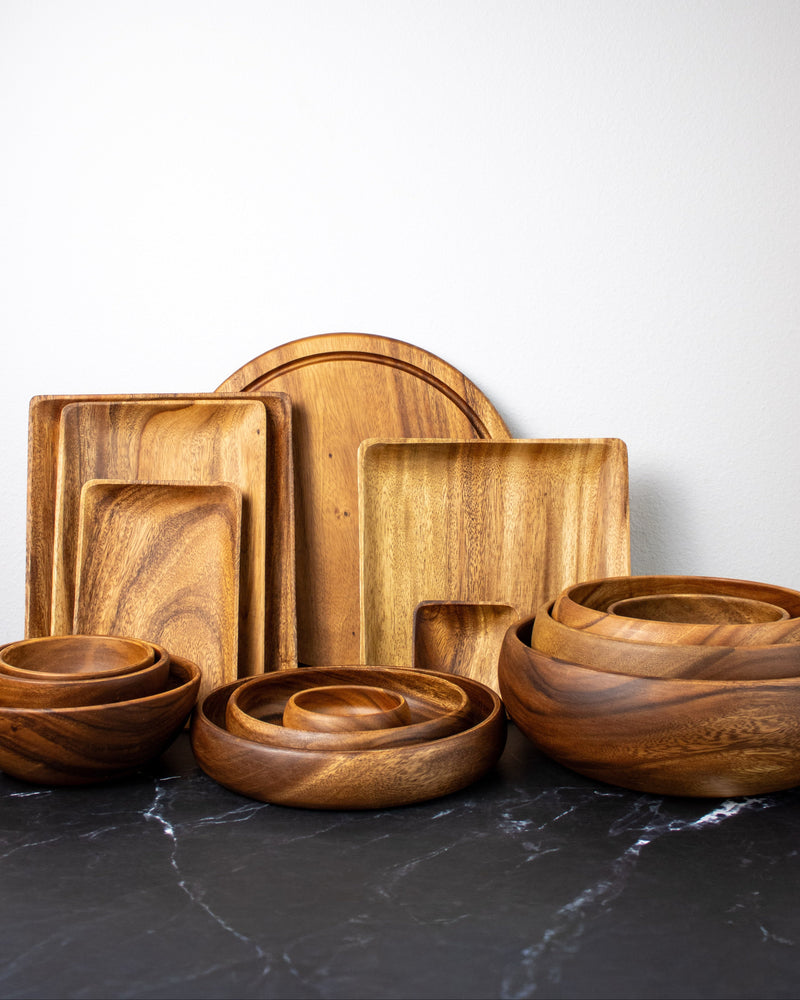
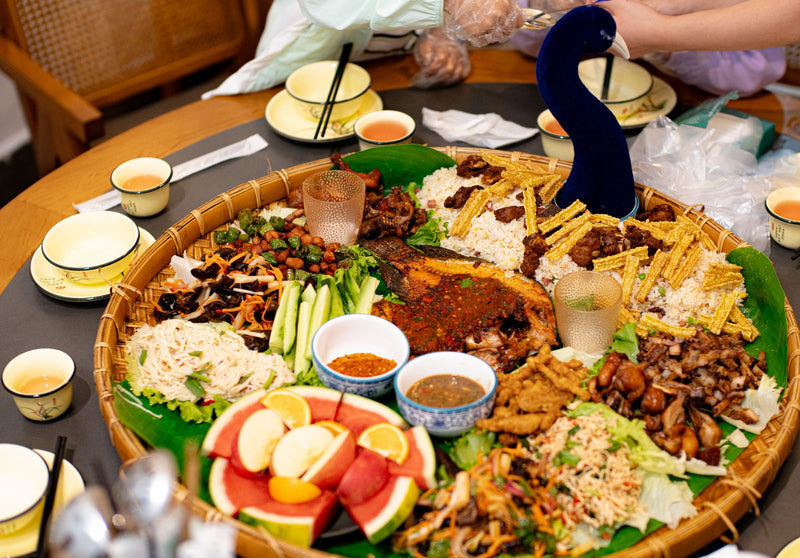
The Mini Hosting Set is the smallest coordinated set we make, and it is not a compromise. It is the set sized for the way a lot of Filipino households actually eat most nights: two to four people around a table that is not much larger than a coffee-shop four-top. A couple. A parent and two kids. A pair of siblings sharing a condo. A small friend group who has been rotating houses for years and never breaks past four at any given kainan.
This guide is for the reader deciding whether the Mini is the right first hosting set for their kitchen, or whether the honest math of their gathering pattern actually points to something larger. We will walk through what the Mini was built around, what is inside it, how it compares against the Family and Royal at the decision point, how it handles the real meals it was designed for, and what a decade of living with it looks like. By the end you should know whether the Mini is your primary hosting tableware, your weekly workhorse alongside a larger set for special occasions, or the wrong size entirely for the rhythm of your household.
What the Mini Hosting Set Is Built For
Small gatherings do not need small pieces. They need pieces sized honestly for the meal in front of them. That is the distinction the Mini set is built around, and it is the reason a properly sized small set looks intentional at a table for three where a scaled-down Family set would look like leftovers pulled from a bigger box.
The gathering size it was built around
Two to four is the working scale most Filipino households actually eat at, most weeks of the year. The Sunday lunch with the ninongs is the exception, not the rule. The daily rhythm is smaller: a couple sitting down together, a mother and two kids after school, a pair of housemates who eat the same ulam three nights running, a sibling passing through for a week and eating with the household of two.
The Mini Hosting Set was designed to hold this scale properly. The centerpiece piece is sized so that rice for four fills it comfortably without leaving a mound cold at the end of the meal. The serving bowls hold two ulam without ever looking sparse. Individual plates and sawsawan dishes count out to four, which covers the household plus one or two guests. Nothing is oversized. Nothing is undersized. The set matches the meal.
The households it fits
Three household profiles lean on the Mini set as their primary hosting tableware. The first is the condo dweller, whose dining table physically caps at four seats and whose largest possible gathering is bounded by the space, not by intent. The second is the small friend group or family unit, whose actual weekly rhythm never exceeds three or four regardless of the size of the kitchen. The third is the diaspora couple: Filipino households in Metro Manila, Cebu, Los Angeles, Toronto, Dubai, or anywhere the daily life is quieter than the extended-family Sundays back home used to be.
For all three, the Mini set becomes the everyday hosting tableware, not the once-a-year set. It gets used weekly. It develops the softer sheen and deeper color of acacia in regular use. The pieces stop feeling special and start feeling normal, which is what good tableware is supposed to do.
What "small" looks like at a Filipino table
Filipino small is not Western small. Even a table of three tends to include rice, one or two ulam, sawsawan, and often a soup. The bar is not "less food" so much as "less variety, same style of eating." A kainan for two still has rice at the center, still has a serving bowl of ulam, still has a small dish of suka on the side. The shape of the meal does not change with headcount. Only the quantities do.
The Mini set is calibrated for that specific truth. It is not a Western place-setting kit sized down. It is a Filipino hosting kit at the small end of the honest range, which means every piece a Filipino meal actually needs is present, just sized for the smaller table.

The set for the table you actually eat at
The Mini Hosting Set is sized for two to four guests, calibrated for the weekly kainan of a condo table or a diaspora kitchen.
Shop the Mini Hosting Set →
What Is Inside the Mini Hosting Set
A small hosting set has less room to hide a bad piece choice. Every item has to justify its place in the box. The Mini was built by working backward from the honest question: what does a Filipino meal for four actually need on the table? The set answers that and stops.
The centerpiece piece
The largest piece in the set is the centerpiece bowl or platter, sized to hold rice for four without looking half-empty or overloaded. In a small kainan this is the piece that anchors the middle of the table for the whole meal. It sits between the diners, warm, refillable, and it does not compete with the individual plates for visual attention the way an oversized centerpiece would at a small table.
Sizing here is the whole game. A Family-scale centerpiece looks marooned at a table for three. A Western-scale rice bowl looks stingy. The Mini centerpiece is calibrated for the specific in-between: enough presence to anchor the meal, small enough to feel proportionate.
The serving bowls
A meal for two to four does not need four serving bowls. It needs two, sometimes three, and it needs them at the right depth. One deeper bowl for saucy ulam like sinigang or nilaga, one shallower bowl for drier dishes like pancit or ginisang gulay. That is the honest floor for a Filipino weekly meal, and the Mini set is built to that floor rather than padded past it.
Depth matters even more at the small end. If you only have two serving bowls, both of them have to work. A shallow bowl trying to hold sabaw is a spill waiting to happen. A deep bowl holding two pieces of longganisa looks awkwardly empty. The Mini set gives you the right two shapes so the meal fits regardless of what you cooked.
Individual plates and sawsawan dishes
Each place setting gets an acacia plate with the proper deeper lip that Filipino eating requires. Rice with sabaw scooped from a communal bowl will not sit flat on a Western dinner plate without running to the edge. The Mini plates carry the same design logic as the larger sets: a rim that contains the meal rather than daring it to escape.
Each place also gets a sawsawan dish. This is one of the details that separates a hosting set built for kainan from one built for European service. Filipino sawsawan is personal. Each diner tunes their own suka-with-siling-labuyo, their own toyomansi, their own patis to their own preference. A small dish at each place makes that possible. A single central saucer everyone reaches for is what you fall back on when you do not have the right pieces. The Mini set has them, four of them, one per place.
Why acacia at this scale
Small pieces are the ones that get used the most. A weekly-use set has to survive detergent, hot ulam, suka spills, and the accidental five minutes in a sink of standing water when the phone rings mid-cleanup. Acacia holds up to all of it. It is dense enough to resist warping under hot serving temperatures. Its closed grain resists the deep staining that patis and toyomansi will drive into softer woods. And it develops color and character with use, so the small pieces that get the most exposure age into the best-looking pieces in the set.
If you want the longer story of why acacia beat out bamboo, mango, and softer imported woods for Filipino tableware, our writeup on how acacia becomes tableware covers the density, grain, and finishing that make it work at the small end as well as the large.
Mini vs. Family vs. Royal: The Sizing Decision Tree
This is the chapter most first-time buyers came here for. If you have three product pages open and you keep bouncing between them, this is the shortest framework that will still feel right in a year.
Start with your honest weekly rhythm
The mistake most first-time buyers make is sizing to the imagined big gathering. The one where the cousins fly in. The Noche Buena that used to happen back home. The birthday you might host if the extended family ever visits. These are the wrong data points because they are the exception, not the rule.
Start instead with the rhythm of your real week. How many people actually eat at your table on a typical Tuesday? On a Sunday? Over a full month, what is the median headcount of a meal at your house? For most households that answer clusters somewhere between two and four. If yours does, you are in Mini territory and the honest answer is not to size up "just in case."
When the Mini is exactly right
The Mini set is the right primary hosting set for households whose largest realistic gathering caps at four. That description covers more households than most first-time buyers realize. Condo dwellers whose dining nook seats four. Couples in diaspora apartments where the extended family is a Zoom call rather than a Sunday visit. Small friend groups whose rotating dinners never break past three or four. Households of two where the "gathering" is one guest at a time.
For all of these, the Mini is not a stepping stone. It is the finished answer. Sizing up to the Family set for a household that never actually seats six means owning pieces you will not use, which is worse than owning fewer pieces at the right scale.
When to size up to Family
The line to draw is your largest realistic gathering. Not the biggest possible one. Not the one you hope will happen when relatives visit. The largest one that actually shows up on your calendar in a typical year. If that number crosses four with any regularity, you are in Family Hosting Set territory. If it consistently hits eight or more, you are in Royal Hosting Set territory.
The trap to avoid is buying the Family set for the one Sunday a year the extended family passes through. A Family-scale set in a condo kitchen where the weekly meal is for two means the pieces live in a cabinet 51 weeks out of the year. Better to buy the Mini for weekly use and rent or borrow serveware for the annual exception.
When to buy both
Some households eventually own the Mini alongside a larger set. This is not overspending, it is the honest solution to a household that has two different hosting patterns. Weekly meals for the household of two happen on the Mini. The occasional handaan with the cousins happens on the Family or Royal. The pieces coordinate visually because they are cut from the same acacia stock with the same finish, so mixing them at a stretched-out table looks intentional rather than mismatched.
The order to buy matters. Start with the set sized for your weekly rhythm, not the annual peak. If that is the Mini, buy the Mini first and add larger pieces later if the pattern of your hosting actually shifts. Our chooser guide on choosing the right Filipino hosting set walks through the framework across all three sizes.
The three-question filter
If you are still torn, run through these in order and stop at the first answer that clarifies the decision.
- What is the median headcount of a meal at your table in a typical week? Two to three means Mini without qualification. Four means Mini as long as your peak is not much larger. Five or more means size up.
- How many times per year does your gathering actually exceed four? Never or once means Mini. Two to five means Mini plus a supplementary board or a rented centerpiece for the outliers. Six or more means the Family set is a better primary.
- Where will the pieces live when they are not on the table? If your storage is a single kitchen shelf or a narrow condo cabinet, the Mini fits without argument. Larger sets need a dedicated home and the honest question is whether you have one.
The right primary set for small tables
If the decision tree lands on two to four, sized for weekly use and honest storage, the Mini Hosting Set is calibrated for exactly that rhythm.
Shop the Mini Hosting Set →How the Mini Set Handles Real Filipino Meals
Product-page piece counts do not tell you how a set performs at a table. This chapter walks through the meals the Mini was designed for, and where it stretches versus where it stops fitting.
The Tuesday-night ulam moment
The weeknight meal is the default use case. Rice on the centerpiece. One ulam in a serving bowl. Maybe a second lighter dish, maybe just vegetables on the side. Individual plates and sawsawan at each place. Two to four people around the table. This is the meal the Mini set was built for, and it shows in the fit.
The pieces stop feeling like "hosting tableware" at this scale and start feeling like the household's real dishes. Which is the point. A hosting set that only comes out for guests is a hosting set that never breaks in properly. A hosting set that anchors the weekly meal develops the color and softness that make it look right when the small gathering does come.
Merienda for two or four
Merienda is where the Mini set feels most naturally sized. A pair of plates for bibingka or puto. A small bowl for tsokolate or the leftover leche flan. The centerpiece holding pandesal or ensaymada. Nothing is overscaled. The spread looks abundant without looking staged.
The other place the Mini earns its keep at merienda scale is when the "quick merienda" turns into a full dinner, which it does at Filipino gatherings more often than not. Having the full set already at hand means the shift from bibingka and coffee to rice and ulam takes no scramble.
Small salu-salo and birthdays
A birthday for a household of two, with one couple over. A welcome dinner for a cousin passing through the city. A small salu-salo for a friend group of four. These are the gatherings that fill the Mini set to its honest maximum, and where the pieces show they are hosting tableware in the proper sense, not just weekday dishes wearing a nicer hat.
The rhythm at this scale is calm rather than frantic. Everyone fits at the table without folding chairs. The serving bowls stay comfortably full after the first pass, which means second helpings happen without a trip to the kitchen. This is small-scale Filipino hosting at its most enjoyable, and the Mini is the set built to hold it.
Condo Noche Buena and date-night Filipino food
The Noche Buena that fits the Mini set is the diaspora Noche Buena. The one where the household is a couple, or a small family, or a pair of siblings sharing an apartment. Hamon and queso de bola on the individual plates. Pancit in a serving bowl. Rice on the centerpiece. Fruit salad in the second bowl. A small dish of atchara on the side. Midnight, a table for three or four, and a spread that fits the room.
The same set works for the quieter Filipino meals of two: adobo on a Wednesday, the sinigang you make when someone in the household is feeling under the weather, the celebration dinner for a small win. These are the meals that never happen when the only hosting tableware in the house is sized for eight. The Mini makes small Filipino eating a proper thing, not a scaled-down apology.
Living With the Mini Set: Care, Longevity, and Growth
The purchase decision is the easy half. Living with a hosting set for a decade is where the honest questions matter. This chapter covers what the ongoing relationship with the Mini set actually looks like.
The care commitment, honestly
Acacia hosting pieces cannot go in the dishwasher, and the Mini set is no exception. Heat and prolonged water exposure are the two conditions under which wood warps and cracks, and a dishwasher provides both. Every piece gets hand-washed with warm water and mild soap, dried immediately with a clean towel, and never left to soak in a sink of standing water.
For a Mini-scale meal, this comes out to about 10 to 15 minutes of dishwashing after a small kainan, which is not appreciably more than any ceramic set the same size. Every couple of months, or whenever the wood starts to look dry, re-oil the pieces with food-safe mineral oil or a wood conditioner. This is a 10-minute job that keeps the finish alive and prevents surface micro-cracks. Our writeup on whether you can dishwasher acacia wood covers why the answer is a firm no and what happens when people try.
How the set ages
The Mini set has an advantage the larger sets do not: it gets used more often. The Family set might see three meals a week. The Mini set might see fifteen. All of that use, done with proper care, turns into the deeper color and softer sheen that acacia takes on with time. A Mini set at year three looks better than a Family set at year three because the wood has been through more oiling cycles and more honest handling.
The failure modes are the ones the care routine is designed to prevent. Warping from the dishwasher. Cracks from leaving pieces in water. A dull, dry surface from years of no oiling. Follow the routine and none of these happen. Ignore it and the set will look tired well before it should.
The growth path
A common pattern with the Mini set: the household buys it as the primary set, uses it weekly for a few years, and then adds the Family set when a hosting pattern shifts. A new baby means more meals with extended family stopping by. A move to a larger home changes the gathering math. Retirement means more time to host. In every case, the Mini set does not get retired, it becomes the weekly workhorse while the Family or Royal handles the seasonal handaan.
The pieces are designed to look intentional together on a stretched-out table because they are cut from the same acacia stock with the same finish. A Family centerpiece with Mini serving bowls reads as a coordinated setup, not a rescue effort.
When the Mini is the right gift
The Mini is one of the strongest small-scale gifts you can give. For newlyweds still building their kitchen, it is the hosting set that fits the apartment they actually live in. For a condo housewarming, it is the piece the new household will use every week. For a diaspora pasalubong, it is Filipino tableware that fits an American or Canadian or Gulf apartment kitchen without needing a formal dining room to justify itself.
The gift math works because the Mini is right-sized for households that are not yet at the Family stage of hosting. Giving a Royal set to a couple in a studio apartment risks handing them a set that lives in the box under the bed. The Mini fits the actual life the household is living. Our roundup of Filipino housewarming gifts covers where the Mini fits alongside other traditional gifts.
Storage in tight kitchens
The Mini set was built with tight storage in mind, because the households it is sized for tend to have tight storage. The centerpiece piece fits on a standard kitchen shelf without needing a dedicated cabinet. Serving bowls nest. Individual plates stack. Sawsawan dishes fit in a drawer or a small basket. The whole set can live on a single shelf or in one cabinet without a redesign of the kitchen.
Avoid storing acacia pieces above or next to a stove where prolonged heat and steam will dry the wood out faster than the oiling routine can keep up with. A cool, dry, ventilated spot is what wood tableware wants. In a condo kitchen, this usually means a mid-height cabinet or a sideboard shelf, not the space directly above the range hood.
The hosting set that fits the life you actually live
Sized for the meals your household really has, cared for by hand, and built to look better at year ten than year one. The Mini Hosting Set is the working tableware of a small Filipino kitchen that gets used.
Shop the Mini Hosting Set →Frequently Asked Questions
How many people does the Mini Hosting Set serve?
The Mini Hosting Set is sized for 2 to 4 guests comfortably. It handles a household of two with room for one or two guests, and it hits its honest maximum around four. For gatherings that regularly exceed four, the Family Hosting Set is the better primary.
Can I use the Mini set for Noche Buena?
Yes, if your Noche Buena is at diaspora or small-household scale. A midnight table for three or four fits the Mini set without needing extra pieces. If your Noche Buena regularly seats six or more, look at the Family set instead.
Is the Mini set too small for a family with kids?
Not necessarily. A household of two adults and two kids fits the Mini set comfortably for weekly meals. Where the Mini starts to feel small is when the kids are old enough to invite friends over for meals, or when extended family visits become a monthly rather than yearly rhythm.
Can I mix the Mini set with pieces from the Family or Royal?
Yes. All three sets are made from the same acacia stock with the same finish, so the wood tone and grain character coordinate visually even when piece sizes differ. Many households add the Family or Royal for seasonal hosting while keeping the Mini as the weekly-use set.
How do I care for the Mini Hosting Set?
Hand-wash with warm water and mild soap, dry immediately with a clean towel, and never soak the pieces or put them in the dishwasher. Re-oil every couple of months with food-safe mineral oil or a wood conditioner. Store in a cool, dry, ventilated spot away from direct heat.
Is the Mini Hosting Set a good gift for newlyweds or a condo housewarming?
Yes. The Mini is one of the strongest small-scale gifts because it is sized for the exact kitchen the recipient is actually living in. It is more likely to be used than a Family or Royal set given to a couple in a small apartment, where the larger set risks sitting in storage.