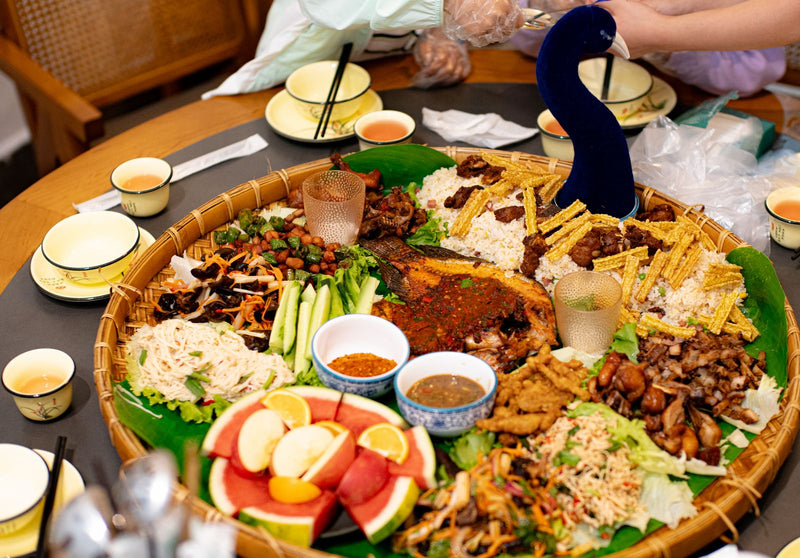
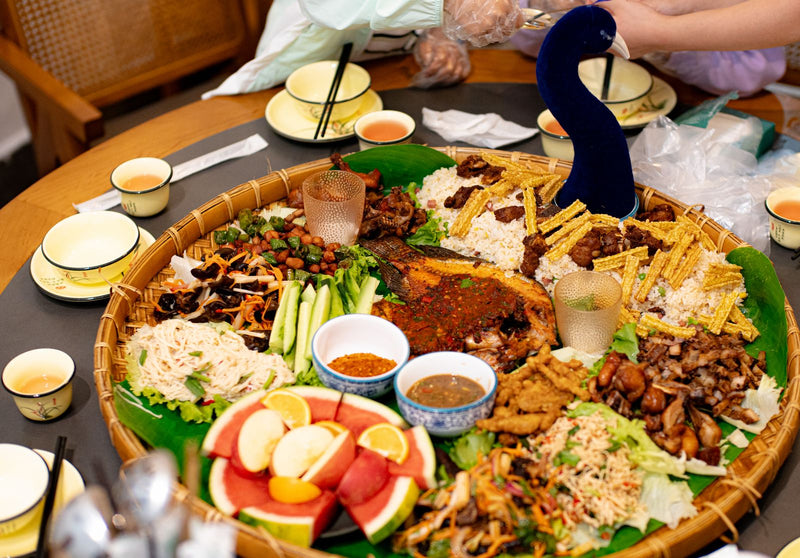
Christmas morning in a Filipino house has a particular sound. The ref door opens, someone sighs, and then a voice from the sala asks, "Ano'ng ulam natin?" The answer is already in there: half a lechon, a hamon missing its best slices, a queso de bola with a dent in it, a tray of pansit, and a bowl of fruit salad that somehow got bigger overnight.
Noche Buena leftovers are not a problem to solve. They are the start of a second kainan. The lechon that was crackling at midnight becomes paksiw by lunch. The hamon goes into pandesal. The queso de bola gets grated over everything. This guide walks through what keeps, what to cook, how to serve it without washing every dish in the house, and how to stretch the table all the way to Media Noche.
1. The Morning After: Sorting the Noche Buena Fridge
Before anyone starts cooking, take ten minutes and look at what you actually have. The table you set for Noche Buena (we covered that in our guide to setting the Noche Buena table) usually leaves behind more than anyone planned for. Sorting it first saves you from finding a forgotten tub of pansit on Dec. 30.
What keeps and what doesn't
Not every dish ages the same way. Here is a practical read on the usual Noche Buena spread:
- Lechon: The meat keeps well and actually improves in paksiw. The skin does not keep its crackle in the ref, so store it separately and plan to re-crisp it or cook it into sisig.
- Hamon: Cooked, glazed ham is one of the sturdiest leftovers on the table. Wrap it tightly so the cut face doesn't dry out.
- Queso de bola: A firm, aged cheese in the Edam style. Once opened, it lasts weeks, not days, if kept wrapped and cold.
- Pansit: Noodles absorb sauce and go soft. Best eaten within a day or two, and it does not freeze especially well.
- Fruit salad: Cream and condensed milk make it a dairy dish. Treat it like one and keep it cold and covered.
- Kakanin: Bibingka, puto bumbong, biko and sapin-sapin harden in the ref but come back with steam or a hot pan.
Safe storage windows and reheating
The USDA Food Safety and Inspection Service gives clear, simple rules for cooked leftovers, and they apply just as well to lechon as to turkey:
- The 2-hour rule: Cooked food should not sit at room temperature for more than 2 hours. In a hot kitchen or outdoors above about 32 C (90 F), that drops to 1 hour.
- Fridge window: Cooked leftovers are best eaten within 3 to 4 days. Cooked ham slices fall in the same 3 to 4 day range.
- Freezer: Frozen food stays safe indefinitely, but quality is best within about 2 to 3 months for cooked meat dishes.
- Reheating: Reheat leftovers until they reach 74 C (165 F) all the way through. Sauces, soups and paksiw should come to a rolling boil.
- Hard cheese: The USDA FoodKeeper puts opened hard cheeses at about 3 to 4 weeks in the ref. Cut away any small spot of mold with a generous margin.
Split big portions into shallow containers. A whole lechon half in one deep tub cools slowly in the middle, which is exactly where bacteria like it.
Planning Christmas Day meals before you open the fridge
A short plan stops the "graze until dinner" cycle that leaves the best bits to go stale. Try this order:
- Use the most perishable things first: fruit salad, pansit, anything with cream or seafood.
- Turn the lechon meat into paksiw on Day 1. It holds well for the next two days and tastes better on the second.
- Save hamon and queso de bola for breakfasts, since they keep longest.
- Decide by Dec. 26 what goes into the freezer for Media Noche.

2. Lechon Leftovers: From Paksiw to Sinigang
If you only cook one thing on Christmas Day, make it lechon paksiw. It is the dish half of us actually look forward to more than the lechon itself: tender pork, a sauce that is sour, sweet and peppery all at once, and a pot of rice going on the side. After paksiw, the lechon still has more to give.
Lechon paksiw, step by step
This makes enough for 6 to 8 people from about 1 kilo of leftover lechon meat and bones.
You'll need:
- About 1 kg leftover lechon, chopped into serving pieces, bones included
- 1 head garlic, crushed
- 1 large onion, sliced
- 3/4 cup suka (cane or coconut vinegar)
- 1/4 cup toyo
- 1 cup lechon sauce (the leftover sarsa from Noche Buena works)
- 2 to 3 tbsp brown sugar, to taste
- 3 dried bay leaves
- 1 tsp whole black peppercorns, lightly cracked
- 1 to 1 1/2 cups water
Method:
- In a wide, heavy pot, saute the garlic and onion in a little of the lechon fat until soft and fragrant.
- Add the lechon pieces and toss for a few minutes so they pick up color.
- Pour in the suka and water. Bring it to a boil without stirring. This is the old rule from every lola: let the vinegar cook off its sharp edge before you stir it in.
- Add the toyo, bay leaves and peppercorns. Lower the heat, cover, and simmer for 30 to 40 minutes, until the meat is fork-tender.
- Stir in the lechon sauce and brown sugar. Simmer uncovered for another 10 to 15 minutes until the sauce thickens and coats the meat.
- Taste and adjust. More suka for brightness, more sugar for balance, a splash of patis if it needs depth. Serve hot with rice.
Paksiw keeps 3 to 4 days in the ref and freezes well. It also tastes better the next day, so don't feel bad about making a big pot.
Crisp-up methods for skin and meat
Lechon skin goes chewy overnight because it pulls moisture from the air and from the meat underneath. Separate them, then:
- Air fryer: Pat the skin dry. Cook at 200 C (about 400 F) for 5 to 8 minutes, checking often. It puffs fast and burns faster.
- Oven: Lay skin side up on a rack over a tray at 220 C (about 425 F) for 10 to 15 minutes. Meat underneath stays juicier if you keep it in larger chunks.
- Pan: For small pieces, a dry, hot pan with the skin side down works, pressed lightly with a spatula.
- Skip the microwave for skin. It turns it into leather.
Lechon sisig and lechon fried rice
Once the paksiw pot is full, the scraps and skin still have a job.
- Lechon sisig: Chop meat and crisped skin finely. Fry in a hot pan until edges char, then add red onion, siling labuyo, calamansi juice and a little toyo. Finish with a raw egg cracked on top or a spoon of mayo, depending on which side of the sisig debate your family is on.
- Lechon fried rice: Day-old rice, lots of garlic, chopped lechon, scallions, and a fried egg. Add a spoon of lechon sauce at the end for a sweet edge.
- Sinigang na lechon: Simmer the bones with tamarind, tomato, onion, gabi and radish, then add kangkong and sitaw at the end. The roasted pork gives sinigang a smoky depth plain pork can't.
Paksiw and sinigang both want deep bowls that hold sauce and rice together. Families often reach for the Manila bowls here, since the high sides keep sabaw where it belongs.

Bowls for paksiw and sinigang
Deep acacia bowls that hold rice, sabaw and a generous ladle of paksiw sauce without spilling over.
Shop the Manila Bowl Set →3. Hamon and Queso de Bola: The Sweet-Salty Second Act
Hamon and queso de bola are the pair that make Christmas breakfast feel like Christmas. They keep longer than the lechon, so they carry the mornings while the paksiw carries lunch.
Hamon in pandesal, sinangag and egg bakes
- Hamon pandesal: Warm pandesal, a thick slice of hamon, a smear of the leftover pineapple glaze, and a slice of queso de bola. Toast it in a pan until the cheese softens.
- Hamon sinangag: Dice the ham and fry it first so the glaze caramelizes, then add garlic and rice. The sweetness balances well with a vinegar dip of suka, garlic and chili.
- Egg bake: Whisk 8 eggs with a splash of evaporated milk. Fold in diced hamon, grated queso de bola, sliced onion and any leftover vegetables. Bake at 180 C (about 350 F) for 25 to 30 minutes. It feeds a crowd and reheats well.
- The ham bone: Don't throw it out. Simmer it with munggo, or with white beans and pechay, for a soup that tastes like it took all day.
Using the queso de bola rind and ends
The red wax coating is not food, so peel it away completely. The firm cheese right under it, though, is good for cooking.
- Grating: Hard ends grate beautifully. Use them over ensaymada, bibingka, pasta, or Filipino-style spaghetti.
- Baking: Fold grated queso de bola into pandesal dough, cheese bread, or a batch of cheese cupcakes.
- Melts: Make a quick cheese sauce with butter, flour, milk and grated queso de bola. Spoon it over leftover macaroni or use it as a dip for crisped lechon skin.
- Storage: Wrap cut faces in wax paper, then loosely in a bag. Plastic wrap directly on the cheese traps moisture and speeds up mold.
Pairing with leftover ensaymada and hot chocolate
The Christmas morning merienda that needs no cooking at all:
- Warm leftover ensaymada for 20 seconds, then add extra grated queso de bola on top.
- Make tsokolate with tablea, whisked until frothy, or a thick hot chocolate if that's your family's way.
- Set out thin slices of hamon on the side. Sweet bread, salty ham and bitter chocolate is a combination worth keeping.
4. Pansit, Rice and Fruit Salad: Everything Else
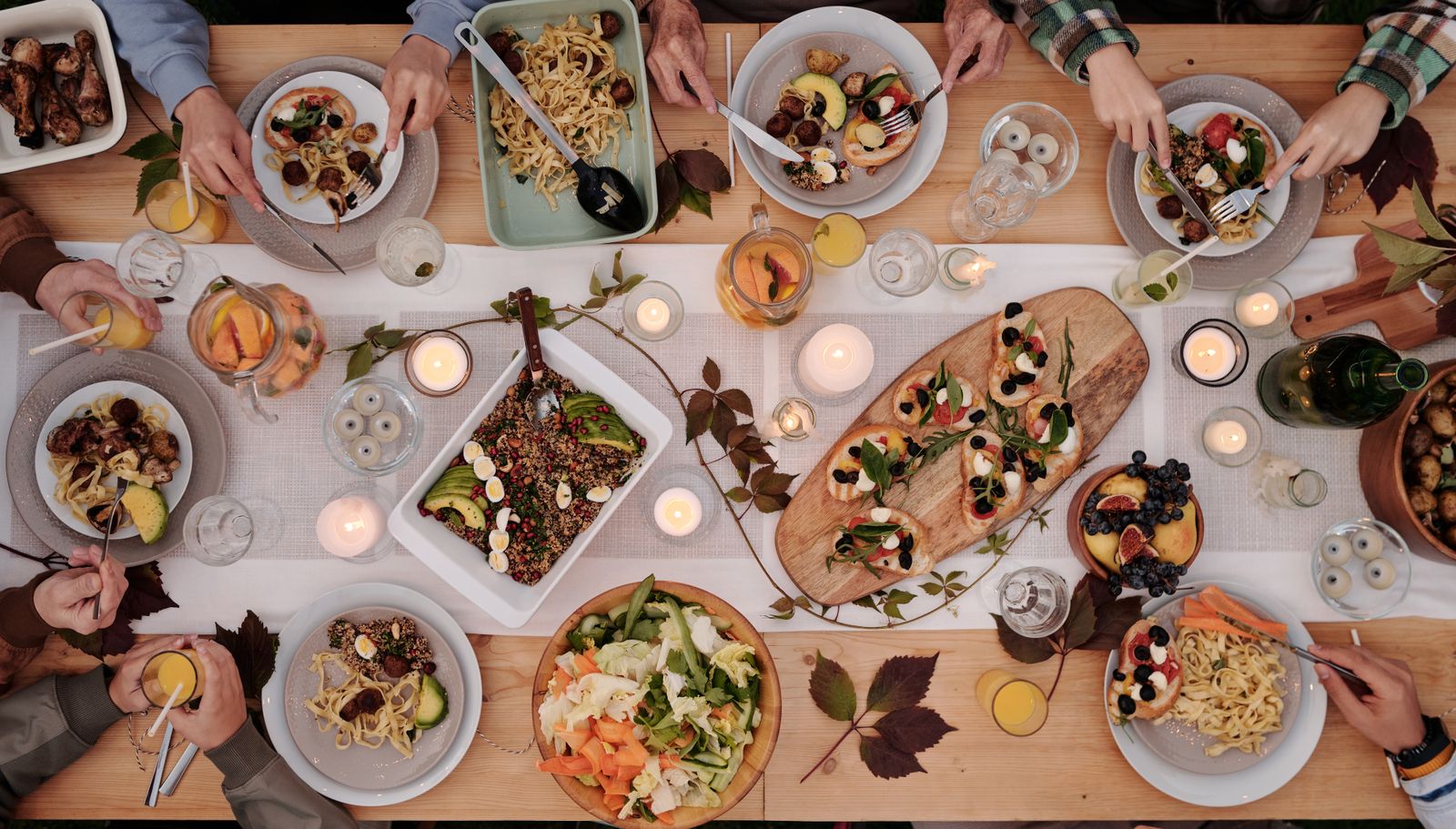
The supporting cast gets ignored until it's too late. Pansit gets mushy, rice dries out, kakanin turns into bricks, and the fruit salad hangs around until someone finally tips it out. A few small moves keep all of it on the table.
Reviving pansit and kakanin
- Pansit bihon or canton: Reheat in a wok with a splash of broth or water, not in the microwave. Toss in fresh cabbage, carrots or snow peas to bring back some crunch, and finish with calamansi.
- Pansit palabok: Keep sauce and noodles separate if you can. Warm the sauce on its own, pour it over noodles that have been briefly refreshed in hot water, then add new toppings.
- Bibingka and puto bumbong: Wrap in banana leaf or foil and warm in a low oven, or steam for a few minutes.
- Biko and sapin-sapin: Steam until soft again, or slice and pan-fry biko in a little butter for crisp edges.
- Rice: Day-old rice is what sinangag is for. Break up clumps with damp hands before it hits the pan.
Turning fruit salad into halo-halo or a dessert base
Fruit salad with cream and condensed milk has about the same fridge life as any dairy dish. Use it before Dec. 27, or change its form:
- Halo-halo: Layer fruit salad with shaved ice, evaporated milk, leche flan, ube halaya and pinipig. Some of the work is already done.
- Frozen fruit salad: Spread it in a shallow container and freeze. Scoop it like ice cream, or freeze in ice candy bags for the kids.
- Graham float base: Layer fruit salad between graham crackers and whipped cream, then chill overnight.
- Pandesal French toast topping: A spoon of cold fruit salad on hot, buttery French toast is better than it sounds.
What to freeze for Media Noche or January
If something won't be eaten by Dec. 27, freeze it now instead of on Dec. 29. Good candidates:
- Lechon paksiw, in flat freezer bags with the air pressed out
- Plain lechon meat, without the skin
- Hamon slices, separated with wax paper
- The ham bone, for soup later
- Grated queso de bola, in a bag, ready to use straight from the freezer
- Kakanin like bibingka and biko, wrapped individually
Skip freezing pansit and anything with mayonnaise. Label every bag with the dish and the date, and thaw in the ref, not on the counter.
When the Christmas Day table is a mix of paksiw, sinangag, pansit and kakanin, everyone grabs a plate and builds their own. Flat, wide plates like the Anak set handle saucy food next to dry without everything running together.

Plates for the Christmas Day kainan
Everyday acacia plates sized for rice, paksiw and a bit of everything else from the fridge.
Shop the Anak Plate Set →5. Setting the Christmas Day Table (Low-Effort Boodle Style)
Noche Buena is the formal table. Christmas Day can be loose, loud and served straight from the pots. A boodle-style spread solves the mixed-leftovers problem and keeps the washing down to almost nothing. The same thinking we used for the Noche Buena table applies here, just with fewer rules.
Kamayan-style spreads for mixed leftovers
- Lay clean banana leaves down the center of the table, overlapping so there are no gaps.
- Mound rice down the middle in a long line.
- Place the wet dishes (paksiw, sinigang meat, lechon sauce) in bowls along the line so the sauce doesn't run across the leaves.
- Arrange dry food directly on the leaves: crisped lechon skin, hamon slices, fried rice, cubed queso de bola, pansit, salted eggs and tomato.
- Put out sawsawan in small bowls: suka with garlic and chili, toyo with calamansi, patis.
- Set a basin of water and a towel at each end for handwashing.
Kamayan works well on Christmas Day because nobody needs to plan individual plates, and the cousins who arrive late can just slot in.
Serving dishes straight from the pan to wood
Not everyone wants to eat with their hands on the 25th. A middle path is to move food from the pan to a few large wooden pieces and let people serve themselves.
- Boards for carving: A large board in the center for the hamon, queso de bola and whatever lechon is left whole. People slice what they want.
- Bowls for anything with sabaw: Paksiw and sinigang go into deep bowls, never onto a flat board.
- One big piece for the centerpiece: If you're hosting a crowd, a full spread like the Royal hosting set lets you plate everything once and refill from the kitchen.
- Let food cool for a few minutes: Acacia handles warm food, but a sizzling pan straight onto wood can leave a mark. Give it a couple of minutes off the heat first.
For more on which dishes suit which wooden pieces, see our guide to Filipino dishes for wooden tableware.
Care notes for acacia after oily, vinegary food
Christmas Day food is about as hard on wood as it gets: lechon fat, suka, toyo, sauce. Acacia is dense and handles it well, as long as you follow a few habits:
- Don't let food sit for hours. Vinegar-heavy paksiw sitting overnight in a wooden bowl can dull the finish. Move leftovers to containers once the meal ends.
- Wash by hand, soon. Warm water, a little mild dish soap, and a soft sponge. Rinse and wipe right away.
- Never soak and never use the dishwasher. Long exposure to water and heat causes swelling and cracking.
- Cut grease with a little salt. For a fatty lechon board, sprinkle coarse salt, scrub with half a calamansi or lemon, then wash as normal.
- Dry upright. Stand boards and bowls on their edges so air reaches both sides.
- Oil after the holidays. Once the season is over, rub in a thin coat of food-safe mineral oil and let it soak in overnight.

Boards for hamon, queso and lechon
A family-sized set of acacia boards for carving the hamon, slicing queso de bola and serving what's left of the lechon.
Shop the Pamilya Board Set →6. Carrying the Table to Media Noche
Between Christmas and New Year's Eve, the Filipino kitchen never really closes. With a bit of planning, the Noche Buena spread does more than feed Christmas Day. It gives you a head start on Media Noche, and it sends guests home with something in hand.
What to hold back for Dec. 31
Freeze or set aside these early, before they get picked at:
- A portion of paksiw: Frozen on Dec. 25 or 26, it thaws in the ref overnight on Dec. 30 and reheats in minutes.
- Hamon slices: A ready-made Media Noche platter with some fresh fruit and cheese.
- Queso de bola: Keep a wedge whole, wrapped, for the New Year's cheese board.
- The ham bone: Frozen now, it becomes a pot of soup for New Year's Day.
For the full New Year's Eve spread, including the round fruits and the sticky rice for luck, see our guide to setting up Media Noche.
Splitting leftovers into pasalubong for guests
Sending titos, titas and cousins home with food is part of the tradition, and it also keeps your fridge from overflowing. Do it in a way that keeps everyone safe:
- Pack food while it's still cold from the ref, not after it has been sitting on the table.
- Use clean, lidded containers, one dish per container so sauces don't mix.
- Label each one with the dish and the date it was cooked.
- Remind guests with long drives to bring a cooler bag, or tuck an ice pack in.
- Give the skin and the meat separately so they can crisp the lechon at home.
A 3-day leftover plan, Dec. 25 to 27
Dec. 25 (Christmas Day)
- Breakfast: hamon pandesal with queso de bola, tsokolate, warmed ensaymada
- Lunch: lechon paksiw with rice, crisped skin on the side, boodle-style table
- Merienda: fruit salad, reheated bibingka and puto bumbong
- Dinner: revived pansit with fresh vegetables, leftover paksiw
- Before bed: freeze a portion of paksiw, the ham bone and some hamon slices
Dec. 26
- Breakfast: hamon sinangag with fried eggs and spiced suka
- Lunch: lechon sisig with rice and calamansi
- Merienda: halo-halo from the last of the fruit salad
- Dinner: sinigang na lechon from the bones
- Pack pasalubong for anyone heading home
Dec. 27
- Breakfast: hamon and queso de bola egg bake
- Lunch: lechon fried rice with the last of the meat
- Merienda: pan-fried biko, cheese bread with grated queso de bola
- Dinner: whatever is left of the paksiw and sinigang, then clear the ref
- End of day: anything not eaten goes into the freezer or out. Day 4 is the limit for cooked food in the ref.
By Dec. 28, the fridge is clear, the freezer is stocked for Media Noche, and Christmas Day turned out to be its own full kainan instead of a day of scraps.
Frequently Asked Questions
How long do lechon leftovers last in the fridge?
USDA guidance puts cooked leftovers at 3 to 4 days in the refrigerator, and lechon falls in that range. Get it into the ref within 2 hours of serving and store it in shallow containers so it cools quickly.
Can you freeze lechon, and how do you reheat it?
Yes. Freeze the meat without the skin in flat, airtight bags, and use it within about 2 to 3 months for best quality. Thaw it in the ref, then reheat to 74 C (165 F), either in paksiw or in the oven, and crisp the skin separately in an air fryer.
What is lechon paksiw made of?
Lechon paksiw is leftover lechon simmered in suka, toyo, lechon sauce, garlic, onion, bay leaves, peppercorns and a little brown sugar. The result is tender pork in a thick, sweet-sour sauce, best eaten with rice.
How do you keep lechon skin crisp the next day?
Store the skin separately from the meat so it doesn't absorb moisture. To serve, pat it dry and crisp it in an air fryer at 200 C for 5 to 8 minutes or in a hot oven on a rack. Avoid the microwave, which makes it chewy.
What can I do with leftover queso de bola?
Remove the red wax, then grate the cheese over ensaymada, bibingka or spaghetti, slice it into hamon pandesal, or bake it into cheese bread and egg bakes. Grated queso de bola also freezes well for later cooking.
Is it safe to eat Noche Buena food left out overnight?
No. USDA guidance says cooked food left at room temperature for more than 2 hours, or 1 hour in hot conditions, should be thrown out. Reheating does not reliably destroy toxins some bacteria produce, so it isn't worth the risk.