The Royal is the largest hosting set we make. It is built for the host who is regularly feeding 8 to 12 people, not the host who occasionally pulls extra plates from a cupboard when a cousin drops by. If you run monthly handaan, host extended-family Sundays, take on Noche Buena, or inherited the title of "the one whose house everyone goes to," this is the set the rhythm of your kitchen has probably been asking for.
This guide walks through exactly what is in the box, who the set is actually for, the hosting scenarios it handles, how to care for a larger set without warping a single piece, and how to decide between the Royal, the Family Set, and assembling your own from individual collections.
What the Royal Hosting Set Actually Is
The Royal is our hosting set built around one premise: a host running a real Filipino table for 8 to 12 people should not have to mix three serving styles, borrow plates from the in-laws, or apologize for the smallest bowl being too small for sabaw. Every piece in the Royal is sized for shared dishes that travel hand to hand across a long table.
The pieces inside and what each one does at a kainan
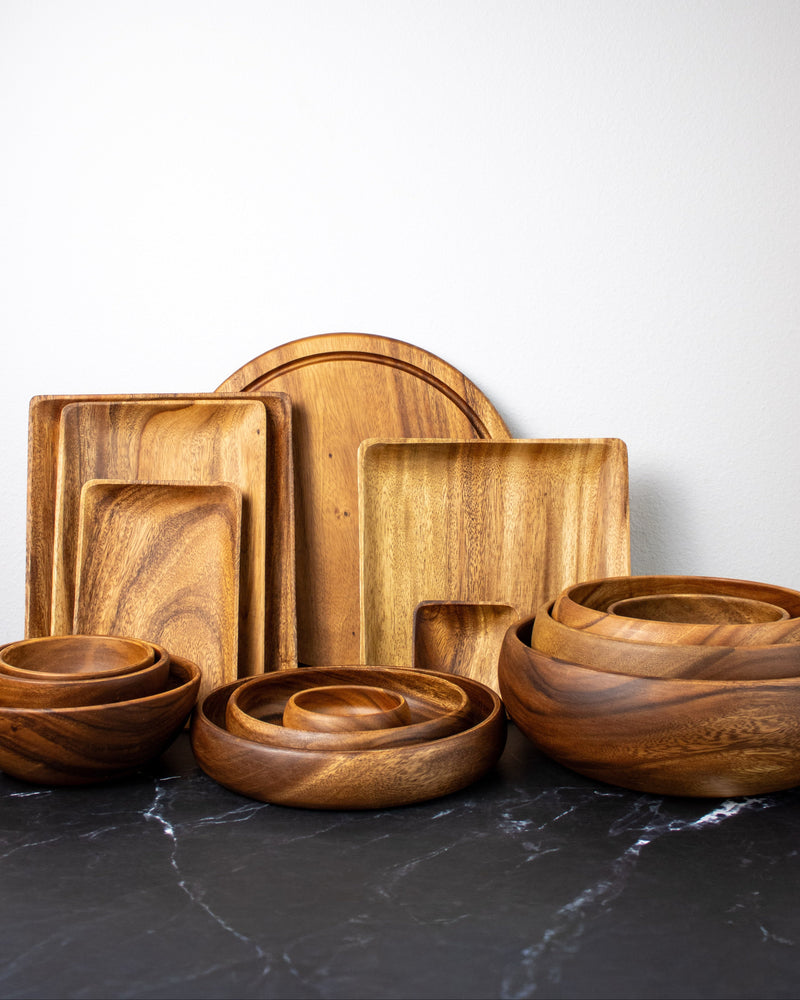
The set is anchored by large acacia serving boards built to hold a whole lechon belly, a tray of lumpia, or a mound of pancit. Around those boards sit deep bowls that take the weight of sinigang and bulalo without sloshing when passed. Rice bowls are sized to feed a table family-style, not portioned for one. Individual plates round out the set so the host is not playing tetris with mismatched dinnerware when twelve people sit down at the same time.
Why we built it for 8 to 12, not 4 to 6
A hosting set for 4 to 6 is a different object. It assumes the host is the cook is the dishwasher, and the table is rarely full. At 8 to 12 the math changes. You need enough serving surface for at least three ulam, a sabaw, rice, and pulutan, all moving at once. You need bowls deep enough that sabaw does not vanish in two passes. And you need the visual coherence of pieces from the same set so a long table reads as one kainan, not a salvage operation.
How it sits alongside the Family and starter sets in the lineup
The starter sets are for couples and small households. The Family Set covers most weekly hosting at 4 to 6. The Royal is the upgrade you make when "we host" stops describing the occasional Sunday and starts describing your standing role in the family. We unpack the full comparison in the Family Hosting Set explained guide, and you can read more on which tier fits your typical headcount in our choosing the right Filipino hosting set article.

The hosting set sized for your real table
Everything you need to plate a full handaan for 8 to 12 in one box, made in acacia.
Shop the Royal Hosting Set →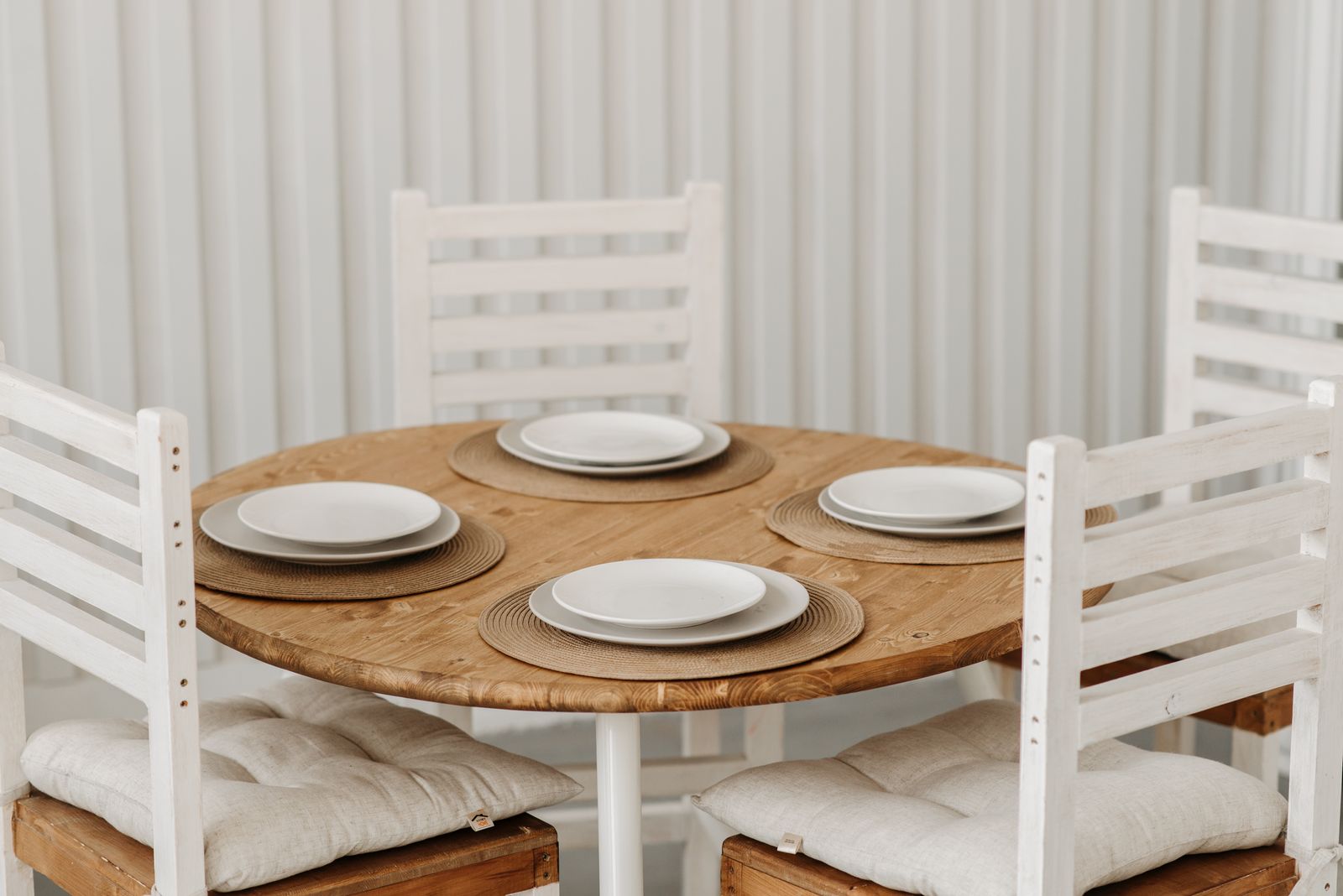
Who This Set Is Built For
If you read the first chapter and thought "that is more than I need," the Royal is probably not for you, and that is fine. But there is a specific kind of host this set was built around, and you tend to recognize yourself quickly.
The host running monthly handaan or extended family Sundays
You are the cousin whose dining table absorbs the family every few weeks. You have learned the rhythm: rice is going on at 9am, the adobo is sweating in patis and suka by 10, someone is calling to ask what to bring, and by noon there are eleven people in your kitchen. You already know how to host. You just keep running out of matching serveware. The Royal solves that.
Newlyweds inheriting the hosting duty from parents
When the lola who used to host Christmas decides this is the year she passes the kainan to a daughter or apo, the inheriting household is suddenly responsible for feeding everyone. Most newlyweds start with a starter set sized for two. A year into hosting in-laws, the Royal becomes the practical wedding gift to themselves, or the pasalubong an aunt actually wants to give.
Households that host fiesta, Noche Buena, or Media Noche
Fiesta hosting in the province, Noche Buena at 11pm with everyone in barong and Sunday best, Media Noche after the fireworks. These are not "we will figure it out" tables. They are tables where the host has been planning for weeks and where everyone, including the lolo who never compliments anything, notices when the serving boards finally look like they belong to one house.
Hosting Scenarios It Handles Well
The set is sized for a working kainan, not a display shelf. Here is what it actually handles week to week and season to season.
Boodle fight for 10 plus
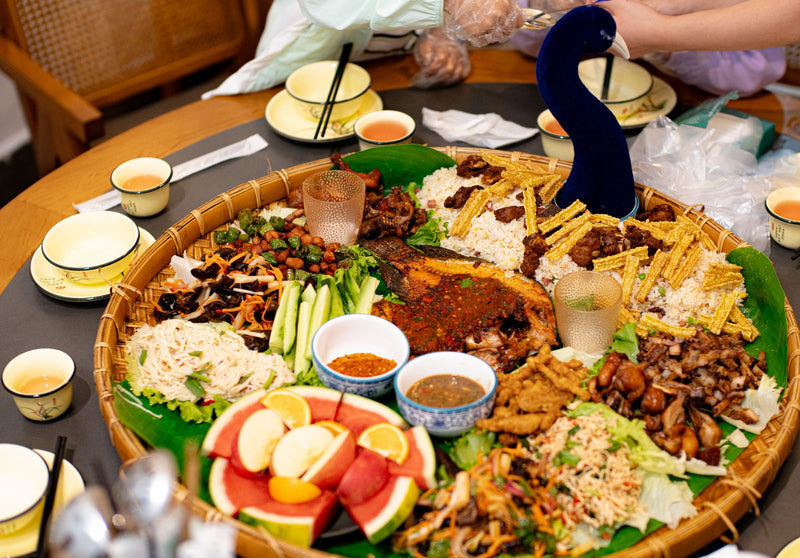
Boodle fights for ten or more need long serving surfaces, and they need them in wood. Ceramic platters chip under elbow traffic, and metal trays read like a canteen. The large boards in the Royal can be laid end to end down the center of a banana-leaf-lined table. If you have never hosted one, our walkthrough on how to host a boodle fight covers the prep choreography, but the short version is: the boards do the heavy lifting and the boards in this set are sized for it.
Sit-down handaan with rice, ulam, sabaw, pulutan stations
A proper handaan has zones. Rice in one large bowl, two or three ulam on boards, a deep bowl of sabaw, and a corner of pulutan for the titos. The Royal gives you a coherent piece for each zone instead of forcing you to mix a friend's borrowed casserole with a wedding-gift platter you have not used since 2019.
Pasalumbong-style merienda when the titas drop by
Not every Royal use is a full meal. When the titas drop by with pasalubong from Baguio or a tray of bibingka from the corner, you want one large board for the bibingka, a bowl for the suman, and small plates for everyone. The set scales down for merienda as easily as it scales up for dinner.
Weekend family gatherings that turn into overnight stays
The Sunday lunch that becomes dinner that becomes "stay over, you are not driving in this traffic" needs serveware that can do two meals back to back. The Royal has enough plates for the second seating to happen without a panic round of dishwashing between courses.
One set, every scenario above
From boodle to merienda, the Royal carries the full hosting weight without borrowed pieces.
Shop the Royal Hosting Set →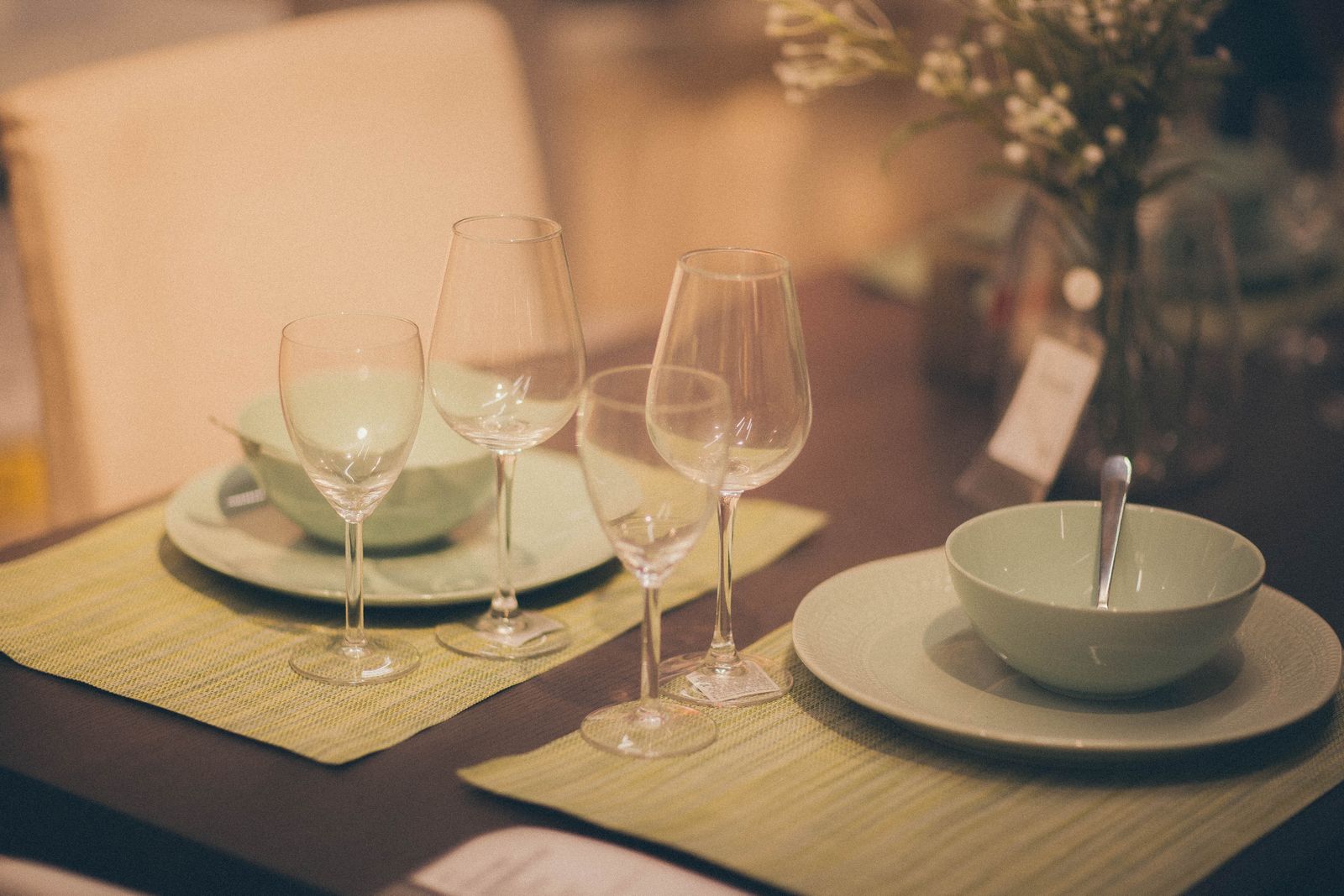
What's Inside, Piece by Piece
This is the part that matters most when you are deciding. Every piece is acacia, every piece is hand-finished, and every piece has a job at a real Filipino table.
Serving boards and platters (sizes, what they hold)
The set includes large rectangular boards sized for whole roasted dishes, lechon kawali, and the long line of grilled liempo a boodle calls for. There are mid-sized boards for lumpia, pancit, kare-kare, and adobo. The dimensions are tuned so two boards sit side by side on a standard six-foot dining table without crowding the bowls.
Bowls for sabaw, rice, and shared dishes
Deep bowls take the volume of sinigang, bulalo, or tinola for a table this size. A wide rice bowl sits at the center so kanin is always within arm's reach. Smaller shared bowls round out the set for atchara, dipping sauces of patis with calamansi, suka with sili, and the bagoong that no proper kare-kare goes without.
Plates and individual pieces
The plates are sized for Filipino portions, not for tasting menus. There is room for two scoops of rice, two ulam, and a little sabaw on the side without anything spilling over the rim. Twelve plates means a full table is set without a single piece pulled from another cupboard.
Why acacia for a set this size (weight, grain, longevity)
Acacia is the right wood for a set that gets used twice a month for the next decade. It is dense enough to resist staining from suka, patis, and turmeric in kare-kare, and light enough that a fully loaded board can still be passed by one hand across a long table. The grain pattern means no two pieces look identical, so the Royal reads as a collection, not a printed set. Acacia also takes oil well, which matters when you are reconditioning a working set rather than babying a display piece.
Caring for a Larger Set
A set with this many pieces needs a care rhythm, not heroic effort. The rules are simple and the rhythm is forgiving.
Storage when not in use (rotating pieces, stacking)
Store pieces in a dry, ventilated cabinet, not above the stove and not next to the dishwasher vent. Stack bowls of the same size and let plates sit flat or on edge in a plate rack. If you only use the boards twice a month, rotate which board goes on top so one piece is not always doing the work and aging unevenly.
Washing 12 plates without warping anything
Hand-wash in batches, never soak, never dishwasher. The damage that warps wood is prolonged contact with water, not the wash itself. Wipe each piece with warm soapy water, rinse quickly, and dry with a clean cloth before stacking. For a 12-person dinner, rope in two helpers and the dishes are done in fifteen minutes.
- Scrape food off boards and plates with a wooden or silicone spatula.
- Wash in warm soapy water, one piece at a time. Do not pile pieces in a basin to soak.
- Rinse and dry immediately with a clean cloth.
- Stand boards on edge to air-dry the last residual moisture before storing.
Reoiling rhythm for a set used twice a month
A Royal used twice a month wants a light reoiling about every two months. Use food-safe mineral oil or a beeswax conditioner, apply a thin coat with a soft cloth, let it sit overnight, and buff off the next morning. You will see the grain wake up. Boards that handle the heaviest use, like the lechon platters, may want reoiling every six weeks during fiesta season. The signal is always the wood: when it looks dry, oil it.
How to Decide Between Royal, Family, and Building Your Own
The Royal is not the right answer for every household. Here is how to figure out which tier you actually need.
When the Family Set is enough
If your normal kainan is 4 to 6 and "8 plus" happens twice a year, the Family Set is enough. The full breakdown lives in our Family Hosting Set explained guide. The Family Set covers everyday family meals and most weekend hosting without committing to storage and care for a larger collection.
When you actually need Royal
You need the Royal when 8 to 12 is your default, not your peak. Signs you are in Royal territory: you regularly run out of matching plates, you keep buying single replacement bowls, friends offer to bring serveware along with the ulam, or you have started Tetris-stacking dishes on the table because there is no platter big enough.
When piecing together Chenoweth plates plus Gorosin bowls makes more sense
Some hosts have specific shapes already and want to fill gaps rather than buy a full set. If you have boards but need bowls for sabaw, the Gorosin bowls handle that on their own. If you have bowls but need a coherent set of dinner plates, the Chenoweth plates do that job. Building your own makes sense when you have a working hosting collection and need to deepen one shelf, not replace it. For first-time large-set buyers, the Royal is usually the cleaner call. For ongoing decision logic on Royal versus Family versus piecing, the choosing the right Filipino hosting set guide walks through more household scenarios.
If 8 to 12 is your real table, this is the one
The Royal is sized for the host who is regularly feeding extended family, not the occasional crowd.
Shop the Royal Hosting Set →Frequently Asked Questions
How many people does the Royal Hosting Set serve?
The Royal is built for a working kainan of 8 to 12. That means 8 to 12 is your comfortable, repeatable headcount, not your one-time maximum. If you regularly seat fewer than 8, the Family Set is the better fit.
What's the difference between the Royal and Family Hosting Sets?
The Family Set is sized for 4 to 6 and covers most weekly family meals. The Royal is sized for 8 to 12 and includes larger serving boards, deeper bowls for sabaw, and more individual plates. The Royal is the right tier when hosting extended family or fiesta-scale gatherings is your normal routine.
Can I use the Royal Hosting Set for boodle fights?
Yes. The large boards in the set are sized to be laid end to end down the middle of a banana-leaf-lined table, which is exactly what a boodle fight for 10 or more needs. The bowls in the set also handle the sawsawan and side dishes a proper boodle calls for.
How do I store a hosting set this large?
Store in a dry, ventilated cabinet away from direct heat sources like the stove or oven. Stack bowls of the same size, keep plates flat or on edge in a plate rack, and rotate which board sits on top so the same piece is not always doing the work.
Is acacia wood safe for hot sabaw and rice?
Yes. Acacia is dense, food-safe hardwood that handles hot dishes without leaching or warping under normal use. Avoid prolonged soaking in water and do not put the pieces in a dishwasher or microwave. Wipe and dry promptly after serving hot food.
Can I buy individual replacement pieces if one warps or cracks?
Most pieces in the Royal correspond to items we also sell on their own, like Chenoweth plates and Gorosin bowls. If a single piece is damaged, you can usually replace it from the standalone collection rather than rebuying the full set. Contact us with the piece you need and we will point you to the closest match.