Walk into any old Filipino home, an ancestral house in Vigan, a lolo's provincial residence in Batangas, a bahay na bato still standing in Taal, and the floor beneath your feet is often ipil. So is the narra staircase, the acacia dining table, and the century-old aparador in the corner. Filipino hardwoods have carried our homes for generations. When people ask us whether ipil belongs on the dinner table too, the answer is not a simple yes or no.
This guide compares ipil and acacia specifically for tableware, bowls, plates, boards, and serving pieces you use daily. We will look at hardness, sustainability, legal status, aesthetic character, and the practical question of what actually belongs in a modern Filipino kitchen. Both woods have deep local heritage. Only one of them is the right choice for a new set of bowls today, and the reason has more to do with forests than with furniture.
The two woods, briefly
Both trees have long histories in the archipelago. They occupy very different places in that history, though, and understanding the split is what makes the tableware decision clear.
What ipil is
Ipil, Intsia bijuga, is a slow-growing native hardwood found across the Philippines, Southeast Asia, and parts of the Pacific. In local usage it is one of the classic "premium native hardwoods" alongside narra, molave, yakal, and tindalo. The heartwood is deep reddish-brown, sometimes almost mahogany dark, and it darkens further with age and light exposure. It is exceptionally dense, exceptionally hard, and famously durable. Ipil floors laid in Spanish-era churches are still in use. Ipil posts holding up ancestral houses have outlived four or five generations of the families who built them.
The problem is that ipil grows slowly. A tree of harvest size can be 60 to 100 years old. Combined with decades of aggressive logging, that has made natural stands of Intsia bijuga rare enough to draw international protection.
What acacia is
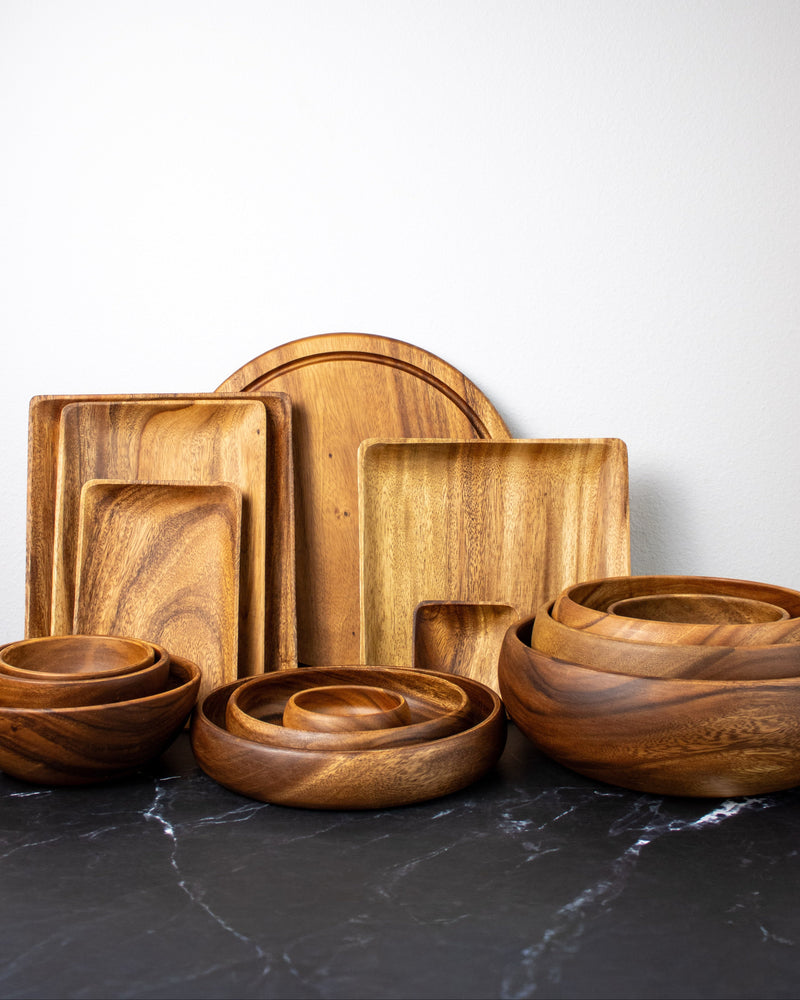
Acacia in the Philippine tableware market usually means Acacia mangium, a fast-growing tropical hardwood farmed on plantations in Mindanao, parts of the Visayas, and Bicol. Mature trees reach harvest size in 10 to 15 years. The heartwood runs from warm caramel to deep chocolate, with dramatic figure where the grain crosses knots or burls. It is dense enough to resist knife marks, oily enough to shrug off water, and available in sizes suitable for bowls, plates, and boards at prices ordinary households can afford. We cover the plantation model in more detail in our piece on acacia and Philippine forestry.
Quick verdict
Ipil is the harder, denser, more storied wood. Acacia is the sustainable, available, plantation-grown wood suited to modern tableware production. If both were equally available and equally legal to harvest, ipil would arguably be the premium tableware wood in the country. Neither of those conditions is true anymore, and pretending otherwise would be dishonest.
Hardness, weight, and daily wear
Both woods sit at the hard end of the hardwood spectrum. The gap between them is real, but it matters less than the marketing sometimes suggests.
Janka hardness numbers
The Janka test measures the pounds of force needed to embed a small steel ball halfway into a wood sample. Higher numbers mean better resistance to dents, scratches, and impact damage. Ipil typically tests around 1,900 to 2,000 lbf, with some sources reporting figures as high as 2,150 depending on origin and sample density. Acacia mangium, the species used for most Philippine tableware, tests around 1,700 to 1,750 lbf. For context, North American hard maple, the wood used for most commercial butcher blocks in the United States, sits at about 1,450 lbf. Both ipil and acacia are harder than maple.
The practical difference between 1,950 and 1,725 is smaller than the numbers suggest. Both woods take knife contact without permanent damage in ordinary use. Both handle stacking, dropped forks, and the daily grind of ladles scraping the bottom of a serving bowl. If you set an ipil bowl and an acacia bowl side by side after a year of the same household routine, a careful eye can tell them apart, but the difference is not dramatic. Above roughly 1,500 lbf, additional hardness gives diminishing returns for tableware. Both woods are well above that threshold.
Weight in the hand
Ipil is heavier. Noticeably heavier. A dinner plate in ipil feels substantial, almost stone-like, and a large ipil serving board is a two-handed object. Acacia is dense but not as dense, so a piece of the same size sits lighter on the table. This is a preference question. Some cooks and hosts love the heft of ipil for boodle-fight platters and heavy serving pieces. Others find the weight tiring during a long kainan when the platter is passed hand to hand around the table.
Long-term ageing
Both woods darken with use and with exposure to light. Ipil deepens toward a rich chestnut, sometimes almost purple-brown at year ten and beyond. Acacia moves from caramel toward chocolate, with the figure in the grain becoming more pronounced as surface oils settle. Both age gracefully with basic care. Both resist the surface checking that plagues softer tableware woods in Philippine humidity, though neither survives a dishwasher or a forgotten soak in the sink.

Everyday density, without the ipil problem
Our Gorosin bowls are turned from plantation-farmed acacia, dense enough for the daily ladle and honest about its sourcing.
Shop the Gorosin Bowl Set →Sustainability and legal status
This is the chapter that decides the argument, and it is the chapter most tableware guides skip. The question is not just whether ipil is beautiful. The question is whether it should be cut down today to make a bowl.
Ipil is a protected species
Intsia bijuga is listed as Vulnerable on the IUCN Red List, driven by decades of overharvesting across its natural range in Southeast Asia and the Pacific. In 2023, following the CITES Conference of the Parties held the year before, the species was added to CITES Appendix II. That listing regulates international trade and requires exporting countries to certify that any harvest does not threaten the species' survival. Within the Philippines, ipil sits under DENR's protection framework for premium native hardwoods, and harvest from natural forests has been effectively banned under Executive Order 23, which imposed a moratorium on logging in natural and residual forests in 2011. Any ipil in the current market is either from that limited, permit-restricted supply, from confiscated stock legally released for sale, or from old salvaged material such as demolition of ancestral houses.
Acacia is a plantation crop
Plantation Acacia mangium is a very different story. It is grown as a farmed crop on land often previously cleared for other agriculture, harvested on a 10 to 15 year rotation, and replanted. The species is not native to the Philippines but has been cultivated here for decades under industrial and community forestry programs. That does not make it flawless, monoculture plantations have their own environmental tradeoffs, but it does mean that using acacia for a bowl is not drawing from a shrinking wild population. For a deeper look at those tradeoffs, our guide on whether acacia is sustainable lays out the honest picture.
What this means for a buyer
Buying a new ipil bowl today, one made from fresh-cut lumber, participates in demand for a threatened species even when the specific piece was legally harvested. Buying acacia does not. This is not a small distinction. If you see a shop selling "ipil tableware" made from newly cut wood at high volume, that is a question worth asking directly: where did the timber come from, and can they document it? A reputable dealer of vintage or reclaimed ipil pieces will have that story ready. Anyone else deserves scrutiny.
Grain, color, and the heirloom question
The aesthetic case for ipil is real. So is the aesthetic case for acacia. They tell different stories at the table, and if you already own ipil pieces, understanding that story matters.
Ipil: deep, formal, heirloom
Ipil reads as formal. The deep reddish-brown, the tight straight grain, the sheer weight of the piece all signal an older, more ceremonial kind of table. In Filipino furniture, ipil was the wood of the aparador, the mesa de altar, the heavy narra-and-ipil dining set that anchored a formal comedor. When it appears at all as tableware, it tends to be as a single significant object, a large boodle platter passed down from a lola, a carved bilao, a serving board that has been in the family since the 1950s. Ipil pieces feel like heirlooms because they usually are heirlooms.
Acacia: warm, informal, everyday
Acacia reads as approachable. The tonal range within a single tree, the flash of figured grain around knots, the lighter weight in the hand all make acacia feel like a piece meant to be used, not preserved behind glass. It is the wood of the daily kainan, the merienda tray, the sunday-lunch serving bowl. Both aesthetics have their place, but they occupy different rooms, and it is fair to say most contemporary Filipino homes want the acacia aesthetic on the table more days of the year.
If you already own ipil
Vintage ipil pieces are worth keeping and worth using. Hand-wash them with mild soap and warm water, dry them immediately with a clean cloth, and oil them once every three to six months with food-safe mineral oil or a food-grade wood butter. They will outlive you, and probably your children. Think of them as inherited objects that happen to also hold food, not as items you need to match or replicate with new purchases. Our guide on how to tell real acacia from fake also covers the identification cues that separate ipil, acacia, and the various imitators sometimes labeled as "Philippine hardwood."

The everyday plate, honestly sourced
The Ina plate set is turned from plantation acacia and finished for the sinigang-and-rice rotation, not the display cabinet.
Shop the Ina Plate Set →Which wood belongs on your table
The comparison ends with a practical recommendation, not a ranking. Both woods are excellent. Only one of them is available to buy new without a difficult footnote.
For new tableware, acacia
If you are shopping for a new set of bowls, a set of plates, a serving board, or a boodle-fight platter, plantation acacia is the responsible and practical choice. It is hard enough for daily use, beautiful enough to anchor a Filipino table, and available in a full range of forms without drawing from a threatened species. The sustainability story is honest, the price is accessible, and the piece will last decades with basic care. For pieces meant to survive years of knife contact, our guide to the best wood for cutting boards in the Philippines also lands on acacia as the leading domestic choice.
For heirloom pieces, ipil earned its place
If a lola or a tita hands you an ipil bowl, an ipil board, or an ipil platter, use it. Care for it. Pass it on. That piece was cut in a different regulatory era, from a forest that could still absorb the harvest, and its continued daily use is the best possible tribute to the tree it came from. Retiring a working heirloom to a display cabinet does not restore the tree. Using it well does honor the wood.
What to avoid
Avoid buying new-production ipil tableware from unnamed sources at prices that seem too accessible. Genuine, legally sourced ipil today is either salvaged, reclaimed, or drawn from very limited permit-controlled stock, and the prices reflect that. Anything else is either mislabeled, illegally sourced, or both. The same instinct applies to any "premium native hardwood" tableware sold in bulk at low prices. If the story does not add up, the wood usually does not either.

Built for the pamilya table
The Pamilya board set handles the boodle spread, the ulam prep, and the everyday chopping without borrowing from a threatened forest.
Shop the Pamilya Board Set →Frequently Asked Questions
Is ipil wood banned in the Philippines?
Ipil is not outright banned as a material, but harvest of natural-grown ipil is heavily restricted under DENR regulations and the 2011 log ban on natural and residual forests. It is also protected internationally under CITES Appendix II as of 2023. Any legitimate ipil in the market today is salvaged, reclaimed, or drawn from limited permitted stock, and it should come with clear provenance.
Is ipil harder than acacia?
Yes, ipil tests around 1,900 to 2,000 lbf on the Janka scale, versus acacia mangium at 1,700 to 1,750 lbf. Both woods are well above the durability threshold needed for tableware, so the real-world difference in daily use is smaller than the numbers suggest. Above about 1,500 lbf, added hardness gives diminishing returns for bowls and plates.
Can I still use my lola's old ipil bowl?
Absolutely, and you should. Vintage ipil pieces are food-safe with normal hand-washing and periodic oiling. Using them honors both the wood and the person who passed them down. The environmental cost of that tree has already been paid, and keeping the piece in daily circulation is far better than replacing it with new production.
Why is plantation acacia considered more sustainable than ipil?
Plantation acacia is farmed on a 10 to 15 year rotation and replanted, so harvest does not deplete wild populations. Ipil grows slowly over 60 to 100 years and is not commercially plantation-grown in the Philippines, so any harvest draws from a shrinking natural stock. The species classifications from IUCN and CITES reflect that gap.
How can I tell ipil from acacia at a glance?
Ipil is heavier for its size, darker with a redder tone, and shows a tighter, straighter grain. Acacia is lighter in weight, warmer caramel to chocolate in tone, and shows more dramatic figure around knots and burls. A test lift is often the fastest tell, ipil feels almost stone-dense in the hand while acacia feels substantial but not startling.