Noche Buena is the meal that closes Simbang Gabi and opens Christmas Day, the midnight table where the whole family (the ones who live down the road, the ones who flew in from Manila or Dubai or Toronto, the tita you have not seen in three years) all sit down together after Misa de Gallo and stay there until the sky lightens. The trick is not making the food impressive. Filipino families already know how to cook hamon and queso de bola. The trick is setting a table that holds its warmth from ten in the evening to two in the morning, then gracefully rolls into brunch, without anyone in the kitchen having to leave the sala. This guide walks you through it the way the lolas plan it: from December inventory to the aguinaldo-morning reset.
What Noche Buena Actually Is
Before you plan the table, it helps to be clear on what the meal is doing. Noche Buena is not a Christmas dinner in the Western sense of a plated feast served at seven. It is a midnight communion meal, historically tied to the completion of Simbang Gabi, the nine dawn masses that begin on December 16 and close on Christmas Eve. Families come home from the last mass around 10 or 11 PM, the kids get changed out of their formal clothes, and the food that has been sitting covered on the counter comes out slowly, one dish at a time, over the next few hours.
The Simbang Gabi through-line
You do not need to attend all nine dawn masses to host Noche Buena, but understanding the tradition changes how you pace the meal. Simbang Gabi is a nine-day arc of anticipation. On the ninth night, the anticipation lands. The table is a resolution, not a start. That is why the meal moves slowly. Guests are not hungry the way they would be at a birthday handaan. They are ready to sit and stay.
Diaspora Noche Buena is still Noche Buena
If your Noche Buena is happening in Toronto, San Francisco, Dubai, or Sydney, do not apologize for scaling. A four-person table with hamon, queso de bola, tsokolate, and one kakanin is a full Noche Buena. What makes it Noche Buena is the pacing and the pakikisalo, not the guest count. The same principles you would find in a broader treatment of Filipino dining traditions apply whether you are hosting twenty in Quezon City or five in a condo abroad.
What separates it from other Filipino feasts
- Time of day: Noche Buena begins near midnight and closes near dawn. Other Filipino feasts hit their peak at lunch.
- Menu backbone: hamon and queso de bola are non-negotiable in most households. A fiesta or handaan has no such anchor.
- Pacing: the meal opens quietly and builds. A birthday handaan opens loud and burns down.
- Follow-through: Noche Buena expects an aguinaldo brunch the next morning. The night is not the end of the hosting.
Planning the Table Before December
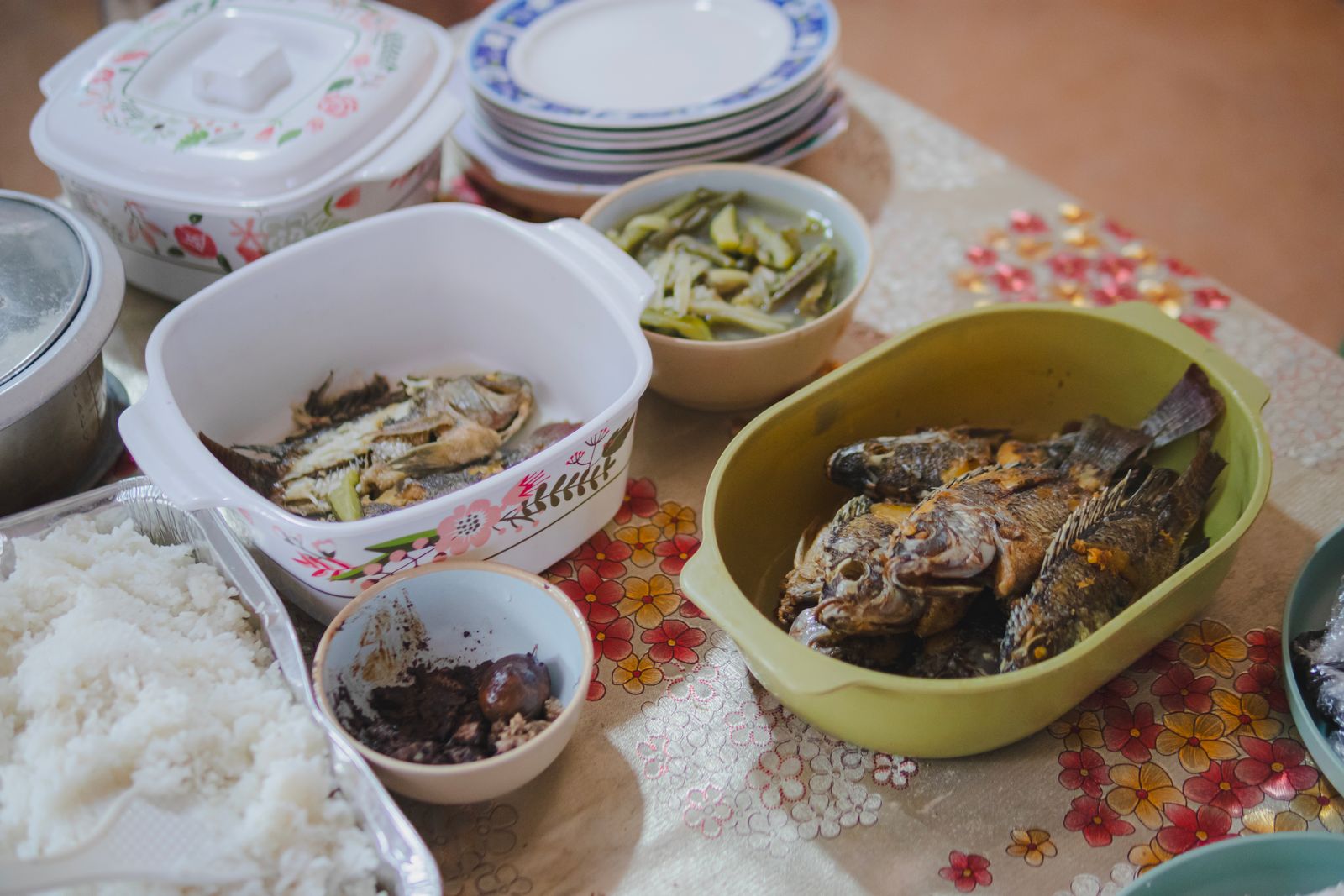
Most Noche Buena stress comes from planning the table in the last week of Advent, when supermarkets are already stripped and the good hamon is sold out. The lolas who make it look effortless are the ones who ran the inventory in November and made three lists: menu backbone, serveware, and timeline. Do those in September or October and December feels like a party you show up to, not a party you produce.
The three-list method
- Menu backbone. Hamon, queso de bola, pancit or spaghetti, one sabaw dish (usually chicken macaroni or a light sinigang), kakanin (bibingka, puto bumbong, suman), and tsokolate. This is the spine. Regional or family additions layer on top.
- Serveware inventory. Walk through the kitchen and count what you actually have. One long serving board for the hamon. One shallow bowl for the queso de bola and its accompaniments. A shared vessel for pancit. A sabaw bowl with a ladle that does not sink. Sawsawan dishes distributed along the table, not centralized.
- Timeline. Work backward from midnight. Ten hours before is prep, six hours before is cooking, two hours before is staging, thirty minutes before is table-setting.
Guest math without the panic
Count the confirmed guests, add two, and plan for that number. The extra two absorb the neighbor who drops by after midnight, the tito who brings his adult son, and the returning OFW who was supposed to sleep at the airport hotel but decided otherwise. Rice and hamon scale. Kakanin does not. Order the kakanin for the actual count plus one, not for the buffer.
The order-early list
- Whole hamon: reserve by early December. The good glazed ones sell out.
- Queso de bola: buy two if you host more than eight. One always disappears before midnight.
- Kakanin (bibingka, puto bumbong): pre-order from your neighborhood suki, do not gamble on Christmas Eve availability.
- Fresh tsokolate tablea: order from Batangas or Davao suppliers by early December if you want the good stuff.
- Serveware: if you are buying wooden pieces, order in October. Shipping windows tighten by mid-November.

The full-table set for Noche Buena hosting
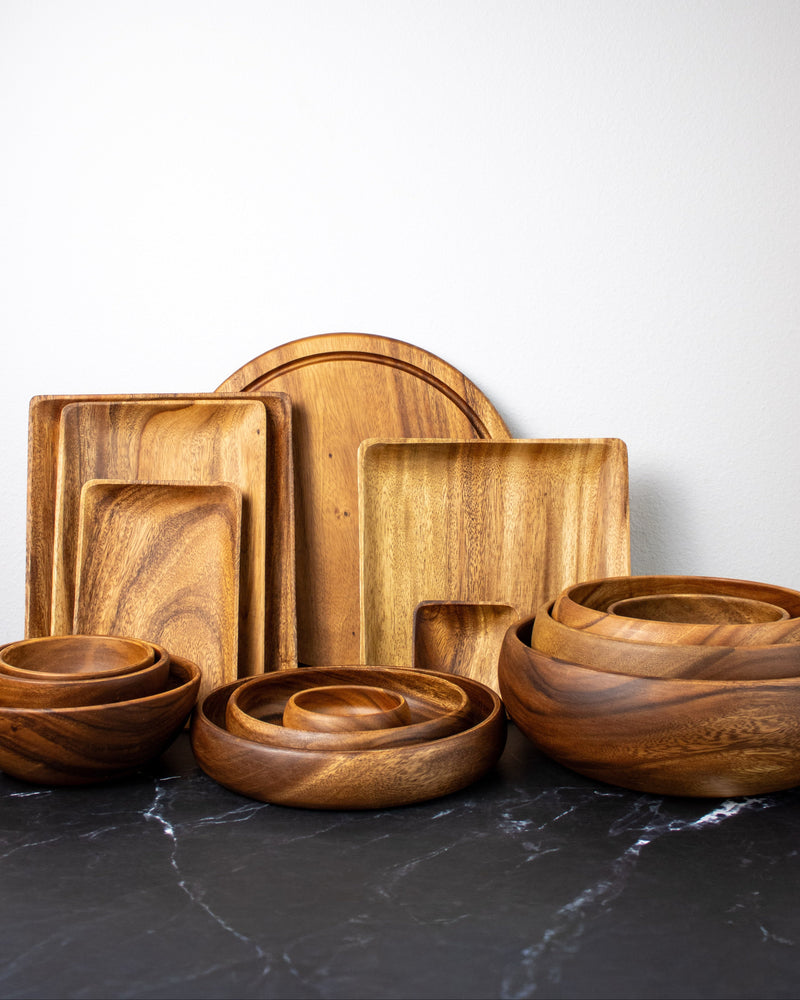
Built to carry a Noche Buena from the hamon reveal to the tsokolate at 1 AM, the Royal Hosting Set covers boards, bowls, and shared plates in one coordinated system.
Shop the Royal Hosting Set →The Anchor Pieces
Every Noche Buena table has three or four pieces that do the heavy lifting. Get those right and the rest of the table settles into place around them. Get them wrong and you spend the whole night moving dishes because nothing has a permanent home. The anchor pieces are less about aesthetics and more about mechanics: what holds heat, what holds the hamon steady while you carve, what keeps the sabaw from cooling too fast.
The hamon board
The hamon is the visual center of Noche Buena, and it deserves a proper board. A long wooden serving board, at least 45 to 55 centimeters, gives the carver room to work and keeps the glaze from sliding onto the tablecloth. Wood also insulates: the hamon stays closer to serving temperature than it would on ceramic, and the board absorbs the impact of the carving knife without dulling it. Browse the serving boards collection if you are shopping specifically for this anchor.
The queso de bola vessel
Queso de bola gets cut into wedges or shaved into slivers and sits on a shallow board or bowl next to crackers, apples, and grapes. It sweats at room temperature, so choose a wooden surface that will not pool moisture under the wax rind. A small wooden plate or a shallow acacia bowl works. Ceramic is fine but reads colder next to the hamon board.
The sabaw and sawsawan vessels
Chicken macaroni sopas or a light chicken sinigang is the sabaw dish that anchors most Noche Buena spreads. It wants a wide shallow communal bowl with a ladle, not deep individual soup bowls. The mistake most hosts make is treating this as a Western soup course. It is not. It is a ladling station. Sawsawan (usually a plain suka with sili for the hamon and a toyomansi for the pancit) goes into small dishes distributed along the length of the table, one for every two or three seats.
Why wood does specific work here
- Holds serving temperature longer than ceramic or glass, which matters when the meal stretches four hours.
- Absorbs the sound of knives, ladles, and plates in a house where some family members are already asleep.
- Does not fog or sweat under warm hamon or under a rind of queso de bola.
- Reads warm in overhead light, which is what a candlelit or dim-lit Noche Buena room actually looks like.
The Spread and Its Regional Notes
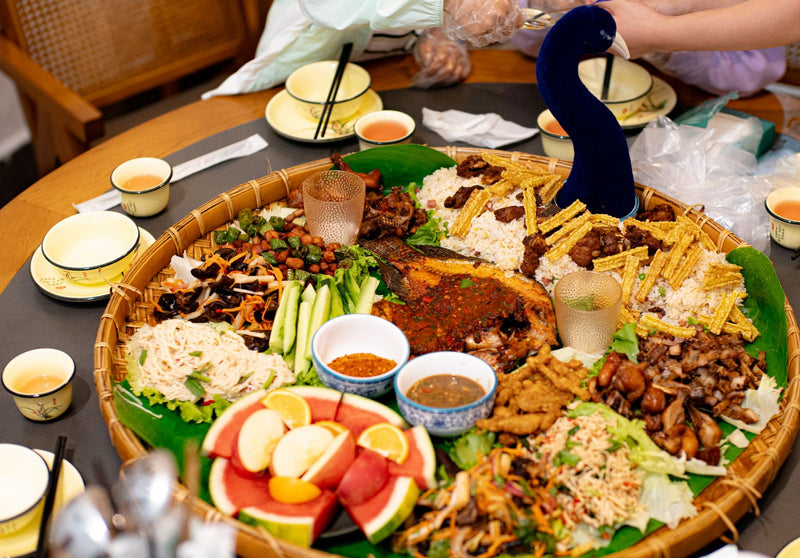
The Noche Buena spread is remarkably consistent across the Philippines and the diaspora, but the regional and family variations are where the table becomes yours. A Bicolano household will slide in laing or Bicol Express next to the hamon. A Cebuano family will have puto maya and sikwate instead of bibingka and tsokolate. An Ilocano lola will bring bagnet. None of this is decorative. These dishes are the personal signature on the tradition, and they belong on the table.
The classic backbone
- Hamon: glazed pineapple ham, sliced at the table for the theater of it.
- Queso de bola: the wax-rinded Edam wheel, sliced or shaved.
- Pancit or spaghetti: long noodles for long life, whether it is bihon, palabok, or the sweet-style Filipino spaghetti with hotdogs and banana ketchup.
- Sabaw dish: chicken macaroni sopas or a light sinigang, ladled over rice or eaten from bowls.
- Kakanin: bibingka and puto bumbong at minimum, plus whatever suman or biko your family favors.
- Tsokolate: thick tablea-based chocolate, served in small cups after midnight.
- Fruit basket: apples, oranges, grapes, and often lansones or chico if you can find them.
Regional layers worth honoring
- Bicol: laing, Bicol Express, or a small dish of pinangat next to the hamon.
- Cebu and the Visayas: puto maya with sikwate, lechon carvings, and sometimes budbud kabog.
- Ilocos: bagnet, longganisa, and a small plate of KBL (kamatis, bagoong, lasona).
- Pampanga: tocino, longganisa hamonado, and a small tray of sisig for the guests who want something sharp at 1 AM.
- Mindanao (Zamboanga and Davao): curacha or crab, sometimes satti, and Davao-grown tablea for the tsokolate.
Ordering the spread on the table
Do not put everything out at once. Noche Buena is a paced meal. Set the anchor pieces (hamon board, queso de bola, cold cuts, fruit basket) at 11:45 PM, so guests can graze while the last cars pull in from Simbang Gabi. Bring out the hot dishes (pancit, sabaw, rice) right at midnight, when the toasts are done. Kakanin comes out around 12:45 AM, after the first round of eating slows. Tsokolate closes the meal at 1 AM. If you set everything at 11 PM, the kakanin is soggy by midnight and the tsokolate is a wasted moment. Pacing is what turns a food table into a Noche Buena.

Individual plates that carry hamon, pancit, and sabaw together
Wide-rim acacia plates keep glaze, sauce, and noodles from bleeding into each other, which is exactly what a Noche Buena plate has to do at midnight.
Shop the Chenoweth Plate Set →Keeping Warmth from 10 PM to 2 AM
The single hardest thing about Noche Buena is that it happens at an hour when most people are usually asleep, in a house that is usually cold or air-conditioned, with food that has been sitting since dinner. Warmth is not just temperature. It is the sensory register of the room: lighting, sound, the way the food is held, the way the host moves. A Noche Buena that fights its own late-night hour will feel like a chore. A Noche Buena that leans into the late hour will feel like the truest part of the season.
Physical warmth: the temperature layer
- Rest the hamon under a tent of foil after glazing, then bring it to the table twenty minutes before carving so it settles to serving temperature.
- Keep pancit in a heavy covered vessel until plating, then transfer to a wide serving bowl. Long noodles cool fast when they are spread flat.
- Ladle sabaw from a warm pot, not a room-temperature bowl. If you must pre-plate, use a small warmer or move the bowl closer to the sabaw pot mid-meal.
- Bring tsokolate to the table hot, in a small pitcher, and pour it directly into cups at the table. Serving it in a bowl is how it becomes lukewarm.
Sensory warmth: light, sound, hosting rhythm
- Cut the overheads. One or two warm lamps and the tree lights are the whole light budget for Noche Buena. Overhead fluorescents flatten the table.
- Keep the music low. Christmas carols at conversation volume, not party volume. The room is not competing with the food.
- Do not clear plates while people are still eating. Noche Buena has one clearing moment, between the savory and the kakanin, at around 12:45 AM.
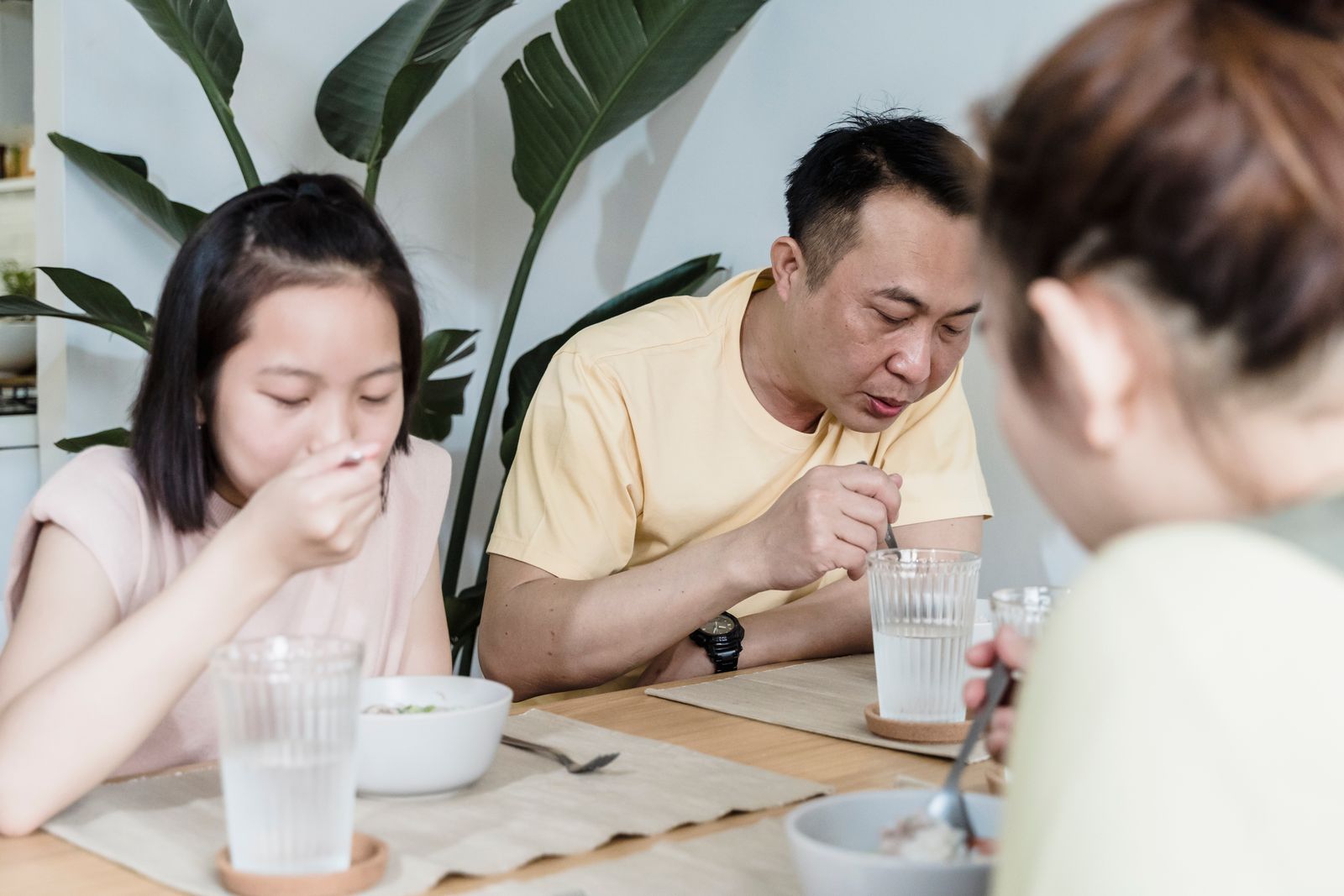
- Sit down with the guests. The pakikisalo principle we cover in our piece on salu-salo and pakikisalo is doubly important at midnight. The host who stays standing in the kitchen breaks the meal.
The 10 PM to 2 AM timeline in practice
- 10:00 to 11:00 PM: family returns from Simbang Gabi, changes, kids get settled. Coffee is on. Cold cuts and fruit are laid out.
- 11:00 to 11:45 PM: hosts stage the anchor board (hamon, queso, crackers). Guests graze and catch up.
- 11:45 PM to 12:15 AM: pancit, sabaw, and rice come out. Toasts happen. Everyone sits down.
- 12:15 to 12:45 AM: the heart of the meal. Second helpings. Conversation lengthens.
- 12:45 to 1:00 AM: savory plates cleared. Kakanin comes out. Kids either wake back up for bibingka or stay asleep on the sofa.
- 1:00 to 2:00 AM: tsokolate, second wave of kakanin, and the long slow decompression. Guests start drifting home or claiming beds.
The Morning-After Reset and the Aguinaldo Brunch
Noche Buena is not the end of the hosting. Christmas Day begins with the aguinaldo brunch, when the inaanaks and the pamangkins come by to receive their gifts and their share of the leftovers. The trick is to close Noche Buena in a way that sets up the brunch, rather than leaving a battlefield in the kitchen at 2 AM. This is where the lolas separate from the amateurs. They clean as they close.
The 2 AM close-down
- Wrap the hamon in foil and put it back in the fridge. Do not leave it uncovered on the counter overnight.
- Cover the queso de bola in wax paper or beeswax wrap. Do not use cling film, which pulls the rind.
- Portion leftover pancit into two containers: one for tomorrow's brunch, one for the pamangkins to take home.
- Wash the wooden serveware by hand in warm soapy water, dry with a towel, and set upright to finish air-drying. Never let acacia soak overnight.
- Set out the brunch plates and coffee cups before you go to sleep. Future-you will be grateful.
Aguinaldo brunch: what to serve
- Hamon silog: sliced leftover hamon, garlic rice, and a fried egg. The single most beloved use of Noche Buena leftovers.
- Reheated pancit with a squeeze of calamansi to wake it up.
- Fresh pandesal for slicing queso de bola sandwiches, one of the great Filipino breakfast combinations.
- Tsokolate or coffee, whichever the household defaults to. Batangas kapeng barako is traditional.
- Fresh fruit from the Noche Buena basket, sliced and re-plated.
Caring for the wood after the meal
Wooden serveware needs a small ritual after a long meal. Wash in warm soapy water immediately, do not soak, dry thoroughly, and let it air-dry standing on its edge if possible. Once a month during heavy hosting seasons like December, rub the pieces with a food-safe mineral oil or a beeswax and oil blend and let them absorb overnight. The pieces you use at Noche Buena will get another workout at the aguinaldo brunch, at New Year's Media Noche, and at the Three Kings meal on January 6. Treat them well and they will carry you through the whole Christmas arc.
Beyond Christmas: pieces that keep working
The anchor pieces for Noche Buena are the same anchor pieces that carry a January birthday handaan, a March baptism reception, and a July fiesta. If you are investing in wood serveware for December, choose pieces that will still be earning their place in July. Our guide to a handaan-style birthday feast uses the same board and bowl vocabulary. So does our fiesta feast platter setup. Buy for the year, not for the season.

The year-round hosting set that carries you past Christmas
The Family Hosting Set is sized for the meals that repeat all year: Noche Buena in December, handaan in March, fiesta in July, and salu-salo in between.
Shop the Family Hosting Set →Frequently Asked Questions
What time should Noche Buena start?
Traditionally it begins around 11 PM to align with the return from Misa de Gallo, with the main meal landing at midnight. If your household does not attend the mass, aim for a soft start at 10:30 PM with anchor pieces on the table by 11:45 PM and the hot dishes served at 12:00 AM.
Do I need both hamon and lechon?
No. Hamon is the true Noche Buena anchor. Lechon is a Christmas Day dish in many families, served at the aguinaldo brunch or the Christmas lunch. Serving both at midnight is common in larger households but not required, and can crowd the pacing of the meal.
How much hamon should I plan per guest?
Plan for about 150 to 200 grams of hamon per adult, closer to 250 grams if you expect leftovers to feed an aguinaldo brunch the next morning. A five-kilogram whole hamon comfortably feeds twelve to fifteen guests with brunch leftovers.
Can I do Noche Buena with only four or five people?
Yes. Scale the menu, not the ritual. A small Noche Buena still needs the pacing, the pakikisalo, the anchor pieces, and the tsokolate close. A four-person Noche Buena with hamon, queso de bola, a small pancit, and bibingka is a full Noche Buena. Guest count is not what defines the meal.
What is the best way to keep hamon warm on the table?
Rest the hamon under a foil tent after glazing, then bring it to the table on a wooden board about twenty minutes before you plan to carve. Wood holds serving temperature better than ceramic. Do not use a hot plate or warmer, which will dry out the glaze.
How is Noche Buena different from Media Noche?
Noche Buena is the Christmas Eve midnight meal on December 24. Media Noche is the New Year's Eve midnight meal on December 31. The two share the pacing and much of the serveware, but Media Noche leans into round shapes (round fruit, round kakanin, round coins) for prosperity, while Noche Buena centers on the hamon and queso de bola tradition.
Do I need to attend Simbang Gabi to host Noche Buena?
No. Simbang Gabi is the devotional practice that historically anchors Noche Buena, but the midnight meal is a family tradition that many households observe independently of the mass attendance. If your family does attend, plan the Noche Buena timing so the food is ready when the last car pulls in from the ninth mass.
How to Set a Noche Buena Table: The Nine-Step Method
- Confirm your guest count in early December, adding two to the confirmed number for late arrivals.
- Order the hamon, queso de bola, and kakanin by the first week of December.
- Inventory your wooden serveware and identify the anchor pieces: hamon board, queso vessel, sabaw bowl, sawsawan dishes.
- Build your timeline backward from midnight, with prep at ten hours out, cooking at six hours, staging at two hours.
- Set the table at 9:30 PM with plates, cutlery, glasses, and the fruit basket. Do not lay food yet.
- Bring out the anchor board at 11:45 PM (hamon, queso, cold cuts, crackers). Let guests graze.
- Serve the hot dishes at midnight (pancit, sabaw, rice). Toasts, then everyone sits.
- Clear savory and bring out kakanin at 12:45 AM. This is the reset moment.
- Serve tsokolate at 1:00 AM and let the meal wind down naturally toward 2 AM.