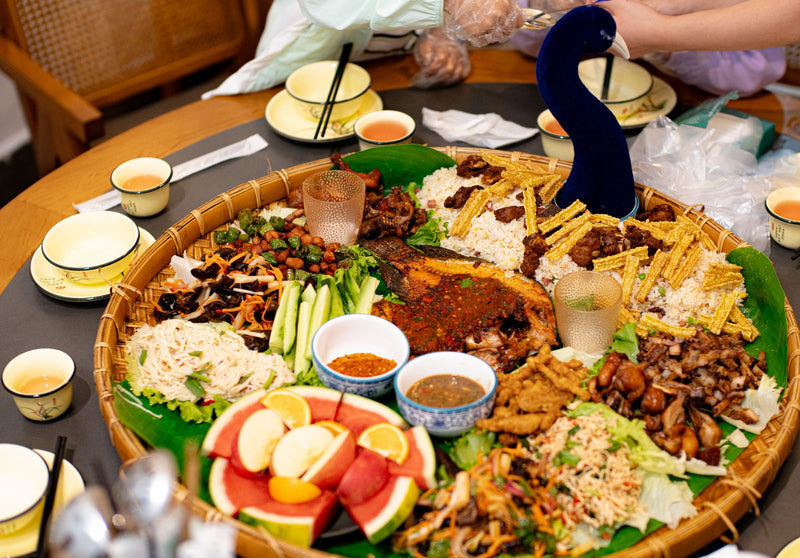
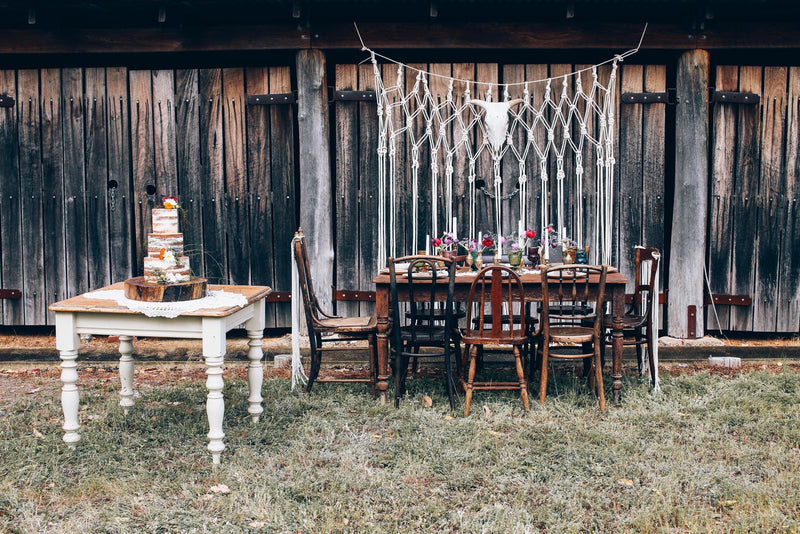
Every generation of Filipino couples inherits the same registry advice: pick a china pattern, add crystal, throw in a silver tray. The advice is decades old, and it was never really written for the way we host. A Filipino household does not live off eight-piece place settings that sit behind glass. It lives off the platter that comes out for Sunday lunch, the board that carries the lechon, the bowl that everyone reaches into during a birthday. A registry built around that reality outlives the wedding by forty years. One built around imported formalwear lasts until the first move.
This guide is for couples building a wedding registry between now and December, and for the ninongs, ninangs, and principal sponsors trying to give something with more weight than an envelope. It walks through what wooden tableware to ask for, how to structure a registry across price tiers so every kind of guest can participate, and how to make the pieces personal enough that they carry your names into the next generation.
Why Filipino Couples Are Rethinking the Wedding Registry
The traditional bridal registry was built for a household that entertains formally, with plated courses and separate cutlery for fish. Filipino hosting rarely runs that way. A kasalan is celebrated, then the couple goes home and immediately starts hosting Sunday lunches for both sets of parents. The dishes that get pulled out are shared, communal, and often eaten by hand. Anything that cannot survive that pace ends up in storage.
The problem with crystal and bone china in a kamayan household
Bone china chips at the rim the moment a serving spoon hits it wrong. Crystal fogs in Philippine humidity and cracks in dishwashers that most condominium kitchens rely on. Neither survives a boodle fight, where the whole point is laying banana leaves and rice across a long surface and letting a dozen people eat with their hands. Couples who register heavy in these materials often find their sets untouched by their fifth anniversary, then packed away entirely by their tenth. The registry did its job on the wedding day and stopped working the week after.
What "worth asking for" means when family will eat here for 40 years
A registry item is worth asking for when it will still be in rotation for your child's baptism, your parents' golden anniversary, and the Christmas after your youngest moves out. That is a forty-year horizon. Very few materials hold up to that timeline of family hosting. Solid acacia and other tropical hardwoods do, because they were built to work in exactly this climate, with exactly this kind of use. They do not shatter, they do not stain permanently, and a scratch adds character instead of ruining resale value.
The shift toward heirloom-grade over trend-grade
Couples in their late twenties and early thirties are choosing fewer, better pieces over larger sets of trend-driven items. Part of it is condo-living reality: cabinet space is limited and you cannot store twelve chargers you use twice a year. Part of it is aesthetic maturity, a willingness to sit with warm neutrals instead of the whiter, glossier finishes that were fashionable a decade ago. A registry that reflects this shift reads as intentional rather than acquisitive, and it gives guests a story to hand along with the gift.

The anchor piece worth asking a principal sponsor for
A full royal set covers the pieces you will pull out for every major family occasion, from your first hosted noche buena to your child's binyag.
Shop the Royal Hosting Set →How to Build a Registry That Reflects How You Actually Host
Before you touch a scan-and-add app, sit down together and describe the meals you will actually cook once the wedding is over. The registry follows the hosting, not the other way around. If your Sundays are lechon and rice for eight, register for what carries lechon and rice for eight. If you are the couple whose barkada shows up unannounced for pulutan, register for boards.
Start with your hosting rhythm (Sunday lunches, boodle fights, birthdays)
Most Filipino couples host in three modes. There is the weekly rhythm, which is usually a Sunday lunch or a Tuesday-night handaan for parents who happen to be in town. There is the occasion rhythm, which covers birthdays, baptisms, and small anniversaries. And there is the annual rhythm, which is noche buena, media noche, and the fiesta of whichever town your family is from. Your registry needs pieces for all three, but weighted toward the weekly. A serving bowl that comes out fifty times a year justifies its place. A charger that comes out twice does not.
Sizing for a two-person kitchen that will host 20
The trap in wedding registries is sizing for the couple you are today. You are two people who eat off two plates, but within eighteen months you will be hosting your extended family, your in-laws, and whichever cousin has just flown in from abroad. Register for the twenty-person version of your kitchen, not the two-person version. Two large serving bowls, one long kamayan board, four medium sharing bowls, and a set of chargers scale to a household that hosts. Add smaller everyday pieces after the wedding when you know what you actually reach for.
Balancing daily-use pieces with occasion pieces
A good rule of thumb: seventy percent of your registry should be pieces you will use monthly, thirty percent reserved for occasion pieces you will pull out four to six times a year. Couples who invert this ratio end up with a registry full of impressive photographs and very little to eat off during a normal Wednesday. If a piece is beautiful enough to earn a place but too precious to use casually, that is a sign it should be a smaller share of the list, not a bigger one.
The Core Wooden Tableware Pieces to Put on Your Registry
The following pieces do the heaviest lifting in a Filipino hosting household. If you register for these first and everything else second, you will find your registry earning its keep from week one. Solid acacia is the default recommendation because it is dense, dimensionally stable in humidity, and the grain patinas rather than fades.
Serving bowls (large family-style, medium sharing)
Every hosting kitchen needs at least two large serving bowls, one that can hold rice for eight and one that can hold a stew or a noodle dish. Medium bowls handle sides, ensaladas, and the second helping of ulam that always shows up. Wooden bowls have the added benefit of insulating heat gently, so the rice stays warm longer than it does in a ceramic bowl of the same size. Register in pairs. You will always find a use for two.
Boards (kamayan boards, cheese/pulutan boards)
A long kamayan board is the single most requested piece in a Filipino registry, and for good reason. It is the surface that carries the boodle fight, the lechon, the whole grilled fish. Choose one that is at least sixty centimeters long, ideally longer, and thick enough that it will not warp when hot food sits on it. A separate smaller board for pulutan, cheese, or the after-dinner ubod of Christmas ham gets pressed into service far more often than most couples expect.
Plates and chargers for principal-sponsor dinners
Chargers are the ceremonial layer. They sit under your dinner plate at formal meals, particularly at the principal-sponsor dinners you will host in your first year of marriage as thanks to your ninongs and ninangs. Wooden chargers frame ceramic dinnerware beautifully and forgive the wine spill that inevitably lands during the toast. Six is usually enough. Eight if your family runs large.
What NOT to register for (things that duplicate wedding gifts)
Skip the small individual bowls that guests will give you anyway. Skip full flatware sets, since a set of these will show up from your godparents whether you asked or not. Skip decorative accent pieces that do not have a hosting job. A registry is a curated list of things you specifically want, and the pieces that will not otherwise arrive. Anything a guest is likely to gift on instinct does not need to be on it.

The daily-use core of a Filipino registry
A hosting set built for Sunday lunches, weeknight ulam, and the birthdays that keep multiplying once you are married.
Shop the Family Hosting Set →Registry Etiquette for Filipino Weddings
Filipino wedding culture layers on top of Western registry conventions rather than replacing them, and the etiquette gets specific fast. Principal sponsors want to give something meaningful. Barkada groups want to pool. Older tita relatives want to hand you an envelope. A well-structured registry accommodates all three without making anyone feel awkward.
How to guide ninongs, ninangs, and principal sponsors toward heirloom pieces
Principal sponsors are the anchor gift-givers of a Filipino wedding, and most of them are actively looking for something that says "we sponsored this couple into marriage." A larger heirloom-grade piece, listed clearly at the top of the registry with a short note about why it matters, gives them a target. Do not be shy about labeling it. "Anchor gift for principal sponsors" or "for the couple's ninongs and ninangs" reads as respectful, not transactional. If you feel awkward about a similar life-event registry, the same principle applies to Filipino housewarming gifts, and couples find the framing carries over.
Price tiers so every guest finds something (barkada pool gifts vs solo)
A working registry has three tiers. The first tier is the solo-guest tier, pieces a single guest can buy without coordinating. The second is the barkada tier, larger sets that four to eight friends can pool for and still feel their share is meaningful. The third is the sponsor tier, the anchor pieces reserved for godparents and immediate family. Structure the registry visually so the tiers are obvious. Guests should be able to see at a glance where they fit.
When to add engraving requests to the registry
Engraving deepens the gift, but it also complicates timing. Add engraved pieces to the registry only if you are prepared to coordinate the details with the giver, since guests will often want to know what to have inscribed. A short note next to each engravable item, indicating who is coordinating and by what date, prevents last-minute confusion. Couples who want to explore this further find our full wedding engraving ideas guide covers wording, monogram conventions, and lead-time planning in depth.
Sharing the registry on invitations without seeming transactional
Direct registry mentions on the invitation itself still read as slightly gauche in Filipino wedding tradition, so most couples route the registry through the wedding website or through the maid of honor and best man. A gentle line on a details card, "For guests who prefer to gift, we have curated a small registry at our website," works well. It gives permission without pressuring anyone, and it leaves room for the envelope-culture guests to do what they have always done.
Making It Personal With Engraving and Custom Pieces
The difference between a registry gift and an heirloom is usually one line of engraving. Names, dates, or a short phrase turn a beautiful piece into something a future grandchild will identify as belonging to a specific marriage. This is the layer of the registry that pays off the most, because it is the layer that stops the piece from ever being sold, donated, or forgotten.
Wedding date, monograms, and family names
The three most common engravings are the wedding date, a shared monogram of both surnames, and one or both family names. Dates in "12 September 2026" format age better than "9/12/26," which looks dated within a decade. Monograms usually place the shared new surname larger in the center, with the two given names smaller on either side. Family names alone, tastefully placed on the underside of a serving bowl, feel more heirloom and less souvenir.
Bible verses, kundiman lines, or family sayings
A short line of scripture, a lyric from a kundiman that meant something to your relationship, or a family saying passed down from a grandmother turns a piece into a story. Keep it short. One line, five to eight words, engraved along a rim or on the underside. Longer inscriptions crowd the wood grain and lose their intimacy. If you are considering something similar for corporate or life-event gifts, our guide to corporate heritage gifting covers restraint and legibility in engraving choices.
Timeline: when to order engraved pieces before the wedding
Give engraving at least six weeks before the wedding, and eight weeks if the piece is going to a principal sponsor who wants to gift-wrap it in advance. Engraving is not the bottleneck. Finishing is. After the piece is engraved, the wood is re-oiled and cured, and that cure needs to complete before the piece is food-safe. Rushed pieces feel rushed. Give the finishing time it needs.

Personalize the pieces that will outlast the wedding
Names, dates, or a family saying turn a registry gift into an heirloom your grandchildren will recognize.
Shop the Custom Engraving →Caring for Registry Pieces So They Last to Your Anniversary
Solid wooden tableware is easy to care for, but the care is different from ceramic. Couples who treat their wooden pieces like china are the couples who complain, five years in, that their bowls "dried out." The pieces need small, consistent attention rather than intensive scrubbing. Set the routine early and it will run itself for decades.
First-month seasoning routine (mineral oil, hand wash)
In the first month after you begin using a new wooden piece, oil it once a week with food-safe mineral oil. Wipe it in, let it sit overnight, buff off the excess in the morning. After the first month, oiling drops to monthly for the rest of the first year, then quarterly forever after. Hand wash only, with warm water and a mild dish soap. Never soak, and never leave a piece sitting in standing water. The FDA and USDA both recognize mineral oil as food-safe for wooden kitchen surfaces, which is why it is the standard.
Storage in a Philippine climate (humidity, aircon)
Philippine humidity is friendlier to wood than dry, air-conditioned interiors are. Wood that lives in a heavily air-conditioned condominium dries faster than wood that lives in a naturally ventilated house, so adjust your oiling frequency accordingly. Store pieces flat or standing, never stacked with weight pressing on curved surfaces. If you have the option, keep them out of direct sunlight, which fades the grain over time.
How to repair, refinish, and pass down
Scratches and minor dings can be sanded out with fine-grit sandpaper, then re-oiled. Deeper damage, like a cracked handle, is often repairable by the maker. When you pass a piece down, pass it down with a short written note about where it came from, when it was engraved, and how it has been cared for. That note is what turns a wooden bowl into a family object, and it makes the receiving generation care for it the same way you have.
Frequently Asked Questions
Is wooden tableware safe to register for a Filipino wedding with humid climate concerns?
Yes. Solid acacia and similar tropical hardwoods are dimensionally stable in Philippine humidity because they grew in it. The care routine is straightforward, hand wash and periodic oiling, and the pieces patina rather than degrade. Humidity is friendlier to wood than dry aircon interiors.
How many serving pieces should a new Filipino couple actually register for?
A working starter registry for a hosting household is roughly two large serving bowls, four medium sharing bowls, one long kamayan board, one smaller pulutan board, six chargers, and one or two engraved anchor pieces. Add more only where your hosting pattern justifies it.
Can we add engraved pieces to a wedding registry, and how does the timing work?
Engraved pieces belong on the registry, but they require six to eight weeks of lead time between order and delivery. The engraving itself is quick. The re-oiling and curing that follow are what set the timeline. Coordinate details with whoever is gifting the piece.
What is the etiquette for suggesting a registry to Filipino guests who prefer giving cash?
Do not push. Envelope culture is a genuine and generous tradition in Filipino weddings, and forcing a registry on cash-inclined guests reads as ungracious. Offer the registry through the wedding website as an option, then let guests choose the form of gift they prefer.
Which wooden pieces will actually get used at boodle fights and family gatherings?
The long kamayan board is the workhorse. Large serving bowls come out at every Sunday lunch. Chargers show up for principal-sponsor dinners and formal occasions. Smaller decorative pieces get used less than couples expect. Weight the registry toward the workhorses.
How do we split registry items into price tiers so barkada and ninongs can both contribute?
Structure the registry in three tiers. Solo-gift items at the lower end, pool-gift items in the middle for barkada groups of four to eight, and anchor heirloom pieces at the top for principal sponsors and immediate family. Make the tiers visually obvious so every guest sees where they fit.