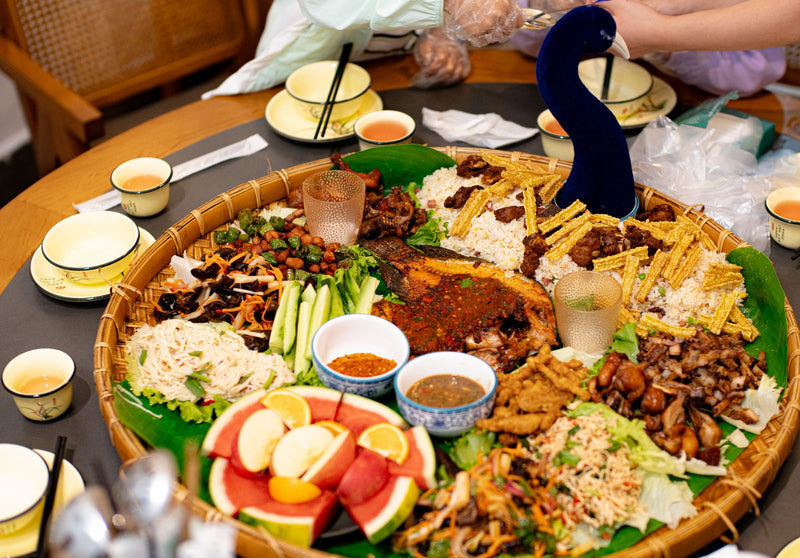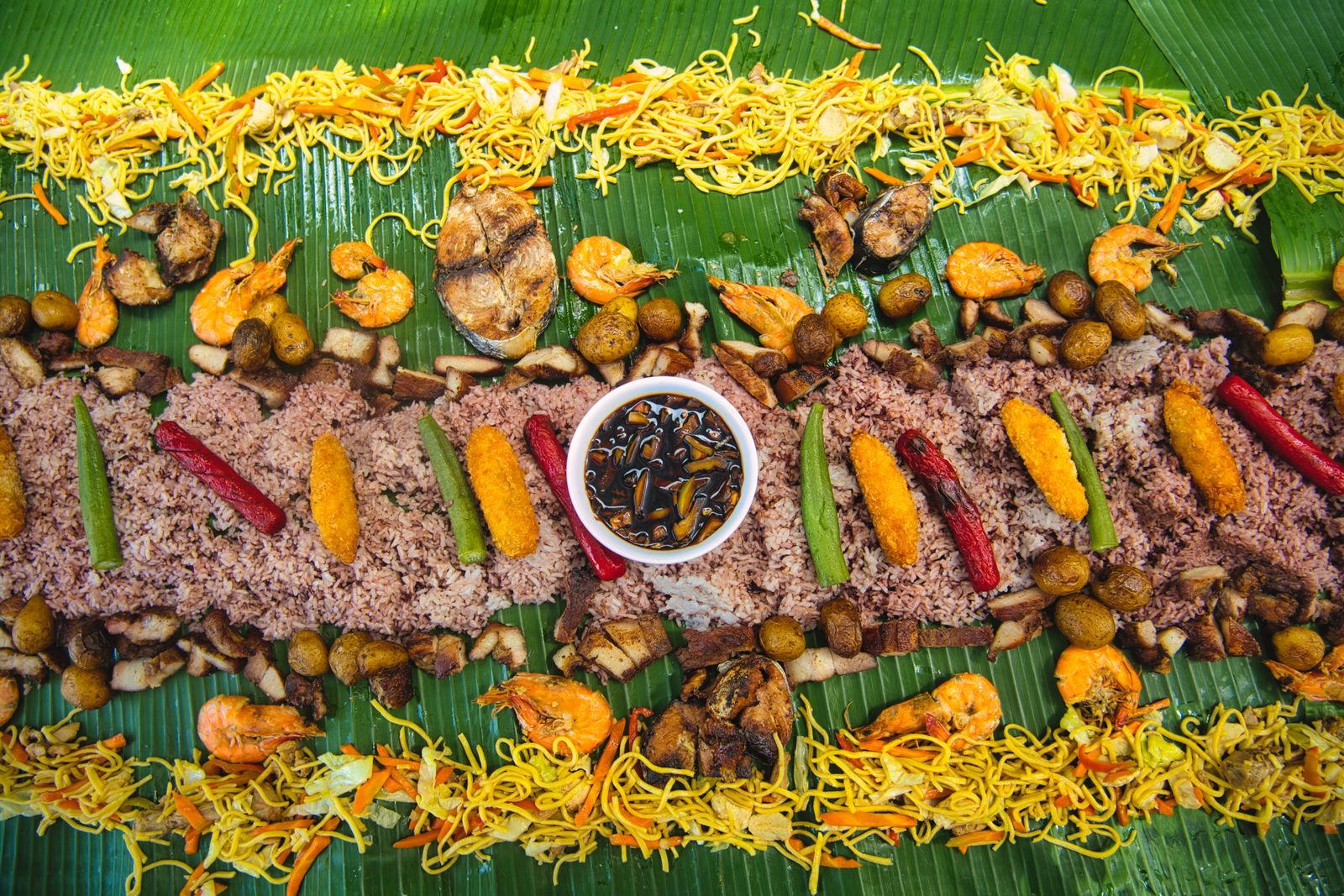
You have seen the photos: a long table draped in banana leaves, rice running down the middle like a spine, grilled fish and pork and vegetables laid out in bright rows, no plates, no forks, just hands and hunger and the whole table eating at once. Maybe you grew up with it. Maybe you tasted it once at a friend's house and have wanted to host your own ever since. Either way, you are here because you want to do it right at your own table.
A boodle fight can look like happy chaos, but it runs on quiet rules: how the leaves are laid, what goes where, when everyone begins. This guide walks you through all of it, from setup and menu to eating etiquette and cleanup, so your first kainan feels less like a performance and more like the gathering it has always been.
If you are new to the wider table it belongs to, start with our guide to Filipino dining traditions, then come back and host.

The first boodle fight set
Pamilya Board Set
Starting your boodle fight tradition? This set is sized for 4 to 6 guests, the right starting scale for first-time hosts.
Shop the Pamilya Board Set →What Is a Boodle Fight (and Why It's Different)
A boodle fight is a shared meal eaten with the hands, served straight onto a long table lined with banana leaves. There are no plates, no cutlery, and no assigned seats. Rice is spread down the center, ulam is arranged on top, and everyone eats from the same spread at the same time. It looks like abundance, and it is, but the deeper point is equality: at a boodle fight, no one is served more or first.
If you have only ever seen it in a video, the format can read as spectacle. In practice it is one of the most unguarded ways Filipinos gather, and it sits squarely within our wider filipino dining traditions, where eating together matters more than how neatly it is plated.
From Filipino Military Mess to Family Table
The boodle fight began in the Philippine Military Academy. Cadets ate from a common spread laid out on long tables, hands only, ranks set aside for the length of the meal. The idea was simple and deliberate: a general and a plebe reach into the same rice, so no one eats better than the person beside them. Shared hardship, shared food.
From the barracks it moved outward, to fiestas, to family reunions, to backyard gatherings where the table is really just boards pushed together. The military origin explains the discipline of the layout. The family table explains why it stuck. For the longer story of how the practice spread and what it has come to mean, see our piece on the history and meaning of the boodle fight.
How a Boodle Fight Differs from a Regular Dinner
A regular dinner divides. Each person gets a plate, a portion, a place. A boodle fight does the opposite. The differences are worth naming because they change how the meal feels:
- No individual plates. The table itself, lined with leaves, is the serving surface. Everyone eats from the common spread.
- Hands, not cutlery. This is kamayan. You scoop rice and ulam together, and the food tastes more direct for it.
- One shared layout. Rice down the middle, grilled fish, pork, shrimp, salted egg, tomatoes, and mango fanned around it, all reachable.
- No hierarchy of service. Nobody waits to be served. You start when the host says kainan na, and you start together.
The result is a meal that runs on closeness rather than ceremony. You are shoulder to shoulder, reaching across each other, talking with full hands. That friction is the point. It is hard to stay formal when you are sharing a single line of rice.
Why Wooden Tableware Belongs at a Boodle Fight
Banana leaves are the traditional base, and for good reason. But leaves are not always at hand, and a boodle fight needs sturdy ground for everything that surrounds the central spread: the suka and patis for dipping, the bowls of rice held in reserve, the platters of grilled ulam waiting to be added.
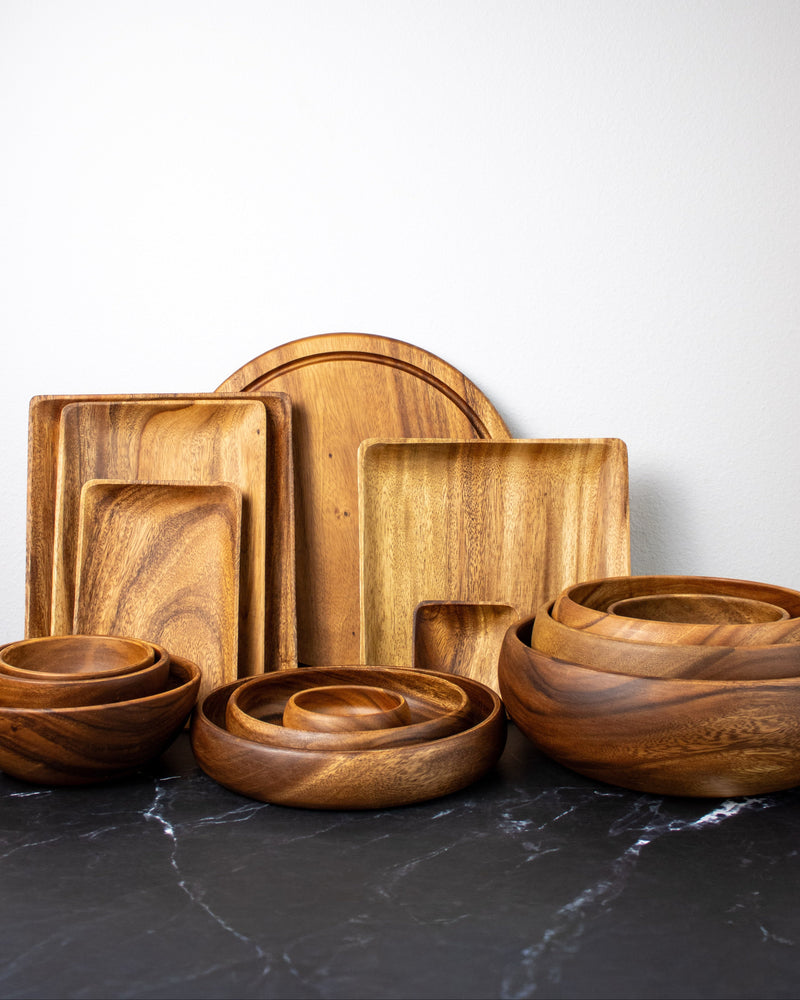
Wood does this work quietly. Acacia boards run long enough to carry a spread without crowding, and they take the heat of freshly grilled fish and the weight of a loaded platter without flinching. Bowls in wood hold sawsawan and steamed rice close to the eating line, where hands can reach them.
There is also a matter of feeling. A boodle fight is warm, tactile, and unpolished in the best sense. Plastic and bright ceramic fight that mood. Wood belongs to it, the same way the leaves do, grounding the table in something that looks like it grew rather than something that was manufactured. When the meal is about hands and sharing, the surfaces under the food should feel like they were made to be touched.
The Setup: Surface, Banana Leaves, Servingware
A boodle fight lives or dies on its foundation. Before a single grain of rice touches the leaf, you are making decisions about space, surface, and flow that will shape how everyone eats together for the next hour.
Get this part right and the meal almost runs itself. The food becomes a long, shared landscape down the center of the table, and every hand reaching in finds its place.
Choosing Your Surface
Any sturdy table works, but the shape matters more than the material. A long rectangular table lets guests line both sides and reach a continuous run of food. A round table works for smaller groups but breaks the line, so the spread becomes a circle instead of a river.
Measure your run before you commit. A good rule is roughly 18 inches of table length per person, with diners on both sides. For eight people, that means about six feet of usable surface down the middle, leaving the edges clear for hands and drinks.
- 4 to 6 guests: a standard six-foot table, diners on both long sides.
- 8 to 10 guests: push two tables together end to end for one unbroken line.
- Outdoors: a picnic table or plywood on sawhorses handles a crowd without fear of spills.
If you plan to build the spread on boards rather than directly on leaves, size them generously. Long serving boards laid end to end create a clean spine for the meal and make cleanup far simpler. Our acacia serving boards are cut for exactly this kind of shared, edge-to-edge service.
Banana Leaves: Selection, Cleaning, and Laying
Banana leaves are the traditional table for kamayan, and they are doing real work, not decoration. They keep food off the wood, add a faint grassy aroma, and make the whole table compostable at the end.
Choose leaves that are deep green, supple, and free of large tears. Frozen leaves from a Filipino or Southeast Asian grocery are reliable and already trimmed. Rinse each one under warm water and wipe both sides with a clean cloth to remove any waxy residue.
The key step most people skip is wilting. Pass each leaf quickly over an open flame or a hot dry pan for a few seconds per side. The leaf darkens slightly, turns glossy, and becomes pliable instead of brittle, so it lies flat without cracking.
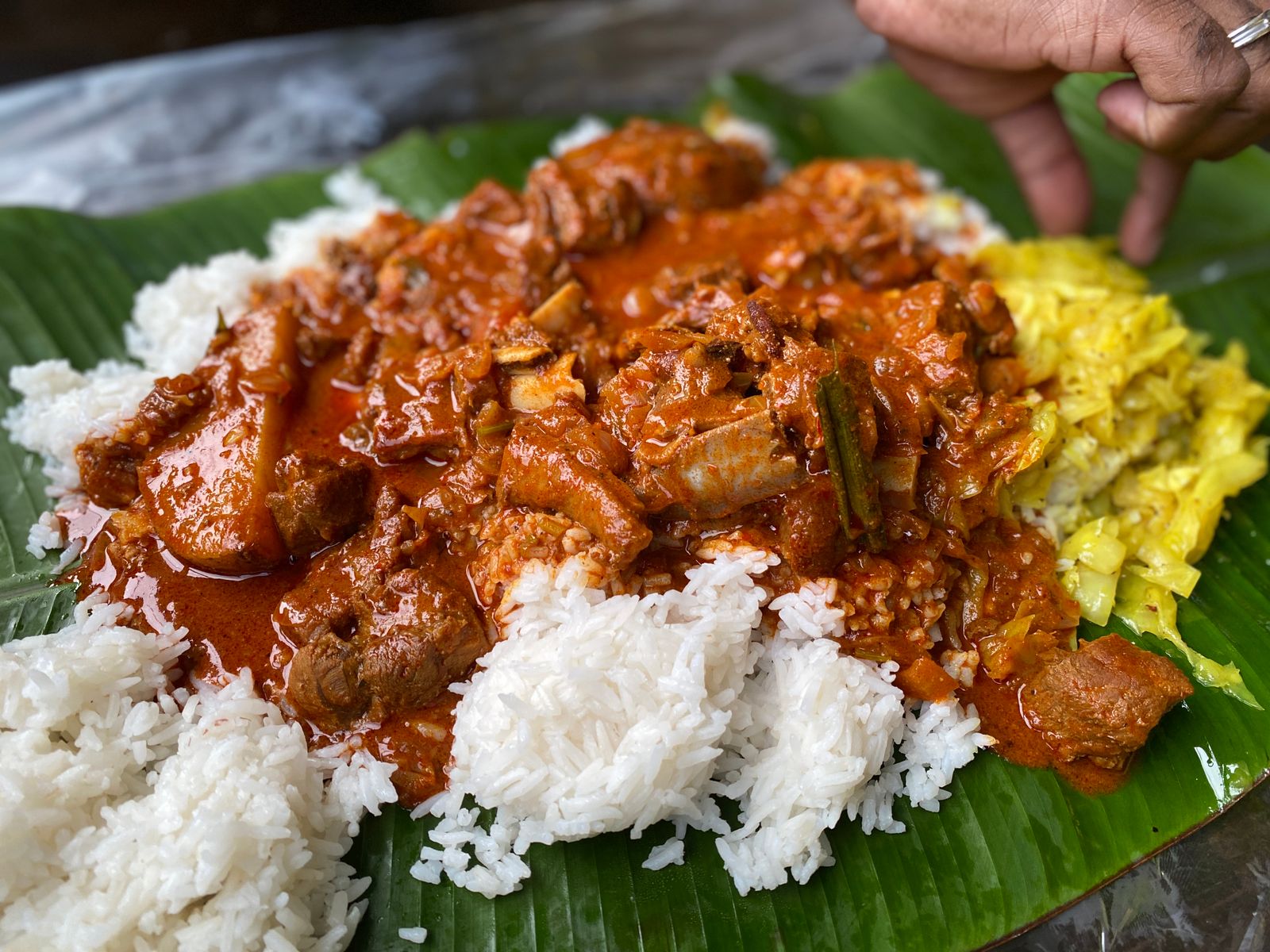
- Overlap leaves down the center of the table, shiny side up, like roof shingles.
- Run them lengthwise so the spread reads as one continuous surface.
- Tuck the edges under boards or bowls to keep them from curling up.
Arranging the Wooden Boards and Bowls
Once the leaves are down, the wood comes in. Boards carry the heavy work of grilled meats, fish, and the long bed of rice, while smaller bowls hold the things that should not run loose across the leaf.
Build the rice as a wide, flat ribbon down the spine of the table, then arrange everything else on top of and around it. Keep wet and dry separate: anything with sauce belongs in a bowl, not poured over the leaf where it pools and travels.
- Boards for grilled pork, chicken, whole fish, and the rice bed.
- Small acacia bowls for suka, patis, and soy with calamansi.
- One or two deeper bowls for ensaladang talong or atchara, kept off to the side.
Space the dipping bowls every two or three place settings so no one has to reach across a neighbor. The goal is a table where everything you want is within an arm's length, and the food itself becomes the centerpiece. For more on caring for the wood afterward, see our guide on keeping acacia in good shape.
The Menu: What to Serve at a Boodle Fight
A boodle fight is not a single dish. It is a landscape. The food gets spread the length of the table so that everyone reaches into the same spread, and that means the menu has to work as a whole rather than as a sequence of separate plates.
The good news is that the structure is simple once you see it. Build in layers, pick dishes that hold up at room temperature, and let the sauces do the work of tying everything together.
The 4-Layer Menu Framework (rice, protein, sides, sauces)
Think of the table in four layers, built from the bottom up. Rice goes down first as the bed that everything else sits on. Protein comes next, the anchor each handful is built around. Then the sides, which add color, acidity, and crunch. Sauces finish the table, scattered in small pools so no one has to reach far.
A rough rule for portions: figure on a generous cup of cooked rice per person, one to two protein pieces each, and two or three side dishes for the whole spread rather than per guest. Sauces are small but non-negotiable. Get the ratios close and the table feeds itself.
Traditional Dishes That Travel Well on a Boodle Table
The best boodle dishes are the ones that taste right warm or cool, hold their shape under reaching hands, and do not turn to soup. Grilled and fried things shine here. Saucy stews are harder, since they run into the rice and muddy the layers.
- Inihaw na liempo and grilled chicken, charred and cut into hand-sized pieces.
- Daing na bangus and fried galunggong, crisp enough to pull apart by hand.
- Lumpiang Shanghai, which stays crunchy and disappears fast.
- Grilled or steamed prawns, laid out whole for people to peel themselves.
- Lechon kawali, cut into cubes so the crackling stays loud.
For a deeper look at which dishes sit well directly on wood and which need a liner, see our guide to Filipino dishes for wooden tableware.
Vegetable and Side Combinations
Sides cut the richness of all that grilled and fried protein. You want acid, freshness, and a little salt to reset the palate between handfuls.
Ensaladang talong, smoky grilled eggplant tossed with tomato and onion, is a classic counterweight. Atchara, the pickled green papaya relish, brings a sharp sweetness that loves anything fried. A simple plate of sliced tomatoes, salted egg, and raw mango covers acid and salt in one move. Steamed okra and string beans round things out for anyone who wants to build a lighter handful.
Sauces and Dips: Suka, Patis, Toyomansi
Sauces are where a boodle table comes alive. They are personal, regional, and argued over, and they let each person season their own handful exactly how they like it.
- Suka: spiced vinegar, usually with crushed garlic, chili, and a little salt. The default partner for anything grilled or fried.
- Patis: fish sauce, often with a squeeze of calamansi, for those who want pure salt and depth.
- Toyomansi: soy sauce and calamansi, sometimes with sliced chili. Bright, salty, and good on almost everything.
Set these out in small bowls spaced along the table so a dip is always within reach. Refill them before they run low. A table without sauce is just food on a leaf, and the whole point is that everyone gets to make each handful their own.
The Etiquette: How to Eat (and How to Host)
A boodle fight looks like chaos to anyone watching for the first time. It isn't. There is a rhythm to it, a set of unspoken agreements about how people reach, share, and pace themselves around a shared spread. Nobody announces the rules. You learn them by sitting down and paying attention to the hands around you.
The good news for a host is that almost none of this needs explaining out loud. Set the table well, start things off, and the etiquette takes care of itself.
Why Boodle Fight Is Eaten With Hands (Kamayan)
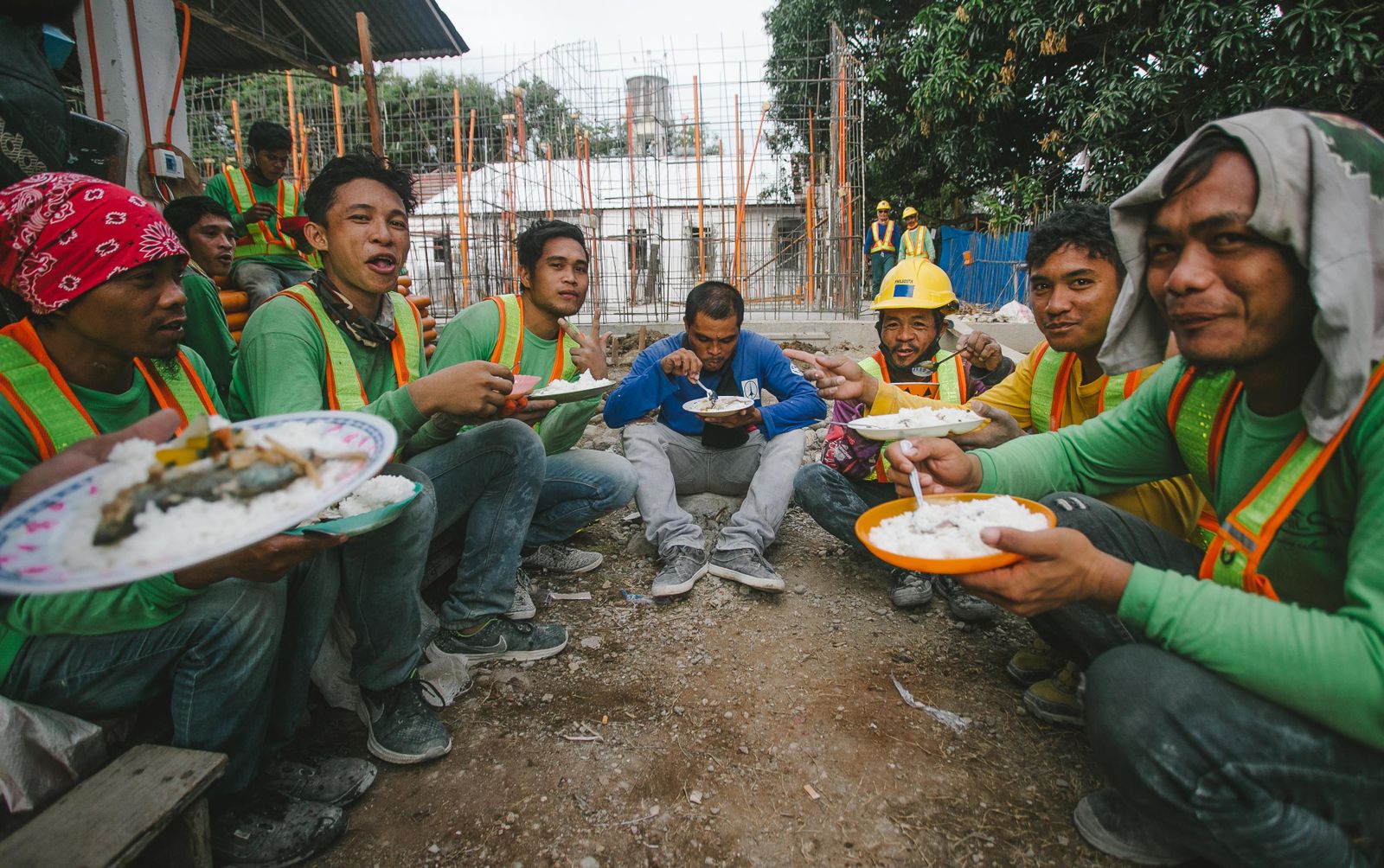
Kamayan means eating with your hands, and it is not a novelty or a stripped-down version of "proper" dining. For a great many Filipino households it is simply how food has always been eaten. The word comes from kamay, hand, and the practice carries the idea that nothing should sit between you and the meal.
There is a practical logic to it. Rice, grilled fish, a piece of pork, a smear of suka or patis all come together in one small mound shaped against the fingertips, then lifted with the thumb. You taste the proportions before they reach your mouth. A spoon flattens that. Hands let you build each bite the way you want it.
It is also social. When everyone eats the same way, off the same surface, the meal levels the table. No one is fussing with cutlery while someone else digs in. The shared leaf becomes shared territory.
The Host Starts the Rhythm
The meal does not begin when the food is laid down. It begins when the host says so. A simple "kainan na" is the signal, and until it lands, people wait, even with the spread steaming in front of them.
As host, your first job is to make the start feel easy. Lay the rice along the length of the board or leaf, arrange the proteins and vegetables in clear runs so everyone can see what is theirs to reach, and put the dipping bowls within arm's distance of more than one person. A long, even surface does most of the work here, which is why a generous serving board or two laid end to end matters more than any single dish.
Then reach in first, or invite the eldest at the table to. That one gesture tells everyone the waiting is over.
Eating Etiquette: Reaching, Sharing, Pacing
Once the meal is moving, the etiquette is mostly about awareness of the people beside you. A few quiet habits keep it generous rather than greedy:
- Reach for the food directly in front of you, not across the spread into someone else's stretch of the table.
- Take a bite's worth at a time. Hoarding a whole section of fish onto your patch reads as the opposite of the spirit of the thing.
- Pace with the table. If the spread is thinning and someone hasn't eaten much, slow down and leave the good bits within their reach.
- Keep one hand clean if you can. It makes passing a bowl or refilling water far less of an event.
None of this is policed. It is just how a shared meal stays comfortable for everyone leaning over it.
When to Offer Guests Utensils (and When Not To)
Not everyone at your table will have grown up eating with their hands, and that is fine. The kind thing is to make a spoon available without making a moment of it. Set a small stack of spoons quietly at one end before anyone sits, so a guest who wants one can take it without asking or feeling singled out.
What you do not want to do is hand utensils out as though kamayan needs an apology, or insist a hesitant guest "give it a try" when they would rather not. Let people meet the meal where they are. Most of the time, a guest who sees the whole table reaching in with their hands will set the spoon down within a few minutes and join in on their own.

For the everyday boodle fight
Pamilya Board (single)
Smaller family meals deserve the same setup. The single Pamilya Board is the daily-use sibling of the full set.
Shop the Pamilya Board (single) →Cleanup and Aftercare
The best part of a boodle fight is that the cleanup is honest work, not a chore. When the banana leaves carry most of the mess, the table underneath stays clean, and what is left is mostly leaves, hands, and a few serving pieces.
Handle it while the table is still warm with conversation. A pan that sits overnight with dried suka and rice is harder to deal with than one you rinse before the guests have found their slippers.
The 3-Step Cleanup Routine
Cleanup after a kamayan moves fastest when everyone takes a part. Assign the leaves to one person, the dishes to another, and the wiping down to a third. Here is the order that works.
- Bundle the leaves first. Roll the banana leaves inward from the edges so all the rice, bones, and sauce gather in the center. Lift the whole bundle off the table in one motion. This alone clears most of the mess before a single plate is touched.
- Stack and soak the serving pieces. Move bowls, platters, and serving boards to the sink. Anything ceramic or steel can soak. Wooden pieces get rinsed and set aside, never left submerged.
- Wipe the table and floor. A damp cloth handles the table. Sweep underneath, since kamayan is a hands-and-laughter affair and a few grains of rice always escape.
Start to finish, a table that fed eight people is usually clear in under fifteen minutes when the work is shared.
What to Do With Used Banana Leaves
Banana leaves are not trash in the way plastic wrap is. They break down, and in many Filipino households they go straight to the garden rather than the bin.
- Compost them. Scrape off the worst of the rice and sauce, tear the leaves into smaller pieces so they break down faster, and add them to your compost or garden bed. They return to the soil within weeks.
- Avoid the recycling bin. Food-soaked leaves do not belong with paper or plastic recycling. If you cannot compost, they go in the general waste or green waste bin, not recycling.
- Save clean offcuts. If any sections stayed clean and dry, they keep for a day or two in the fridge, useful for lining a steamer or wrapping suman.
The leaves did their job. They protected your table, carried the food, and now feed the garden. That full circle is part of why the practice has lasted.
Caring for Your Wooden Boards After a Boodle Fight
If you laid out long acacia serving boards alongside the leaves, give them a moment of attention before they go back on the shelf. Wood asks for a little care, and it pays you back with years of use.
Rinse each board under warm water with a soft sponge and a small amount of mild dish soap. Wipe away any sauce or oil, then dry the board upright so air reaches both sides. Never leave a wooden board soaking in the sink or sitting in a puddle, and keep it out of the dishwasher, where the heat and standing water will crack it over time.
Every few weeks, or whenever the surface starts to look dry and pale, rub in a thin coat of food-safe mineral oil and let it sit overnight. This keeps the grain sealed against moisture and stains. For the full routine, including how to handle deeper stains and lingering garlic smells, see our guide on how to care for acacia wood cutting boards.
Treated this way, a board that hosted one boodle fight will be ready for the next hundred.

The complete boodle fight table
Royal Hosting Set
When the guest list grows to 8 to 12, the Royal Hosting Set carries the full spread, board, bowls, and supporting pieces in one matched run.
Shop the Royal Hosting Set →Frequently Asked Questions
What is a boodle fight in the Philippines?
A boodle fight is a communal meal where rice and dishes are spread along a single long surface and everyone eats together, standing shoulder to shoulder. It started as a military practice meant to dissolve rank, since officers and cadets ate the same food from the same line with no plates and no order of seniority. Today it shows up at family gatherings, fiestas, and reunions as a way to feed a crowd without fuss.
Do you really eat a boodle fight with your hands?
Yes, eating with your hands is the point, not a novelty. The technique is kamayan: you gather a small mound of rice and ulam with your fingertips and use your thumb to push it neatly into your mouth. Most people find the rhythm within a few bites, and the shared, unhurried pace is part of why the meal feels different from eating off individual plates.
What dishes are traditionally served at a boodle fight?
The backbone is steamed rice, often a great deal of it, laid down the center with grilled and fried dishes arranged around it. Common additions include grilled fish or liempo, fried chicken, lumpia, salted egg with tomato, ensaladang talong, and sliced mango, with small dishes of suka and patis set within reach for dipping. The spread shifts with the region and the season, so no two tables look exactly alike.
How many people can a boodle fight serve?
A boodle fight scales to whatever space and surface you have, from a handful of people at one table to dozens lined up along several joined together. The food is portioned by length rather than by plate, so you simply extend the line of rice and dishes as more guests arrive. For a home gathering, a long board or a few serving boards placed end to end comfortably handles six to ten people.
Can you host a boodle fight without banana leaves?
You can, and many households do when banana leaves are hard to come by. Wooden boards and platters hold the rice and ulam just as well and give the food a steady surface that does not shift or tear as people reach across. If you want the look and faint aroma of leaves, a few sheets laid over the wood work, but they are a finishing touch rather than a requirement.
Is a boodle fight only for special occasions?
It carries the feeling of an occasion because it gathers people closely, but nothing about it demands a holiday. Plenty of families set one up on an ordinary weekend simply because it is an easy, generous way to feed everyone at once. The meal itself creates the sense of event, so the reason to host one can be as small as people being together.
What's the difference between a boodle fight and kamayan?
Kamayan is the act of eating with your hands, while a boodle fight is one particular setting where kamayan happens. Put simply, every boodle fight is eaten kamayan style, but not every kamayan meal is a boodle fight. You can eat kamayan alone with a single plate of rice and fish, whereas a boodle fight is always communal, spread along a shared line for a group.
How do you clean a wooden board after a boodle fight?
Scrape off the food, then wash the board by hand with warm water and a little mild soap, wiping along the grain rather than soaking it. Stand it on edge to air dry fully before storing, since trapped moisture is what warps and splits wood over time. Every so often, a thin coat of food-safe oil rubbed in and left overnight keeps an acacia board fed and water-resistant for years of use.