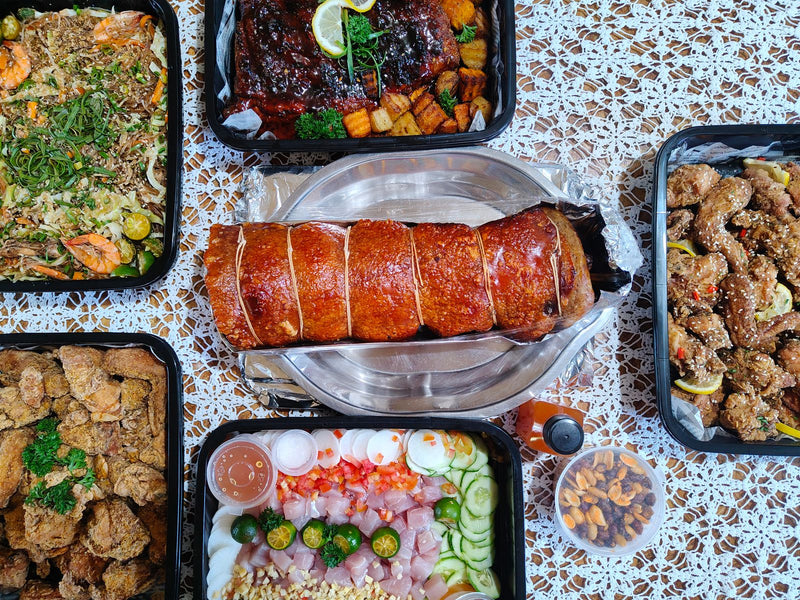
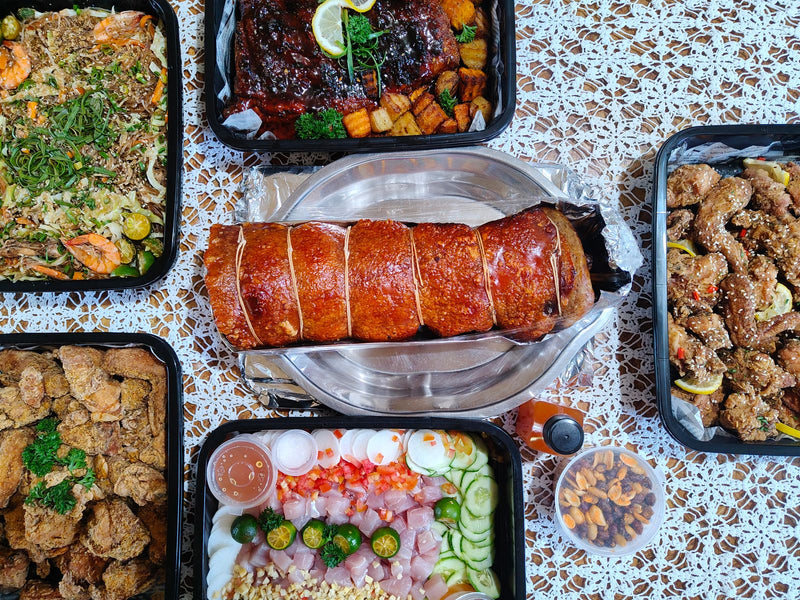
There is a reason Filipino food and wooden tableware feel right together before you can articulate why. Our cooking moves between the saucy and the bright, the charred and the wrapped, the everyday plate and the table-length spread for kainan with family. Wood gives all of that a place to live. It does not rattle under a spoon, it does not freeze a hot bowl of sinigang into something austere, and it carries the kind of color story (turmeric gold, soy-vinegar brown, tomato red, charred edges) that ceramics tend to flatten. The question is not whether wood suits the food. It is which piece suits which dish.
This guide walks through ten Filipino dishes and the wooden vessel each one belongs on. It is a pairing guide, not a rule book. The goal is to help you set a table that makes the food look like itself.
Why Filipino Food and Wood Were Made for Each Other
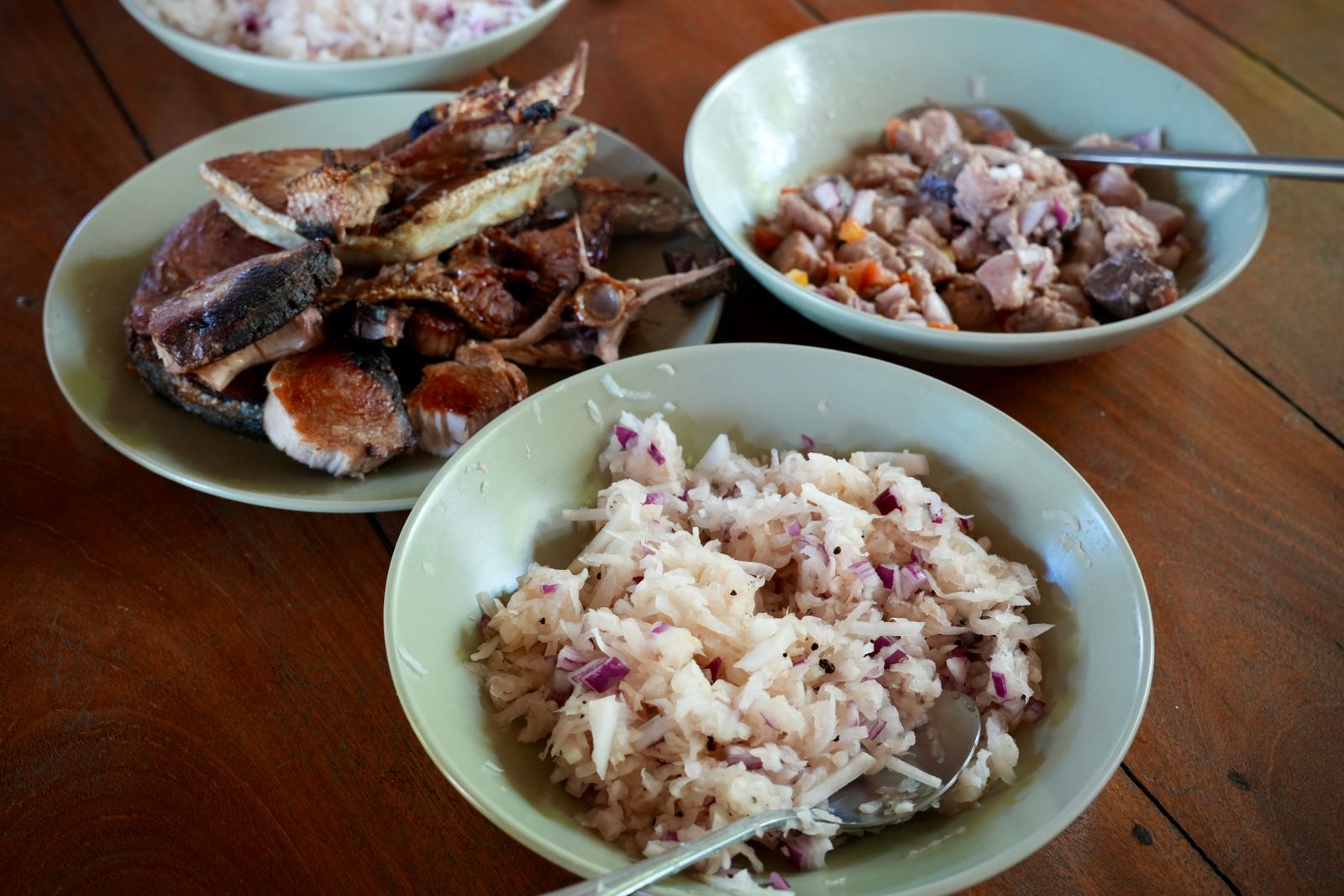
Filipino food was never built for fine bone china. It was built for banana leaves laid across a wooden table, for halved coconut shells that doubled as bowls, for bilao woven from bamboo, and for the heavy hardwood boards that families passed down. The vessels were never the point. They were quiet support for the cooking, and they happened to be made of whatever the household had hands on. Wood, in particular, was always there. It is the throughline that runs from a rural kainan on the floor to a Tagaytay weekend house to a Manila condo today. To understand the pairings in this guide, it helps to read more about the dining traditions that shape how Filipino food is served, because the vessel logic flows from the eating logic, not the other way around.
Dry, saucy, shared: the three questions that decide the vessel
Before you reach for a plate, ask three questions about the dish in front of you.
- Is it wet or dry? A dish with broth or thick sauce wants a bowl with depth. A grilled, fried, or wrapped dish wants a flat or shallow surface that lets edges crisp instead of sweating into a puddle.
- Is it hot or cool? Hot food (sinigang, lechon kawali) is fine on bare wood at typical serving temperatures, which sit well under wood's working tolerance. Cool dishes (kinilaw, halo-halo style sweets) can either go on bare wood briefly or sit in a separate inner vessel if the dish releases a lot of citrus or melt.
- Is it one person's plate or a shared spread? A solo serving belongs on an individual plate or bowl sized to it. A shared centerpiece (boodle-style rice, a whole inihaw, a lumpia tower) wants a board or platter wide enough for hands to reach without crowding.
Those three questions resolve most of the table for you. The pairings in this guide are just the answers, dish by dish.
When to line the wood (and when the wood is the point)
Banana leaf is the original Filipino non-stick liner, and it is still the right answer for a few specific situations. Line the wood when you are serving sticky sweets like suman or bibingka that would otherwise glue themselves to the surface, when you are doing a full boodle spread of rice and ulam directly on the board, or when you are serving anything that has aggressive coloring agents (atsuete, turmeric, deep tomato) and you want to keep the wood as it was. The leaf gives a faint, grassy scent under the food that is part of the eating experience, not a barrier to it.
Do not line the wood when the wood is the point. A kare-kare in a deep acacia bowl is meant to show the warm grain against the orange peanut sauce. A pansit on a serving plate is meant to look like a tangle of noodles on hardwood, not a slick leaf surface. Reach for the leaf when it serves the food, not as a default protective layer.

The everyday plate, for the rotation
A set of acacia dinner plates is the piece most people reach for nightly, from a quick adobo to a tapsilog breakfast. The Chenoweth handles the rotation.
Shop the Chenoweth plate set →Saucy Stews and Soups: Reach for a Bowl
The first three dishes are the ones that ruin a flat plate. They are also, not coincidentally, three of the most-cooked dishes in any Filipino household. Each wants depth, each wants room for rice on the side without contaminating the broth, and each looks better in wood than in any neutral white bowl you can buy.
Kare-kare
Kare-kare is a peanut-thickened oxtail and vegetable stew, deep orange from atsuete, slow-cooked until the tail falls off the bone. The sauce is the point. It coats the back of a spoon, it pools around the bagoong, and it is the wrong dish for a flat plate by a wide margin. A wooden bowl with a four to five centimeter wall holds the sauce, lets you spoon it over rice in one motion, and gives the orange color a warm background instead of a white-clinical one.
The pairing logic for this dish is worth thinking through in detail, which we did in a separate piece on why kare-kare belongs in acacia rather than ceramic. The short version: acacia's grain reads in the same warm family as the sauce, and the bowl shape lets the eggplant, sitaw, and pechay sit half-submerged rather than drowned. Serve the bagoong alata in a small separate dish so guests can spoon it in to taste. Do not pre-mix.
Sinigang
Sinigang is a sour broth, traditionally soured with tamarind, sometimes with guava, kamias, calamansi, or green mango depending on the region. It is hot, it is liquid, and it carries strong aroma. This is the dish people worry about with wood, usually because they ask, "will the wood take on the smell?" The honest answer is that a well-finished acacia bowl with a food-safe sealant will not absorb sinigang's aroma in a single serving the way a raw, unfinished piece of pine might. Wood is not as porous as people assume when it is properly cured and sealed for tableware use.
The case for wooden bowls with sinigang is partly visual and partly thermal. Wood does not conduct heat the way ceramic does, so the bowl does not become uncomfortable to hold within seconds of pouring. The walls stay touchable. We wrote more on the specific case of sinigang in wooden bowls and how to handle the broth, the aroma, and the wash. The short rule: deep bowl, never overfill, wash by hand within an hour.
Adobo
Adobo is the easiest case in this chapter and also the one people get wrong most often. Yes, adobo is saucy. No, you do not need a deep soup bowl for it. The sauce on a properly reduced adobo is more of a coating than a broth. A shallow wooden bowl, what some sets call a pasta bowl shape, is the right call. It holds the sauce, it shows the dark soy-vinegar lacquer against the wood, and it gives the rice room to sit underneath the chicken or pork without becoming soggy.
One adjustment by region: if you are cooking an adobo sa gata (adobo with coconut milk), or an adobong puti from the southern Tagalog tradition, you do want more depth. The gata version produces more sauce. The puti version (no soy, just vinegar) is so pale that the contrast with the wood is the entire visual story; a wider, shallower bowl makes that work. For the standard soy-vinegar adobo, anything with a two to three centimeter wall is plenty.
Grilled and Fried Mains: Straight onto a Board
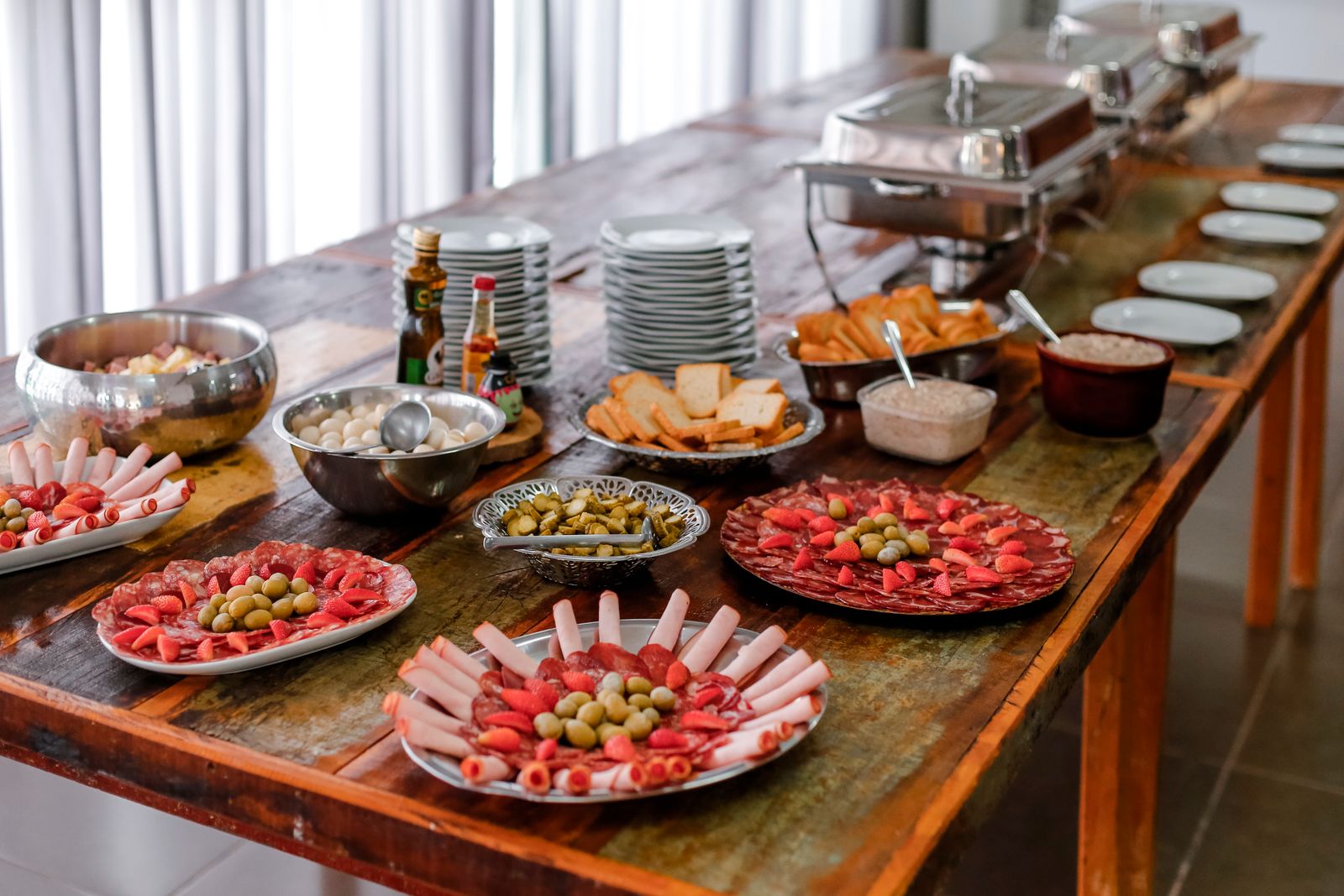
The second category is the easiest to set. These dishes were designed, by accident or otherwise, for boards. They are dry on the outside, they want air around them to keep the crisp intact, and they look the way they are supposed to look only when they are sitting on something with grain. Avoid lining these. Avoid stacking. Avoid plates with raised rims that trap steam under the food.
Inihaw na liempo
Inihaw na liempo is grilled pork belly, marinated in soy, calamansi, garlic, and often a bit of 7-Up or banana ketchup depending on the household. It is sliced into strips, served still hissing from the grill, and meant to be eaten with rice and a small bowl of sawsawan (soy with calamansi and chili, or suka with chopped onion). The board is the right vessel because it gives you a slicing surface and a serving surface in one piece. You set the whole strip down, slice it across the grain, and let the slices fan on the board so people can reach in.
The choice of board matters. Acacia is well-suited because the grain is dense enough to handle a knife edge without showing scarring, and the wood does not absorb the marinade in a way that would carry over to the next dish. Avoid a board with deep juice grooves for inihaw; the grooves trap fat and char and become a nightmare to wash. A flat board with a slight lip is the better tool. Have a small ceramic or wooden bowl of sawsawan beside the board, not on it, so the dipping sauce does not pool into the slicing surface.
Lechon kawali and crispy pata
Lechon kawali is deep-fried pork belly. Crispy pata is the whole front leg of a pig, boiled then deep-fried until the skin shatters. Both are theatrical dishes. Both are eaten with hands as much as with utensils. Both belong on a board, full stop. A serving plate, even a wide one, is the wrong instinct here. The dish is meant to land on the table with weight, to be a centerpiece people lean toward.
For lechon kawali, slice in the kitchen and arrange the pieces on the board with the skin side up so the gloss is the first thing people see. Set a bowl of vinegar with garlic and chili (the classic spiced suka) at the corner of the board. For crispy pata, serve whole on the largest board you own and let one person carve at the table. The crackle as someone breaks into the skin is part of the eating ritual; do not pre-portion it into invisibility.
People worry about hot oil and wood. At the temperature lechon kawali reaches on the plate (well under 90 degrees Celsius after a few seconds of rest), a properly sealed acacia board is in safe working range. The bigger risk is grease staining the wood. Wipe the board within an hour of serving, do not soak.
Lumpiang Shanghai
Lumpiang Shanghai is the small fried spring roll, pork and aromatics wrapped in lumpia wrapper, sliced into bite-sized pieces and deep-fried to a tight golden cylinder. It is finger food. It travels well, it lands on every fiesta table, and it has exactly one correct vessel: a board or shallow wooden plate with a small bowl of sweet chili sauce beside it.
The reason a board beats a plate for lumpia is structural. Stacked lumpia on a curved plate roll into each other and create that one disappointing piece on the bottom that has gone soft from steam contact. A flat board lets you fan them in a single layer, or two layers offset like a roof tile pattern, so the crisp survives. If you are scaling up for a party, two medium boards beat one giant plate every time. You can pass them around the table without anyone reaching across someone's face.
Shareable Centerpieces: Rice and Noodles
This chapter is where the boodle spread comes in, and it is where the wooden board does work that no other vessel can do. Rice and noodles, served for sharing, are the foundation of the Filipino feast format. They are not side dishes. They are the bed on which everything else sits.
Sinangag and the boodle-spread rice bed
Sinangag is garlic fried rice, the morning version of the boodle bed. For breakfast (tapsilog, tocilog, longsilog), sinangag belongs on a flat plate beside the egg and the cured meat. For a full kamayan, it becomes the floor of the spread. Lay a banana leaf across a long board, pile sinangag down the center, and arrange grilled, fried, and saucy components around it. This is the classic format for sharing, and the board is doing structural work: it gives the leaf a flat, stable surface, it sets the visual frame for the food, and it lets people eat with their hands without having to navigate dish rims.
If you have never set a boodle this way, the mechanics are worth reading on their own. We have a full walkthrough on how to host a boodle fight at home, from board size to dish order. The summary version: pick the longest board you have, line it with leaf, build rice down the middle, place wet dishes (saucy adobo, kare-kare portions) in small inner bowls within the spread rather than directly on the leaf, and let dry components (inihaw, lumpia, grilled fish) sit directly on the leaf around the rice.
Pancit (bihon, canton, palabok)
Pancit is the noodle category, and it is its own vessel question. Bihon (thin rice noodles) and canton (wheat noodles) are mostly dry by the time they reach the table; they belong on a wide, flat serving plate or board. Palabok, which is dressed with a thick orange shrimp-based sauce and topped with crushed chicharon and boiled egg, is wetter and wants a wide, shallow bowl or a serving plate with a slight wall.
Filipino birthdays are pancit birthdays. The dish carries the symbolism of long life, and it is meant to be served generously on a single platter that everyone serves themselves from. A wooden serving board does this better than a porcelain platter because the noodles do not slide. The grain catches them, holds the shape of the mound, and lets the calamansi wedges sit at the edge without rolling off. Garnish at the table, not in the kitchen; the lift of fresh calamansi squeezed over hot noodles is part of the dish, and it does not survive the walk from stove to table.
Bright and Sweet: Kinilaw and Kakanin
The last two dishes are the bookend dishes. Kinilaw opens a meal. Kakanin (the sweet rice cakes) closes it, or stands alone with coffee in the afternoon. Both have specific vessel requirements that are easy to get wrong.
Kinilaw
Kinilaw is raw fish or shellfish cured in vinegar (often coconut vinegar, suka tuba) and calamansi, with ginger, chili, and onion. It is bright, it is cool, and it is acidic enough to matter. The vessel question is twofold: the wood needs to handle the acid without staining (a well-finished acacia is fine for short serving windows), and the bowl needs to be small enough that the kinilaw stays cold for the whole meal.
The right shape is a small individual bowl or a shared shallow bowl with a generous wall. Avoid a flat plate; the curing liquid is part of the dish and you want it to pool, not run. If you are nervous about extended acid contact (a long afternoon party where the kinilaw will sit out), line the wooden bowl with a banana leaf cup or use a small ceramic inner bowl set into the wooden serving bowl. Most home meals do not need this. The kinilaw will be eaten faster than the wood can absorb anything.
Bibingka and suman
Bibingka is the rice-and-coconut cake baked in banana leaf, classically with salted egg and grated coconut on top. Suman is sticky rice steamed in palm or banana leaf, eaten with coconut and sugar or with mangoes. Both are wrapped foods, and both belong on a board lined with leaf, not on a plate.
The leaf is the critical detail. Sticky rice will fuse to bare wood within minutes; this is not a wood-quality issue, this is a sticky-rice physics issue. The leaf gives you a release surface and a serving surface that looks the way it is supposed to look. For bibingka, present the cake whole on a small board with the leaf still under it from the baking, then slice at the table. For suman, arrange the wrapped bundles on a board with one or two opened up so guests can see the rice inside; the unwrapped ones go on the leaf, the wrapped ones can rest on bare wood since the leaf is doing the work.
Coffee or tsokolate goes alongside. The wood-and-leaf-and-warm-rice-cake combination is one of the quieter Filipino afternoons there is, and it is worth setting it up properly even when it is just for you.

For a family of four or five
The Anak set scales the everyday plate down for a smaller table, with the same acacia grain. It fits a weeknight rotation and a small-spread Sunday lunch.
Shop the Anak plate set →Building a Wooden Set That Handles All Ten
If you have read this far, the natural question is: what do I actually need to own to serve these dishes well? The answer is shorter than people expect. Filipino food does not require a vast catalogue of specialized vessels. It requires three or four well-chosen pieces that overlap. Here is how to think about the buy order.
Plates vs bowls vs boards: what to own first
If you are starting from zero, buy in this order.
- One wide acacia bowl per person. Four bowls in a set of four. This single piece handles kare-kare, sinigang, adobo, palabok, kinilaw, and rice. It is the most-used vessel in any Filipino household and the one to buy first.
- One long serving board. This is your boodle board, your inihaw board, your lumpia platter, and your lechon kawali landing pad. Forty to sixty centimeters long, with a flat surface and minimal grooves. Lined with banana leaf when the food calls for it, bare when it does not.
- A set of acacia dinner plates. These are for individual servings of grilled, fried, or composed dishes (silog breakfasts, pancit portions, bibingka slices). A four-plate set covers a weeknight family meal.
- A few small bowls. For sawsawan, for bagoong, for chili sauce, for the toyo-mansi at every meal. These are easy to overlook and easy to under-own.
That is the foundation. Plates, bowls, boards, sawsawan dishes. Everything else (rice paddles, larger platters, individual sized serving bowls) is a nice-to-have that you add as your hosting habits grow.
Scaling from a weeknight plate to a full hosting spread
The household rotation and the hosting spread are two different setups, and most people only need to actively think about the second one. A weeknight is a plate of adobo and rice, a bowl of sinigang for the table, a small dish of toyo-mansi. That is four pieces total per person plus one shared bowl. You already own this if you have followed the buy order above.
A hosting spread (a salu-salo, a birthday, a Christmas Eve table) needs more vessels but not more types. You are still using plates, bowls, and boards; you just need them in greater quantity or larger sizes. The hosting math, for a table of eight to twelve, looks like: one long boodle board, two medium serving boards (one for grilled, one for fried), three or four shared serving bowls (one per saucy main), and individual plates and small bowls per guest. Layer this onto your weeknight set, and you have everything you need to set the table for any Filipino meal you cook.
The mistake people make is buying for the hosting spread first and then realizing they have nothing for Tuesday dinner. Build from the everyday outward. The hosting pieces are the additions, not the foundation.

When the spread gets serious
For a full hosting table (boodle board, serving bowls, plates, sawsawan dishes), the Royal Hosting set covers the lot in matched acacia.
Shop the Royal Hosting set →Frequently Asked Questions
Can you put saucy Filipino food directly on a wooden plate?
Saucy dishes belong in bowls, not on flat plates. A flat wooden plate will let kare-kare, sinigang, or palabok sauce run off the edge within seconds. Use a wooden bowl with at least a two to three centimeter wall for any dish with broth or thick sauce, and reserve flat plates for grilled, fried, or composed dishes that are dry on the outside.
What Filipino dishes work best for a kamayan or boodle fight?
The classic boodle lineup is grilled (inihaw na liempo, grilled fish), fried (lumpia, crispy chicken), saucy components in small inner bowls (adobo, sisig), and sinangag or steamed rice as the bed. Add a side of fresh vegetables (tomato, salted egg, ensaladang talong) and a small bowl of bagoong or sawsawan. Everything sits on banana leaf laid over a long board.
Do wooden bowls absorb the smell of sinigang or adobo?
A properly cured and sealed acacia bowl will not retain noticeable odor from a single meal. Wood becomes a problem only when it is unfinished, when it has cracked, or when it has been left soaking. Hand-wash bowls within an hour of use with warm water and mild soap, dry immediately, and they will not carry sinigang scent into your next breakfast.
Which is better for Filipino food, wooden plates or bowls?
Bowls, if you can only own one. Filipino cuisine is heavily weighted toward saucy and brothy dishes, and a wide wooden bowl handles those plus rice servings, plus dry dishes that sit fine in a bowl shape. A flat plate is a great second piece but it does not cover sinigang, kare-kare, or palabok the way a bowl does.
Is acacia wood safe for hot and oily dishes like lechon kawali?
Yes, at the temperatures food actually reaches on the plate. Acacia's working tolerance comfortably handles serving heat, which is well below the temperatures used in cooking. The real concern with oily dishes is staining, not safety. Wipe oil off the board within an hour and do not soak, and the wood will hold up to lechon kawali, crispy pata, and fried lumpia without issue.
How do you keep wooden tableware from staining with turmeric or annatto?
Turmeric and atsuete are aggressive natural dyes and they can leave a faint yellow or orange tint on lighter wood. The two preventive moves are: line the wood with banana leaf when serving dishes heavy in these ingredients, or accept the patina as part of the wood's life. If a stain does appear, a paste of baking soda and water gently scrubbed across the grain, then dried thoroughly, lifts most of it. Re-oil the wood with food-safe mineral oil afterward.