

Walk into any Filipino home during mealtime, and you'll hear the same warm invitation: "Kain na!" (Come, eat!). It doesn't matter if you're family, friend, or a stranger who just happened to stop by. There's always room at the table, and there's always enough food to share.
This isn't just politeness. It's malasakit, the Filipino value of genuine care and concern that permeates every aspect of Filipino culture, but nowhere more visibly than at the dining table. To understand Filipino hospitality is to understand how Filipinos eat, serve, and celebrate together.
The Cultural Foundation: Why Food Matters So Much
Kapwa: Shared Identity
At the heart of Filipino dining culture is the concept of kapwa, the recognition of shared identity between self and others. When Filipinos invite you to eat, they're not just offering food; they're recognizing you as part of their shared humanity, their community, their kapwa.
This philosophy transforms meals from simple nutrition into acts of connection and belonging.
Pakikisama: Harmonious Relationships
Pakikisama is the Filipino value of getting along and maintaining smooth interpersonal relationships. The dining table is where this value comes alive, where differences are set aside, where conversation flows, and where the simple act of sharing food creates and reinforces bonds.
Refusing food in Filipino culture is almost unthinkable, not because of the food itself, but because it can feel like refusing the relationship being offered.
The Filipino Table: More is Always More
Family-Style Serving: Everything Shares the Stage
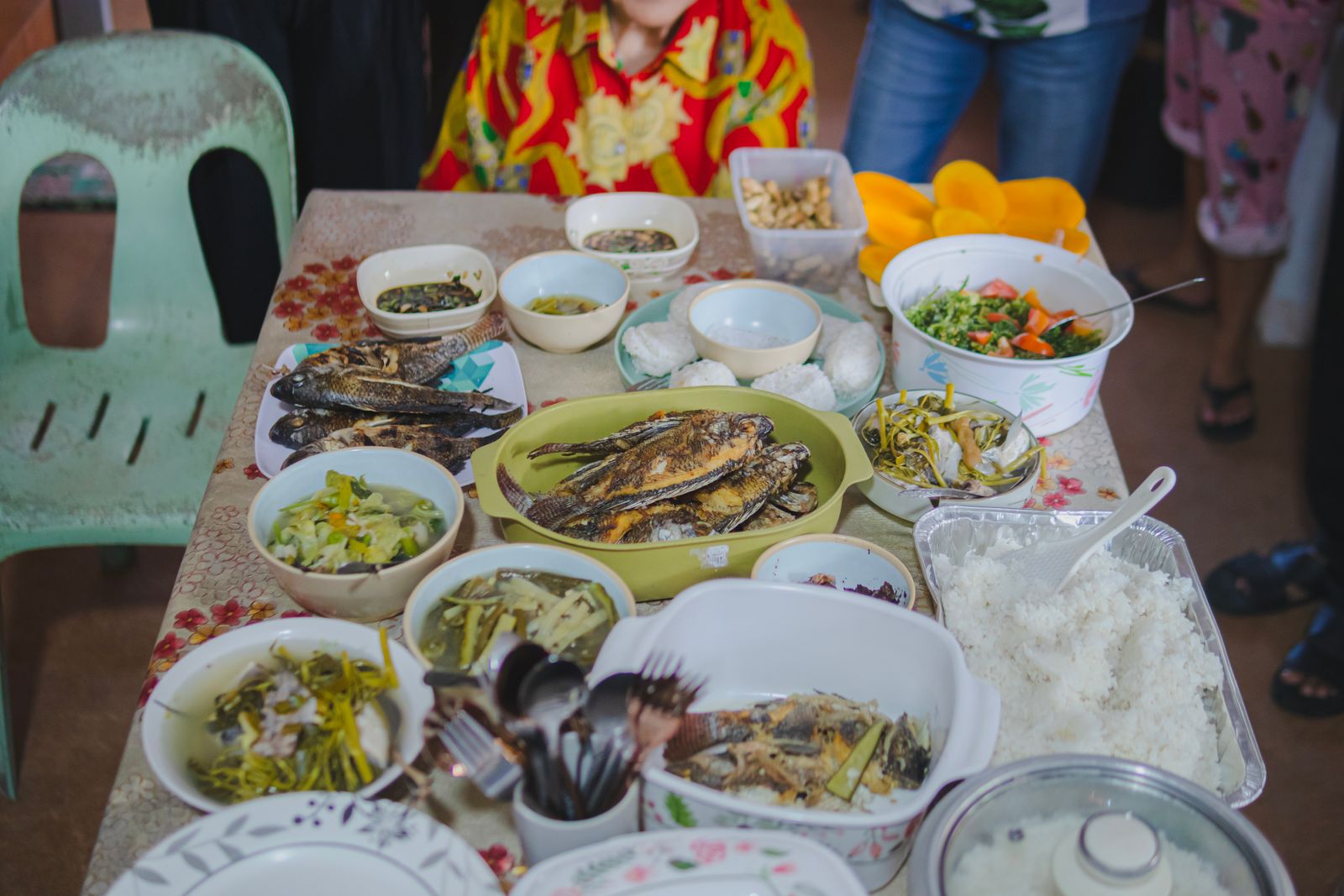
Filipino meals are served family-style, with all dishes presented simultaneously at the table. Unlike Western courses that arrive sequentially, Filipino dining is democratic: soup, vegetables, protein, rice, and condiments all appear together, inviting diners to compose their own experience.
This style of service reflects Filipino values:
- Abundance: There's always more than enough
- Choice: Everyone can take what they prefer
- Sharing: Dishes circulate, creating natural interaction
- Equality: All foods are equally accessible
Rice: The Essential Foundation
Rice isn't just a side dish in Filipino cuisine. It's the foundation, the constant, the measure by which other dishes are judged. The question isn't "what's for dinner?" but rather "what are we having with rice?"
Kanin (steamed white rice) provides the neutral backdrop that allows the bold flavors of Filipino dishes to shine. It's served in generous portions, often in a large bowl at the table's center, reinforcing the communal nature of the meal.
Kamayan: Eating with Your Hands
The Traditional Practice
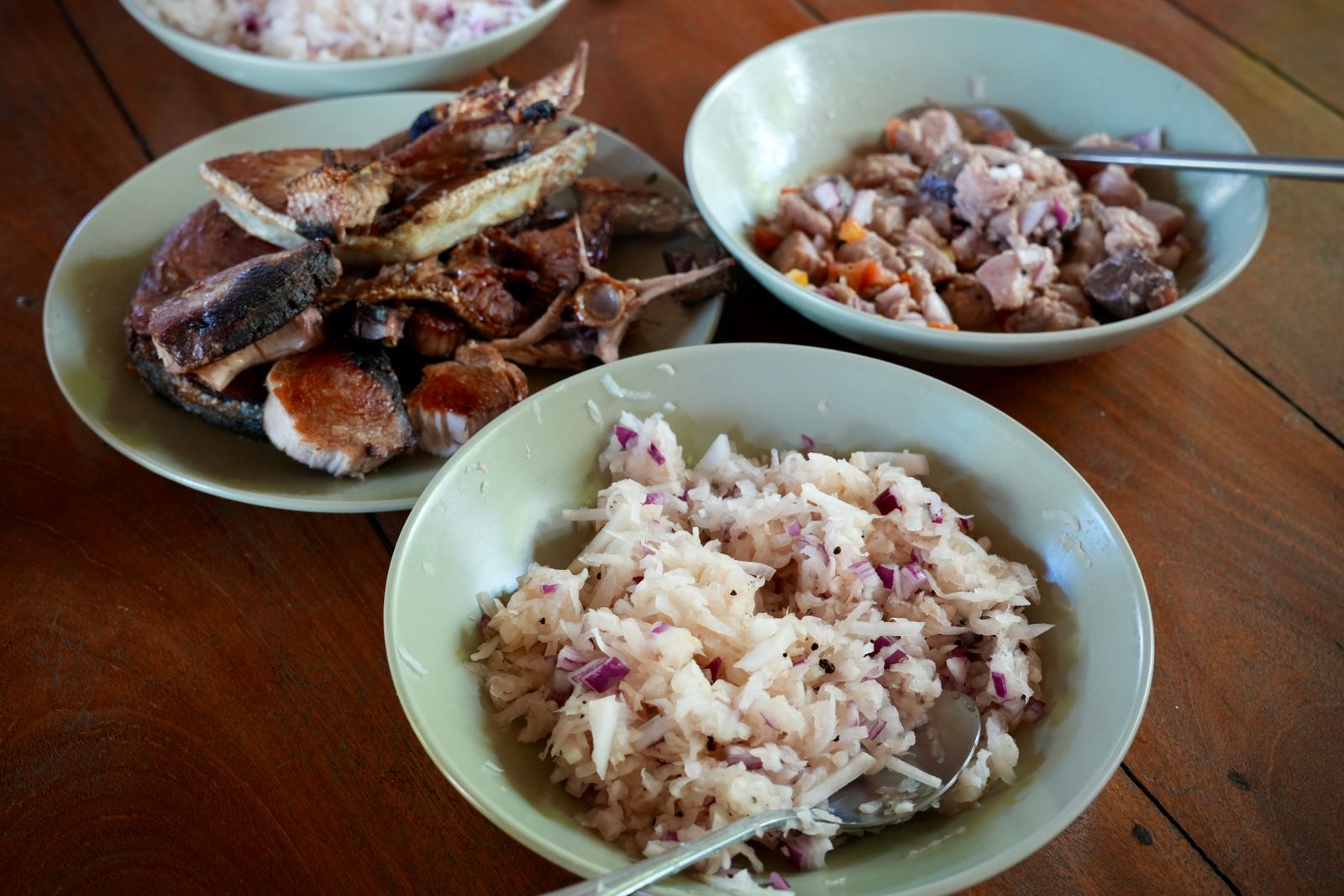
Kamayan literally means "with hands" and refers to the traditional Filipino practice of eating with your hands instead of utensils. While modern Filipino families may use forks and spoons for daily meals, kamayan remains a beloved tradition for special gatherings and celebrations.
How Kamayan Works
Food is served on banana leaves laid across the table, creating an aromatic, eco-friendly placemat. Rice, grilled meats, seafood, vegetables, and condiments are arranged in abundant displays. Diners use their right hands to:
- Scoop rice and form a small mound
- Add pieces of viand (ulam, the accompanying dishes)
- Use fingers to combine everything
- Bring the food to the mouth in one fluid motion
Why Kamayan Matters
Beyond the sensory pleasure (and many insist food tastes better when eaten with hands), kamayan reinforces Filipino values:
- Equality: Everyone eats the same way, removing hierarchies
- Connection: Sharing food from a common display deepens bonds
- Presence: The tactile experience demands mindfulness
- Tradition: Links modern diners to ancestral practices
In recent years, kamayan feasts have experienced a revival, especially among Filipino-American communities reconnecting with heritage.
"In a Filipino home, the meal is the relationship. Refusing the food is refusing the welcome."
The Sacred Invitation: "Kain Tayo"
More Than Just "Let's Eat"
"Kain tayo" (or the more formal "kain na po tayo") is perhaps the most common phrase heard in Filipino households. Translated literally as "let's eat," it carries layers of meaning:
- An invitation to join the community
- An expression of care and concern
- An acknowledgment of your presence and worth
- A pledge of hospitality without expectation of return
Always Sincere, Always Generous
When a Filipino says "kain tayo," they mean it. Even if they only prepared food for their family, they'll make it work. Portions will be adjusted, someone might eat less, another dish will be quickly prepared, whatever it takes to ensure the guest is fed and honored.
This isn't performative. It's deeply genuine, rooted in the Filipino value of kagandahang-loob, a beautiful inner disposition that compels generosity.
The Honored Guest: Filipino Hospitality in Action
Preparing for Guests: The Labor of Love
Filipino hospitality involves considerable preparation, often invisible to the guest:
- Multiple dishes: A single entrée isn't enough; variety demonstrates care
- Fresh ingredients: Market trips to ensure the best quality
- Homemade everything: Cooking from scratch shows respect
- Abundant portions: Running out of food would bring deep shame
- Special touches: The "good" plates come out, even for casual visits
At the Table: The Guest is King
Once seated, guests experience Filipino hospitality's full expression:
- Best portions: Choice cuts and first servings go to guests
- Constant offering: "Kuha ka pa" (take more) is repeated frequently
- Gentle insistence: Refusing is met with warm encouragement to reconsider
- Attention and care: Hosts often eat last, ensuring guests' needs are met
- Send-home food: Baon or leftovers packaged for guests to take
This level of attention can overwhelm those unfamiliar with Filipino culture, but understanding the cultural context helps. Refusing too firmly might inadvertently cause offense.
Special Occasions: When Hospitality Amplifies
Fiestas: The Ultimate Expression
Town fiestas (festivals honoring patron saints) showcase Filipino hospitality at its grandest scale. Homes open their doors to anyone who passes by, often preparing food for hundreds. The phrase "sayang" (what a waste) is never about excess food, but rather about not having enough to share with everyone who came.
Salu-salo: Communal Feasting
Salu-salo refers to communal dining celebrations marking life's important moments:
- Birthdays (kaarawan)
- Baptisms (binyag)
- Graduations
- Homecomings
- Even wakes and funeral gatherings
Food is central to each, transforming events from simple markers of time into shared experiences that strengthen community bonds.
Lechon: The Centerpiece of Celebration
No discussion of Filipino celebration is complete without lechon, whole roasted pig with crispy skin and succulent meat. Its presence signals that an occasion is truly special, and its placement at the table's center literally and symbolically anchors the gathering.
Table Etiquette: The Unspoken Rules
Respect for Elders
Filipino dining maintains a hierarchy that honors age:
- Elders eat first or are served first
- "Mano po": Blessing gesture (touching elder's hand to forehead) before meals
- Wait for permission: Younger members wait for elders to start eating
- Best seats: Elders sit in positions of prominence
The Polite Guest
While Filipino hospitality is generous, guests should understand cultural expectations:
- Accept the first offer: Refusing once is polite; refusing repeatedly can offend
- Compliment the food: Genuine appreciation honors the cook's effort
- Finish your rice: Leaving rice on the plate suggests the food wasn't satisfying
- "Busog na po" (I'm full): The polite way to indicate you've had enough
- Help if offered: Offering to help clean may be refused, but the gesture matters
Modern Filipino Dining: Tradition Meets Today
The Filipino-American Experience
For Filipino-American families, dining traditions serve as crucial cultural anchors:
- Heritage preservation: Teaching children through food and practice
- Community building: Potlucks and gatherings in diaspora communities
- Cultural pride: Sharing Filipino food with non-Filipino friends
- Fusion innovation: Blending Filipino and American food traditions
Restaurant Culture Shift
Filipino restaurants in the US increasingly celebrate traditional serving styles:
- Kamayan feasts offered as special experiences
- Family-style menus designed for sharing
- Banana leaf presentations
- Educational components explaining cultural significance
Home-Style Adaptations
Modern Filipino households adapt traditions while preserving core values:
- Family-style serving with contemporary dinnerware
- Simplified weekday meals, elaborate weekend gatherings
- Video calls bringing distant family to the table
- Social media sharing of food and hospitality
The Deeper Meaning: Why Filipinos Feed You
Food as Love Language
In Filipino culture, cooking for someone is a primary expression of love. The hours spent shopping, preparing, and cooking aren't burdens. They're manifestations of affection. When a Filipino cooks for you, they're saying "you matter to me" in the most tangible way possible.
Memory and Identity
Filipino food traditions preserve memory and identity across generations:
- Lola's recipe: Grandmother's cooking maintains family connection
- Comfort foods: Specific dishes evoke childhood and home
- Cultural transmission: Children learn identity through food practices
- Diaspora anchors: Food connects immigrants to homeland
Building Community
Filipino dining traditions don't just feed bodies. They build and maintain community. Every shared meal reinforces relationships, creates obligations of reciprocity, and weaves the social fabric that holds Filipino communities together.
Bringing Filipino Hospitality to Your Table
You Don't Need to Be Filipino
The beautiful thing about Filipino hospitality values is their universal applicability. You can embrace these principles in your own home:
- Abundance over scarcity: Prepare more than you think you need
- Sincere invitation: Mean it when you say "please join us"
- Minimize barriers: Make guests feel immediately welcome
- Share generously: Food, time, attention. Hold nothing back
- Create memories: Focus on connection over perfection
Start with the Table
Setting a welcoming table is the first step:
- Family-style serving: Put everything out for sharing
- Beautiful presentation: Honor your food and your guests
- Comfortable seating: Ensure everyone has a place
- Warm atmosphere: Lighting, music, and ambiance matter
The Dalisay & Co Connection
This is why we created Dalisay & Co., to provide beautiful, handcrafted pieces that facilitate the kind of sharing and connection at the heart of Filipino hospitality. Our acacia wood bowls, plates, and serving boards are designed for family-style dining, for generous portions, for creating the abundant, welcoming table where "kain tayo" comes alive.
Each piece is handcrafted by Filipino artisans in the City of San Fernando, Philippines, carrying forward generations of woodworking tradition. When you serve in our pieces, you're not just using dinnerware. You're participating in a cultural practice of hospitality, connection, and care.
Bring this kind of hospitality to your own table. Browse our hosting sets and dining collections, the pieces designed for the Filipino table.
Frequently Asked Questions
What is the meaning of "kain tayo"? "Kain tayo" literally means "let's eat" but culturally expresses an invitation to join the community, share a meal, and be welcomed as family. It's a fundamental expression of Filipino hospitality.
Why do Filipinos always insist guests eat? Insisting guests eat is an expression of malasakit (genuine care) and hospitality. Ensuring guests are well-fed honors them and fulfills the host's cultural obligation to be generous and welcoming.
What is kamayan dining? Kamayan is the traditional Filipino practice of eating with your hands, typically from a communal banana leaf display. It emphasizes connection, equality, and sensory engagement with food.
Is it rude to refuse food in Filipino culture? While not gravely offensive, repeated refusal can be seen as rejecting the relationship being offered. Politely accepting at least a small portion honors the host's gesture of care.
What should I bring to a Filipino dinner party? While not required, guests often bring dessert, drinks, or fruit. However, your presence and appreciation are the most important gifts you can offer.
Why is there always so much food at Filipino gatherings? Abundance demonstrates generosity, ensures no one goes hungry, and allows hosts to fulfill their cultural obligation of hospitality. Running out of food would bring shame.
Experience Filipino hospitality at your own table. Explore our handcrafted acacia wood collection designed for generous, family-style dining at Dalisay & Co.
Want to learn more about Filipino culture and craftsmanship? Subscribe for monthly stories from our artisans, cultural deep-dives, and entertaining inspiration.
Article by Dalisay & Co | Last Updated: December 2025


