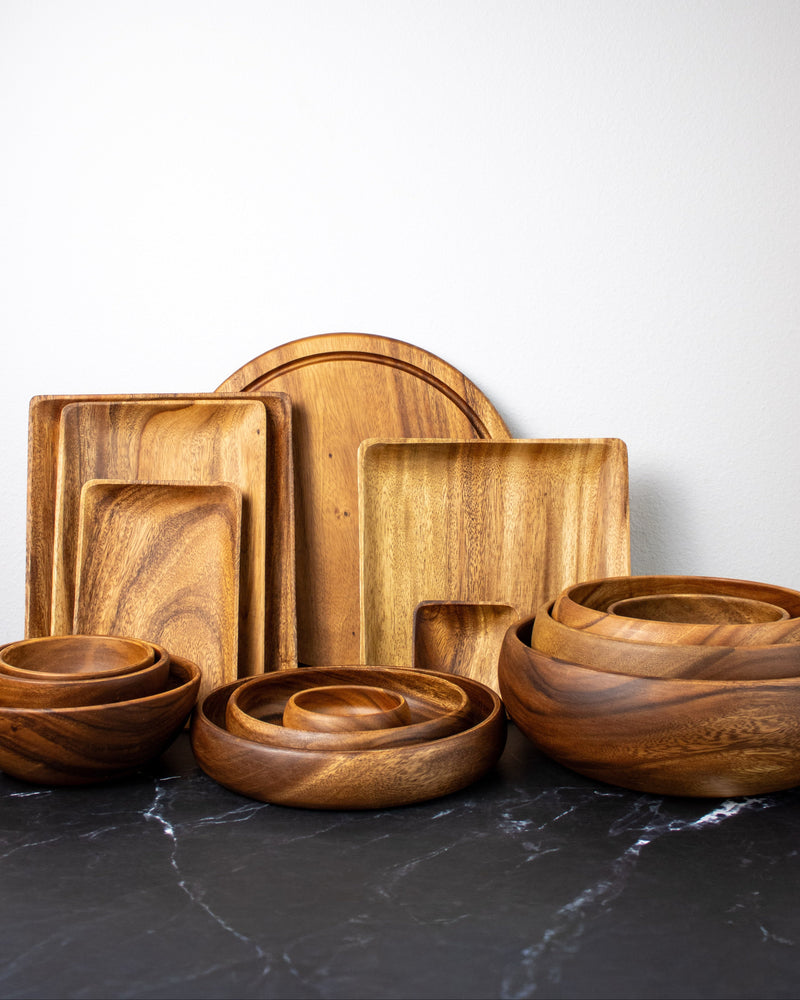
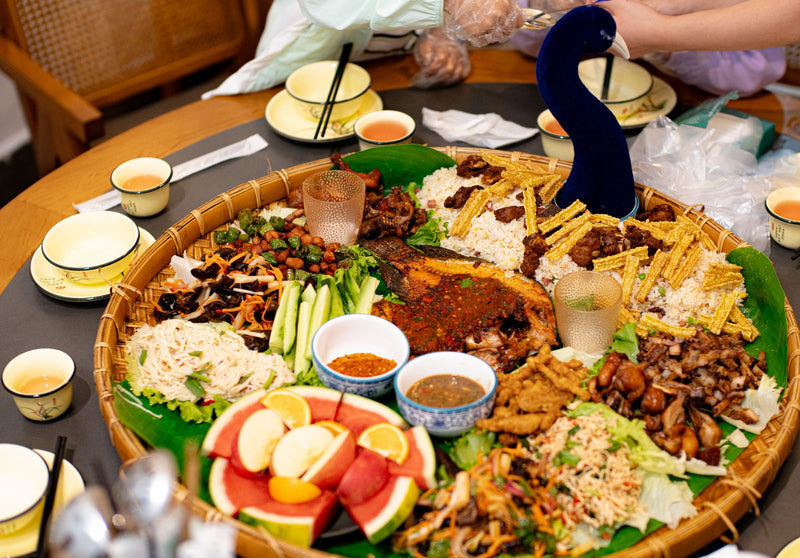
Pampanga wears the title of culinary capital of the Philippines, and it is not a marketing claim. It is a recognition earned over four centuries, built in Bacolor kitchens under Spanish rule, refined in the trade town of Guagua, and carried into every Filipino home where the standard for taste was set by a Kapampangan cook. When you plate Kapampangan food on acacia, you are pairing two traditions that share a province. Dalisay's workshop sits in Pampanga. The artisans who shape our boards, bowls, and plates live in the same towns that gave the country sisig, tocino, and bringhe. This guide walks through the province's signature dishes, why wood suits them, and how to set an acacia table that honors the food.
Why Pampanga Is Called the Culinary Capital
The claim gets repeated so often that it is easy to hear it as slogan. It is not. Pampanga's food reputation is the result of a specific colonial geography, a specific set of kitchens, and a specific standard that Kapampangan cooks set for the rest of the country. Understanding the why matters because it shapes how the food should be served, and why acacia, a Pampanga wood shaped by Pampanga artisans, is the honest surface for it.
The Spanish-mestizo kitchen legacy
Bacolor was the seat of the Spanish colonial government of the Philippines for a stretch during the British occupation of Manila from 1762 to 1764, and its households absorbed Iberian cooking techniques directly rather than through the filter of Manila's marketplaces. Guagua, a river-trade town, brought in Chinese ingredients through the same estuaries that carried rice out to Manila Bay. The result was a kitchen that combined slow-braised meats, cured pork traditions, and rice-cooking sophistication that no other single province matched. Morcon, embutido, and the sweeter styles of longganisa all trace to this mestizo cross-pollination. Bringhe, the local paella cousin, is the most obvious surviving echo.
Pampanga as home to Dalisay's workshop and artisans
The provincial connection matters for us as well. Our workshop and the artisans who shape our tableware are Pampanga-based, working with acacia sourced through legal channels within the region. When we pair Kapampangan food with a Kapampangan-made board, we are not manufacturing a story. We are describing the actual origin of both the meal and the wood. You can read more about that link in our sister guide on Pampanga as a craft capital, and see the hands behind the work in our artisan profile.
What Kapampangan cooking means as a standard, not just a region
Ask a Filipino cook from any province who trained them, and there is a good chance a Kapampangan grandmother, tita, or head cook appears in the answer. Kapampangan cooking functions less like a regional cuisine and more like a professional benchmark: precise seasoning, sauces built with time, meat cured with intent, rice cooked to a specific texture for a specific dish. When you set a Kapampangan table, you are not staging a regional theme. You are showing the standard that the rest of the country's home cooking measures itself against.
Sisig, the Dish That Went Global
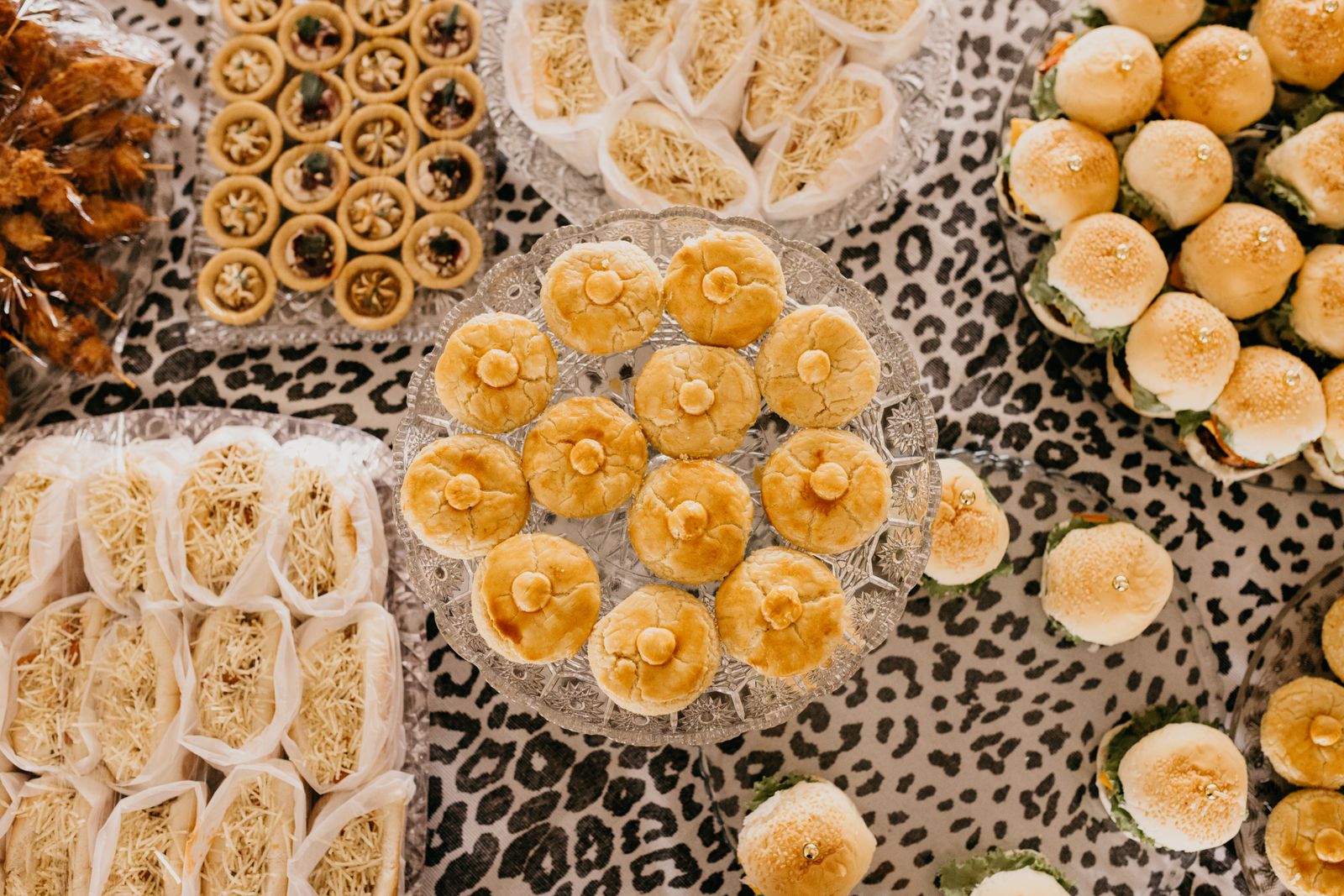
No Kapampangan dish has traveled further than sisig. It is on menus in Toronto, Berlin, Dubai, and San Francisco, usually with some translation loss. To serve it properly at a Kapampangan table, understand where it came from and why the surface it sits on matters as much as the meat.
Aling Lucing and the Angeles origin story
The modern sizzling sisig of grilled pork face, chopped fine and seasoned with calamansi and chili, is credited to Lucia Cunanan, known as Aling Lucing, who served it at her stall along the railroad tracks in Angeles City starting in the 1970s. Angeles City was later designated a UNESCO Creative City of Gastronomy in 2023, largely on the strength of the sisig lineage that grew from her carinderia. The word "sisig" pre-dates her by centuries and originally described a sour-vinegar preparation of any meat, but the version served worldwide today is the Angeles version, dense with maskara (pork face), reduced to a crackling texture on cast iron.
Why sisig belongs on wood
Cast iron is the cooking vessel, but the serving surface is where the meal lives. Wood earns its place under sisig for three reasons. First, char aesthetics: acacia's dark, movement-heavy grain reads as visual continuity with the caramelized meat, where a white ceramic plate breaks the mood by turning the char into a stain. Second, communal scoop: sisig at a Kapampangan table is not portioned. It is set down as a shared centerpiece, and diners pull from it. A wood board with a modest lip corrals the mixture without imposing bowl walls. Third, heat resilience at serving temperature: acacia, dense and closed-grained, holds up under a warm serving of sisig transferred off the sizzling plate. It is not for cast-iron temperatures, but it handles the meal-service warmth of sisig without warping or scorching.
Plating sisig on an acacia board with rice, egg, calamansi
The composition is straightforward. Center the sisig on a rectangular acacia board, roughly 30 to 45 cm across, in a mounded pile rather than spread flat. Crack a raw egg over the top so it half-cooks in residual heat as diners mix it in. Set calamansi halves at the corners. Rice goes to the side, either mounded on the same board or served from a separate rice platter if you are feeding more than four. Keep chopped scallion, chicharon dust, and extra chili on small bowls at the perimeter. Do not garnish the board itself with anything you would not eat: the board is a serving piece, not a display prop.

Built for the Sunday kainan
Our Family Hosting Set brings together the board, bowls, and plates you need to hold a full Kapampangan spread without borrowing from another set.
Shop the Family Hosting Set →Tocino, Longganisang Hamonado, and the Kapampangan Sweet Palate
Kapampangan cures are noticeably sweeter than the national baseline. Batangas longganisa carries garlic and vinegar as the loudest notes. Ilocos longganisa runs sour and fatty. Pampanga's cures lean into sugar and anise, and the palate that developed alongside them changed how the whole province approaches breakfast.
Why Pampanga cures meat sweeter than the rest of the country
The reason ties back to the Spanish-mestizo kitchen. Iberian charcuterie traditions favored sugar-cured hams like jamon dulce, and Chinese sausage-making that entered through Guagua contributed rice wine, five spice, and pork-blood sausages to the local repertoire. The two currents met in Pampanga and produced longganisang hamonado, longganisang recado, and the deeply red tocino that most Filipinos now recognize as the default. Sugar preserves as effectively as salt in a humid tropical climate, and Pampanga's cooks worked out ratios that survived the days before refrigeration. What began as necessity became preference.
Breakfast plating: tocino, sinangag, itlog on a single wooden plate
A silog plate, short for whatever-silog such as tocilog, longsilog, or tapsilog, works best as a single individual plate that holds the three elements without letting the tocino's caramelized sugar bleed across the yolk of the sunny-side-up egg. Acacia's slight lip and non-absorbent finish contain the visual and the actual juices. Center the sinangag as a small mound. Set the tocino to one side, three or four slices overlapping. The itlog goes opposite the tocino, whites just set, yolk intact. A pinch of sliced tomato and a dab of banana ketchup or spiced vinegar sit at the edge. The plate should read balanced, not crowded.
Longganisa varieties and how they read on grain
Kapampangan longganisa comes in at least three common styles: hamonado (sweet, red, ham-adjacent), recado (garlicky, still with sweetness), and de recado macau, a drier five-spice-forward variety with Chinese lineage. Their color and shine differ, and on acacia's warm brown ground the visual differences read more clearly than they would on white ceramic. Hamonado's red pops. Recado's brown-orange blends into the grain, so plate it with a green (spring onion or fresh calamansi wedge) to give the eye a hold. Serve them halved on the diagonal rather than whole, which reads more generous and reveals the interior.

Individual plates for the Kapampangan silog
The Chenoweth Plate Set gives each guest their own acacia surface, sized right for tocino, sinangag, and itlog without crowding.
Shop the Chenoweth Plate Set →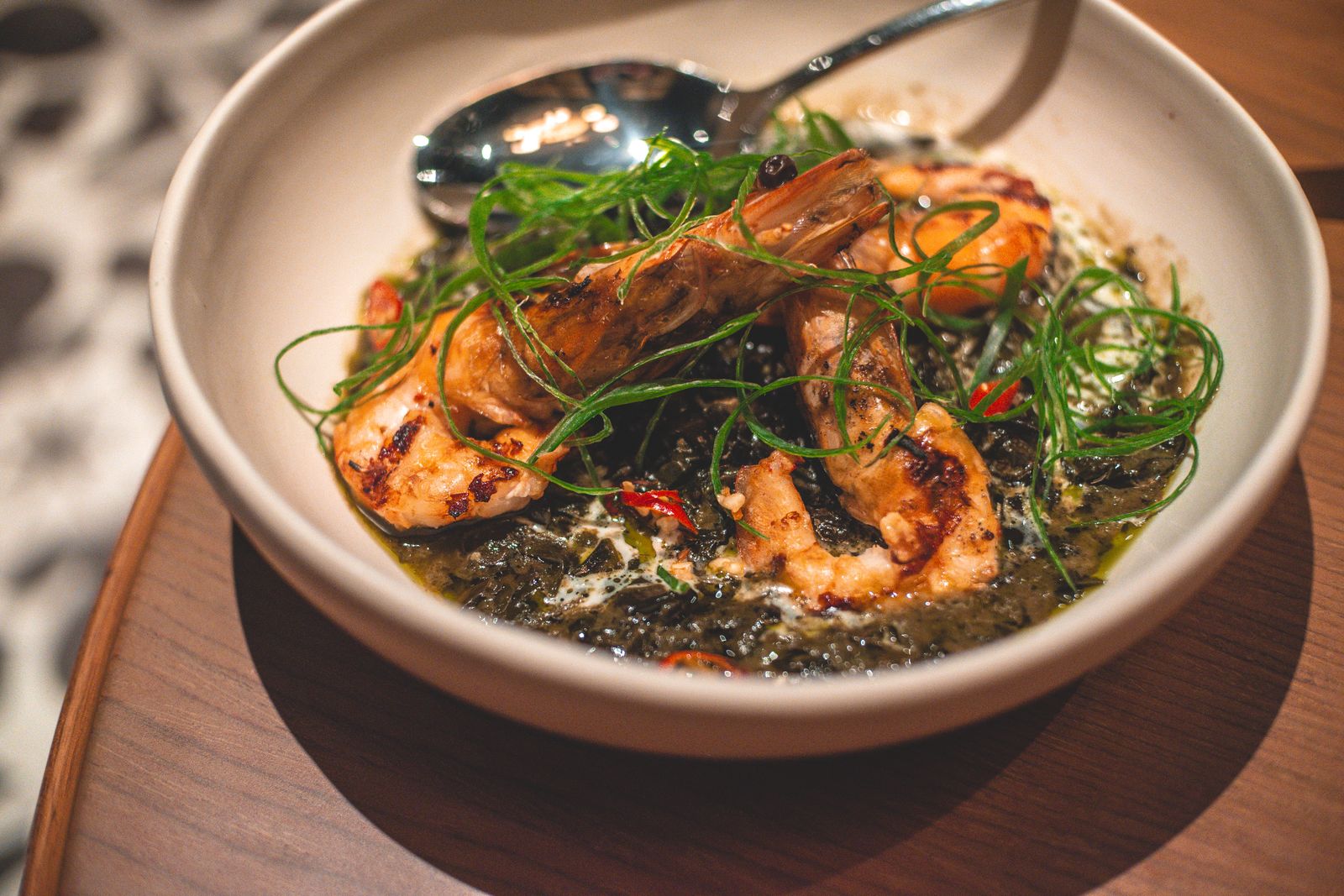
Kalderetang Kambing and the Sunday Kainan
Sunday lunch in a Kapampangan household still tends to run long, and goat, when it appears, appears with intent. Kalderetang kambing is the stew that anchors those meals: goat shoulder braised with tomato, liver spread, olives, and a red sauce that stains everything it touches.
Goat as celebration meat in Pampanga
Goat has never been an everyday meat in the Philippines the way pork or chicken has. Its appearance signals occasion: a fiesta, a homecoming, a Sunday when the extended family arrives. Pampanga's kaldereta tradition specifically leans into the funk of goat rather than masking it, using a longer braise and a heavier sauce than Tagalog versions. In the older recipes the goat is bled and dressed at home, and the liver is reserved for the sauce as thickener and flavor. Modern kitchens use liver spread from a can, but the intent is the same.
Serving family-style from a deep acacia bowl
The dish cannot be plated individually and still feel like kaldereta. It needs to arrive at the center of the table in a wide, deep bowl, ladle laid across the rim, steam rising. Acacia in a 25 to 30 cm diameter with a depth of 8 to 10 cm holds a family-of-six portion without slopping. The wood does not conduct heat quickly, so the bowl stays comfortable to touch while the stew stays warm. Diners lift the ladle, spoon over their rice, and pass. The rhythm of the meal depends on this shared center.
Pairing pieces: rice platter, sawsawan bowls, ladle
Kaldereta wants companions. A separate rice platter, long and shallow, at least 40 cm, sits alongside so no one waits their turn at the shared bowl. Small sawsawan bowls at each place hold a simple vinegar and siling labuyo dip, since the sauce is rich and diners sometimes want a sharp counter. A wooden ladle rather than metal preserves the bowl's interior over years of use. If you host a Kapampangan Sunday spread regularly, the geometry of the table matters more than any single piece: rice center-adjacent, stew center, sawsawan at each seat. Our guide to matching Filipino dishes to wooden tableware covers the pairing math in more depth.
The Lesser-Known Kapampangan Dishes Worth Knowing
Sisig and tocino carry the province's reputation abroad, but a full Kapampangan kitchen extends much further. These are the dishes that a Kapampangan cook considers ordinary and a visitor considers revelatory.
Bringhe, morcon, and adobong kamaru
Bringhe is the Kapampangan rice dish that most closely echoes Spanish paella, cooked with glutinous rice, coconut milk, chicken, and turmeric that gives it a yellow that reads more warm than saffron-golden. Whether to call it a Kapampangan paella is a matter of taste. It shares the pan-cooked, single-dish geometry of paella, but the coconut milk and glutinous rice make it distinctly Filipino. Serve it directly from a wide bowl or a shallow platter, family-style. Morcon is a rolled beef roulade stuffed with sausage, egg, cheese, and pickle, sliced into rounds that look like stained glass on a plate. Adobong kamaru is mole crickets, braised in vinegar and garlic and eaten with rice; it is authentic Kapampangan, unusual for diaspora tables, and worth trying once with an open mind.
Buro and its sawsawan role at the wooden table
Buro is fermented rice, sometimes with shrimp or small fish folded in, and its role at the Kapampangan table is closer to a condiment than a main dish. It shows up in a small bowl alongside grilled fish, mustasa leaves, and green mango, functioning as the salt and umami source in a simple lunch. The smell is assertive. The taste rewards commitment. Serve it in a small acacia sawsawan bowl rather than a ceramic one: the wood keeps the buro at a stable temperature and the visual sits better with the meal it accompanies.
Fiesta dishes: lechon Kapampangan and asadong matua
Fiesta food in Pampanga is not just larger portions of everyday cooking. It is a different register. Lechon Kapampangan is roasted whole pig stuffed with tamarind leaves and lemongrass, served without a heavy sauce because the meat is meant to speak for itself, unlike Manila lechon which is drowned in liver sauce. Asadong matua is a slow-braised beef dish reserved for weddings and major family gatherings, with a bay-leaf-and-soy-sauce base that concentrates over hours. Both dishes come to the table on wooden boards or platters because the plates would not hold them, and because the visual of dark meat on warm wood carries the occasion.

Bowls for stews, sawsawan, and shared centers
The Gorosin Bowl Set gives you the deep central bowl for kaldereta and the smaller sawsawan bowls each seat needs, in one coherent collection.
Shop the Gorosin Bowl Set →Setting a Full Kapampangan Table on Acacia
Every dish above has its own logic, but they all end up on the same table when a Kapampangan family sits down together. The geometry, the sizing, and the after-meal care all matter, and none of it is complicated once you have done it a few times.
The three-tier layout: rice center, ulam ring, sawsawan outer
The classic layout works in three concentric rings. At the center, a rice platter or a mounded rice bowl anchors the table. Around it, in a ring, the ulam bowls and boards: sisig on a board, kaldereta in a deep bowl, sinigang in another, a plate of tocino if breakfast blurs into lunch. At the outer edge, each seat has its own sawsawan bowl, its own drinking glass, and its own plate for rice-and-ulam portions. The visual reads as abundance without disorder. It also puts every shared dish within reach of every seat, which is the practical reason the layout survived.
Sizing your set for 4, 6, 8, or 12 guests
Rough sizing that works for Kapampangan meals: for four guests, one rectangular board around 30 cm, one deep bowl around 22 cm, four individual plates, four sawsawan bowls. For six, size up to a 40 cm board, a 25 cm bowl, and add a rice platter of 40 cm length. For eight, run two boards side by side rather than one large one; a single oversized board is harder to reach across. For twelve, plan for two shared centers, two boards and two deep bowls, rather than one giant one, and have a second rice platter at the other end. The point is not to buy more than you need. It is to make sure no dish sits stranded because a diner cannot reach it.
Care after Kapampangan meals: oil-heavy, vinegar-based cleanup
Kapampangan food is heavier in oil than most regional Filipino cuisines, and vinegar shows up in sisig, in adobo, and in most sawsawan. Both are hard on wood if you neglect the aftermath. Wipe boards and bowls with a warm damp cloth within an hour of the meal, before the oil sets. Avoid soaking. Do not run acacia through the dishwasher. For deeper cleaning after a stew, use warm water and a drop of unscented dish soap, then dry the piece standing on its edge so both faces air-dry evenly. Oil the wood once a month with food-safe mineral oil or a beeswax and mineral oil blend. If you want the full walkthrough of common errors and how to avoid them, see our guide on the nine acacia care mistakes everyone makes.
Frequently Asked Questions
What makes Pampanga the culinary capital of the Philippines?
The reputation rests on a specific colonial geography (Bacolor as a former colonial seat, Guagua as a trade town), a documented Spanish-mestizo kitchen tradition, and the enduring role of Kapampangan cooks as the professional standard in kitchens across the country. It is a recognition earned, not a marketing claim.
What is the difference between Kapampangan sisig and other regional versions?
Kapampangan sisig, specifically the Angeles version credited to Aling Lucing, is grilled pork face chopped fine, seasoned with calamansi and chili, and served sizzling on cast iron. Other regional versions vary in meat, from chicken to tuna to tofu, but the Angeles pork sisig remains the reference point everyone else adapts from.
Can I serve hot sisig directly on acacia wood?
Transfer the sisig off the cast-iron sizzling plate onto the acacia board rather than placing the hot iron plate directly on the wood. Acacia handles meal-service warmth well, but not sustained cast-iron temperatures. A quick transfer preserves the char aesthetics without risking scorching or warping.
Why is Kapampangan tocino sweeter than other Filipino tocino?
The sweetness traces to Iberian sugar-curing traditions absorbed through Bacolor's Spanish colonial kitchens and to Chinese sugar-preservation techniques that entered Pampanga through Guagua's river trade. Sugar also functions as an effective preservative in a humid climate, so what began as necessity became the province's preferred flavor profile.
What size acacia bowl works for kalderetang kambing for a family of six?
A bowl of roughly 25 to 30 cm diameter and 8 to 10 cm depth holds a family-of-six kaldereta portion without spilling when passed around the table. Pair it with a separate rice platter and small sawsawan bowls at each place setting so the shared bowl stays reserved for the stew.
How do I clean acacia after serving oily Kapampangan dishes?
Wipe with a warm damp cloth within an hour, before the oil sets. For deeper cleaning use warm water with a drop of unscented dish soap, avoid soaking, and never use the dishwasher. Dry the piece standing on its edge, and oil it monthly with food-safe mineral oil.