Every Filipino host hits the same wall before a big kainan. You count the guests, do the math, then remember that Tita will send a plate back for seconds, the kids will need their own bowls for suka, and someone will show up unannounced with a friend. Suddenly your neat plan for 8 needs to feed 11.
This is the sizing guide we wish someone had handed us before our first proper hosting purchase. Not vibes, not aesthetics, just numbers, ratios, and the pasabog buffer you actually need.
The math nobody tells you about Filipino hosting
Most tableware sizing guides are written for Western dinner service: one plate, one bowl, one glass, done. Filipino hosting does not work that way. Our meals have layers, and the piece count follows the layers.
Why "one plate per guest" undercounts every time
A single Sunday lunch typically involves rice, an ulam or two, something with sabaw, and a dessert like leche flan or bibingka. If you set out one plate per guest, that plate has to do triple duty. Most Filipino hosts instinctively put out a second plate for dessert, or so guests can go back for seconds without piling sinigang broth onto their leche flan.
The working ratio we recommend is 1.5 plates per guest for casual meals, and 2 plates per guest for anything with a proper dessert course. For a table of 6, that means planning for 9 to 12 plates in rotation, not 6.
The pasabog effect (second plates, dessert plates, sawsawan bowls)
Pasabog is the surprise second wind of a Filipino meal. The main spread comes out, everyone eats, then Ate brings out the pancit she was hiding, or the crispy pata arrives late, or someone runs to the palengke for fresh lumpia. Pasabog reshuffles the table, and it needs its own plates and bowls.
Budget one extra plate per guest and one extra small bowl per two guests for pasabog. If you do not use them, great. If you do, you will not be washing mid-meal in front of company.
How boodle-style vs plated service changes the count
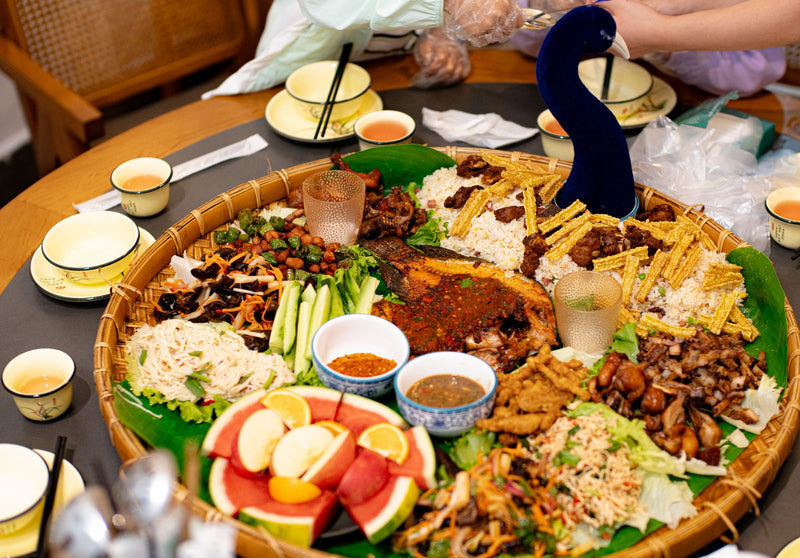
Boodle fight service (food laid on banana leaves, kamayan, shared) uses fewer individual plates but many more sawsawan bowls and finger-rinse bowls. Plated service (each guest gets their own composed plate) needs the full 1.5 to 2 plates per guest ratio, plus dedicated dessert plates.
If you host both styles, size for the plated ratio. Boodle setups are forgiving. Plated dinners with too few plates are visibly awkward.
Sizing for 2 to 4 people (the intimate table)
This is the most under-served bracket in tableware guides. Two-person and four-person households do not need less thoughtful hosting gear, they need it sized correctly so nothing feels comically oversized on a small table.
Everyday pairs and small families
A couple hosting parents for lunch, a young family of four doing weekend brunches, a pair of roommates doing regular Sunday cooking. The math here: 2 to 4 guests, 1.5 plate ratio, plus one buffer plate. You need 6 plates minimum for a 4-top, 4 plates minimum for a 2-top with dessert.
What a Mini Hosting Set actually covers
A Mini set is built around the 4-seat cap. It comfortably handles two to four guests through a full meal with a dessert course, plus sawsawan for each seat. It falls short the moment you hit 5 guests or start hosting a proper adobo-and-rice lunch with in-laws, since those meals demand more serving surface.

Right-sized for the small kainan
The Mini Hosting Set is built for tables of 2 to 4, without oversized platters that dwarf an intimate meal.
Shop the Mini Hosting Set →When to size up instead (in-laws visit, apo sleepovers)
If your regular table is 4 but you host in-laws once a month, or the grandkids stay over with their parents on weekends, you are functionally hosting 6 to 8. Buy for the peak, not the average. A Mini set will not stretch to a bilog na family lunch even with careful plate rotation. Read our breakdown on when the Mini Hosting Set is actually enough before you commit.
Sizing for 5 to 8 people (the standard Filipino Sunday)
This is where most Filipino hosting sets live, because this is where most Filipino families live. Extended family Sundays, barkada dinners, the standard Noche Buena with your immediate household plus a few relatives.
The classic barkada or extended family count
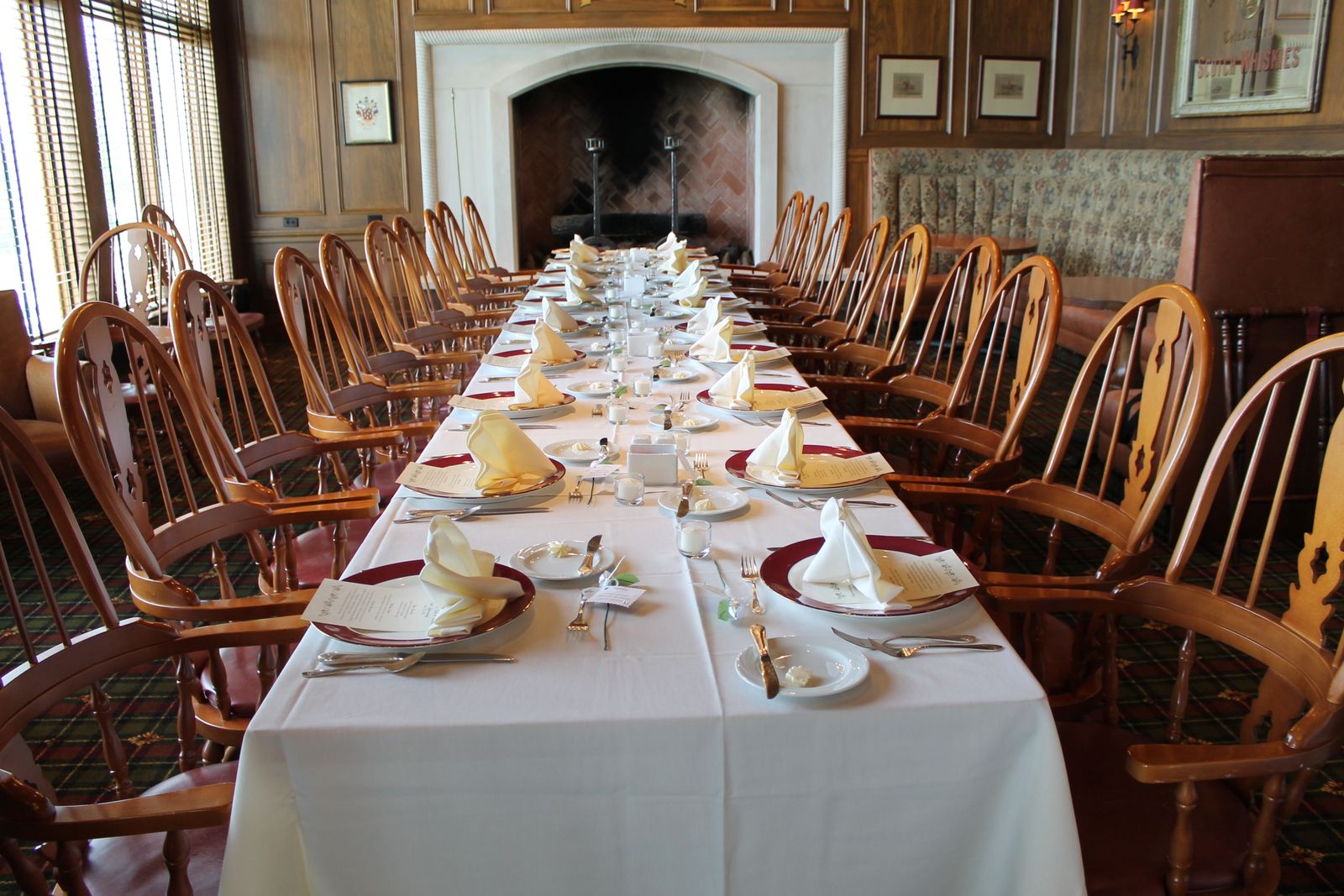
Five to eight covers the typical Filipino gathering: parents, grown kids, one or two titos, maybe a cousin. At this scale, plate rotation becomes real work. You cannot rely on rinsing between courses. You need 8 to 12 plates in circulation for a 6-person meal, and 12 to 16 for an 8-person meal.
Family Hosting Set breakdown per guest
The Family Hosting Set targets the 6-to-8 bracket at 1.5 plates per guest, plus dedicated serving platters and enough sawsawan bowls for kamayan-style service. Per seat, you are looking at roughly 1.5 to 2 plates, 1 rice bowl or shared platter portion, 1 sawsawan bowl, and shared serving pieces. Our full Family Hosting Set explainer walks through the exact piece list.
Serving pieces vs individual pieces (why the ratio matters)
Individual pieces (plates, bowls, cups) scale linearly with guests. Serving pieces (platters, big bowls, boards) do not. One large acacia platter comfortably holds enough pancit for 6 to 8. Two medium platters hold the same volume but crowd the table. The Family set balances this with fewer, larger serving pieces, which is why the ratio of individual to serving pieces looks different than what you would spec for a restaurant.

The Sunday-kainan workhorse
The Family Hosting Set is sized for the 5-to-8 bracket that covers most Filipino households and their regular gatherings.
Shop the Family Hosting Set →Sizing for 9 to 12 people (fiestas, holidays, milestone kainan)
Twelve is not a random ceiling. It is the practical limit of one dining table, one hosting flow, and one cook doing plated service without a helper. Above 12, you are running a small event and need buffet logistics, not tableware sizing.
Noche Buena, Media Noche, and birthday counts
A proper Noche Buena with immediate family and one set of grandparents lands around 10 to 12. A first birthday with the ninongs and ninangs present hits 12 fast. A milestone anniversary or engagement dinner sits in the same zone. For 12 guests at 1.5 plates each, you need 18 plates in rotation. That is the Royal set territory.
Royal Hosting Set: what it holds and what it does not
The Royal Hosting Set sizes for 10 to 12 seats with the full plate rotation, sawsawan for each guest, and serving platters that can hold a lechon segment, a whole fish, or a proper pancit pile. What it does not do: replace a buffet setup for 20-plus guests, or serve as an event rental fleet. Read the Royal Hosting Set walkthrough for what is inside and what its limits are.
Mixing sets vs buying up (cost per seat comparison)
Two Family sets stacked together cover 12 guests, sort of. In practice, you end up with duplicate serving pieces (two big platters when you needed one, and no medium platter), mismatched piece counts, and a cabinet that will not close. Cost per seat, one Royal set beats two Family sets by roughly 15 to 20 percent, and the storage math is dramatically better.

Built for the full Noche Buena table
The Royal Hosting Set is the one-set answer for the 9-to-12 bracket that covers most Filipino holidays and milestones.
Shop the Royal Hosting Set →Beyond plate count: bowls, boards, and serving vessels
Plates are the loud part of the sizing conversation. Bowls, boards, and serving vessels are the quiet part that determines whether the meal actually flows.
Sawsawan bowl math (1 per guest, or 1 per 2 guests?)
For kamayan or boodle-style meals, budget 1 sawsawan bowl per guest. Filipinos are particular about sawsawan ratios (patis-to-calamansi, suka-to-siling labuyo), and sharing a bowl means someone loses. For plated Western-style dinners where a single dipping sauce sits on the table, 1 bowl per 2 guests is fine.
If in doubt, size for kamayan. Extra sawsawan bowls double as pickle dishes, kids' dessert bowls, and side vessels for atchara or ensalada.
Cutting board sizing for lechon, hipon, whole fish
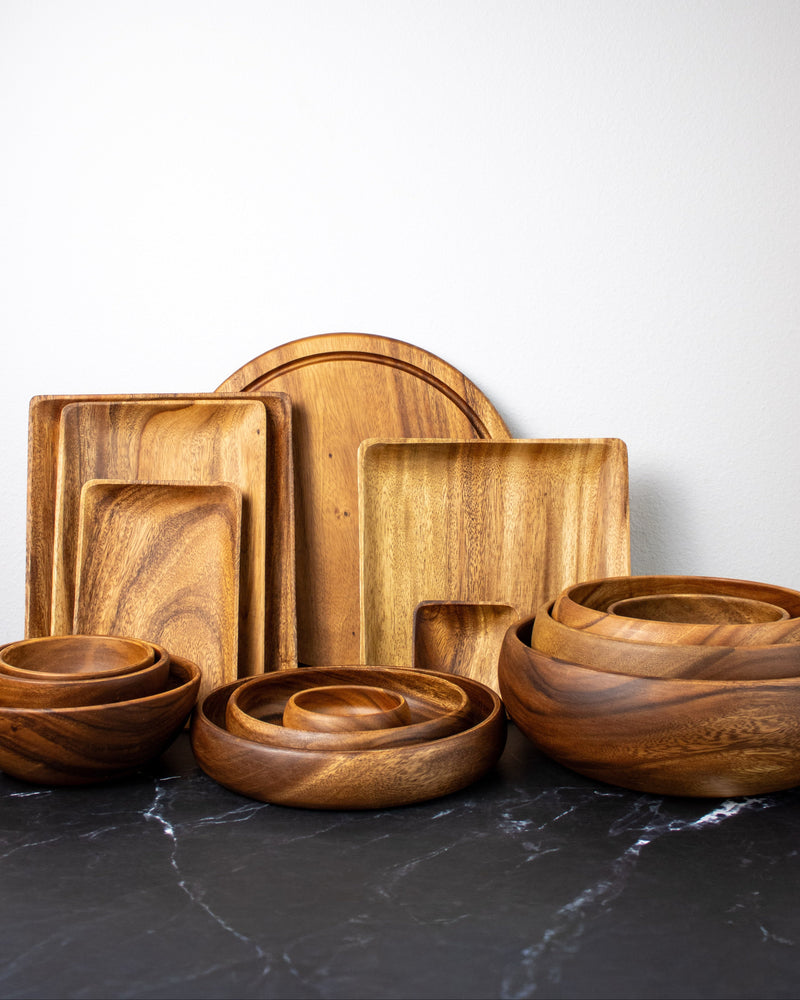
A whole roasted fish needs a board of at least 45 cm. A quarter lechon or a lechon belly needs 50 to 60 cm. Hipon platters can work on 35 to 40 cm. If you only own one large board, size it for lechon and use it for everything else. Undersizing the board is the most common mistake, since a fish overhanging the edge drips juice on your table linen.
Rice bowls vs shared platter, and how it shifts your buy
If you serve rice from a shared platter, you need one large rice platter and no individual rice bowls. If you serve rice in individual bowls (more common for daily meals and formal service), you need one bowl per guest, and you can skip the rice platter. This single choice changes your buy meaningfully. Decide before you shop.
The decision matrix (choose your set in 60 seconds)
Here is the compressed version of everything above, sized for how you actually make a purchase decision.
Quick chart: guest count vs recommended set
- 2 to 4 guests, occasional hosting: Mini Hosting Set.
- 2 to 4 guests, hosting monthly or more: Mini Hosting Set, plus consider a second board for prep.
- 5 to 8 guests, any frequency: Family Hosting Set.
- 4 guests regularly but hosts up to 8 twice a year: Family Hosting Set, not Mini. Buy for peak.
- 9 to 12 guests, any frequency: Royal Hosting Set.
- 8 guests regularly but 12 at Christmas: Royal Hosting Set. Two Family sets stack worse than one Royal.
Frequency multiplier (host 2x/year vs 2x/month)
If you host twice a year, size for your average guest count. A rare peak can be absorbed with borrowed plates or paper plates for the kids' table. If you host twice a month or more, size for your peak. Frequent hosts feel the pain of undersized sets every single time, and the annoyance compounds.
When to buy the next size up on purpose
Buy up if any of the following are true: you are hosting your first Christmas as the household with the biggest dining room, you have engaged children who will marry into your family and expand the guest count, you cook large-batch dishes (kaldereta, kare-kare, whole lechon) that beg for the bigger platters, or your storage can accommodate the larger set without gymnastics.
For the deeper decision framework, our cornerstone guide to choosing the right Filipino hosting set walks through the same call from the angle of hosting style rather than guest count. Read both if you are between tiers.
Frequently Asked Questions
How many plates should I buy per guest for a Filipino hosting set?
Plan on 1.5 plates per guest for casual meals and 2 plates per guest when a dessert course is served. Filipino meals often need a second plate for dessert or for going back for seconds without mixing sweet and savoury on one plate.
Is a 4-piece hosting set enough for a family of 5?
No. A 4-piece set caps at 4 seats before plate rotation becomes stressful. For a household of 5, or a household of 4 that hosts one extra guest regularly, step up to the Family Hosting Set rather than trying to stretch a Mini.
Do I need one sawsawan bowl per guest or can guests share?
For kamayan and boodle-style meals, one sawsawan bowl per guest is the working ratio. Filipinos have specific sawsawan preferences (patis to calamansi, suka to sili), and sharing means someone eats a compromise. For plated dinners with a single shared sauce, one bowl per two guests is fine.
What size hosting set do I need for Noche Buena with 10 people?
Ten guests puts you in the Royal Hosting Set range. Two Family sets stacked together will not sit right, since you end up with duplicate serving pieces and no medium platter. One Royal set is cheaper per seat and easier to store.
Should I buy two Family sets or one Royal set?
Buy one Royal set. Cost per seat is roughly 15 to 20 percent lower, storage is dramatically simpler, and you avoid the duplicate-platter problem that comes with stacking two Family sets. Two Family sets only make sense if you host at two locations.
How big should my cutting board be for lechon or whole fish?
A whole roasted fish needs a board of at least 45 cm. A quarter lechon or lechon belly needs 50 to 60 cm. If you only buy one large board, size it for lechon, since the same board handles fish, hipon, and everything smaller.