The rooster in the neighbor's yard starts before the alarm does. By the time the first jeepney rattles past the gate, the workshop lights are already on, the kettle is already whistling, and Kuya Renato is already running his thumb along a plank of acacia to see which way the grain wants to go. This is not a factory. It is a shophouse where a handful of people show up every day to make bowls, plates, and boards by hand, one piece at a time. What follows is what an ordinary Tuesday looks like from the inside.
4:45 a.m. , The workshop wakes before the neighborhood does
The first sound is not a saw. It is the scrape of a metal stool on a concrete floor, then the click of a switch, then the low buzz of a single fluorescent tube warming up over the sanding bench. Kuya Renato, our head turner, has been coming in this early for almost fifteen years. He says the wood behaves differently before the day heats up. The workshop is still cool, the air is dry, and the acacia dust that settled overnight has not yet been kicked back into the light.
He puts water on the burner for the first pot of kapeng barako of the day. There will be four or five more. Coffee here is not a treat, it is a kind of rhythm. The kettle whistles, the mugs come out, and by the time Mang Domeng arrives on his motorbike a few minutes past five, there is already a cup waiting for him on the sill.
Nothing has been cut yet. Nothing has been sanded. The two of them stand at the doorway and look at the yard, at the stack of rough acacia that came in last week, and talk quietly about what needs to go out the door by Friday. The day begins in conversation, not in noise.
5:30 a.m. , Choosing the wood, one board at a time
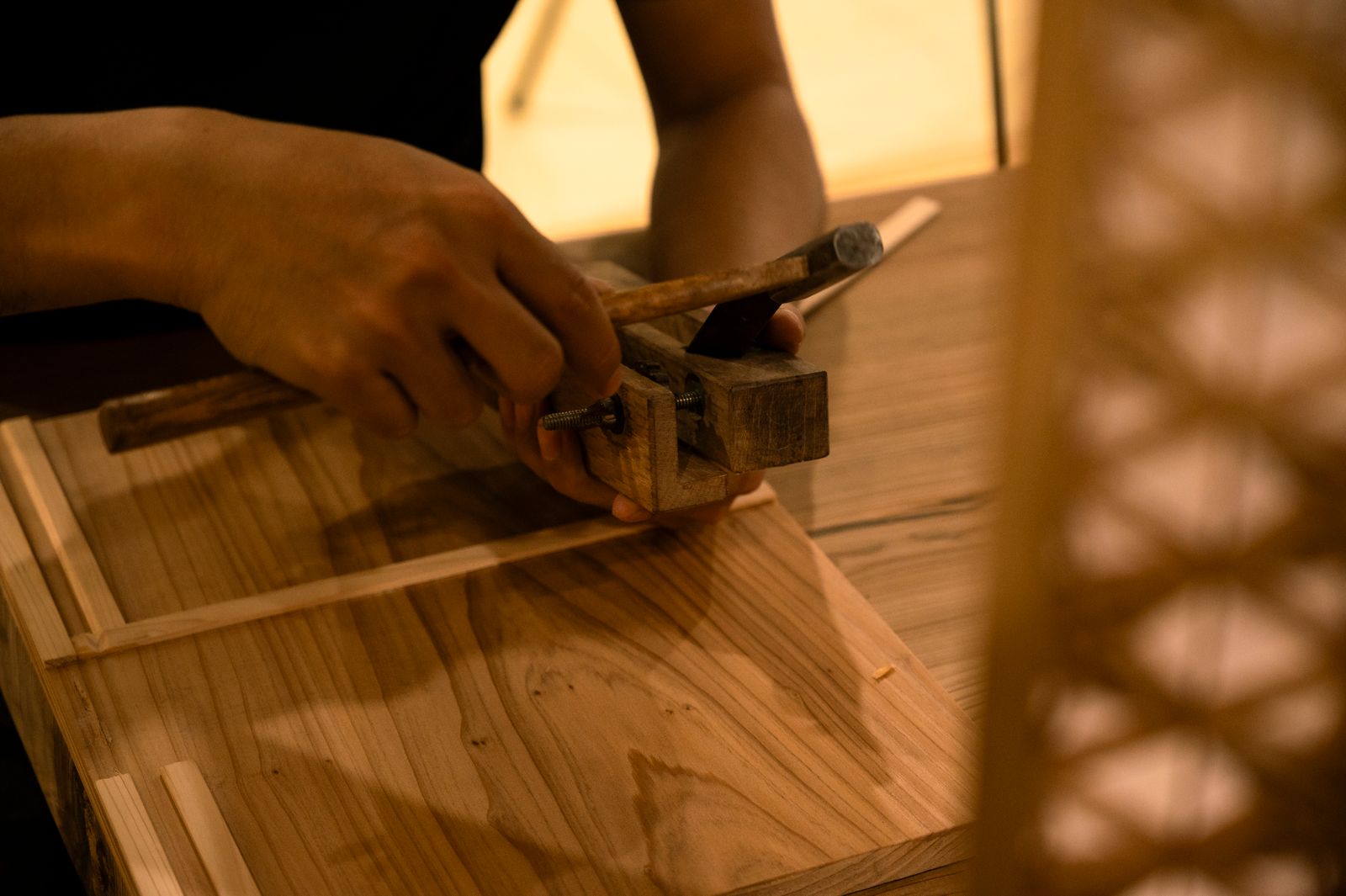
The pile in the yard is not identical timber. Each slab of acacia has its own story, and part of the craftsman's job is to read it. Kuya Renato squats in front of the stack and turns pieces over, one by one. He is looking at the grain, at the color transition from sapwood to heartwood, at the little dark knots that a machine would reject and a human might use as the centerpiece of a bowl.
He is also feeling for weight. Two boards of the same size can weigh noticeably different amounts depending on how long they have been drying and how dense the tree grew. The heavier ones tend to hold an edge better, which matters for a serving board that will meet a bolo knife every weekend. If you want the long version of how a tree becomes a piece of tableware, we walked through it in from tree to table, but the short version is this: the choice of blank determines almost everything that follows.
Today he is pulling stock for a run of large serving bowls, the deep, wide kind that show up at family gatherings for pancit or kaldereta. He picks out five candidates for the Ama Bowl, the biggest one in our line, and stacks them by the lathe. The rejects go back on the pile. They are not bad wood, they just are not the right wood for this shape.
7:00 a.m. , The first cuts of the day
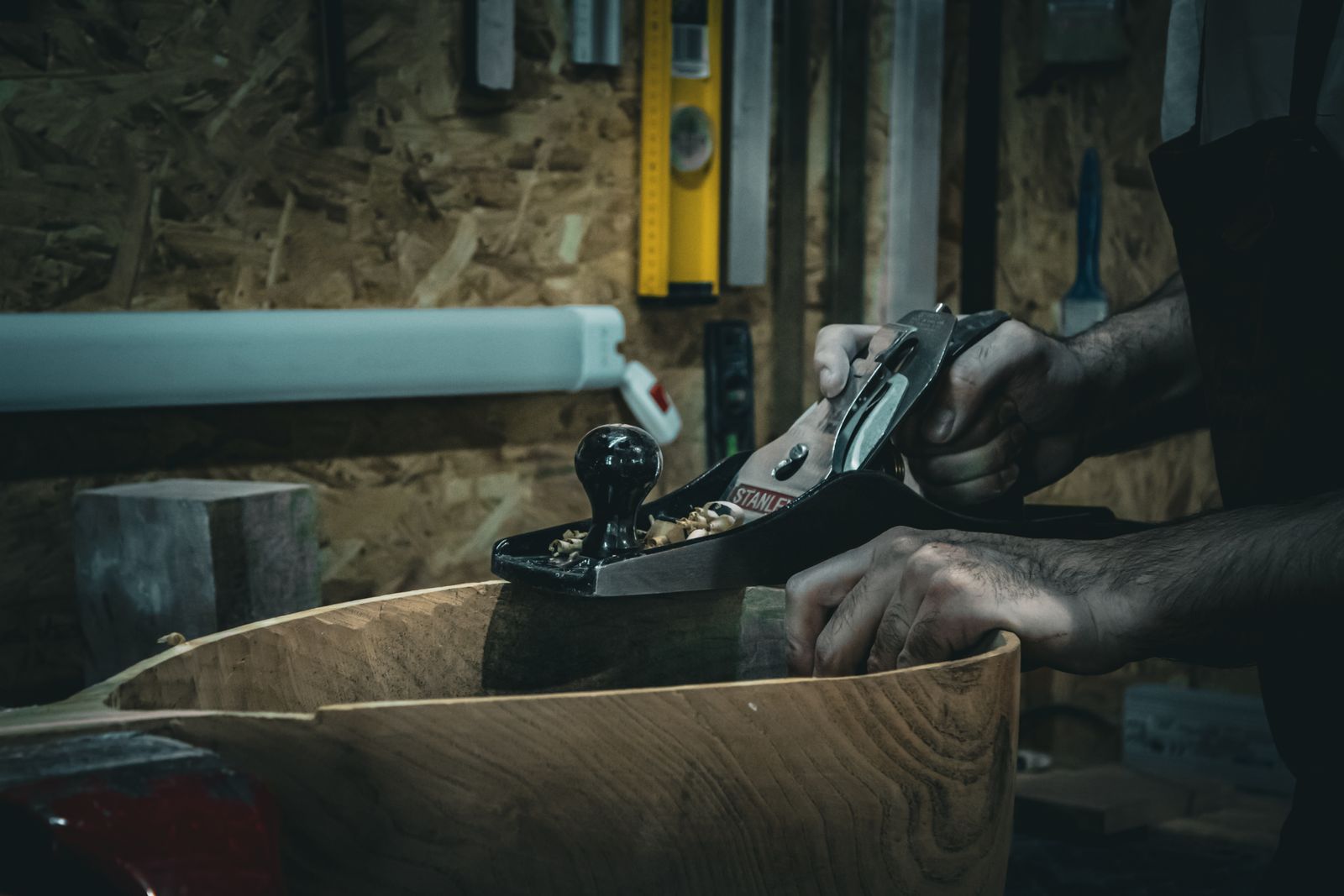
By seven, the workshop is loud. The bandsaw is running, the router table is running, and someone has put a radio on softly in the corner. Mang Domeng is on the lathe now, mounting the first blank of the day. He steps on the pedal, the motor hums up, and a fine curl of acacia begins to peel off the chisel and drop onto his forearm.
"Kailangan mong makinig sa kahoy," Mang Domeng says, without stopping. You have to listen to the wood. "It will tell you when you are pushing it too fast."
Roughing out a bowl the size of the Ama takes maybe twenty minutes on the lathe. Roughing out the smaller pieces in the Gorosin Bowl Set, the nesting rice bowls that most Filipino households actually use every day, takes closer to eight or nine each. He does them in batches, one after another, and the pile of shavings under the lathe grows into a small hill by mid-morning.
The rough shape is the easiest part to see and, according to Mang Domeng, the hardest part to get right. If the wall thickness is wrong here, no amount of sanding later will save it. A bowl that is too thin will warp when it meets hot sabaw. A bowl that is too thick feels heavy in the hand and never sits nicely in the hollow of your palm. He measures with a caliper twice on every piece before it comes off the lathe.
12:00 p.m. , Lunch on the floor, kamayan
At noon, the machines stop. All of them, at once. It is the quietest moment of the day.
Nanay Lita, who does most of the food for the shop when there is a bigger job on, has brought a covered banana leaf bundle from home. Inside is rice, tuyo, ensaladang mangga, and a plastic tub of the previous night's adobo. Someone unrolls a cotton runner on the floor near the doorway, someone else brings out a stack of our seconds, the pieces that did not pass final quality but are still perfectly good to eat off, and lunch is set in about three minutes.
Everyone sits on the floor. Everyone eats with their hands. The banana leaf is spread flat, the rice goes on directly, the ulam gets portioned out around it, and people reach in from wherever they are sitting. Nobody talks about it as a boodle fight because nobody here calls it that. It is just lunch, done the way lunch has been done in a lot of Filipino homes for as long as anyone can remember. We wrote more about why this kind of shared table matters in salu-salo and pakikisalo, but the workshop version is not a philosophy. It is a habit.
The seconds get wiped down after and stacked to the side. Some of them will go home with the craftsmen. That is how most of them acquired the pieces they use at their own tables.
1:30 p.m. , Sanding, oiling, waiting
The afternoon is quieter than the morning. The heavy machinery has done most of what it needs to do, and now it is hands, sandpaper, and time. This is the part of the day that nobody sees in a photograph because it does not look like much. A person sits on a low stool with a bowl in their lap and moves through five progressively finer grits of sandpaper, and then does the same to the next bowl, and the next, for two hours.
Ate Marlene runs the sanding bench. She is fast, and she is exact. She can tell by feel when a surface has moved from 120 grit to 220 grit, and she knows without checking when a piece is ready to move on. Her hands are stained pale gold from the acacia dust, and she does not wear gloves because she says she cannot feel through them.
Once a piece is fully sanded, it goes to the oiling table. We finish everything by hand with food-safe mineral oil, worked in with a soft cloth, then left to sit for at least an hour before a second coat. A serving board like the ones in the Pamilya Board Set takes three coats over the course of two afternoons before it is signed off. This is the step that gives acacia its depth of color, the reason a raw sanded board looks pale beige and a finished one looks warm brown. It is also part of why acacia holds up so long in a working kitchen, which we get into in why acacia outlasts other wood.
There is no way to rush this. If you skip a grit, you can see it. If you skimp on oil, you can see it. So nobody does.
4:30 p.m. , The last look before it leaves
Late afternoon is quality checks. Every piece that came off the lathe or the router today gets picked up, turned over, held to the light, and either passed or set aside. Kuya Renato does most of the final looks himself. He runs a finger along the rim, tilts the bowl toward the window, checks the base for wobble on a flat surface, and sniffs it. A piece that has been oiled too recently smells sharp and needs another day. A piece that is ready smells like almost nothing at all.
The ones that pass get wrapped in soft paper and packed into boxes. The ones that do not pass go into the seconds pile by the door, the same pile the lunchtime plates came from. Nothing here is thrown away. A bowl that split during turning becomes a shop tool for holding screws. A board with a knot that opened up becomes a chopping surface for the workshop kitchen. Waste is a foreign concept to people who grew up watching their grandparents make one length of rope last a decade.
At five, the machines are covered. The floor is swept, and the shavings go into a sack that a neighbor uses to line his chicken coop. The kettle gets one more pass for a final round of coffee, and the day ends the way it started, with two or three people standing near the doorway, not saying much, just looking at what got made today.
What you are actually buying
When someone orders a bowl or a board from us, they are buying about six to eight hours of one person's day, spread across two or three people and two or three afternoons, plus the wood, plus the years of quiet practice that let Mang Domeng know when to ease off the chisel. The price of a piece reflects that. So does the wait, when there is a wait.
The full arc of that process, from the standing tree to the finished piece on the packing table, is something we tried to lay out honestly in how acacia becomes tableware. If a Tuesday in the workshop tells you anything, it is that the finished pieces you eventually eat off, whether they arrive on your table one at a time or all together in something like the Family Hosting Set, carry the hours in them. That is not a marketing line. That is what a day here actually looks like.