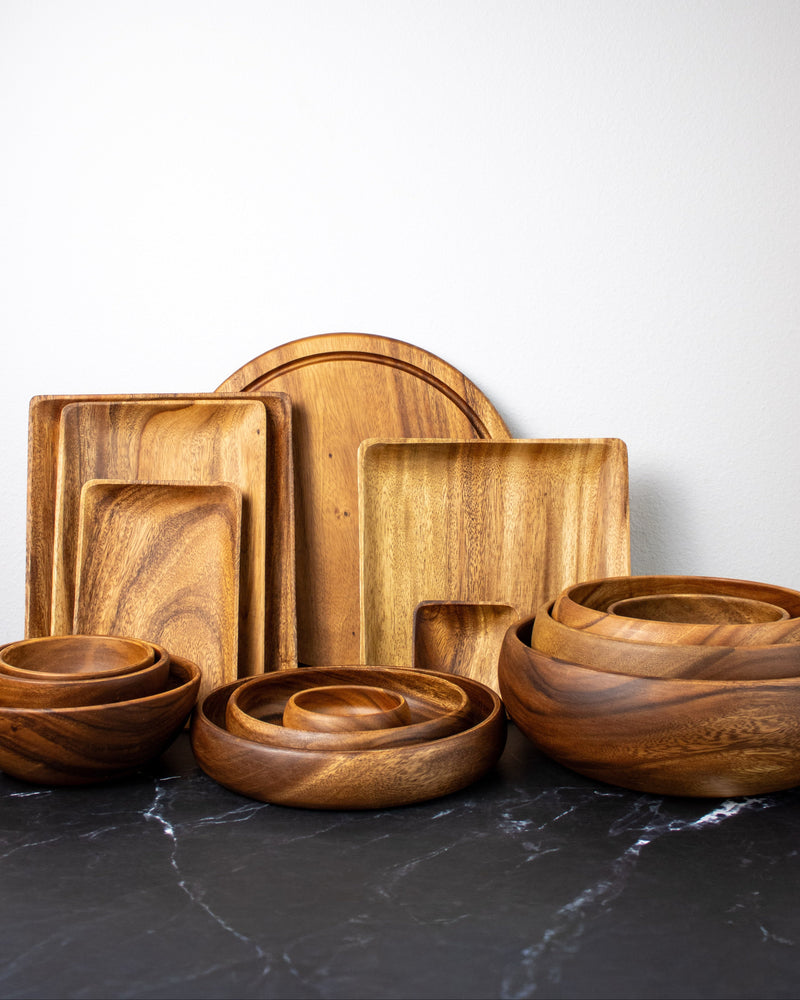
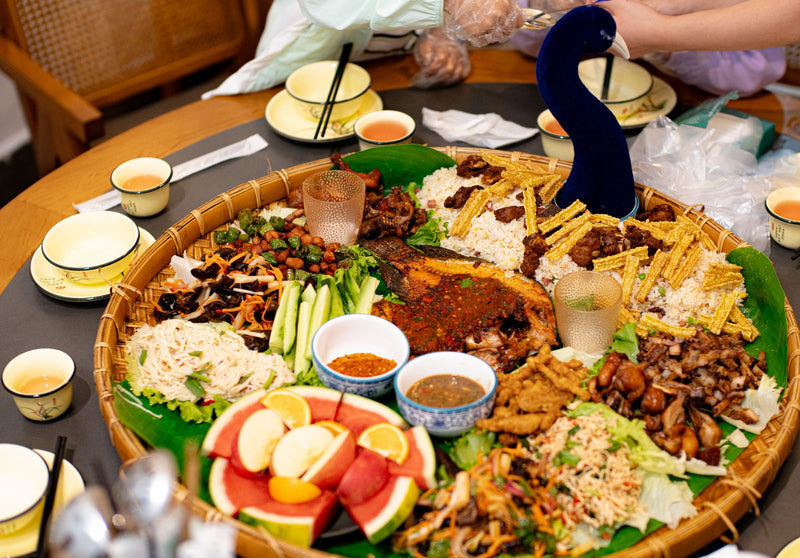
A wooden bowl on a bare table is a good object. A wooden bowl resting on a length of hand-loomed cotton, next to a pandan placemat and a napkin edged in indigo, is a Filipino table. The difference is not decoration. It is context. Wood and woven cloth have shared kitchens, dowries, and long lunches on these islands for centuries, and the pairing still reads correctly today because both materials carry the same quiet logic: made by hand, softened by use, tied to a specific place.
This guide is for hosts who already own or are shopping for acacia tableware and want to layer in Filipino textiles without the table looking staged. It is about pairing logic, not shopping lists. If you have ever set out a beautiful wooden platter, added a runner, and felt the whole thing tip into costume, this is the correction.
Why Wood and Woven Belong Together on a Filipino Table
Before you think about color or pattern, think about material honesty. Acacia, narra, pandan, tikog, abaca, and cotton were all worked by hand in the same provinces, often in the same households. A weaver's mother might have shaped the wooden bowl that held her merienda. That is not a marketing story. It is why the two materials sit next to each other without effort.
The shared logic
Both wood and woven textile are anisotropic. They have a direction, a grain, a warp and a weft. Both age. Both take on the marks of use. When you place a hand-turned bowl on a hand-loomed runner, the eye recognises the shared discipline even before it reads the pattern. That is why the pairing settles rather than competes.
What the pairing signals
To a Filipino guest, wood plus textile says the host cares about the meal enough to compose it, but not so much that the composition is the point. It signals kainan, not display. To a guest new to the tradition, it reads as considered warmth, which is exactly the register a Filipino host wants.
Why bare wood on bare table can read unfinished
Acacia on raw wood dining tables can visually fuse. The bowl loses its edge. A textile layer creates the small tonal break the eye needs to register the piece as an object rather than part of the furniture. This is a practical composition problem, not a styling flourish.
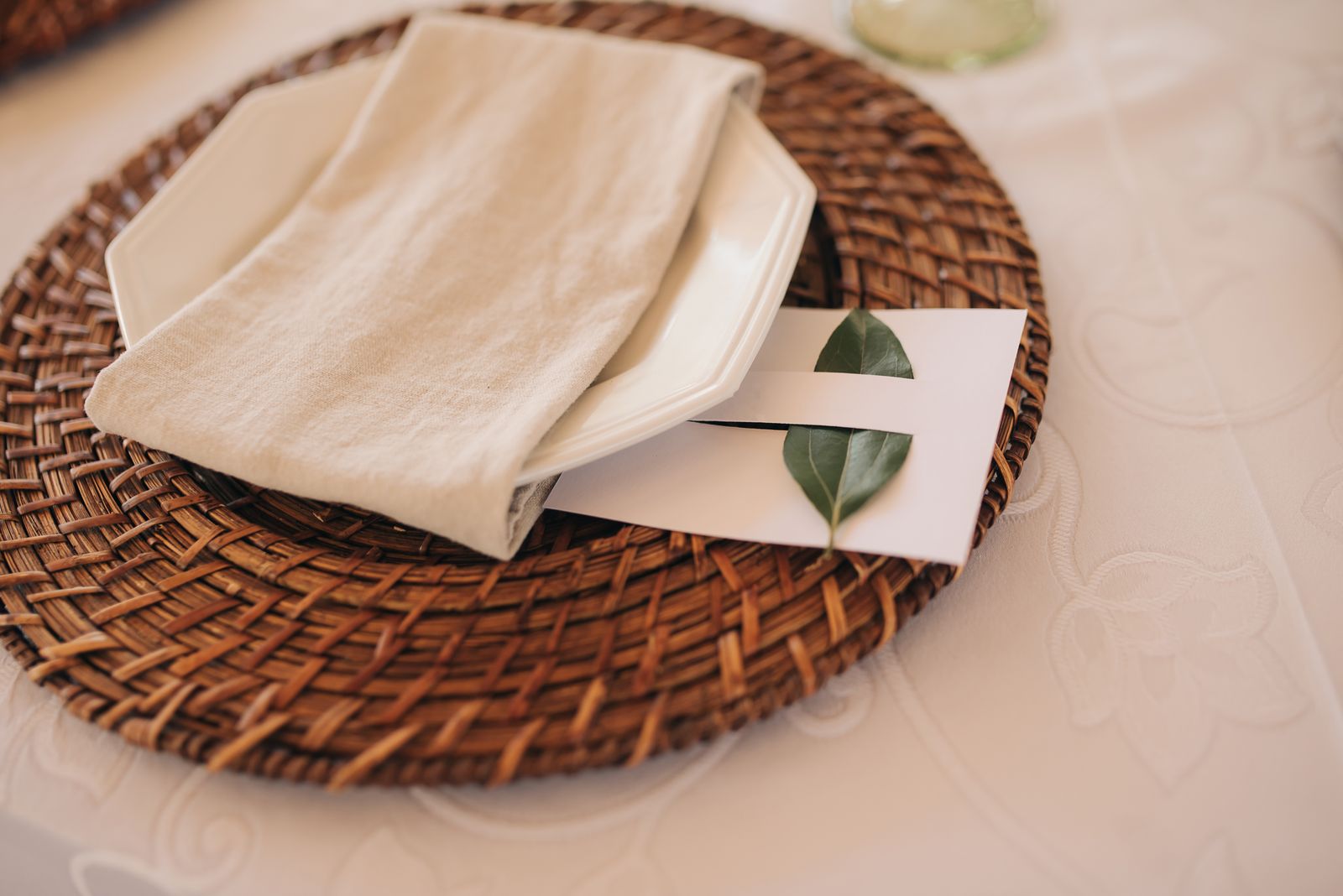
Meet the Three Textiles: Pinilian, Banig, Abaca
You do not need a textile encyclopedia. You need to recognise three families and know what each one does under a bowl.
Pinilian (Ilocos)
Pinilian is a tightly woven cotton with a raised, pick-up pattern lifted by hand during weaving. The patterns are geometric, often binakol or kusikus motifs, and the palette runs from indigo and rust to natural cream. Pinilian is structured. It sits flat, holds a crease, and behaves like linen under a plate. Use it when you want the textile to add graphic order to a table of round wooden pieces.
Banig (Samar, Basey, Sulu)
Banig is a woven mat made from pandan or tikog leaves, most famously in Basey, Samar, and in different palettes across the Sulu archipelago. It is warm, textural, and firm. As a placemat under a wooden bowl, banig gives you a physical platform, not just a visual one. The palette is honey, cream, ochre, and occasional cochineal red. Banig is the easiest textile to pair with acacia because they share the same undertone.
Abaca (Bicol, Leyte)
Abaca is a fibre from a plantain relative, spun and woven into runners, table cloths, and napkin weaves. It is coarser than cotton, drapes with weight, and reads as a warm neutral. Abaca is the quiet layer. It softens the table without adding pattern, which makes it the correct base when your wooden pieces are already doing the visual work.

When the whole table is the piece
Our family hosting set is built to be the anchor of a full textile-and-wood scene, plates, bowls, and serving pieces that a runner and mats can wrap around.
Shop the Family Hosting Set →Pairing Logic: Grain, Weave, and Color Temperature
Once you can name the textiles, the pairing decisions come down to three variables: direction, temperature, and hierarchy.
Match or contrast direction
Wood has a grain. Runners and mats have a warp. When the grain of a long serving board runs the length of the table and the runner runs the same way, the eye reads calm. When you turn the board perpendicular to the runner, you create tension, which is useful for a centerpiece meant to draw the eye. Pick one on purpose. Do not let it happen by accident.
Warm wood, warm weave, safe result
Acacia sits in the warm brown family, often with a red undertone in older pieces. Banig in honey or ochre is the safest visual match, because they share temperature. If you want a more composed, gallery-quiet look, contrast the warm wood with a cool textile: a cream or slate abaca runner, or an oatmeal linen underneath. Avoid pairing cool acacia (the greyer end) with hot cochineal reds, which will make the wood look tired.
The 70/30 rule
On any table, one layer is the hero and one is support. If the wood is the hero (a large serving bowl, a boodle-length board), the textile is support: a plain runner, unfussy placemats, no patterned napkins. If the textile is the hero (a striking pinilian runner in binakol), the wood is support: quieter forms, single tone, no carving or contrast. Two heroes fight. One always wins by making the other look busy.
When to skip textile entirely
A boodle fight served the traditional way, banana leaf directly on the table, needs no runner. A long acacia serving board with charcuterie or grilled fish does not need a mat under it, because the board is the mat. In both cases, the textile would fight the intent. A bare table is a legitimate styling choice when the meal is meant to be shared with hands, not with layers.
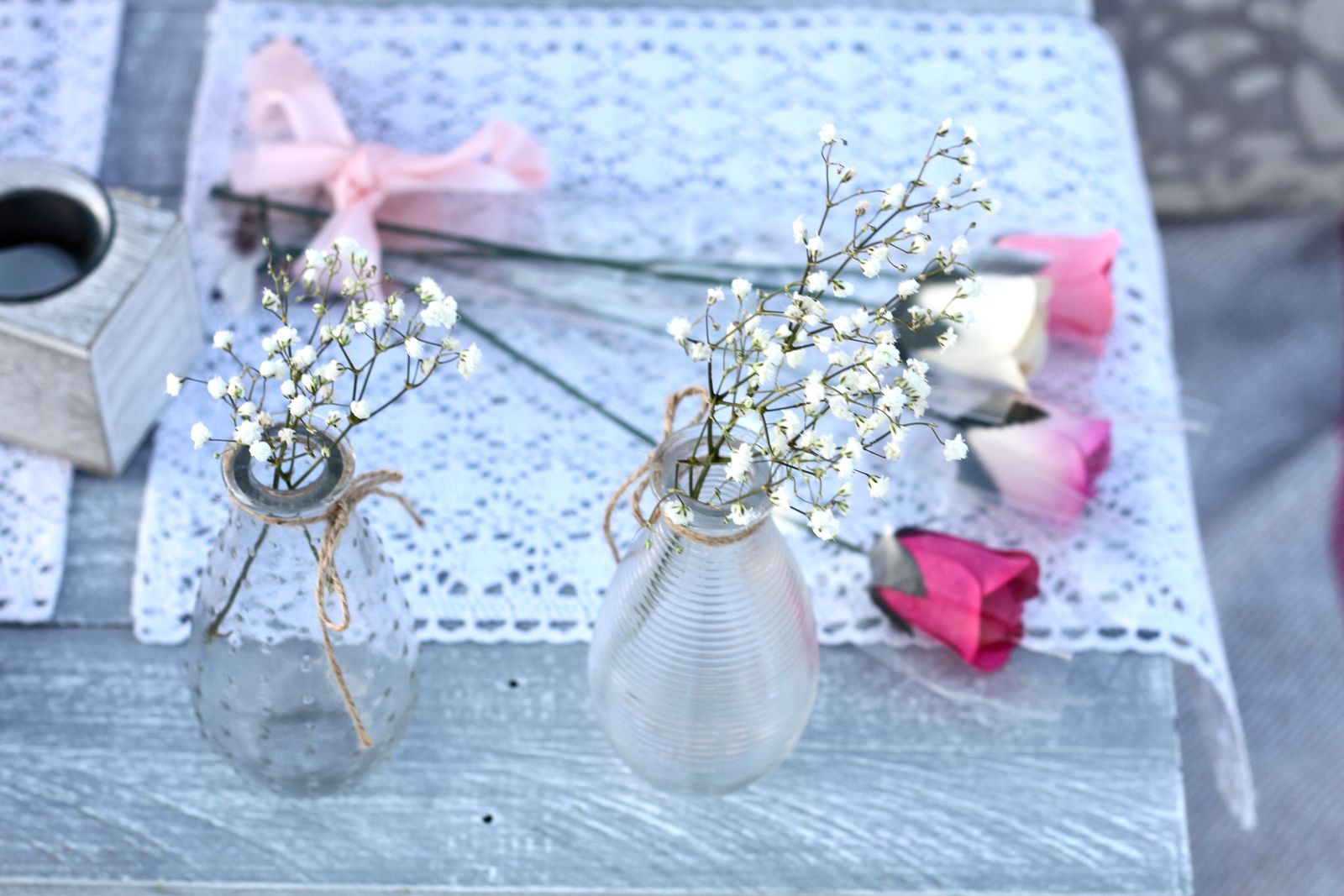
Five Table Scenes to Copy or Adapt
Rules are easier when you can see them staged. Here are five scenes, from the everyday to the holiday, that you can rebuild with the pieces you already own.
1. Everyday breakfast for two
Single abaca runner down the centre of the table. Two ina plates for pandesal and eggs, small acacia bowls for tsokolate or fruit. No patterned napkins, no centerpiece. The textile is a quiet base, and the food is the color. This is the scene that teaches restraint. For more on the workflow behind pieces like these, see our guide on modern Filipino kitchen styling.
2. Sunday lunch with family
Banig placemats at each seat, honey or ochre. A gorosin bowl set in the centre for rice, ulam, and a shared vegetable. No runner, because the banig mats already carry the textile weight. Napkins in a plain cotton or unbleached linen. The wood and the woven pandan share warm undertones and read as one material family.
3. Merienda for four
Pinilian napkins are the hero, folded and set at each place with a small acacia bowl for kakanin, bibingka, or fresh fruit. Skip the runner. The pattern in the napkins is enough. A single wooden serving board in the middle for suman or ensaymada ties the scene together.
4. Holiday centerpiece
Layer a banig mat down the centre of the table as a base, then a shorter abaca runner on top offset slightly. A family hosting set arranged along the length, alternating plates and bowls, with candles low so the light catches the weave. This is the one scene where two textiles are permitted, because the wood is doing so much narrative work that the layered textiles read as ground, not competition.
5. Modern minimalist
A single plain linen runner, oatmeal or slate, and one wooden serving piece placed off-centre. That is the whole scene. This works when the room is doing the styling, good light, a considered wall, a low arrangement of leaves. The restraint reads as confidence, not emptiness.

Everyday layering, without the fuss
The ina plate set is sized for daily meals, which makes it the piece most likely to teach you what your textiles actually do under wood.
Shop the Ina Plate Set →Mistakes to Avoid When Layering Textiles Under Wood
Most styling problems are one of five mistakes. If your table feels off, run through this list first.
The full-coverage tablecloth
A tablecloth that reaches the floor hides the table entirely. It also flattens the wooden pieces on top, because they no longer have a hard surface to sit against, only more soft fabric. If you must use a full cloth for a formal setting, choose a plain, low-contrast weave and add a runner over it to give the wood something to register against.
Competing patterns
A pinilian runner with binakol motifs plus patterned plates plus embroidered napkins is three heroes on one table. Pick one. If the runner is the hero, the plates are plain. If the plates are patterned, the runner is a solid weave. The 70/30 rule from Chapter 3 exists precisely to prevent this.
Wet textile under warm wood
A damp runner under a hot serving bowl traps moisture against the base of the wood, which lifts grain, dulls finish, and can leave visible rings. Always let your textiles dry fully before the meal, and use a folded napkin or trivet as a buffer under any bowl coming straight from the stove. For more on protecting your pieces, see our guide on displaying wooden tableware at home.
Novelty prints
A jeepney-print runner or a barong-embroidered placemat under a hand-turned acacia bowl fights the material honesty of both pieces. The wood is quiet. The textile should be quiet in the same register. Save the novelty prints for a casual buffet, not a table where the wood is the anchor.
Ignoring scale
A tiny pinilian runner under a large hosting set looks like a scarf someone forgot. A long abaca runner under three small merienda bowls looks like a bowling lane. The textile should extend past the pieces at each end by roughly the width of a plate. That gives the eye a frame without swamping the wood.
Building a Small Textile-and-Wood Wardrobe
You do not need a linen closet. You need three textile pieces, chosen well, that cover most of the scenes above.
The starter three
Buy one runner in a neutral abaca or plain cotton, four banig placemats in honey or cream, and six napkins in unbleached linen or plain woven cotton. That combination covers everyday meals, Sunday lunch, and merienda without any of the pieces feeling like a costume. Add one hero later: a pinilian runner in a pattern you love, once you know how the neutrals behave with your wood.
Neutral base, one patterned hero
Think of your table like a wardrobe. Neutrals do the daily work. One patterned piece rotates in for occasion. If you buy three patterned runners at once, you will use one and store two, and the stored two will fade in a drawer.
How to store textiles
Roll, do not fold. Folded creases in pinilian and abaca become permanent shadows after a year. Store rolled around a cardboard tube, wrapped in plain cotton, away from direct sunlight and out of the kitchen where oil vapour can settle into the weave. Wash by hand or on delicate, air dry flat.
Where to source ethically
Buy from provincial weaving co-ops when you can, either directly on trips or through vetted retailers who name the community. Pinilian from Ilocos, banig from Basey in Samar or from Sulu, abaca from Bicol. Avoid mass import copies that use the visual language without paying the weavers. If a shop cannot tell you where a piece was woven, assume it was not woven where you hope. For a broader view on choosing pieces that match your table, see our guide on choosing acacia bowl sizes, and think of textile purchases with the same discipline.

A single anchor piece
If you want one wooden object to build a whole textile scene around, the gorosin bowl set gives you a sculptural centre that reads correctly on any weave.
Shop the Gorosin Bowl Set →Once the wardrobe is small and considered, styling stops feeling like styling. It just becomes how you set a table. For ideas on what to actually serve on the pieces, our guide on Filipino dishes for wooden tableware covers the food side of the same question.
Frequently Asked Questions
Can I use a full tablecloth with wooden tableware, or does it defeat the purpose?
You can, but the wood loses much of its presence. If the setting is formal enough to require a full cloth, choose a plain low-contrast weave and lay a runner over the top so the wooden pieces have a firmer visual ground to sit against.
What color textiles work best with acacia wood?
Warm neutrals in the honey, oatmeal, and cream family are the safest match, because they share undertones with acacia. Cool cream or slate reads more composed and gallery-quiet. Avoid hot cochineal reds against greyer acacia, which will look tired.
Where can I buy authentic pinilian and banig without traveling to Ilocos or Samar?
Look for retailers who name the specific weaving community, not just the region. Manila-based shops working with provincial co-ops are increasingly common. If a listing does not name a barangay or a weaver group, assume the piece is a copy rather than a commissioned original.
How do I keep textiles from staining under warm food bowls?
Use a folded napkin or a small trivet as a buffer between hot bowls and any textile. Let runners and placemats dry fully before setting the table, and spot-clean spills with cool water and a mild soap. Do not scrub, which lifts fibres.
Is it okay to mix two Filipino textile traditions on one table?
Yes, when the wood is carrying the main narrative, as in a holiday centerpiece with a family hosting set. Otherwise, one textile tradition per table is a safer rule, because the visual grammars of pinilian, banig, and abaca do not always share the same rhythm.
What is the difference between banig and abaca for table use?
Banig is a firm mat woven from pandan or tikog leaves, best used as a placemat because it holds its shape. Abaca is a fibre spun into cloth, best used as a runner or a napkin because it drapes with weight. Banig is a platform, abaca is a layer.