The workshop before it opens
The workshop is behind a house on a side street in San Fernando, Pampanga. You reach it by walking through a small sari-sari store, past a covered patio where laundry is drying, and out into a shaded lot where three long tables are set up under a corrugated roof. There is a lathe in the corner, a rack of bowl blanks waiting on the far wall, and the smell of mineral oil hanging low over everything. At six in the morning the roosters are still going and the workshop is empty. By half past seven, six women have arrived, tied their aprons, and started work.
The men do the felling and the milling and the rough turning. That work happens elsewhere, in bigger sheds with louder machinery, and it gets its own telling in our piece on the journey from tree to table. This workshop is the other end of the process, the quiet end. The bowl arrives here as a rough shape, still holding the tool marks from the lathe, and it leaves here as a finished piece ready to be wrapped and shipped. Everything that happens in between is done by hand, and every one of those hands belongs to a woman.
We spent a week here, watching and asking questions. This is what we saw.
The women at the tables
Aling Cita is the oldest. She is sixty-three and has been sanding wood in Pampanga workshops since she was nineteen. She sits at the first table with two younger women, Rowena and Marissa, both in their thirties, both mothers of school-age children. The three of them handle the first three grits of sanding, which is the roughest and most repetitive stage. Aling Cita is the one the other two ask when a bowl comes through with a knot or an unusually stubborn tool mark. She looks at it, runs her thumb across the surface, and points. They keep going.
At the second table are Ate Merla and her sister, Ate Nena. They handle the finer grits and the transition to oil. Ate Merla is the fastest oiler in the workshop, which is a specific kind of skill: enough oil to feed the wood, not so much that it pools, worked in with the palm rather than a cloth. She learned from her mother-in-law, who used to finish narra furniture in the same neighborhood decades ago.
The sixth woman is Jenny. She is the youngest, twenty-eight, and the newest, only two years in the craft. She works the third table alone, doing final buff and quality check. Every finished bowl passes through her hands before it goes into paper. If a piece is not right, it goes back. Nobody argues with Jenny, not because she is unkind about it but because she is almost always correct.
Why this happens in Pampanga
Pampanga is a woodworking province. It has been for centuries. Betis, a barangay in Guagua, is famous nationally for its church-carving tradition, and that reputation extends across the wider region as a place where wood is taken seriously. When you drive through parts of San Fernando or Bacolor, you pass small workshops the same size as ours, most of them tucked behind houses, most of them run by families that have been doing this work for two or three generations.
The women in our workshop did not learn from a school. They learned from mothers, aunts, mothers-in-law, and neighbors. Aling Cita's own mother sanded santo figures for the church-carvers of Betis in the sixties. Ate Merla and Ate Nena grew up in a house where their father did the rough carpentry and their mother did the sanding, and the family joke was that the men made the shapes and the women made them worth touching. That joke turns out to be a fairly accurate description of what we saw here.
What Pampanga has that a lot of provinces do not is a labor tradition around wood specifically. It is not the same as the weaving tradition in the Cordilleras or the shell-craft tradition in Cebu. It is its own thing, and it is a woman's thing at the finishing end. The province's larger relationship with the tree itself, where the acacia is grown, felled, and moved, is something we cover in our essay on acacia and Philippine forestry. What happens in this particular workshop is downstream of all of that, but it is also its own inheritance.
The finishing that nobody photographs
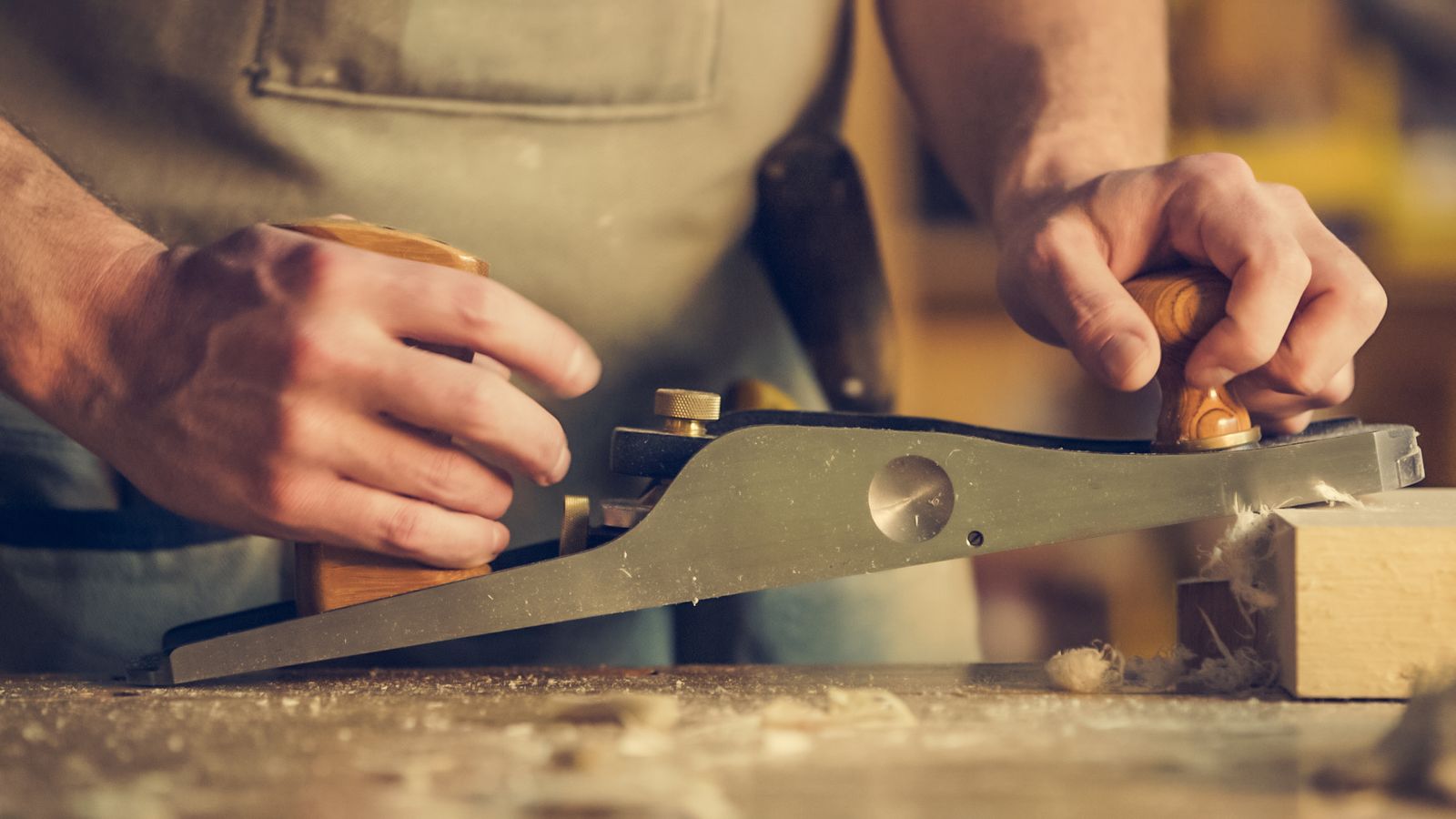
Most marketing photography around wooden tableware shows the moment a bowl comes off the lathe. It is a good moment. The chips fly, the shape appears, the color deepens. It looks like craft. But the truth is that the lathe stage is maybe an hour of work per bowl. The finishing stage, which almost nobody photographs, is fifteen to twenty hours.
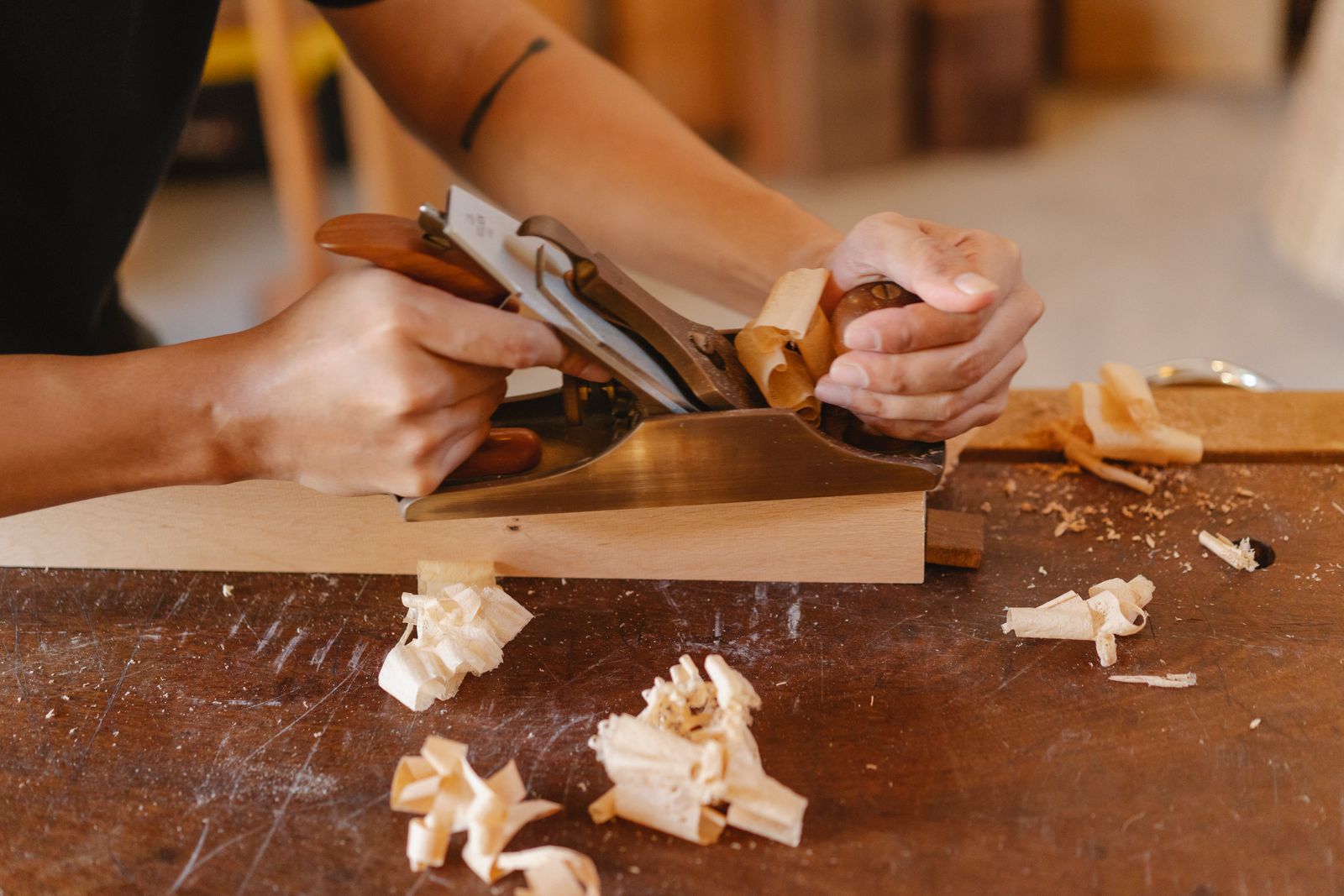
Here is what fifteen hours of finishing actually looks like. Aling Cita starts a bowl on 80 grit and works the outside first, then flips it and works the inside, moving her sanding block with the grain and never against it. She hands it to Marissa, who takes it up to 120. Marissa hands it to Rowena, who takes it to 180. That is table one. It has taken about ninety minutes, and the bowl now looks, to an untrained eye, finished. It is not.
At table two, Ate Nena starts on 240 grit and works up through 320 and 400. Between grits she wipes the piece with a damp cloth to raise the grain, then lets it dry, then sands again. This is the step that separates a decent bowl from an heirloom one. Skipping it is why some wooden bowls feel fuzzy after the first wash. Doing it means the surface stays smooth for years. Ate Nena has done this step so many times that she does not think about it. She just does it, the way a person who has driven the same road for thirty years does not really navigate the road.
Then the oil. Ate Merla warms a small bottle of food-safe mineral oil in her hands, tips a puddle into the bowl, and works it into the wood with her palm in slow circles. She lets it soak for twenty minutes, wipes off what has not been absorbed, and sets the bowl on a rack. Twenty-four hours later she does it again. Then a third time, two days after that. This is why our acacia bowls arrive already conditioned, dark, and ready to eat from, instead of raw and thirsty.
"The wood tells you when it has had enough. You just have to stop treating your hand like it is separate from the wood."
That is Ate Merla, describing how she knows when to stop oiling. She said it while oiling. She did not stop working while she said it. She has never used a moisture meter and never intends to. Her mother-in-law did not use one either.
Finally the buff. Jenny sits with a soft cotton cloth and a small tin of beeswax and buffs each piece until the light catches the grain a certain way. The way she checks is by tilting the bowl toward the workshop's single hanging bulb. If the shine breaks evenly across the curve, it is done. If there is a dull patch, it goes back to the oil rack. This is why every finished piece looks like every other finished piece, and why the pieces in a matched set actually match.
What the day actually pays
We want to be honest about what this work pays, because a lot of heritage-craft brands are vague on this point, and vagueness is usually hiding something.
The six women at this workshop are paid a day rate above the Central Luzon regional minimum wage. They are paid for a full day whether or not there are enough bowls to fill it. They get the standard Philippine national holidays off and paid, and half-day on Saturdays. There is a small health stipend that covers PhilHealth premiums plus a bit more, and each of them has a thirteenth-month bonus written into the arrangement. Lunches are brought from home, but the workshop provides coffee, water, and merienda in the afternoon.
None of this is heroic. It is above minimum, not radically above. It is what a workshop that respects the people doing the work should pay, and it is less than the same women would earn in a call center in Angeles City if they were willing to do that work instead. Most of them are not, because this work is close to home, matches their kids' school hours, and belongs to a lineage they care about. Those things have real value that a payslip does not fully capture, but a payslip still has to clear a floor, and this one does.
We are not going to pretend the arrangement is perfect. Craft wages in the Philippines have structural ceilings that no single workshop can break by itself. What we can say is that we know the day rate, we know it clears the regional minimum with margin, and we are willing to publish that fact rather than hide behind the language of empowerment. When a brand tells you a product is handmade by artisans in the Philippines and gives you nothing else, that brand is asking you to trust vibes. The number is more useful than the vibes.
What they say when the machines stop
At noon the workshop stops for lunch. The women bring their food from home, wrapped in banana leaf or in old ice cream containers. They sit on the covered patio, eat, and talk. We asked them, over the week, what they wished people knew about their work.
Aling Cita wanted people to know that a bowl is not just wood. It is somebody's afternoon. She said if the customer knew how long the sanding took, they would treat the piece differently, and probably enjoy it more.
Rowena wanted people to know that the pieces they make travel further than they do. She has never left Central Luzon, but a bowl she sanded last year is now in a kitchen in Toronto. Her cousin who lives there sent her a photo of it on the counter with a mango cut on top.
Ate Merla wanted people to know that the oil finish is not decorative. It is protection. If a customer never re-oils the bowl, it will still be fine for years, but a light re-oil once or twice a year is what makes it last a lifetime. The same rule she uses on bowls applies to boards, and we walked through the specifics of that habit in our guide to the best wood for cutting boards in the Philippines. The technique came out of this workshop.
Jenny wanted people to know that she does not accept a bowl she would not eat from at her own table. That is her whole quality standard. It is stricter than any spec sheet we could write.
"The wood is not ours. It was somebody's shade tree. We just take care of it after."
That was Aling Cita, at the end of the week, when we asked her what she wanted the last word to be. It was not a marketing line. It was a fact about how she thinks about her own hands.
The workshop closes at half past four. The women untie their aprons, wash up, and walk home through the same side street they came in on. The bowls they finished today will be wrapped in paper tomorrow, boxed the day after, and on their way to households in Manila, Cebu, San Francisco, Sydney, and Dubai by the end of the week. Somewhere, somebody will unpack one of them, run a hand across the surface, notice that the grain feels like the skin of a mango, and not know why. The answer is at the third table, in a small workshop behind a house in San Fernando, where Jenny is buffing the next one.