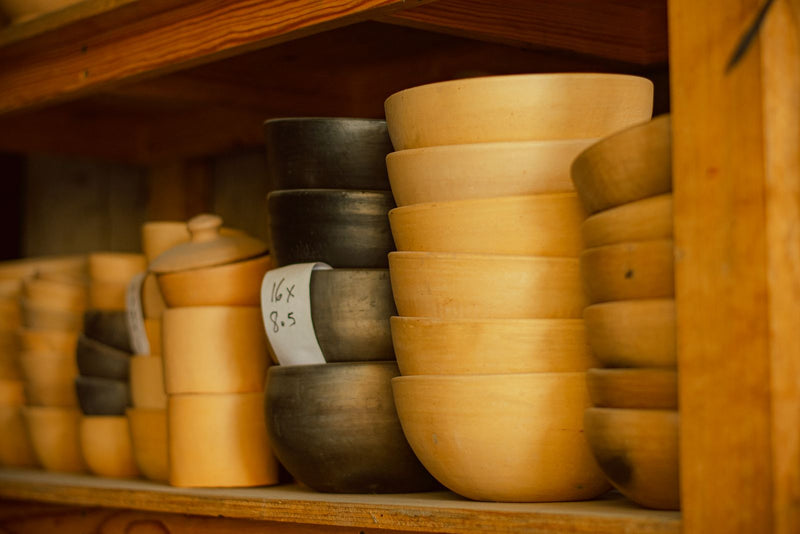
Most of what gets repeated about acacia wood online comes from people who have never actually lived with it. The myths get passed around in WhatsApp groups, Facebook marketplace comments, and well-meaning advice from titas who once heard something from someone. We have spent years working with Philippine acacia, eating off it, washing it, watching it age. Here is what the evidence actually says, with the kamayan and salu-salo context that most Western-written guides skip.
Before we go myth by myth, a quick frame. If you want the long-form background on the species, our complete acacia wood guide covers the botany, the milling, and the finishing. This piece is for the reader who already knows what acacia is and just wants the secondhand warnings tested against actual evidence.
Myth 1: "Acacia is just a cheap teak substitute"
This one annoys us the most because it gets the lineage backwards. Acacia was not invented to imitate teak. Filipino artisans were carving raintree (the local name for Samanea saman) into bowls, dulang, and platters long before the 1990s Southeast Asian teak boom turned teak into a luxury furniture brand. The "cheap substitute" framing came from the export trade, not from how Filipinos actually used the wood at home.
Where the myth came from
In the 1990s, Indonesian and Burmese teak got positioned as the premium hardwood for outdoor furniture. Acacia, which is cheaper to mill and more abundant, got slotted as the budget alternative in international catalogs. The hierarchy stuck. Western buyers learned "teak good, acacia okay-but-lesser," and that framing trickled back into Philippine retail.
What acacia actually is
Samanea saman, the raintree, is native-naturalized across the Philippines. It is the broad-canopy tree that shades half the plazas in Luzon and Visayas. The wood is dense, oily, and naturally rot-resistant. It is closer in working character to walnut than to teak.
Density and hardness numbers
On the Janka hardness scale, the standard reference for wood resistance to denting:
- Acacia (Samanea saman): roughly 1,700 lbf
- Teak: roughly 1,070 lbf
- White oak: roughly 1,360 lbf
- Mango wood: roughly 1,070 lbf
Acacia is harder than teak. By a lot. The "cheap substitute" line collapses the second you put a number on it.
The Filipino lineage
Lola's dulang, the low wooden table for family kainan, was almost never teak. It was usually narra, kamagong, or acacia. Acacia served Filipino households long before it served IKEA catalogs. The wood does not need to apologize for being itself.
Myth 2: "Wooden tableware harbors bacteria, it's unsanitary"
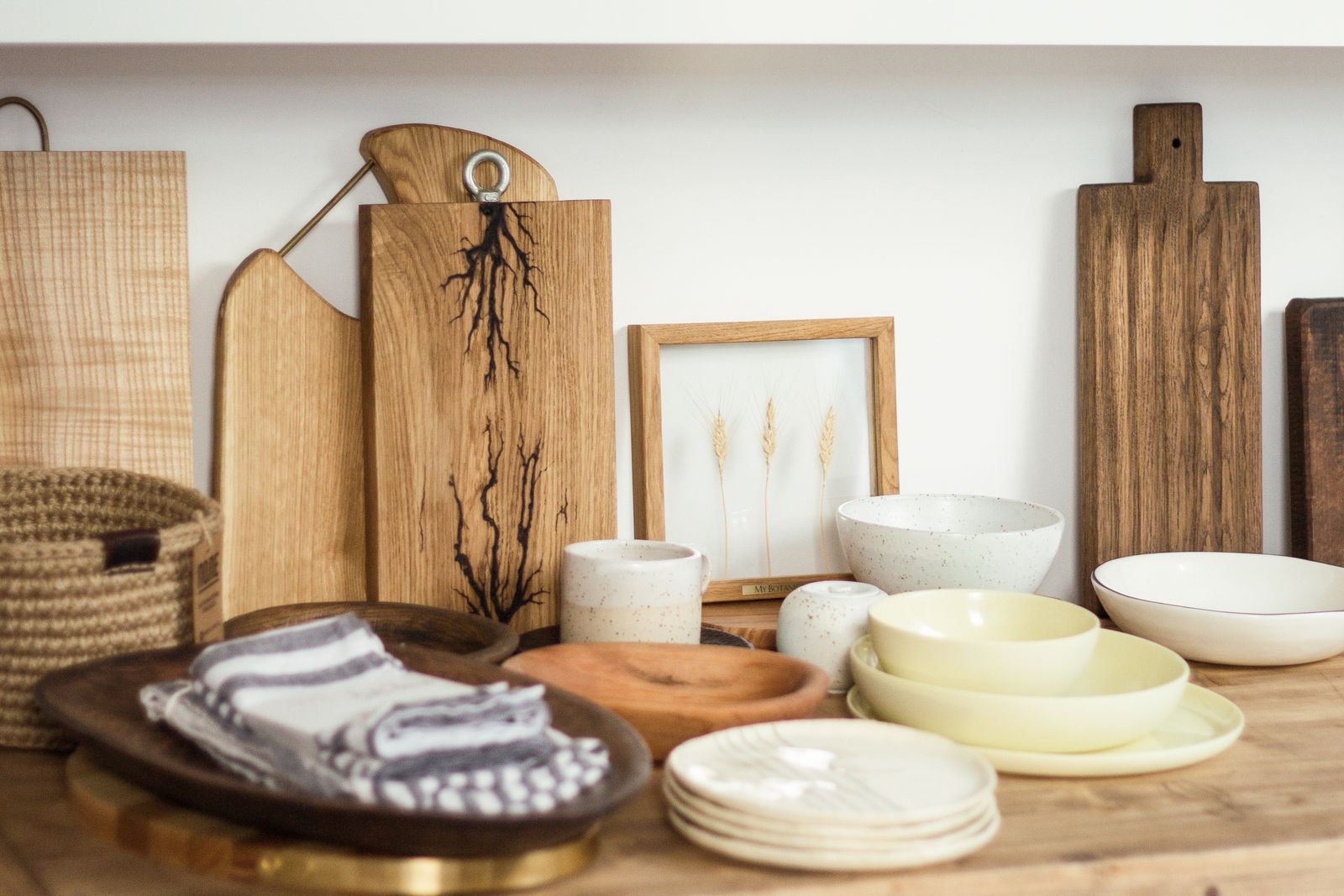
This is the myth that scares titas the most, and it is the most thoroughly debunked one in the actual scientific literature. The 1994 study by Dr. Dean Cliver at the University of California, Davis tested wooden and plastic cutting boards inoculated with Salmonella, Listeria, and E. coli. The results were the opposite of what everyone assumed.
What the Cliver study actually found
On wooden boards, 99.9 percent of the bacteria died within three minutes. On plastic boards, the bacteria survived and multiplied overnight, especially in knife scars. Cliver and his team repeated the test with hardwoods, softwoods, new boards, and scarred old boards. The wood consistently outperformed the plastic. Most of the people who quote "wood is unsanitary" have never read past the headline of the 1980s studies that the Cliver work specifically corrected.
Why wood's tannins inhibit bacteria
Hardwoods like acacia contain natural tannins and antimicrobial compounds. Bacteria absorbed into the wood fibers cannot reproduce, and they die off. Plastic offers them a sealed surface to multiply on. This is biology, not folklore. For a deeper read, our piece on whether acacia wood is food-safe walks through the FDA classifications and the practical handling rules.
What lola already knew
Generations of Filipino kitchens used wooden palayok lids, wooden ladles, wooden chopping blocks. Nobody got sick. That track record was not luck. It was the wood doing exactly what the lab studies later confirmed.
Practical sanitation
- Rinse with hot water immediately after use, no overnight soaking.
- For raw meat or fish: coarse salt scrub, then hot water rinse, then air dry standing up.
- Once a month: rub with food-grade mineral oil or coconut oil to keep the surface sealed.
- Never the dishwasher. Never the microwave.

Bowls that pass the food-safety test
Our Gorosin set is finished with food-grade mineral oil and built from a single piece of Samanea saman, the same dense hardwood the Cliver study favored over plastic.
Shop the Gorosin Bowl Set →Myth 3: "You can't put hot Filipino food on acacia, it'll warp"
Warping is real. It just has almost nothing to do with the temperature of your sinigang. Wood warps when its moisture content swings unevenly across the grain. Hot soup transferred into a bowl for fifteen minutes does not move enough moisture to warp the piece. Submerging the same bowl in a sink full of suds for two hours absolutely does.
What actually causes warping
Sustained water exposure. Uneven drying (one side wet, one side dry). Direct sun on a wet piece. Sudden humidity shifts. Hot food does not appear on this list because the moisture from steam evaporates off the surface long before it penetrates the wood.
Real-world Filipino heat tests
Sinigang at simmering temperature, ladled into an acacia bowl: fine. Kare-kare straight from the palayok onto an acacia serving platter: fine. Nilaga broth at a rolling 95 to 100 degrees Celsius, served and eaten over twenty minutes: fine. Acacia is built for this. Filipino artisans selected it precisely because it handles serving heat without complaint.
Where the limit actually is
The genuine no-go is direct stovetop contact, the inside of a 200-degree oven, and prolonged contact with anything frozen solid. Acacia is a serving wood, not a cooking wood. Use it for the moment between the stove and the table.
The dishwasher question
This one deserves its own answer. The short version: no. The long version, with the chemistry of what dishwasher heat and detergent do to wood fibers, is in our piece on whether you can put acacia wood in the dishwasher. Hand wash is not a marketing suggestion. It is a structural requirement.
Myth 4: "Acacia is endangered or illegally logged"
This is a case of mistaken identity. The endangered acacias are African and Australian species in the CITES appendices, not Samanea saman. Philippine acacia is in many regions considered invasive, not threatened. Confusing the two is like confusing a Tagalog person with a Tagalog-speaking person from another archipelago: same family name, very different status.
Where the confusion comes from
The genus name "Acacia" covers more than 1,300 species. Some, like African blackwood (Dalbergia melanoxylon, technically a rosewood relative), are CITES Appendix I and II protected. None of those are Samanea saman. The raintree is its own genus now, reclassified in 2005, precisely to clear up taxonomy confusion.
Samanea saman's actual status
Fast-growing. Wide-canopy. Naturalized across tropical Asia, Latin America, and the Pacific. In some regions it is so vigorous it is listed as invasive. There is no shortage. The species reproduces aggressively and matures in 15 to 25 years.
How Philippine acacia is sourced
Reputable Filipino acacia comes from fallen trees after typhoons, farm thinning to clear pasture, plantation harvest cycles, and urban removal projects when old plaza raintrees come down. The supply is genuinely abundant when sourced this way. The cheap imported acacia from less regulated chains is a different question.
What ethical sourcing looks like
Traceable supplier records. Specific province of origin. Artisan workshops, not anonymous factory floors. Our breakdown of whether acacia is actually sustainable goes deep on what to ask before you buy.

Everyday plates from traceable acacia
The Ina set is our daily-driver plate range, milled from raintree sourced through Pampanga and Bulacan workshop networks.
Shop the Ina Plate Set →Myth 5: "All acacia looks the same, the grain is fake or painted"
The opposite is true. If two acacia bowls look identical, one of them is probably not acacia. Genuine Samanea saman shows wild swings in color across a single piece, and that variation is the species's most reliable identifier.
Why every piece looks different
Acacia heartwood (the inner trunk) runs dark chocolate to deep amber. Sapwood (the outer growth ring) runs pale cream to honey. Mineral content in the soil where the tree grew adds streaks of olive, rust, and almost-black. A bowl cut from one part of a trunk will look nothing like a bowl cut from the next.
How to spot the imposters
- Stained rubberwood is the most common fake. Look for grain that is too consistent and a color that sits on top of the wood rather than running through it.
- Sand a hidden corner gently. Real acacia stays the same color underneath. Stained rubberwood goes pale.
- Smell it. Acacia has a faint nutty, slightly sweet scent. Rubberwood smells generically like sawn pine.
- Weight it. Acacia is heavy for its size. Rubberwood feels noticeably lighter.
The two-tone signature
The thing Filipino buyers should actively look for is the heartwood-to-sapwood transition: a dramatic dark-to-light band running through the piece. That is the genuine article showing its biology. Uniform amber across a whole platter is the signal to walk away.
Why uniformity is the red flag
Mass-produced fakes are stained or printed to look "consistent" because that is what mass production demands. Real wood does not cooperate. The variation is not a defect. It is the proof.
Myth 6: "Wood tableware is too high-maintenance for daily Filipino use"
This one we get from busy households who imagine wood means hours of buffing. The actual maintenance is laughably small. We have ina-anak wood pieces in our own kitchens that have outlasted three ceramic dinner sets and a melamine collection bought "for the kids."
The five-minute monthly routine
- Wipe clean and let dry completely.
- Pour a teaspoon of food-grade mineral oil (or coconut oil) onto a clean cloth.
- Rub into the wood in circular motions, both sides.
- Let sit 20 minutes.
- Wipe off the excess.
That is it. Once a month. Less than the time it takes to reheat ulam.
How acacia handles Filipino acids
Suka, patis, calamansi, bagoong, kalamansi-soy, vinegar-heavy paksiw: all fine on a properly oiled acacia surface. The oil layer is the barrier. The reason acidic foods stain cheap wood is that the wood was never sealed in the first place. Quality acacia, finished correctly, shrugs the acids off. Wipe clean and move on.
Longevity vs ceramic and melamine
Ceramic chips. Melamine scratches, then leaches with hot food. Acacia just darkens with age and gets handsomer. A good acacia piece bought when your eldest was in elementary school will still be on the table at their wedding. It is genuinely a multi-generation purchase, which is why it appears so often at boodle fights and salu-salo across the country.
When wood IS the wrong choice
We will be honest. Acacia is not the right tool for:
- Dishwashers. The heat and detergent strip the oil finish and warp the grain.
- Microwaves. Uneven heating cracks the wood from the inside out.
- Freezers. The moisture freeze-thaw cycle splits fibers.
- Long soaks in soapy water. Same problem as the dishwasher, slower.
If your household runs entirely on dishwasher cycles and microwaved leftovers, a wooden tableware set will frustrate you. Be honest about your kitchen rhythm before you buy.

The heritage piece worth passing down
The Pamilya board is our largest serving piece, sized for kamayan and built from heartwood thick enough to survive decades of family meals.
Shop the Pamilya Board Set →Frequently Asked Questions
Is acacia wood real wood or engineered?
It is solid, real wood, milled from the trunk of the Samanea saman tree. Quality acacia tableware is never plywood, MDF, or laminate. If a piece feels suspiciously light or shows a layered edge, it is not solid acacia.
Is acacia wood safer than bamboo for food?
Acacia is solid wood with natural antimicrobial tannins. Bamboo is technically a grass and is almost always laminated with adhesives, some of which contain formaldehyde. For food contact, properly finished acacia is the safer long-term choice.
Why does my acacia bowl have dark streaks, is it damaged?
Those streaks are mineral deposits absorbed by the tree from the soil during growth. They are entirely natural and a sign of authentic acacia, not damage. Uniform color would be the actual warning sign.
Can acacia wood crack on its own?
Properly finished acacia stored at normal household humidity will not crack on its own. Cracking usually traces back to sudden moisture loss, direct sun exposure for long periods, or being left near a heat source like a stove or oven vent.
Is Philippine acacia the same as African acacia?
No. Philippine "acacia" is Samanea saman, the raintree, reclassified out of the Acacia genus in 2005. African acacias are different species, and the CITES-protected ones (like African blackwood) are not what Filipino tableware is made from.
How long should a quality acacia piece actually last?
With monthly oiling and hand washing, a quality acacia bowl or board lasts 20 to 40 years easily, often longer. Many Filipino households still use acacia pieces inherited from grandparents. This is genuinely a multi-generation purchase, not a seasonal one.