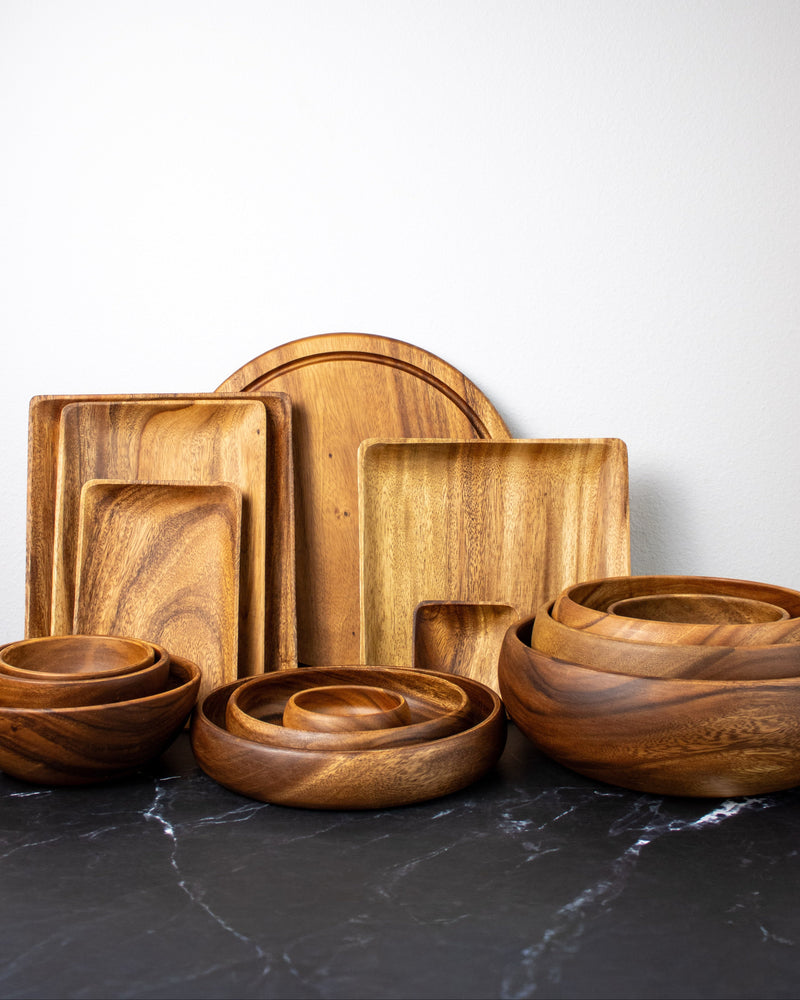
Why acacia rewards small daily habits over big interventions
An acacia bowl or plate is not a fragile object. Left in a corner of the shelf and only used at fiestas, a good piece will look almost new after twenty years without any real care at all. The tricky case is the one most Filipino households actually have, which is a set of bowls and plates that go on the table almost every night. Kanin, ulam, sinigang, arroz caldo, occasional tuyo, occasional adobo. This piece is not being neglected. It is being loved. And loved wood needs a rhythm, not a rescue.
The daily acacia care checklist that follows is the rhythm. Five habits, each of them small enough to slip inside the meal cleanup you already do, that together add years of quiet life to every piece on your shelf. Nothing here is fussy. Nothing here takes longer than a minute except the weekly oiling, which takes five. The whole point of a daily checklist is that if you do it correctly, you never need a rescue guide.
Why "daily" is the right level of care
The reason to keep care habits daily rather than weekly or monthly is not that acacia is delicate. It is that damage compounds. A single overnight soak does not ruin a bowl. Twenty overnight soaks in a row raise the grain, dry out the finish, and eventually crack the rim. A single evening stored slightly damp does not mould a board. Forty such evenings will. Daily care is not about maximum effort. It is about interrupting the compounding before it accumulates.
What this checklist prevents
Done consistently for a year, these five habits prevent almost every failure mode we see in returned or damaged pieces: warping, cracking, mould on the underside of boards, rancid smells inside deep bowls, and the slow chalky dryness that leaves the wood looking tired well before its time. If you have already run into any of these, our companion piece on the nine acacia care mistakes everyone makes walks through what caused each one and how to reverse the ones that are still fixable.
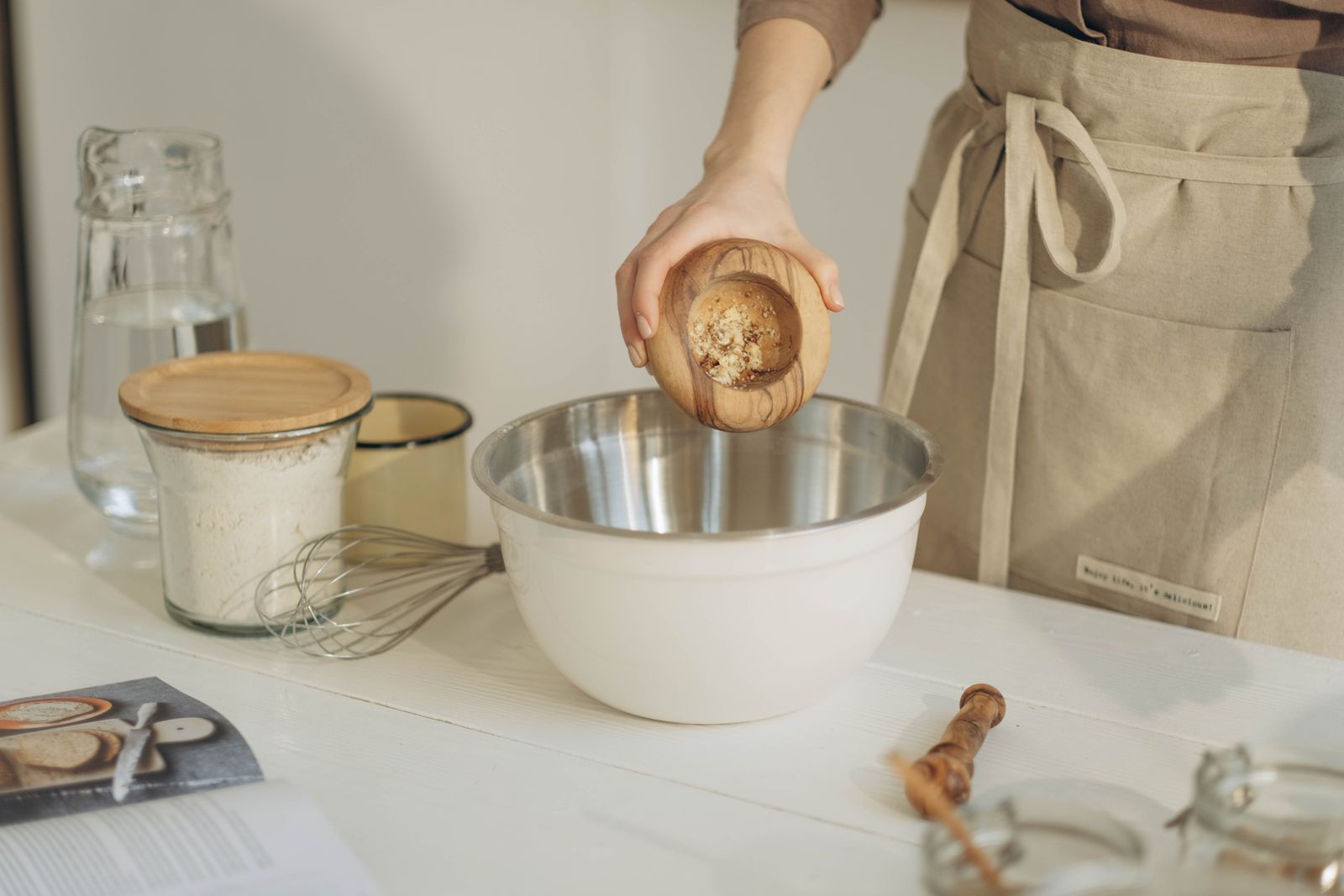
The five daily habits, at a glance
Here is the entire checklist, in the order it happens across a normal day. Read it once, print it out for the inside of a cupboard door if that helps, and then never think about it again. It becomes automatic within a week.
- Wash within 30 minutes of the last bite, in warm water, with mild soap, for under a minute per piece. No soaking, no dishwasher, no hot water.
- Dry every face with a cotton towel right after the rinse, then stand the piece upright on edge so air can reach both faces at once. No lay-flat drying, no stacking damp.
- Return each piece to a shelf that is dry, away from the stove, out of direct sun, and has some airflow. Reset any piece that is still cool to the touch back to the drying rack for ten more minutes.
- Do a 30-second surface check at the end of the day, under good light, on any piece that got used. Look for set stains, chalky patches, hairline lines at the rim, and fuzz on the grain.
- Once a week, spend five minutes on a light oil touch-up for the pieces you used most, so the finish never gets thirsty enough to crack.
How long the whole rhythm actually takes
Add up the times honestly. Habit 1 is 60 seconds per piece and happens at the sink you are already at. Habit 2 is 20 seconds per piece and happens in the same movement. Habit 3 is a glance. Habit 4 is 30 seconds and happens once, not per piece. Habit 5 is five minutes once a week. For a household with six pieces of acacia in daily rotation, this comes to about seven minutes of care per day plus five minutes on Sunday. That is the honest budget.
Who this checklist is for
This is written for anyone whose acacia sits at the middle of the kainan most nights, not the polite corner of the display cabinet. If you serve rice from a wooden bowl to more than one person, more than three times a week, this list is for you. Occasional-use display pieces need much less, and can safely skip the weekly oiling as long as the piece still passes the water-bead test once a month.

Bowls that earn the daily rhythm
The Ama bowl is the piece most likely to be in nightly rotation in the homes that own it, generous enough for family-style sinigang and honest enough for a solo bowl of arroz caldo.
Shop the Ama Bowl →
Habits 1 and 2: the 90 seconds around every meal
Almost every failure that ever happens to an acacia piece traces back to the wash and dry. Ninety seconds of the right habits at this window buys you years. Ninety seconds of the wrong habits, repeated nightly, costs you the piece. This is the most important part of the checklist, and it is the part most households get wrong not by carelessness but by force of habit.
Habit 1: wash within 30 minutes, in under 60 seconds
Get the piece off the table and into the sink while the meal is still winding down, or at the very latest while the coffee is still hot. Food residue that sits on wood for hours starts to set into the grain and needs more scrubbing to lift, which is exactly the kind of extra water contact you want to avoid. Run warm water, the temperature you would wash your own hands with, not hot. Put a small drop of any mild standard dish soap on the soft side of a kitchen sponge. Wash the piece in one continuous 45 to 60 second pass, inside and out, and rinse.
Total water contact should be under 90 seconds from start to finish. Never soak. Never leave the piece in a sink of dishwater while you deal with the rest. Never put it in the dishwasher, even the top rack, even the delicate cycle. If you want the full story of why one dishwasher cycle can do more damage than a year of hand-washing, our piece on whether acacia is dishwasher safe walks through the heat and detergent chemistry.
Habit 2: dry every face, then stand the piece upright
The moment you pull the piece out of the rinse, dry it. Not "let it drip a bit and finish on its own." Dry it. Use a clean cotton or linen tea towel, and wipe every face, inside and outside, top and bottom, including the underside of the base where water pools. This takes about 20 seconds per bowl and is the single most impactful habit in this entire checklist. Wood does not warp from water on one face. It warps from water on one face and dry air on the other.
Then, and this is the second half of the habit, stand the piece upright on a wire dish rack or lean it against the backsplash so air reaches both faces at once. A bowl goes rim-down. A plate stands on its edge. A board stands on its short edge. Never lay a piece flat on the counter or on a dish mat while the wood is still even slightly cool to the touch, because that is the position where warping quietly happens overnight.
Handling stubborn residues without soaking
Sinigang broth, adobo drippings, patis splashes, and turmeric from a curry all lift off wood surprisingly easily if you catch them within the hour. If food is genuinely stuck, sprinkle a small pinch of coarse salt on the spot, rub gently with half a lemon or a damp sponge for about 15 seconds, then rinse. The salt is a gentle abrasive that will not scratch the finish, and the acid in the lemon lifts protein and pigment stains. For stains you did not catch in time and are already set, our guide on removing stains from acacia wood covers the deeper rescue.

A serving bowl set that repays the rhythm
The Gorosin bowl set is built to be the centre of the table, the piece that sees ulam, gulay, and rice pass through it every night. Wood this generous only stays this generous with the 90-second habit.
Shop the Gorosin Bowl Set →Habit 3: the shelf, and the 20-second placement reset
The second stretch of the daily checklist happens away from the sink. Where a piece lives between meals matters more than most households realize, and a small habit here prevents a slow set of problems that build up over months rather than days. This is the least dramatic habit in the checklist and one of the most important.
The three shelf conditions acacia needs
Store acacia on a shelf or in a cupboard that meets three simple conditions. First, dry, meaning not the cabinet directly under the sink where the pipes sweat, and not a cupboard that traps humidity during the rainy months. Second, away from heat, meaning not the shelf next to the stove, not directly above the kettle, and not in the line of the toaster oven vent. Third, out of strong sun, meaning not the shelf that catches the late afternoon light through a west-facing window. Sun bleaches the grain from warm honey to pale grey faster than any wash cycle, and dry cabinet-warm air pulls the finishing oil out of the wood one degree at a time.
The 20-second placement reset
Here is the habit itself, and it takes 20 seconds. When you go to put a piece away, run the pad of your thumb along the underside or the base. If the wood is even faintly cool to the touch, it is not fully dry. Do not shelve it. Put it back on the drying rack for another ten to fifteen minutes and shelve it later. This one check catches almost every case of wood stored damp, which is the invisible cause of most mould that appears on the underside of boards and inside the base of deep bowls. If a fuzzy patch has already appeared on a favourite piece, our guide on removing mould from wooden tableware covers the salt-and-vinegar rescue that handles most surface mould without damaging the finish.
Stacking, or not stacking
If you must nest bowls of the same shape or stack plates to save shelf space, do it only when every piece is completely dry, room-temperature, and separated by a clean cotton napkin or a small strip of felt. The napkin lets any residual moisture escape rather than getting trapped between two wooden faces. Better still, store the pieces side by side or in a rack that keeps them upright. Acacia should touch air more than it touches other acacia.
Habits 4 and 5: the daily check and the weekly oil touch-up
The last two habits are what stops small problems from becoming big ones. Habit 4 happens every evening and takes 30 seconds. Habit 5 happens on the same day each week and takes five minutes. Between them, they turn what would otherwise be an occasional rescue effort into something you barely notice.
Habit 4: the 30-second evening surface check
At the end of the day, once the pieces are dry and shelved, look at them. Not each one individually, and not every day, but the ones you actually used that day. Pull them under the kitchen light or hold them near a window with side light. You are looking for four specific things.
- Set stains that did not fully lift in the wash. Turmeric rings, red wine shadows, patis darkening. Fresh stains are easy. Set stains are annoying. Catching one on day one means salt and lemon fix it. Catching it on day five means sanding.
- Chalky or dry patches where the surface has lost its warm sheen. This is your reminder to move up the weekly oil to today.
- Hairline lines at the rim or across the base, especially on bowls that took hot food. Fresh hairlines are stable if the piece is oiled that same evening. Ignored, they travel.
- Fuzzy grain where the wood fibres have lifted after washing. Fine fuzz is normal after a rougher wash and buffs out with a dry cotton cloth. Persistent fuzz is a sign the wood is thirsty.
None of these should be alarming when caught early. The habit exists specifically so you never have to be alarmed.
Habit 5: the weekly five-minute oil touch-up
Pick a day of the week that works, usually a Sunday evening, and give the pieces you used most that week a light oiling. Use food-grade mineral oil, or a food-grade mineral oil and beeswax blend. Never olive oil, vegetable oil, or unrefined virgin coconut oil, all of which go rancid in a warm humid climate and transfer the smell to the next meal that touches the piece.
The technique is simple. Pour a small amount of oil onto a clean cotton rag, wipe it into the surface with the grain until the whole piece has a thin even coat, let it sit 20 to 30 minutes so the oil absorbs, then wipe off any excess with a dry cotton cloth. The piece should not feel greasy afterwards. Just warm and slightly darker in tone. Do this for the three or four pieces you used most that week. For a full explanation of what "food-safe" actually means at each step of this process, our piece on whether acacia wood is food safe covers the standards.
How to tell when a piece needs oil out of turn
Sometimes the weekly rhythm is not enough, especially in the dry stretch between January and April when the air pulls moisture out of everything. The simplest test is the water bead. Flick a few drops of water onto the surface. If the drops bead up and sit high, the finish is healthy. If the drops soak straight in and darken the wood on contact, the piece is thirsty and needs oil today, not on Sunday.

Plates that quietly ask for the weekly five minutes
The Ina plate set is on the table most nights of the week in the homes that own it, which is exactly the piece the weekly oil habit is designed for. Thick, honest wood, meant to be used.
Shop the Ina Plate Set →Frequently Asked Questions
How long should the whole daily routine actually take?
For a household with six acacia pieces in daily rotation, the honest budget is about seven minutes of care per day, plus five minutes once a week for the oiling. The wash and dry take 90 seconds per piece and happen inside the meal cleanup you already do. The shelf check and the evening surface look are each under a minute total.
What if I miss a day, or several days?
One missed day is invisible. Three or four missed days may leave a piece slightly dry or a stain slightly set. A week or two of missed care usually just means doing a slightly longer version of the weekly oil to catch up. What causes real damage is not missing days but consistently doing the wrong version, especially soaking overnight or dishwashing regularly.
Do display pieces need this checklist too?
Not the daily half. A piece that only comes out for fiestas or serves as a fruit bowl on a shelf needs a wipe with a barely damp cloth once a week and a light oiling once every two or three months. The daily wash and dry only applies to pieces that meet food regularly.
Is warm water safe if the piece has been in the freezer or the fridge?
Bring the piece to room temperature first. A cold bowl straight from the fridge, hit with warm rinse water, faces a temperature gradient across the wood that can lift the grain and stress the joints. Let it sit on the counter for 10 minutes, then wash normally.
What is the single most important habit if I can only do one?
Habit 2, the towel dry and upright air. If you do nothing else on this list, drying every face immediately and standing the piece on edge to finish air-drying is what prevents the majority of warping, splitting, and mould problems. It takes 20 seconds and is worth more than any weekly effort you can add on top.
Can I use the same routine on wooden utensils and cutting boards?
Yes, with one small addition. Boards and utensils that see raw protein, raw fish especially, benefit from a diluted vinegar wipe after the wash and before the dry, roughly one part white vinegar to four parts water on a clean cloth. Everything else in the checklist applies unchanged.