What Handaan Actually Means
Walk into a Filipino home on the day of a handaan and the first thing you notice is that the food was clearly cooked for more people than will fit at the table. That is not a miscalculation. That is the entire point. A handaan is not a party in the Western sense, where the host curates an evening for a guest list. A handaan is an offering, made by the family, for whoever shows up. The day belongs to someone, a lola turning 80, a niece graduating, a tito who finally got the promotion. The food belongs to everyone who walks in.
Beyond "party": handaan as offering, not entertainment
The root word "handa" means to prepare, to be ready, to have something laid out. A handaan is the noun form, the laid-out thing itself. The host is not entertaining. The host is presenting. That distinction matters because it explains every quirk that follows. Why the rice cooker runs all afternoon. Why three lola titas keep arriving with extra ulam even after you said you had enough. Why nobody RSVPs but everyone shows up. The spread is the message: we have enough, please eat, you are welcome here.
This is the same instinct that powers all Filipino hospitality, the same reflex behind the way we set the table when guests are coming. The handaan is just that instinct dressed for an occasion.
Why every milestone becomes a handaan
Filipinos do not save the big spread for round numbers. A graduation handaan happens whether the graduate finished college, vocational school, or kindergarten. A promotion at work becomes a handaan because the new title means feeding the people who supported you to get there. A 60th birthday is a handaan because reaching 60 is a blessing that should be witnessed at a table. Even moving into a new apartment, the housewarming, gets framed as "pakain ko kayo," let me feed you. The milestone is the reason. The food is the proof.
Handaan vs salu-salo vs boodle fight
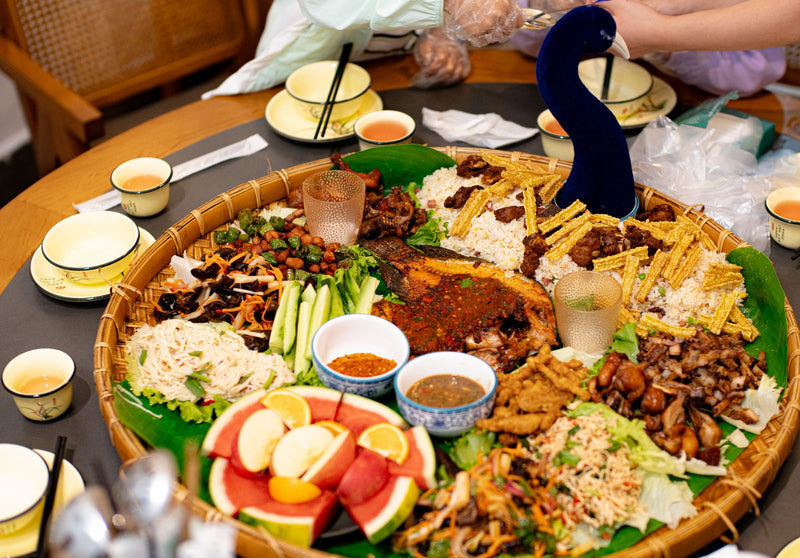
These three get conflated abroad, but the lines are clear inside a Filipino household. A salu-salo is a gathering, smaller, more intimate, usually weekly or monthly, often without a specific occasion. The family eats together, the food is generous but not staged. A handaan is bigger, occasion-anchored, and the table is dressed for the day. A boodle fight is a specific service style, banana leaves on a long table, no plates, everyone eats with their hands. A handaan can be served boodle-fight style if the host chooses, but the two words are not interchangeable. If you want to understand the boodle fight as its own format, we have written a full guide on how to set one up. For a handaan, plates and serving pieces are almost always part of the picture.
The Birthday Handaan, Decoded
A birthday handaan has a canon. Filipinos who grew up with it can clock when a dish is missing the same way a musician clocks a wrong chord. The canon is not strict, regions and families adapt, but there are anchor dishes that almost always appear, and skipping them gets noticed.
Pancit on the table is non-negotiable
Pancit is the one dish you cannot leave off a Filipino birthday table. The long noodles symbolize a long life for the celebrant, and serving short, cut noodles on a birthday is read as a small bad omen. Bihon, canton, palabok, malabon, pancit Molo, the family chooses based on region and preference, but the noodles must be long, and there must be enough that anyone arriving late still gets a generous serving. A common host move is to cook pancit in the largest pan you own and present it on a long board or platter so the noodles read as a single, continuous wish.
The must-have Filipino birthday spread
Beyond pancit, the canonical birthday spread looks roughly like this:
- Lechon, the roasted pig, anchor of any major handaan in the Visayas and a frequent star in Luzon too. For smaller crowds, lechon kawali or lechon belly stands in.
- A noodle dish, the pancit described above.
- Sweet-style Filipino spaghetti, with banana ketchup, hot dogs, and cheese. Children expect it. Adults pretend not to but always take a plate.
- Rice, always, and more than you think you need.
- Kakanin, the rice-based sweets, biko, suman, puto, kutsinta. These double as merienda and pabaon.
- The cake, with candles, sung over, photographed, and cut after the meal.
Vegetable dishes like pinakbet or chop suey, a soup like sinigang or nilaga, and a grilled item like inihaw na liempo round the spread out. Suka and patis are on the table by default. A bowl of sawsawan is set near the lechon.
Regional variation: Visayan, Tagalog, Ilocano
The handaan reads differently across regions. Visayan birthday tables lead with lechon Cebu, the skin crackling and seasoned heavily from the inside. Tagalog tables lean on a wider variety of ulam, kare-kare and menudo often appear, and the lechon may be smaller or replaced with lechon belly. Ilocano tables often feature pinakbet, bagnet, and dinengdeng, and the bitterness of ampalaya is welcomed rather than hidden. Bicolano handaan plates pull in laing and Bicol express. None of these are wrong. They are local accents on the same sentence: come, eat, the day is for you.
Milestone codes that change the menu
Certain birthdays get their own conventions. A 7th birthday for a child usually leans sweeter, more spaghetti, more cake, more party food, and the venue is often a relative's house or a small hall. An 18th birthday for a daughter, the debut, becomes a formal sit-down handaan with 18 roses, 18 candles, and a curated guest list, but the food still runs handaan-style. A 60th, called the sixtieth or the diamond birthday, is treated as a major life milestone, and the spread expands accordingly, with extended family expected to travel for it. A 90th or 100th birthday almost always becomes a community-wide event. The bigger the milestone, the more lechon.

Built for the full handaan spread
When the table needs to hold lechon, pancit, rice, kakanin, and three kinds of ulam at once, this set carries it.
Shop the Royal Hosting Set →Planning the Spread: A Host's Working Menu
The difference between a handaan that breathes and one that runs out of rice at 3 p.m. is planning. Most experienced hosts work backward from the headcount, but with one specifically Filipino adjustment.
Headcount math (always cook for 30 percent more)
If 40 people RSVP to a Filipino birthday, cook for 55. The math is not superstition. It is realistic. Filipino hospitality does not let a guest leave hungry, and it does not let a guest leave empty-handed either. Anyone who shows up unannounced (and they will, this is a feature of the culture, not a bug) needs to be fed without it showing. And the pabaon, the food guests take home in foil and tupperware, is portioned from what remains, not from a reserve. If you cook to the exact headcount, you have failed both invitations.
Rough quantities for a birthday handaan of 40 guests:
- Rice: 8 to 10 kilos uncooked.
- Pancit: 3 to 4 kilos noodles, prepared as one or two large pans.
- Lechon: a whole lechon for 40 is generous, lechon belly for smaller crowds works at roughly 250 to 300 grams per guest.
- Filipino spaghetti: 2 to 3 kilos noodles, sauced heavily.
- 2 to 3 ulam dishes, each portioned for 30 to 35 guests, since not everyone takes from every dish.
- Kakanin and dessert: enough that every guest leaves with some.
Anchor dish, supporting cast, dessert wall
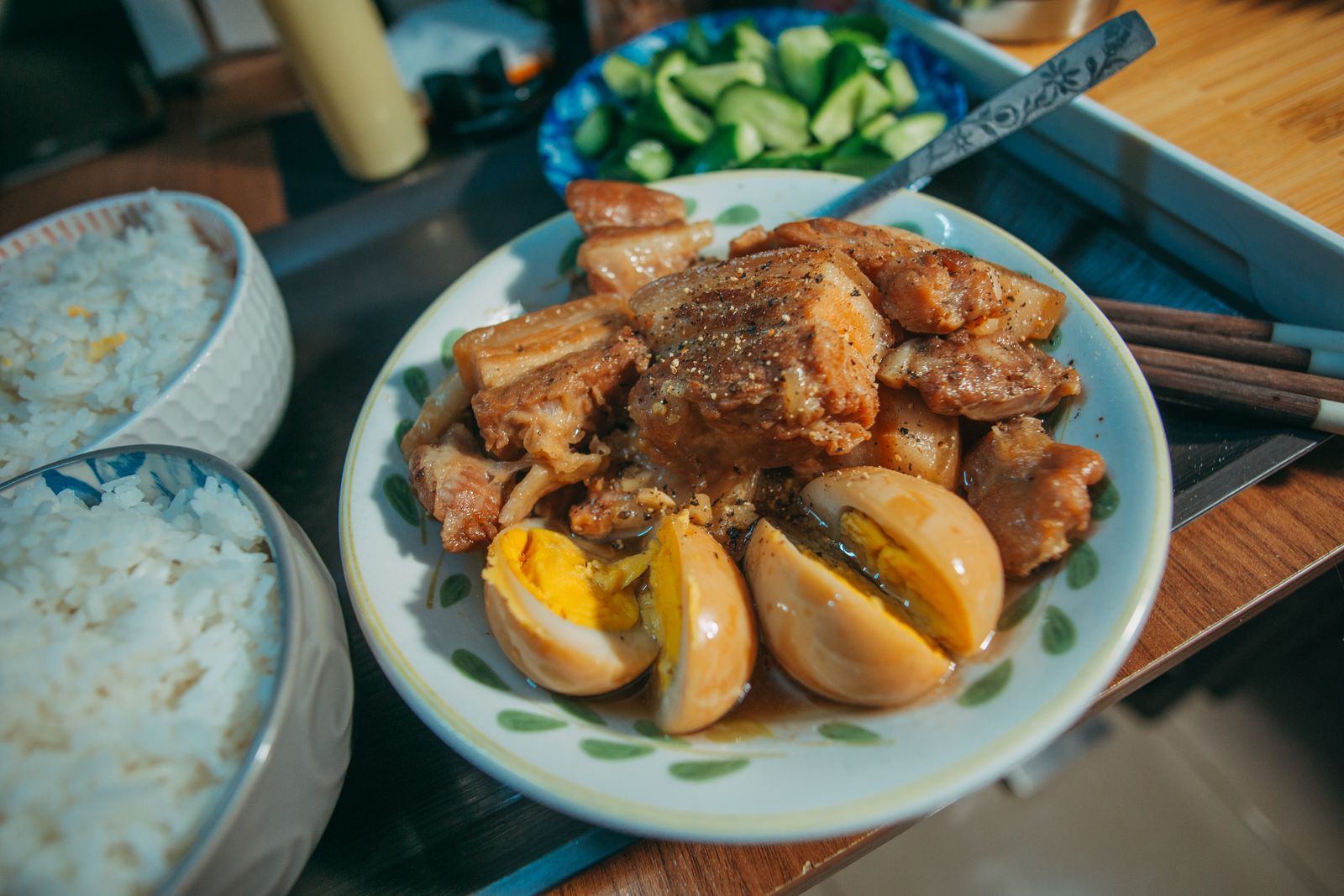
Think of the spread in three layers. The anchor is the dish the day will be remembered for, usually lechon, sometimes a humba or kare-kare if lechon is not happening. The supporting cast is the four or five ulam that hold up around the anchor, pancit always among them. The dessert wall is the kakanin, the cake, and often a halo-halo station or a leche flan tray. The dessert wall doubles as merienda for the long second wave of the day, after the formal meal but before guests leave. Choosing which dishes go on which serving piece gets easier when you think in these three layers.
What to pre-cook, what to finish day-of
Almost everything except the pancit and the grilled items can be cooked the day before. Adobo improves overnight. Kare-kare holds. Menudo and afritada are better on day two. Lechon is delivered, not cooked at home, unless you are doing lechon kawali. The day-of work should be: reheating, plating, the pancit, anything inihaw or fried last-minute, and the rice. The host who tries to cook everything on the day will be wrecked before the first guest arrives, and a wrecked host poisons the room. Pre-cook hard. Plate fresh.
The merienda layer guests did not know they needed
A Filipino handaan is not one meal. It is a meal plus a merienda plus pabaon. Guests start arriving an hour early. They want coffee and something to nibble. After the main spread, there is a lull where people sit and talk, and that lull demands kakanin, fresh fruit, and pichi-pichi or turon. The merienda layer keeps the day going. Without it, the celebration ends at the table. With it, the day rolls into the evening and the celebrant gets the long, slow goodbye that the milestone deserves.
Setting the Table for a Handaan
Where the food sits matters as much as what is in it. A handaan table has a flow, and getting the flow right is part of being a good host.
Buffet, family-style, or hybrid
Three formats dominate. Pure buffet runs the dishes along a long surface, guests line up, plate themselves, and find seats. Family-style sets everything on the dining table and guests pass and serve each other. Hybrid, which is the most common in Filipino homes, puts the anchor and a few large dishes on a buffet surface (a long table, a kitchen island, or a console pushed against a wall), and keeps the rice, the sawsawan, the pancit, and the smaller ulam on the dining table where people actually sit. Hybrid handles crowds without forcing everyone to queue, and it lets late arrivals plate themselves without disturbing the seated guests.
Serving pieces that carry the spread without crowding
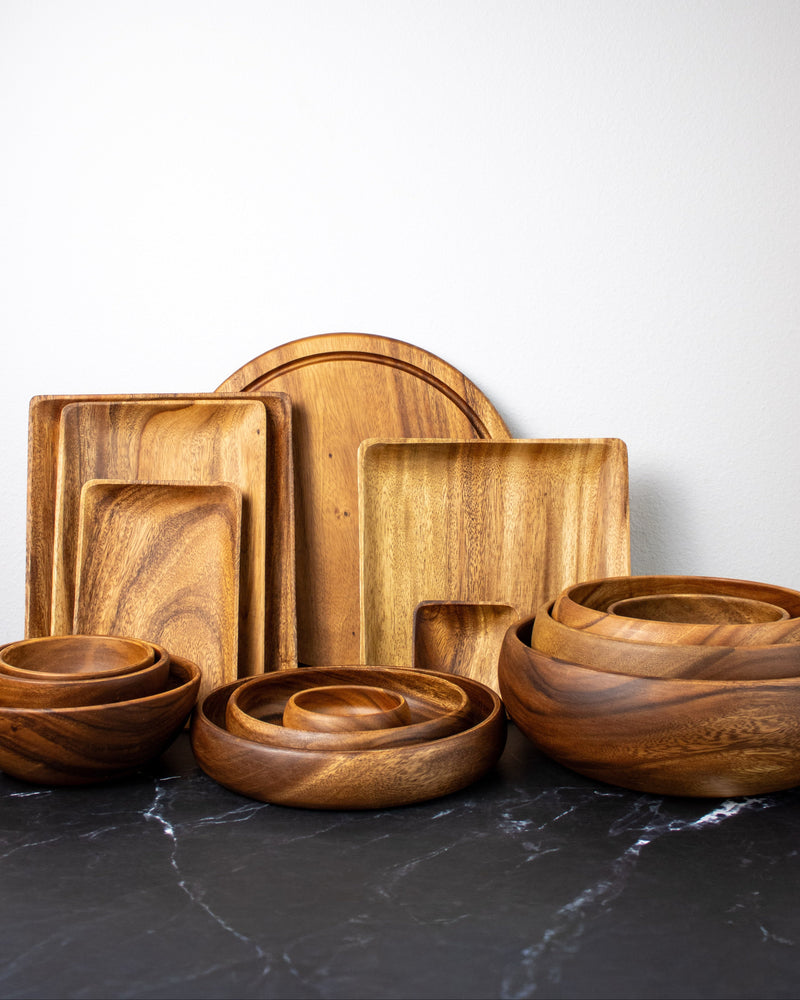
The most common handaan table mistake is using too many small dishes. Twelve small bowls look fussy and clutter the surface. A handaan should read generous, and the serving pieces should carry that. Large, long boards for pancit and grilled items. Wide, low platters for ulam. Deep round bowls for soup and saucy dishes. A separate large board or platter for lechon, set apart so the carver has room. Wooden serving pieces have a particular advantage here: they are large enough to hold real portions, warm to the eye against the food, and they do not chip when a tito sets a hot pan down on the corner.
Where lechon goes, where pancit goes, where the rice lives
Lechon goes at the end of the buffet line, or at the head of the dining table if it is staying whole, because it is the visual anchor and it draws the eye. Pancit goes near the start of the line, because guests reach for it first and the noodles travel well to a plate already loaded. Rice lives at the dining table, not on the buffet. Rice is the constant. A guest gets up for more rice three times in an evening, and walking to a buffet line three times kills the conversation. Sawsawan, suka, patis, kalamansi, all stay on the dining table within reach of every seat.
Why wooden serving boards anchor a long Filipino table
A long Filipino handaan table needs surfaces that quiet the room visually. Glass and bright ceramic on a packed table compete with the food. Wood does the opposite. It absorbs the visual weight, lets the colors of the ulam pop, and ties together a spread that might otherwise look chaotic. Acacia in particular reads warmly under the kind of overhead light most Filipino homes use, the same warm yellow that makes everyone look like family. Wood is also forgiving. A lechon dripping warm oil, a hot pancit pan set down quickly, a wineglass tipped by a cousin who got too animated. None of these wreck a wooden board.

The hybrid handaan layout, sorted
Long boards, wide bowls, and serving pieces that anchor the dining table while the buffet runs along the wall.
Shop the Family Hosting Set →The Unwritten Rules of Hosting
Every culture has the rules nobody writes down. Filipino handaan rules are simple to state and easy to break if you did not grow up with them. Here are the ones that matter.
Elders eat first, always
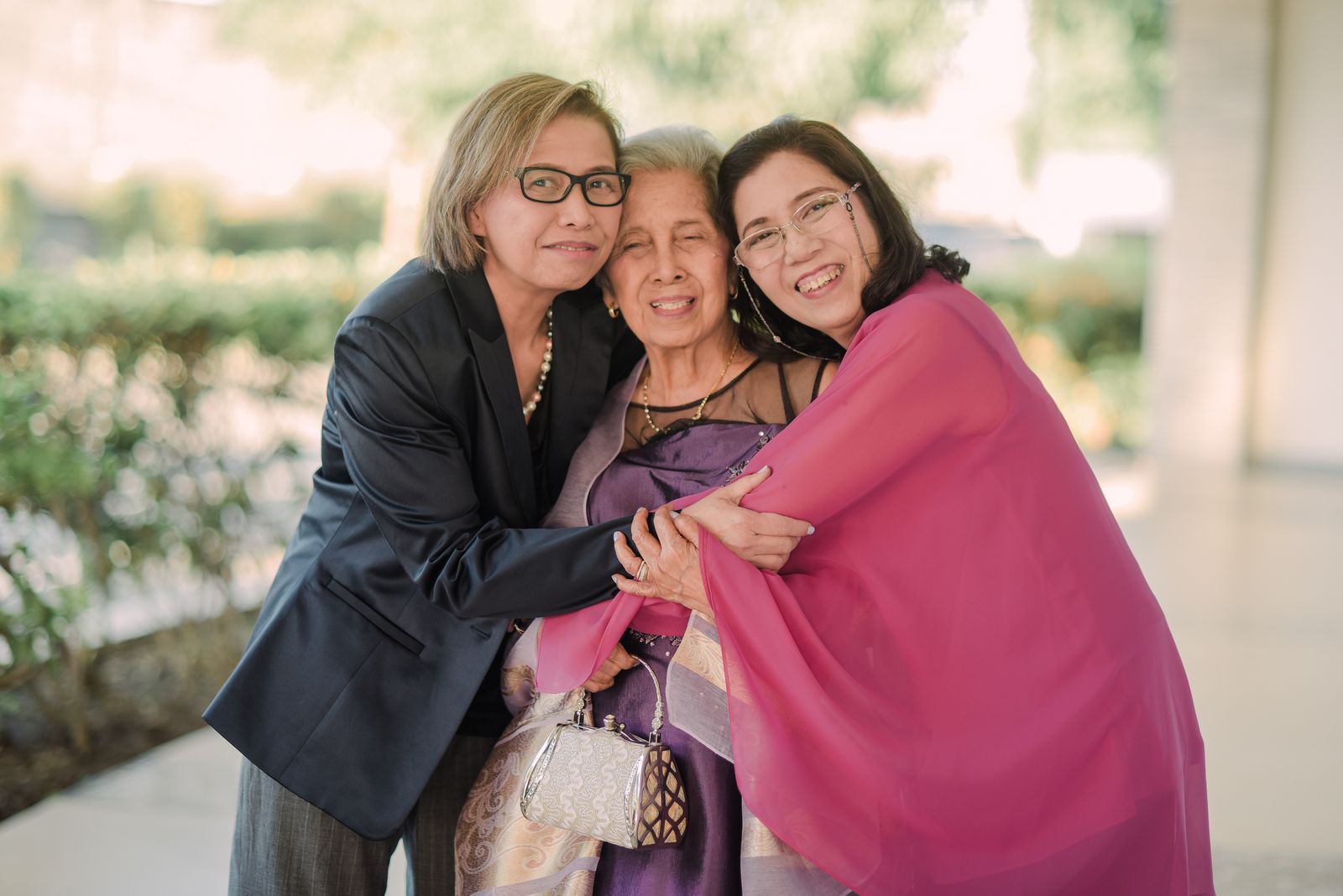
No exceptions. Lolo and lola, then the titos and titas, then the parents and adult guests, then the children, then the host. The host eats last and least. A younger guest who reaches for food before an elder has been served gets a look that they will remember for years. If you are a younger host or a first-time host, walk the elders to the table yourself, plate the first round for them if they let you, and only sit when they have started. This is not formality for its own sake. It is how Filipino tables show respect, and the day of a milestone is when that respect is most visible.
"Kain tayo" is an invitation, not a question
When a Filipino host says "kain tayo," let us eat, the guest is expected to demur, the host is expected to insist, and the dance happens at least twice before anyone actually sits. A guest who immediately says yes and walks to the table on the first invitation reads as eager in a way that is mildly off. A host who only invites once reads as uncertain. Repeat the invitation. Move toward the food. Pull out a chair for an elder. The dance is part of the welcome, not a delay.
Pabaon: the food guests leave with
Pabaon is the food packed for guests to take home, and it is half the celebration. A guest who leaves a handaan empty-handed has not been properly hosted. Keep extra foil, plastic containers, and small bags near the kitchen. Before guests leave, walk them to the kitchen and pack them a plate, even if they protest. The lechon is divided. The pancit is portioned. A small ziploc of kakanin goes on top. The pabaon is what makes the handaan stretch into the next day, when a guest opens their fridge at lunch and remembers the celebration.
Music, mano po, and the moment of the cake
Music plays from the moment the first guest arrives. OPM, ballads, sometimes a karaoke setup if the family leans that way. Children entering the room go to the elders and do mano po, taking the elder's hand to their forehead in respect. The moment of the cake is the formal pause in the day. Everyone gathers, the candles are lit, "Happy Birthday" is sung in English and often in Tagalog too, the celebrant blows out the candles, and a wish is made. The cake is cut, but only a token slice is eaten there. The rest is shared after the meal. Photos are taken at the cake. Always.
Beyond Birthdays: Handaan for Every Milestone
The birthday handaan is the most familiar form, but the same logic carries across every Filipino milestone. The table changes its outfit. The intent stays the same.
Graduation handaan
Smaller than a birthday, usually daytime, often held the day of the ceremony or the weekend after. The menu leans pancit-forward, because long noodles map onto a long, successful career ahead. Lechon may or may not appear, depending on the family and the level of school finished. A college graduation often justifies the full lechon. A grade school moving-up ceremony usually runs to lechon belly and a generous spread. Graduates wear their toga for the first round of photos, then change into something comfortable for the meal.
Promotion or housewarming
The frame here is "pakain ko kayo," let me feed you. A new job, a promotion, a new apartment, all become reasons to gather people who supported the path to that moment. These handaan tend to be smaller and adult-skewed, often evening, with beer and pulutan featured more prominently. The menu can be looser: lechon belly, sisig, inihaw na liempo, a grilled fish, pancit, rice. The point is less about canonical dishes and more about the gesture of feeding the people who helped.
Anniversaries and despedida: the bittersweet handaan
Wedding anniversaries, especially the 25th and 50th, become handaan that mix celebration with reflection. Despedida, the farewell meal for someone moving abroad or away, has the same bittersweet weight. These tables run quieter. The pancit is still there, but the music is softer and the speeches are longer. Pabaon at a despedida is heavier than usual, the host packing food for the traveler that they probably will not eat on the flight but will think about when they reach the new place. These are the handaan where the offering reads most clearly as love.
The same table setup adapts
What makes the handaan format so durable is that the table itself adapts. The same long boards that held lechon for a 60th birthday hold lechon belly for a graduation. The same wide bowls that carried kare-kare hold pinakbet a month later for a housewarming. The same serving pieces, used and used again, develop the small dings and warm patina that turn them from tableware into family objects. That is the long arc of the handaan: a table that is built once and used for every milestone that follows.

The everyday plates that hold the handaan
The plates guests reach for first, sturdy enough for lechon and rice, warm enough to look right under any handaan light.
Shop the Chenoweth Plate Set →Frequently Asked Questions
What is a handaan in Filipino culture?
A handaan is a prepared feast offered by a host on the occasion of a milestone, most often a birthday, graduation, anniversary, or housewarming. The root word "handa" means to prepare or to lay out, and the handaan is the laid-out thing itself. It is less a party for guests and more an offering made by the family to mark the day.
What food is must-have at a Filipino birthday handaan?
The canonical birthday spread includes pancit, lechon or lechon belly, sweet-style Filipino spaghetti, rice, a vegetable dish, a soup like sinigang or nilaga, kakanin, and the cake. Sawsawan with suka and patis sits on the table by default. Regional and family variations shift the supporting dishes, but pancit and rice are constants.
Why is pancit always served at Filipino birthdays?
The long noodles in pancit symbolize a long life for the celebrant, so cutting them short is read as an omen against that wish. Most hosts also serve pancit because it scales well to large crowds, holds at room temperature for hours, and travels easily as pabaon. The dish is both symbolic and practical.
How is a handaan different from a salu-salo or boodle fight?
A salu-salo is a smaller, often regular gathering with no specific occasion. A handaan is a larger, milestone-anchored feast with a dressed table. A boodle fight is a specific service style, no plates, banana leaves on a long table, eaten by hand. A handaan can be served boodle-fight style if the host chooses, but the words mean different things.
What is pabaon and is it expected at a birthday handaan?
Pabaon is the food packed for guests to take home, and yes, it is expected at any proper handaan. A guest who leaves empty-handed has not been fully hosted. Hosts keep foil, containers, and bags near the kitchen and pack a plate for each guest before they leave, often walking them to the kitchen to make sure it happens.