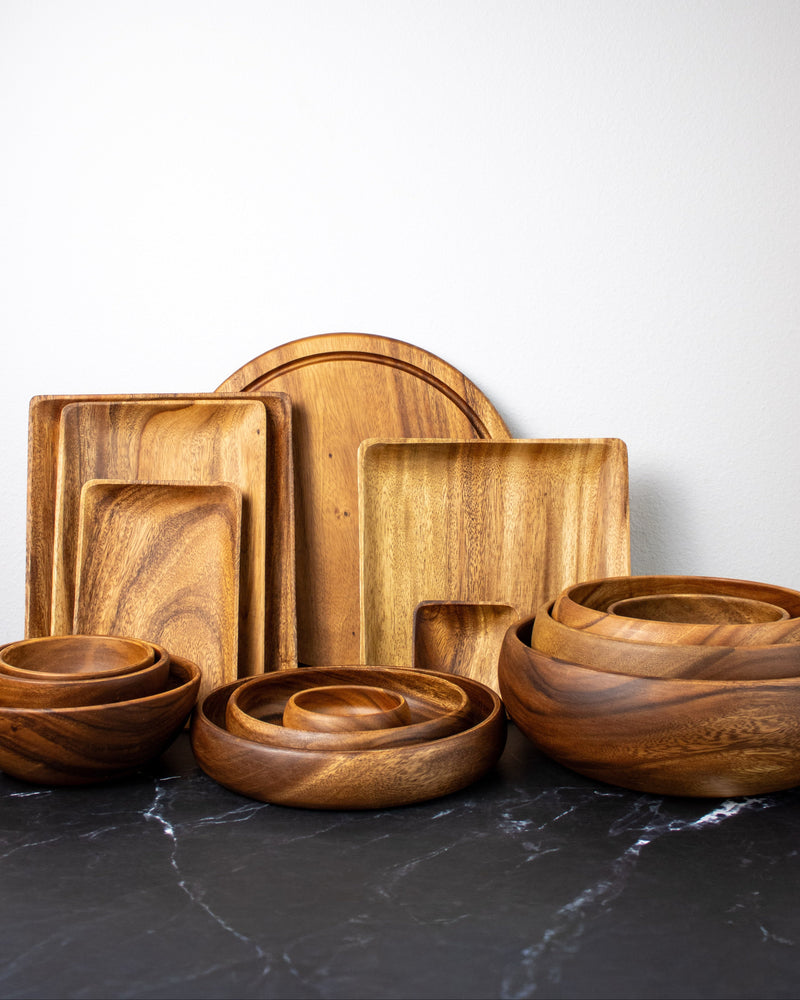
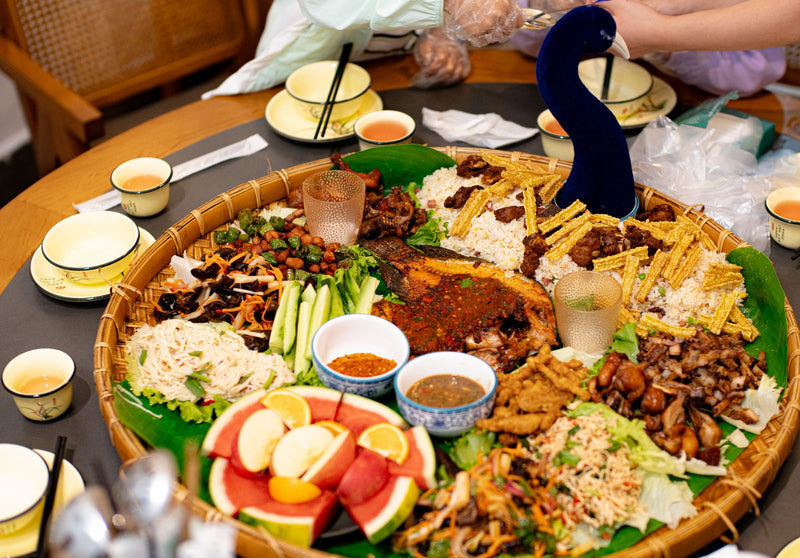
A fiesta table has a hierarchy, and the platter at the center of it is the throne. Everything else on the table, the rice, the sides, the sawsawan, the drinks, orbits that one board. If the centerpiece looks staged and intentional, the rest of the meal reads as a feast. If the centerpiece looks like a plate that got too big, the whole table loses its ceremony, no matter how good the lechon is.
This guide walks through the spatial decisions of setting one fiesta platter well. It covers sizing the board to the crowd, placing the anchor proteins, building the supporting cast around them, guiding guest movement, and caring for the wood after the last plate leaves. It assumes you already have the food handled, or you are about to, and the question you are asking is: where does everything go?
Chapter 1: What Makes a Fiesta Platter Different From Everyday Serving
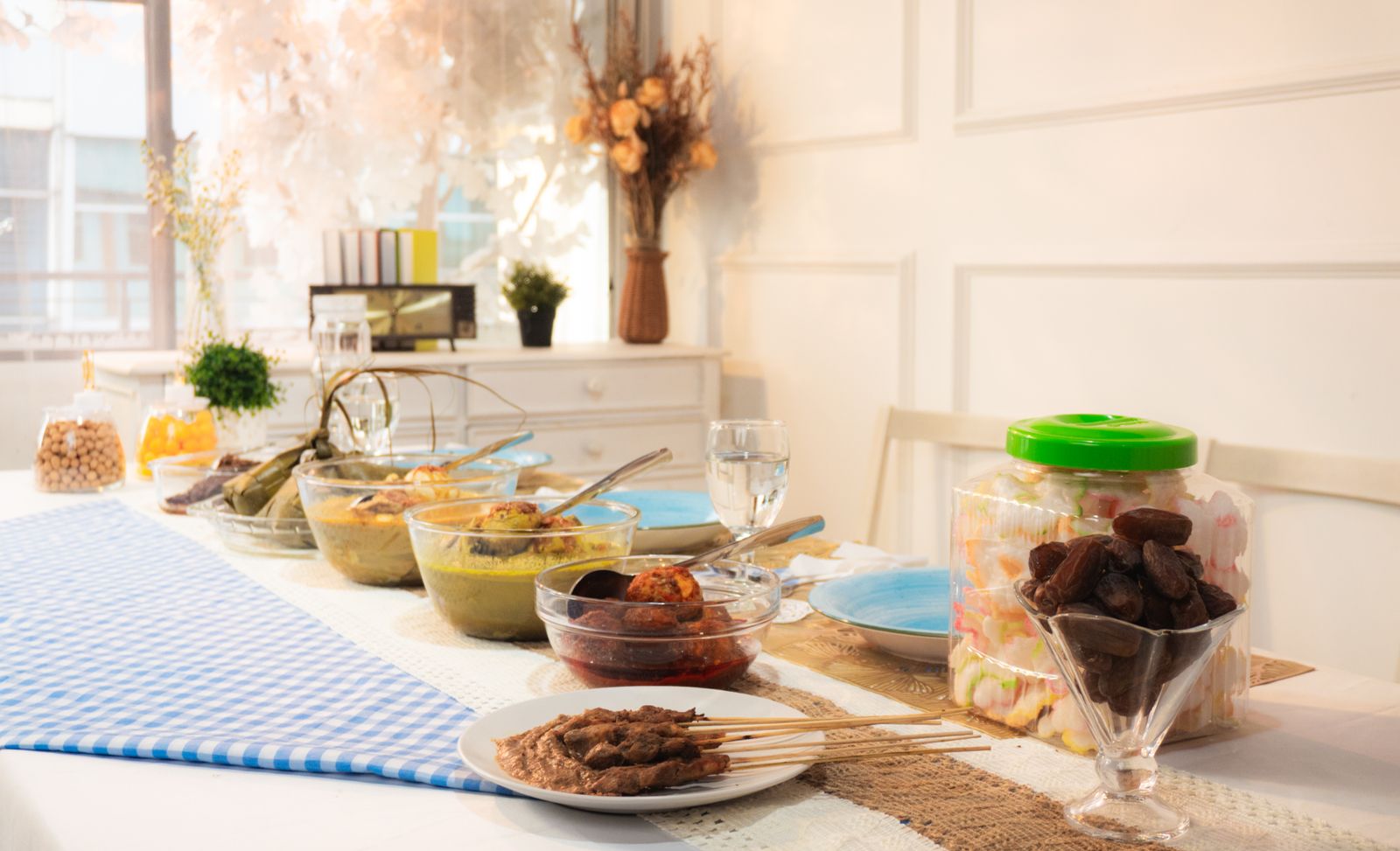
Everyday serving is horizontal. Bowls line up, plates repeat, and the table reads as a grid. A fiesta platter breaks that grid on purpose. It signals that this meal is not ordinary and that the food deserves to be looked at before it is eaten.
The centerpiece principle
A fiesta table has one dominant board. Not two competing boards, not a scatter of medium platters, one. Everything else on the table is a satellite: the rice service, the sawsawan cups, the achara dishes, the puto trays. When guests walk up to the table, their eyes should land on the centerpiece first, then travel outward. If a second platter is nearly as large or nearly as tall, the eye bounces between them and the ceremony flattens out.
This is also a practical rule. A single anchor board gives you one place to refresh, one place to slice, and one place for guests to congregate. Two centerpieces double the choreography and halve the drama.
Height, negative space, and vertical staging
Fiesta platters are staged vertically, not just laid flat. The lechon sits at the tallest point. Bread trays, achara bowls, and sauce cups sit lower and closer to the guests. A whole roasted pig, a hamonado glazed loaf, or a stacked embutido presentation should be the tallest thing within an arm's reach of the table.
Negative space is the other half of that vertical read. Do not fill every inch of the board. A garnish edge that trails off into visible wood grain looks composed. A board packed corner to corner looks crowded, and the eye does not know where to land. Leave at least a hand's width of clean wood showing somewhere on the board.
Why acacia holds up under fiesta conditions
A fiesta platter sits under pork oil, hamonado glaze, and warm ambient air for two to four hours. That is a long service window for any material. Acacia handles it because the wood is dense, closed-grain, and naturally oil-resistant. It does not swell the way softer woods do, and it does not stain as fast as open-grain hardwoods like oak.
The tradeoff is that acacia is not indestructible. Sugary glazes will cure on the surface if left overnight, and standing pools of oil will darken the wood over time. Both are manageable with a wipe-down within the hour, which we cover in Chapter 6. For the pairing logic between specific dishes and wood, our reference on Filipino dishes for wooden tableware goes deeper on which items belong on wood and which do not.
Chapter 2: Sizing the Board to the Feast
Board sizing gets treated as a math problem, but at fiesta scale it is really a geometry problem. The longest protein sets the minimum length. The crowd count sets the working length. Whichever number is bigger wins.
Guests per length, as rules of thumb
These are working numbers, not laws. Real fiestas have kids who do not eat much and titos who eat for three.
- Up to 10 guests: a board 24 to 30 inches long handles the centerpiece with room for garnish framing.
- 10 to 20 guests: 30 to 42 inches. This is the sweet spot for most family-scale fiestas.
- 20 to 40 guests: 42 to 60 inches, or one large board plus a coordinated secondary board.
- 40 plus guests: plan for two staging boards and a rotation, not one impossibly large centerpiece.
Whole lechon vs lechon kawali vs cochinillo
Footprint matters more than headcount at this stage.
- Whole adult lechon: figure 36 to 48 inches nose to tail depending on the animal, plus 4 to 6 inches of garnish space on either end. That is a 44 to 60 inch minimum board length. Most home tables cannot host this and the platter belongs on a dedicated serving station.
- Cochinillo (young roast): 20 to 28 inches nose to tail. A 30 to 36 inch board carries it comfortably.
- Lechon kawali or lechon belly slabs: chopped or pre-sliced, arranged on a board any centerpiece-size will handle, usually 24 to 36 inches.
If you are unsure which format the household is planning, look at the serving boards collection with the longest protein in mind first, then check the crowd number as a secondary filter.
One large board vs two medium boards
One large board wins when the room can accommodate it and the meal has a single showpiece protein. It concentrates the ceremony and simplifies guest flow.
Two medium boards win when the meal has two co-equal proteins (say, lechon kawali and hamonado at the same fiesta), when the table is narrow, or when guests will approach from opposite ends of a long table. In that case, matched boards look intentional. Mismatched boards, one wooden and one ceramic, one large and one small, read as improvised.
The 6-inch clearance rule
Leave at least 6 inches of clear table around the platter. This is service space, not decoration space. Tongs land there. Sawsawan cups get refilled there. A tita reaches across it to point at the pig's ear. Fill that ring with more dishes and the whole staging becomes a hazard, sauces get knocked, garnishes slide, glaze drips migrate onto ceramic.

The anchor board for whole-protein staging
Built long and deep enough to carry a cochinillo or a full lechon kawali arrangement with garnish framing on both ends.
Shop the Pamilya Chopping and Serving Board (Large) →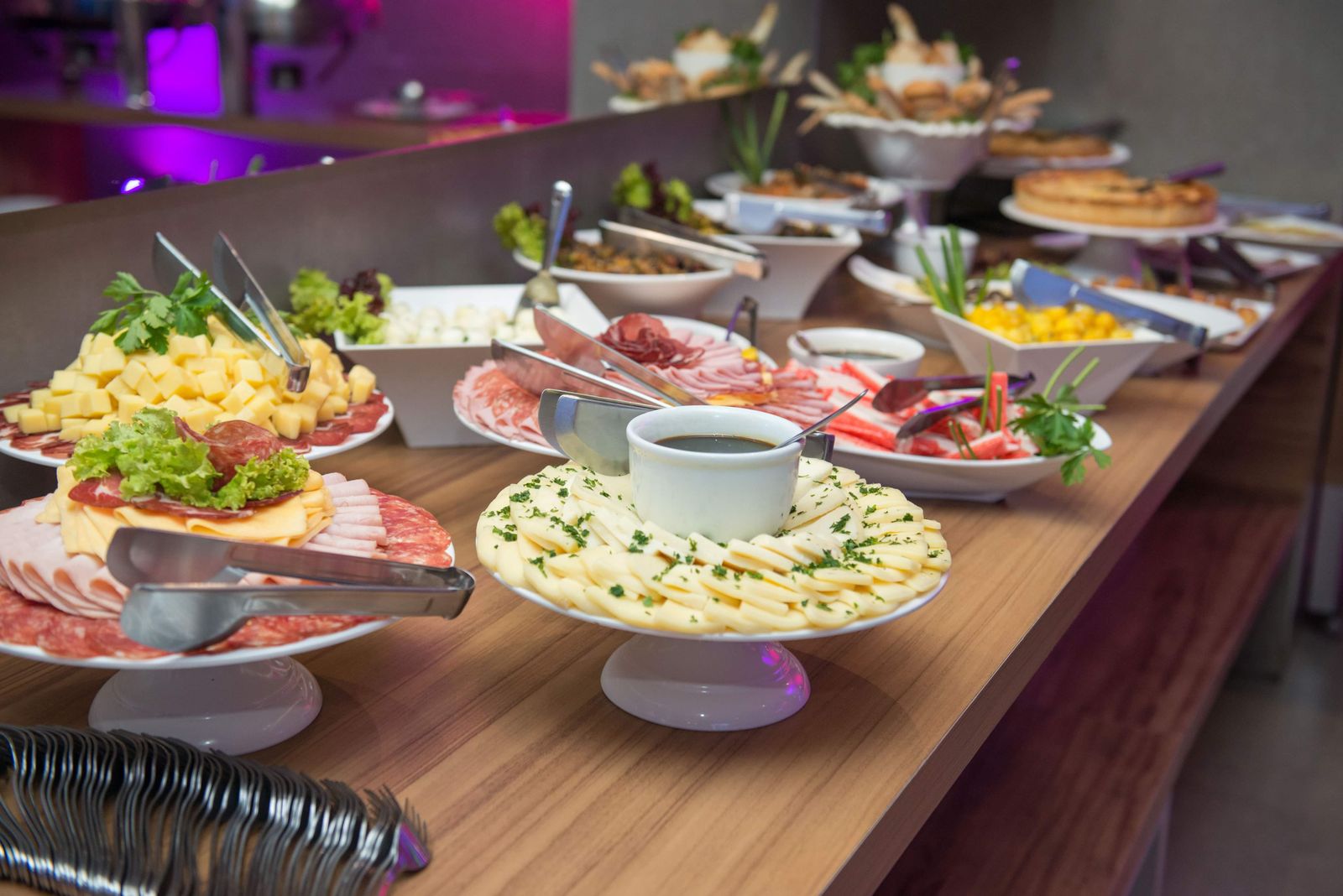
Chapter 3: Laying Out the Anchor Proteins
Once the board is sized, the proteins go down first. Every other element is arranged around them, not underneath or across them. This is the step where most fiesta platters go wrong. People start with garnish and try to fit the pig around it. The pig always wins that fight, and the composition suffers.
Lechon placement and head direction
The head faces the guest of honor, or, if there is no single honoree, the length of the table. A lechon head pointed at a wall or into a corner looks banished. A lechon head pointed at the person the fiesta is for, the birthday celebrant, the newlyweds, the honoree of the town patron feast, reads as a small ceremony inside the larger one.
Lay the pig on a banana leaf or parchment liner directly under the meat contact zone. This protects the wood from prolonged oil exposure and gives you a clean surface for post-slicing juices to pool.
Hamonado positioning
Hamonado, whether the Christmas ham glaze or the braised pork dish, produces glaze pools. Position it toward one end of the board with a slight tilt so glaze migrates in a predictable direction rather than pooling under the meat. Pineapple rings, if you are using them, anchor the composition, place them where the glaze naturally settles, so they read as intentional flavor pairings rather than accidental drift.
If both lechon and hamonado share the board, put them at opposite ends. Their glazes and oils are compatible, but their visual weights are similar, and side by side they compete. End to end, they read as two courses on one stage.
Embutido slicing pattern
Embutido gets sliced ahead of service. Two questions decide the pattern.
- Rounds vs half-moons: rounds look formal and read as a proper cured board. Half-moons are more casual and let guests see the filling. For a fiesta centerpiece, rounds usually win.
- Overlap direction: overlap in the direction of guest approach, so each slice presents its cut face outward. Slices facing away read as a wall.
The 60/30/10 ratio
By visible surface, aim for roughly 60 percent protein, 30 percent garnish and framing, 10 percent sauce staging. This is the ratio that reads as ceremonial without reading as sparse. Push protein higher and the platter looks like a butcher case. Push garnish higher and the platter looks like a salad. Push sauce higher and the platter looks like a condiment bar.
Chapter 4: Building Around the Proteins
The supporting cast has jobs. Acid counterweights cut the fat. Sauces stage the flavor pairings. Herbs and leaves frame the meat. Bread and rice cakes break up the eye's travel. Each element earns its spot on the board or moves off to a satellite dish.
Achara, ensaladang mangga, and other acid counterweights
Fiesta proteins are heavy. Lechon is fatty, hamonado is sweet, embutido is rich. The palate needs acid. Achara is the standard, and it belongs close enough to the meat that guests can spoon it directly onto their plate without reaching. Ensaladang mangga, tomato and salted egg, and pickled ampalaya all serve the same role. Rotate one or two per fiesta, not all four, or the plate reads as noisy.
These belong in shallow bowls on the board or in matched dishes just outside the 6-inch clearance ring. On the board is more ceremonial. Off the board is easier to refresh.
Where to stage sauces
Mang tomas, sarsa, vinegar-based sawsawan, and any specialty dips get staged in small cups off the board, not poured across the wood. Standing sauce on acacia leads to two problems: it soaks into the grain during the service window, and it makes the platter look sloppy within the first hour.
If you want a sauce visually attached to the board, place the cup at the edge, angled inward. It reads as belonging to the composition without touching the wood surface where meat rests.
Herbs, banana leaves, and edible framing
Banana leaves are the traditional frame, and they solve two problems at once. They protect the wood from direct meat contact and they extend the visual weight of the centerpiece. Line the meat contact zone, then let the leaf edges trail out past the protein by an inch or two.
Herbs, spring onion, scallion tops, kalamansi halves, cherry tomatoes, work as edge accents. They belong at the ends of the board, not scattered across the middle. Scattered herbs read as garnish that lost its way.
Bread, puto, or rice cakes as visual breaks
Puto, bibingka, and pandesal often show up at fiestas. They do not belong on the centerpiece board. Their texture and color compete with the proteins, and they are eaten separately from the meal's flow. Give them their own tray on a satellite station, close enough to reach, far enough to read as a separate act.
The exception is a small cluster of puto puti placed at one end of the board as a deliberate palate reset. If you do this, use no more than five or six, and cluster them tightly so they read as one visual element rather than a scatter.

For the full ceremonial table
A coordinated set for hosts building the fiesta beyond just the centerpiece, matched boards, bowls, and serving pieces.
Shop the Royal Hosting Set →Chapter 5: Serving Flow and Guest Movement
A fiesta platter is not decor, it is service infrastructure. Guests will reach across it, servers will slice at it, and a designated tito will hover near it with a knife. The layout has to make that movement easy, not fight it. For broader thinking on communal serving choreography, our guide on how to host a boodle fight covers the guest-flow logic in more detail.
Which side guests should approach from
The long side of the board is the guest side. The short sides are the server sides, where slicing happens and where the head or the show end of the protein points. If your fiesta has a dedicated slicer, guard one short end for them and orient the whole platter so guests approach from the length, not the ends.
If guests approach from both sides of a long table, mirror the garnish framing on both long sides so both approaches feel equally intentional.
When to pre-slice vs slice tableside
Pre-slice when the crowd is large (over 20), when the honoree is not comfortable slicing, or when the timing window is tight. Pre-sliced meat sits under a banana leaf tent to keep the initial ceremony intact, then the tent lifts for service.
Slice tableside when the crowd is small enough that everyone can gather to watch, when the honoree wants to do the ceremonial first cut, or when the protein (a whole cochinillo, a fresh-from-oven ham) benefits from the theater. Tableside slicing is slower. Build the timeline around that.
The 45-minute refresh
Every 45 minutes, the platter needs attention. Garnishes wilt, sauce cups empty, meat gets picked over into a ragged silhouette. Send someone to the board on a timer: pull the emptied cups, refresh the achara, replace wilted herbs, tidy the meat back into a composed shape. Guests will not consciously notice the refresh, but they will notice a platter that stayed beautiful for the full service window.
Managing the drip zone
Oils, glazes, and condensation all travel. Place a folded cloth or a low absorbent tray at the base of the board on the slicer's side to catch drips before they reach the tablecloth. If the platter is on a wooden serving station rather than the dining table, tuck the cloth under the near edge and refresh it once during service.
Chapter 6: Care and Reset Between Events
A fiesta board earns its keep once a year, or twice, or six times if the family calendar runs hot. Between events, the wood needs care that matches the abuse it just absorbed. This is the part most hosts skip, and it is the part that determines whether the board is still flat and beautiful three fiestas from now.
Immediate post-fiesta wipe-down
Do this within the hour, before glazes cure. Wipe the surface with a damp cloth to lift the loose oils and sauce residue. Do not scrub yet, do not soak, just clear the standing material. A cured hamonado glaze is much harder to remove than a warm one, so speed matters more than thoroughness at this stage.
Deep cleaning acacia after heavy oil exposure
Once the wipe-down is done and the board has cooled, hand-wash with warm water and a mild dish soap. Use a soft brush or non-abrasive sponge for stubborn glaze spots. Never soak the board and never send it through the dishwasher, the sustained water exposure and heat cycle will warp and crack acacia over time. Rinse quickly and dry with a towel, then stand the board upright to air-dry so both faces release moisture evenly.
Per FDA guidance for hardwood cutting surfaces, a diluted mild bleach rinse (one teaspoon per quart of water) can be used for sanitation after raw meat exposure. Rinse thoroughly and dry immediately if you do this.
Re-oiling before the next occasion
Heavy fiesta service strips some of the wood's protective oils. Re-oil the board once it is fully dry, using a food-safe mineral oil or a beeswax-mineral oil blend. Apply generously with a soft cloth, let it absorb for several hours, then wipe off the excess. A well-oiled board resists staining better at the next fiesta and shows the grain more richly on the table.
Storing a large centerpiece board without warping
Store the board upright, on its long edge, with air circulation on both faces. Flat storage on a shelf traps moisture on the underside and encourages warping over months. If the board must lie flat, elevate it on wooden runners or a slatted shelf so air can move underneath. Keep it out of direct sun and away from heat vents, both of which dry the wood unevenly and cause cupping.
For the full context on where the fiesta platter sits within a larger celebration table, see our companion piece on the fiesta town celebration table, which zooms out from the centerpiece to the full room.

Two coordinated boards for split staging
When one board is not enough and mismatched platters would break the composition, a matched pair keeps the table reading intentional.
Shop the Pamilya Board Set →Frequently Asked Questions
What size board do I need for a whole lechon?
A whole adult lechon runs 36 to 48 inches nose to tail. Add 4 to 6 inches of garnish space on either end, so plan on a minimum board length of 44 to 60 inches. Most home tables cannot host this comfortably, so a dedicated serving station is usually the right call.
Can I put a hot lechon directly on an acacia board?
Acacia handles warm service, but a whole hot lechon straight from the roasting pit should sit on a banana leaf or parchment liner over the wood. The liner protects the surface from prolonged oil pooling and makes the post-feast cleanup much faster.
How do I keep sauces from soaking into the wood?
Keep sauces in cups off the board, not poured across the surface. If you want a sauce visually attached to the platter, place the cup at the edge angled inward so it reads as belonging to the composition without ever touching the wood grain.
Should I pre-slice the lechon or serve it whole?
Pre-slice for large crowds (over 20), tight timing windows, or when no confident slicer is present. Serve whole and slice tableside when the honoree wants to make the first ceremonial cut or when the theater of the reveal is part of the fiesta.
How far in advance can I set the platter before guests arrive?
Set the board, garnish framing, and empty sauce cups up to an hour ahead. Add the hot proteins within 20 minutes of service, and add fresh herbs and cut fruit at the last moment, so the visual stays sharp instead of wilting during the arrival window.
How do I clean glazed sauces off acacia after the fiesta?
Wipe within the hour with a damp cloth before glazes cure. Follow with a warm-water hand-wash using mild dish soap and a soft brush for stubborn spots. Never soak, never dishwasher, and stand the board upright to dry so both faces release moisture evenly.