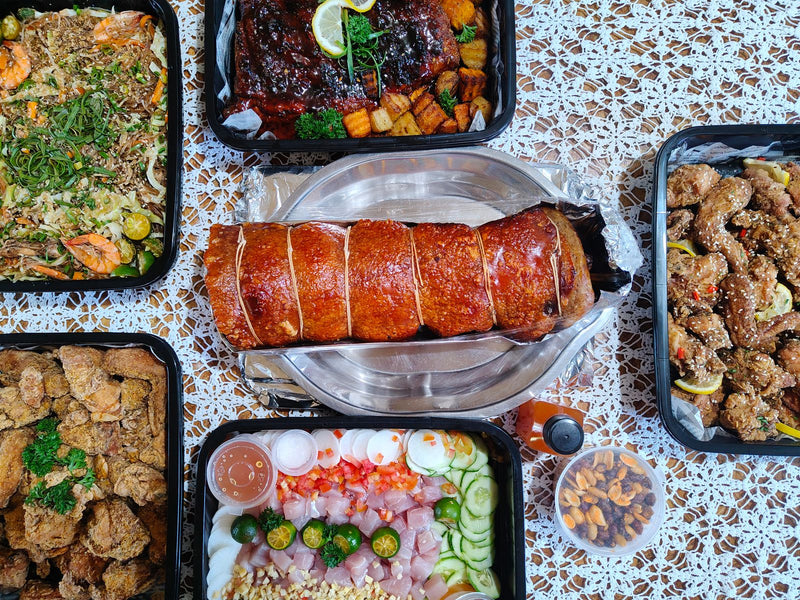
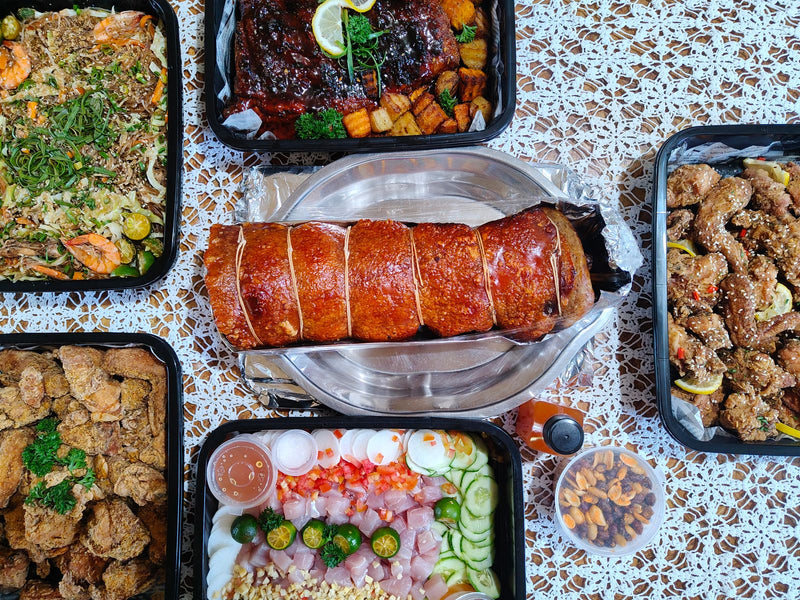
A lumpia tray is a piece of Filipino hosting shorthand. Guests glance at it before they lift a piece, and that glance decides whether the food reads as festive or as leftovers set out in a hurry. The rolls themselves are always going to be golden and hot or fresh and cool, but the surface underneath them, the angle they sit at, and the sawsawan bowl beside them do the actual welcoming. This guide walks through six ways to plate lumpia for the situations you actually host, from a baptism merienda to a kamayan spread to the pasalubong tray you bring to your tita's house.
Style 1: The classic fan for lumpiang Shanghai
The fan is the default for a reason. It gives the eye a starting point, keeps the rolls from touching too much (so the crunch survives the walk to the table), and leaves a natural pocket for the sawsawan. It is the plating you want for baptisms, office potluck, Sunday merienda, and any table where guests will be reaching in from all sides.
How to arrange 12 to 20 pieces in a half-moon
Start from the back of the plate and work forward. Lay the first row at a slight angle, each roll tilted about 30 degrees off horizontal, so the cut ends catch the light. The second row overlaps the first by a third, and the third row does the same. Twelve pieces will hold a tight fan on a 10 inch surface. Twenty pieces need a 12 to 14 inch board or the fan flattens into a pile.
Where the sawsawan bowl sits
Corner, not center. A center bowl forces every hand to reach through the fan, which breaks the arrangement within minutes. A corner bowl (bottom-right if most of your guests are right-handed) keeps the fan intact for a full round of the table. Two bowls for a large tray, sweet chili and vinegar with garlic, sit at opposite corners.
When this style works
Baptisms and binyag lunches where the food is passed around a long table. Office potlucks where the tray sits on a shared counter. Any merienda where you want the lumpia to look considered without staging a whole spread. For a deeper look at pairing wooden surfaces with fried Filipino food, see our notes on filipino dishes for wooden tableware.

Set the fan on a plate that carries it
The Chenoweth set gives you the wide, dark surface a classic lumpia fan needs to read as festive.
Shop the Chenoweth Plate Set →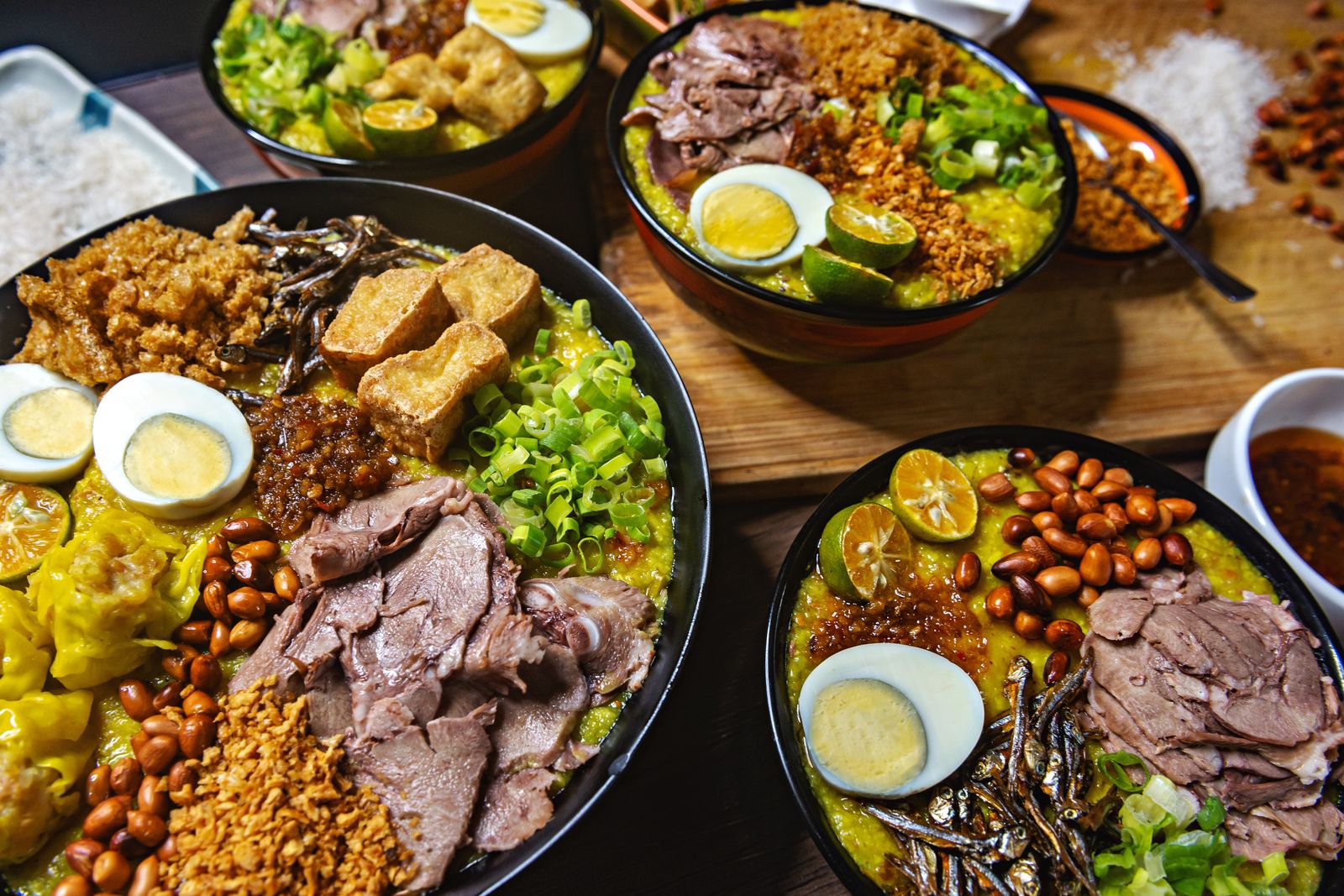
Style 2: The stacked log pile for lumpiang gulay
The log pile is the plating for a house full of cousins. It is generous, unfussy, and it reads as "there is more where this came from." It works best for larger rolls (lumpiang gulay, lumpiang ubod, sometimes lumpiang hubad) where a fan would look sparse.
Cross-hatching for height without collapse
Lay a base row of five rolls side by side. The next row goes perpendicular, three rolls this time. Third row perpendicular again, back to the first direction, two rolls. You end with a small tower that holds around 15 pieces and stays upright even after the first hands come through. The cross-hatching is what keeps the pile from sliding, and the small air gaps between rolls preserve crunch for longer than a solid stack.
Best for lumpiang gulay and larger rolls
Skinny lumpiang Shanghai does not stack well. The rolls slide off each other and you spend the evening rebuilding the pile. Lumpiang gulay, at three-quarters of an inch thick or more, holds the shape. So does lumpiang ubod when it is firmly wrapped.
Garnish rules
Calamansi wedges, chopped spring onion, nothing else. No lettuce leaf underneath (it wilts and turns the wood damp). No parsley (it reads as restaurant). A small pile of calamansi in the corner and a scatter of spring onion across the top is the whole vocabulary. Anything more competes with the lumpia.
Style 3: The grid tray for parties of 20 or more
Once you cross 20 guests, the fan and the log pile both break down. You need a pattern that can be refilled without being restaged, and that pattern is the grid.
Rows of 5 or 6, cut-side up
Cut each roll in half at a diagonal. Line them up in rows of five or six, cut-side facing up so the filling shows. On a rectangular board, four rows of six gives you 48 half-pieces, which feeds around 12 guests at three pieces each. Six rows of six is a full party tray.
Why a rectangular board beats a round plate here
A round plate forces the grid into a compromise where the corner rows are always shorter. A rectangular board (12 by 18 inches is the sweet spot for parties) lets every row be the same length, which is what makes the pattern readable from across the room. See our plates collection if you are looking for the right shape for a specific guest count.
Refilling the grid without breaking the pattern
Refill from the back rows forward, not from the empty spots in the middle. Guests take from the front, and if you fill the middle gaps first, the tray looks like a checkerboard within an hour. Working from the back keeps the front rows visually complete for the next round.
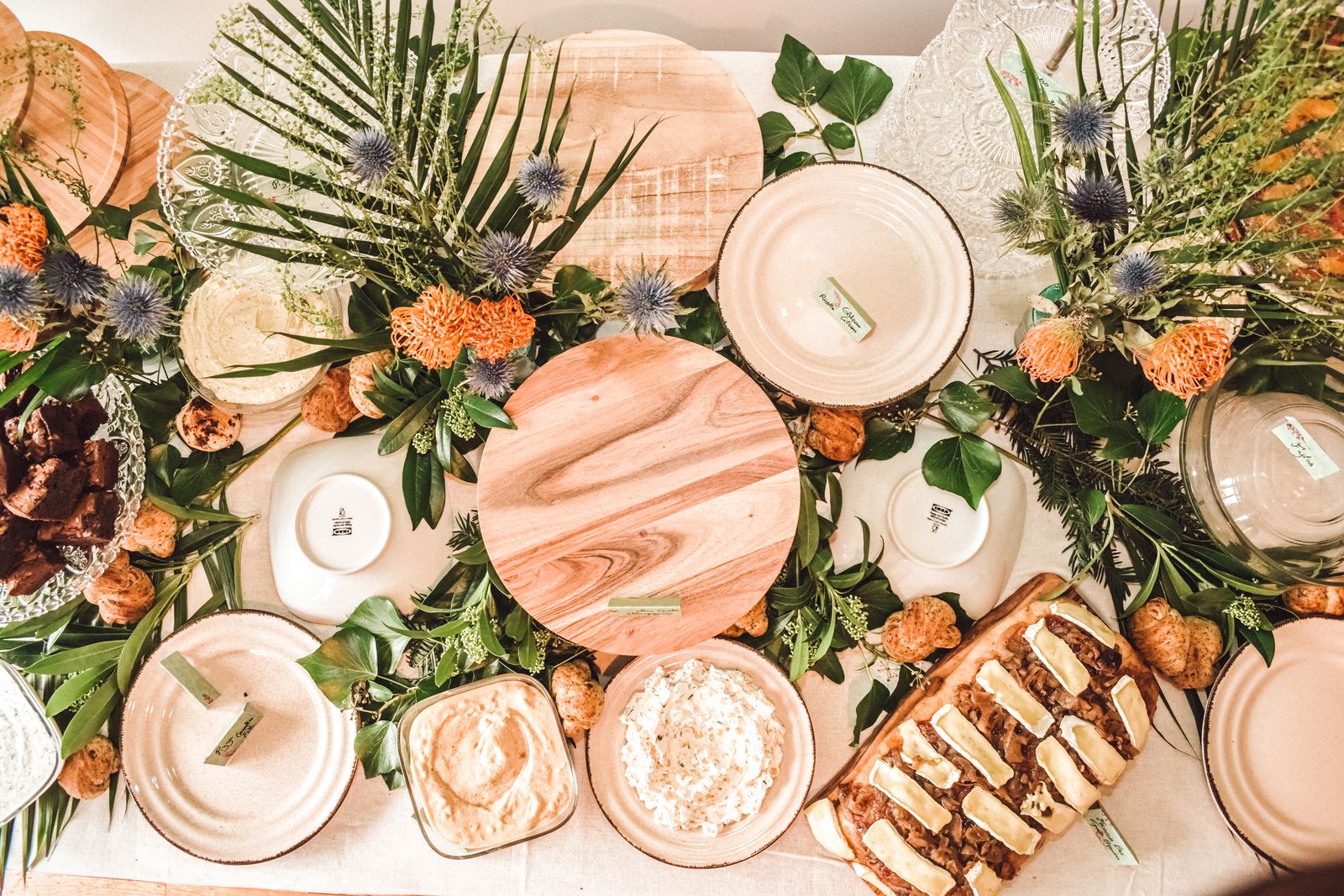
Style 4: The lumpiang sariwa individual plate
Lumpiang sariwa is the one lumpia that does not share a tray well. The sauce is thick, brown, and slow. It needs a rim, a plate for each guest, and a peanut sprinkle that happens at the table, not in the kitchen.
One roll per person, sauce ladled over
Set the roll seam-side down, ladle a generous spoon of the sweet garlic sauce over the top third of the roll (not the whole thing, the wrapper turns to paste), and finish with crushed peanuts and a small pile of minced garlic. Serve immediately. Sariwa does not wait well.
Plate size: 8 to 9 inch works, 10 inch swims
One roll on a 10 inch plate looks lost. On an 8 or 9 inch plate, the roll fills the frame and the sauce reads as intentional. If you are serving sariwa as a starter, a small side plate is enough. If it is the main event of a merienda, a 9 inch plate gives you room for a spoon of extra sauce on the side.
When to serve as a starter vs. merienda
As a starter before a heavier meal, one roll per person, plated in the kitchen and brought out already sauced. As the centerpiece of an afternoon merienda, two rolls per plate with pandesal or puto on the side. For more merienda hosting notes, our merienda spread ideas guide walks through the full afternoon.
Style 5: The kamayan lumpia board with rice and ulam
On a boodle spread, lumpia is not the star. It is a texture piece next to rice, grilled fish, and ulam. Plating it correctly means understanding it as a supporting element, not centering it.
Lumpia at the edges, not the center
The center of a kamayan spread belongs to rice and the main protein (lechon kawali, grilled bangus, adobo). Lumpia goes at the two long edges of the spread, cut in half, cut-side up. This placement lets guests pick up a piece without reaching across the rice, and it frames the spread visually the way a border frames a photograph.
Banana leaf under the lumpia?
Only if the leaf is fresh, wiped down with a hot cloth, and warmed briefly over a flame to release the oils. Old or dry banana leaf turns the lumpia gummy and the color goes dull. If you do not have fresh leaf, skip it. Lumpia sits perfectly well directly on wood, and the boodle context reads as intentional either way. Our note on kare-kare on acacia plates covers the broader logic of Filipino stews and fried food on the same wooden surface.
Rice placement matters more than you think
Rice takes the long center strip. Ulam goes in two or three clusters along the rice. Lumpia frames it. Sawsawan bowls, four to six of them, break up the visual rhythm at intervals. The lumpia should be the last thing you place because it needs to stay crisp.

Anchor the boodle at each seat
The Ina set gives every guest their own edge plate for lumpia, sawsawan, and a scoop of rice.
Shop the Ina Plate Set →Style 6: The gift tray for pasalubong or handoff
The plate you carry to someone else's house is the one plating decision that lives outside your own table. It has to travel, arrive intact, and often stay behind. Filipino hosting has a quiet return-the-plate culture, and that changes how you build the tray.
How to plate lumpia you are bringing
Two flat rows on a rectangular board, not stacked. Height in transit means crushed lumpia on arrival. Leave a small margin around the edges so nothing rolls off. If you are bringing pre-cooked fried lumpia, arrange it on the tray only after it has cooled for 10 minutes (steam trapped under cover turns wrappers soggy).
Cling wrap vs. cover: keeping the crunch intact
A rigid cover with an air gap beats cling wrap every time. Cling wrap sits directly on the top row and traps condensation. A domed cover, or even an inverted second plate propped on a small ramekin, leaves the air moving. If the trip is under 20 minutes and the lumpia is fully cooled, a loose foil tent works.
The plate as the gift itself
In many Filipino households, the tray you send lumpia on comes back weeks later with something else on it (a batch of biko, a container of adobo, some pandesal). If the plate is nice enough that your host feels obligated to return it in kind, you have started a small circulation of hospitality that outlasts the meal. This is why the surface underneath the lumpia is not a small choice.

A tray meant to be passed around
The Anak set is sized for handoffs, pasalubong runs, and the plates that come back with something else on them.
Shop the Anak Plate Set →Frequently Asked Questions
What is the best plate size for lumpia?
For a shared fan of 12 to 20 pieces of lumpiang Shanghai, a 10 to 12 inch plate is the sweet spot. For lumpiang sariwa served individually, 8 to 9 inches keeps the roll and its sauce framed. For parties of 20 or more, move to a rectangular board around 12 by 18 inches.
Should lumpia be served hot or at room temperature?
Fried lumpia is best served within 15 minutes of the last fry, while the outside still snaps. It stays acceptable at room temperature for up to an hour on an uncovered tray. Lumpiang sariwa is served at cool room temperature by definition, never chilled from the fridge.
How do you keep lumpia crispy on a serving tray?
Rest fried lumpia on a wire rack for two minutes before plating, so the trapped steam escapes. Leave small air gaps between rolls on the tray. Never cover with cling wrap directly. If the party is long, refry a fresh batch instead of holding the first batch in an oven.
Can you serve lumpiang Shanghai and lumpiang sariwa on the same plate?
No. The sariwa sauce spreads and softens the Shanghai wrappers within minutes. If you want both at the same event, plate them on separate surfaces and space them apart on the table so the sauces do not cross.
How much lumpia should I plan per person for a party?
For lumpiang Shanghai as a starter or side, plan three to four pieces per adult guest. As a main merienda item, plan five to six. For lumpiang sariwa, one roll per person as a starter, two as a full merienda serving.