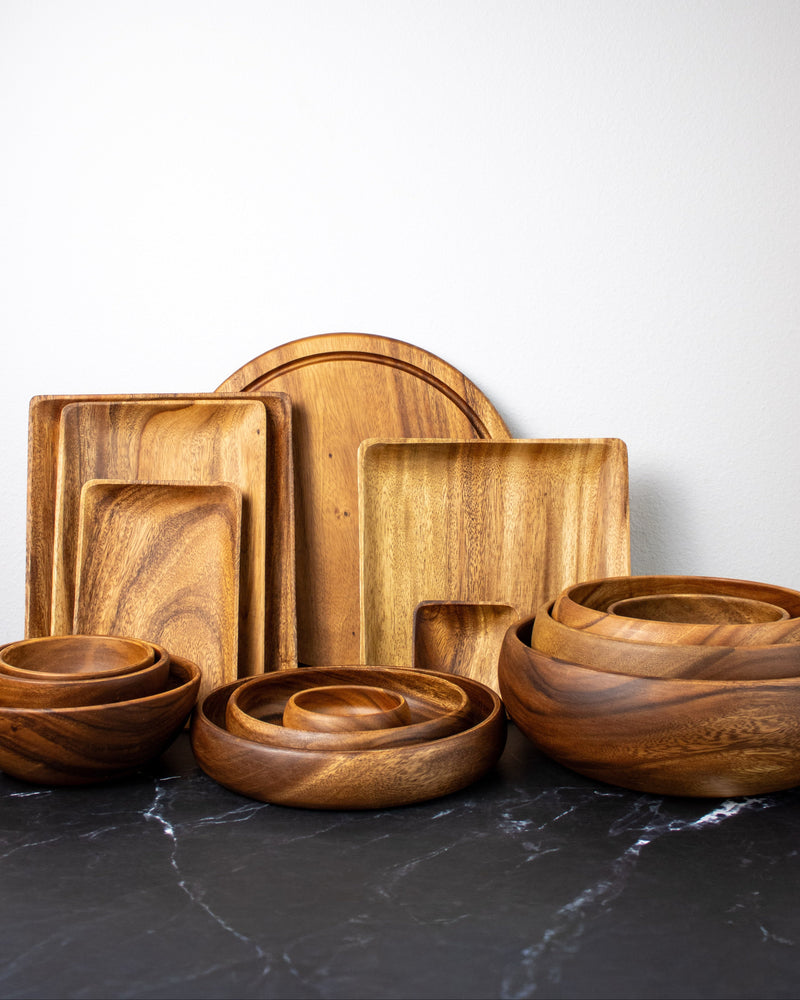
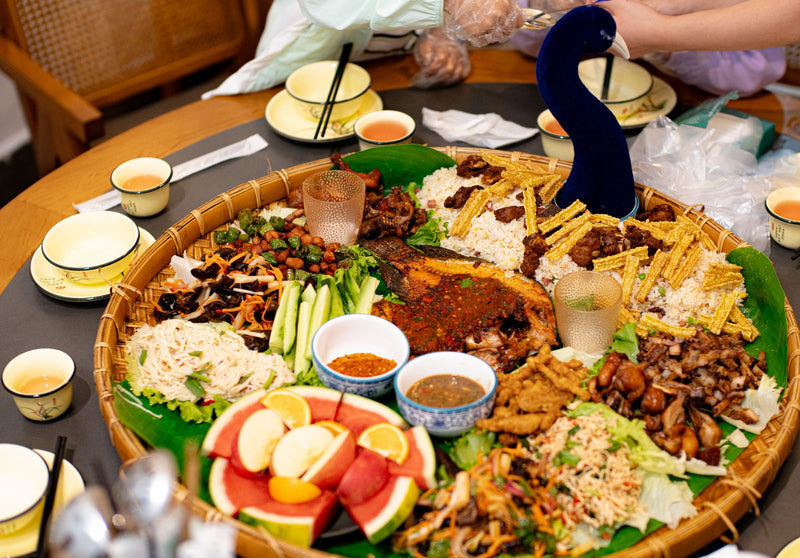
The Filipino breakfast is not one meal. It is a whole grammar. There is the sizzling silog with its yolk still trembling, the tsokolate-dark bowl of champorado you eat with tuyo on the side, the arroz caldo you scoop from the kaldero on cool mornings, the split daing waiting on a board next to a wedge of vinegar. Each one asks something different of the tableware, and if you have ever tried to serve champorado on a flat plate or sinangag in a soup bowl, you already know the pieces were not designed for whichever dishes we cook, but for whichever dishes we grew up with.
This guide walks through the setup that actually works for a Filipino breakfast table, the pieces you reach for again and again, and the small habits that keep them alive through years of tsokolate rings and patis splashes.
Chapter 1: The silog plate, and what it actually has to hold
Silog is short for sinangag at itlog, garlic rice and egg, and every version of it is a study in things that do not want to share space. The rice comes out of the pan loose and hot. The egg comes out of the pan wet, either sunny side up with a runny yolk or over-easy with the yolk broken just enough to sauce the meat. And then there is the tapa, tocino, longganisa, bangus, or corned beef, each with its own oil, its own sugar, its own way of sliding.
Why a rimmed plate matters
The flat, wide plates that look elegant on a lunch table do not hold silog well. The rice pushes off the edge when you cut, the yolk runs off the plate onto the placemat, and the tocino oil ends up on your forearm. A rimmed plate, even one with just a half-inch lip, keeps everything on the surface where a fork can chase it.
For a single serving, look for a plate in the 9 to 11 inch range. Smaller than that and the rice mounds up over the meat. Larger than that and the meal looks lonely in the middle. Wood plates in this size hold their heat better than ceramic, which matters more than people realize when the yolk needs to stay glossy from the first bite to the last.
The three-zone layout
Most Filipino households, whether they think about it or not, set a silog plate in three zones. The sinangag goes on one side, usually the left. The protein sits opposite. The egg lands in the middle, bridging the two, so a bite of yolk-soaked rice can be assembled without a second dish. If you are choosing tableware for breakfast, that three-zone layout is worth thinking about, because a plate with a very shallow well or an asymmetrical shape can push you into stacking, and stacked silog is silog that has stopped being silog.

A plate built for the silog three-zone layout
The Anak plate has the rim depth and 10-inch diameter that hold sinangag, tapa, and a runny egg without any of them meeting the placemat.
Shop the Anak Plate Set →
Chapter 2: The wet-breakfast bowl for champorado, lugaw, and arroz caldo
The other half of Filipino breakfast is wet. Champorado on rainy Tuesday mornings, arroz caldo when someone is sick, plain lugaw with a dashing of soy sauce and calamansi, goto for hangovers, and the odd bowl of pancit lomi when nothing else will do. These are all bowl foods, and the bowl matters more than most people give it credit for.
Size and shape
The right breakfast bowl is wider than a soup bowl and deeper than a rice bowl. Aim for around 24 to 30 oz of capacity, with an opening wide enough that a serving ladle can dip in without knocking the rim, and a wall tall enough that a spoon does not scrape the last mouthful up a slope. Wooden bowls in this size range double as noodle bowls in the evening, so they are one of the highest-use pieces in a Filipino household.
Why wood for champorado
Champorado is thick, hot, and dark. Poured into a cold ceramic bowl at 6 in the morning, it drops several degrees before you sit down. Wood is a natural insulator and holds temperature much longer, which is the difference between champorado you eat quickly because it is cooling, and champorado you eat slowly because you have time to talk. The other reason is that hot tsokolate splashes stain porcelain along the crazing lines and never come out. On wood, they darken the grain evenly, which is the beginning of what most families come to call the champorado patina.
Handling the pairings on the side
Champorado without tuyo is only half a breakfast. Arroz caldo needs a wedge of calamansi, a spoon of patis, and often a hard-boiled egg. Lugaw pairs with tokwa't baboy or a spoonful of chili garlic oil. All of these live on small side plates or on the board, not floating in the bowl. Think of the bowl as the anchor and the side plate as the seasoning shelf.

The wide, deep bowl for wet breakfasts
The Ama bowl large is sized for champorado, arroz caldo, and lugaw, deep enough to hold the ladle and wide enough for a spoon to reach the base.
Shop the Ama Bowl Large →
Chapter 3: The daing board, and why small breakfasts need their own surface
Daing na bangus, tuyo, tinapa, and tocino share a habit: they release oil. A lot of it. Set them on a flat dinner plate and the oil pools under the sinangag, turning half the rice into an oil slick you did not sign up for. This is why traditional Filipino households often serve small salty breakfasts on a wooden board, not a plate. The board keeps the oil corralled on a separate surface, gives the fish a place to be filleted with a spoon, and holds the vinegar dip alongside without either invading the rice.
What to look for in a breakfast board
Breakfast boards do not need to be the massive cutting boards you use for kamias and pork belly. A smaller serving board, roughly the size of a paperback, is enough for a single daing plus a small saucer of suka. Look for these features:
- End-grain or side-grain acacia, both handle oil well, but end-grain hides marks from a spoon better.
- A shallow juice groove around the perimeter, which catches vinegar drips before they meet the placemat.
- A thickness of at least 3/4 inch so the board sits flat under a warm fish and does not warp over time.
- No feet or handles, which get in the way when the board doubles as a bring-to-table serving plank for two or three pieces of tuyo.
The best cutting-board woods for this climate are covered in our guide on the best wood for cutting boards in the Philippines, and most of those criteria hold true for breakfast boards, minus the knife requirement.
Tocino oil, and the sugar layer
Tocino is a slightly different case. The oil is mixed with caramelized sugar, which means it hardens as it cools. A wooden board is easier on tocino than a plate because the sugar releases in a single film when you wipe it, whereas on ceramic it can stick to glaze imperfections and require a scrub. Wipe tocino boards while still warm, before the sugar sets. This is a habit worth teaching everyone in the household within the first week of using the piece.
Chapter 4: Setting the family breakfast table
Filipino breakfast almost never stays at one person. Even if only one adult wakes up at 6, someone else is awake by 6:30, a child by 7, a lolo by 7:15, and by 8 there are four or five people at the kitchen table asking whether there is more sinangag. Breakfast tableware has to scale, or you will spend the meal washing dishes instead of eating them.
The pair-by-pair rule
The easiest way to think about scaling a Filipino breakfast set is in pairs. One rimmed plate per silog eater, one bowl per wet-breakfast eater, and one shared board per two people at the table. If the household is four, that is four plates, four bowls, and two boards. If it grows to six or eight for a Sunday, the plates and bowls double but the boards go up to three, not four, because breakfast boards are meant to be shared across the middle of the table.
The serving anchor
Sinangag comes out in one big pan or platter, not on individual plates. The same is true of scrambled eggs when there are more than two people, and of tocino cooked in a large batch. A large serving platter or wide shallow bowl in the middle of the table is the anchor around which the meal builds. Without it, someone always has to get up, and the person cooking never sits down. Serving pieces for family-scale meals are also covered in our breakdown of the family hosting set, if you want a broader picture of how the anchor pieces fit together.
Coffee, tsokolate, and the third surface
The third surface most Filipino breakfast tables need is the drinks corner. A tray or long board at the end of the table holds the coffee thermos, the taza of tsokolate, the sugar and calamansi, and the kids' juice glasses. Keeping the drinks off the main eating area frees the rimmed plates and bowls to breathe, and it means someone can top up their cup without leaning across the tuyo.

A four-person breakfast set that scales up gracefully
The Chenoweth plate set covers a family of four for silog mornings, and pairs naturally with the Ama bowls for champorado and lugaw days.
Shop the Chenoweth Plate Set →Chapter 5: Living with stains, oil, and the patina of daily breakfast
The breakfast table is where wooden tableware ages fastest, and it is also where most people get anxious about that aging. Champorado leaves rings. Tocino oil darkens the grain. Vinegar dulls the finish if it sits. This is the part of ownership that most guides skip, because it is less exciting than the shopping list, but it matters more.
The one-minute rinse
The single best habit is a warm-water rinse within a few minutes of finishing the meal. Not a soak, not a scrub, just a rinse. Champorado, in particular, hardens on the wall of a bowl once it cools past a certain point, and a bowl that gets a warm rinse at 8:15 is a five-second wipe, while the same bowl at 9:30 is a soak-and-brush job. This is covered in more depth in our daily acacia care checklist, but the breakfast version is simpler: rinse before the second cup of coffee.
Tsokolate rings and how they fade
A bowl used for champorado every rainy season week will develop a slightly darker band where the surface of the drink sat. This is not damage. It is the wood absorbing a very small amount of cocoa oil over hundreds of servings, and it is what makes an old champorado bowl look like an old champorado bowl. If a ring bothers you, a light rub with fine salt and half a calamansi, followed by a rinse and a dry, will lift most of it. Do this once a season, not once a week, or you will sand down the finish.
Oiling the pieces you actually use
Food-grade mineral oil, applied thinly with a cloth, once every four to six weeks, is enough for pieces on daily breakfast duty. Signs it is time: the wood looks slightly grey or dry along the rim, the grain feels rougher to a fingertip, or water no longer beads on the surface. Never use olive oil, sesame oil, or any cooking oil that can go rancid. The US Food and Drug Administration classifies food-grade mineral oil as safe for direct food contact, which is why it is the standard finish for wooden kitchenware worldwide.
What actually hurts breakfast tableware
Three things do real damage over time. Long soaks in the sink, which raise the grain and cause splitting. The dishwasher, which combines heat, water, and detergent in a way no wooden piece was designed to survive. And direct sun on a windowsill, which fades the color and dries out the fibers. If you can avoid those three, everything else, including tsokolate, patis, suka, and tocino sugar, is part of the patina.
Frequently Asked Questions
Can I serve hot champorado in an acacia bowl without damaging it?
Yes. Acacia handles hot liquids well and is a natural insulator, so champorado stays warm longer than in ceramic. The bowl may develop a slightly darker band over years of use, which is normal patina, not damage. Rinse within a few minutes to prevent hardened residue on the wall.
What size plate do I need for silog?
A rimmed plate in the 9 to 11 inch range works best. Smaller than 9 inches, the sinangag mounds over the meat and the yolk runs off. Larger than 11 inches, the meal looks sparse. A half-inch rim keeps the runny yolk and tocino oil contained.
Should tuyo and daing go on a plate or on a wooden board?
A small wooden board is the more traditional and practical surface. The board keeps the fish oil corralled away from the sinangag, gives the fish a stable place to be filleted with a spoon, and holds the suka dip alongside without either invading the rice.
How do I remove a tsokolate stain from an acacia bowl?
Rub the stained area with fine salt and half a calamansi, then rinse with warm water and dry immediately with a cloth. Do this once a season, not weekly, or the finish will thin out. Most cocoa darkening is patina, not stain, and does not need removal.
How many pieces do I need for a family of four?
Four rimmed plates for silog, four wide-deep bowls for champorado or lugaw, two small serving boards for shared daing or tocino, and one large serving platter as the anchor for the sinangag pan. Scale up in pairs as the household grows.
Can I put acacia breakfast pieces in the dishwasher?
No. The combination of prolonged heat, water, and detergent breaks down the finish and causes cracking. Hand wash with warm water and a mild soap, dry immediately with a cloth, and do not leave pieces to soak in the sink. This applies to all wooden tableware, not just acacia.