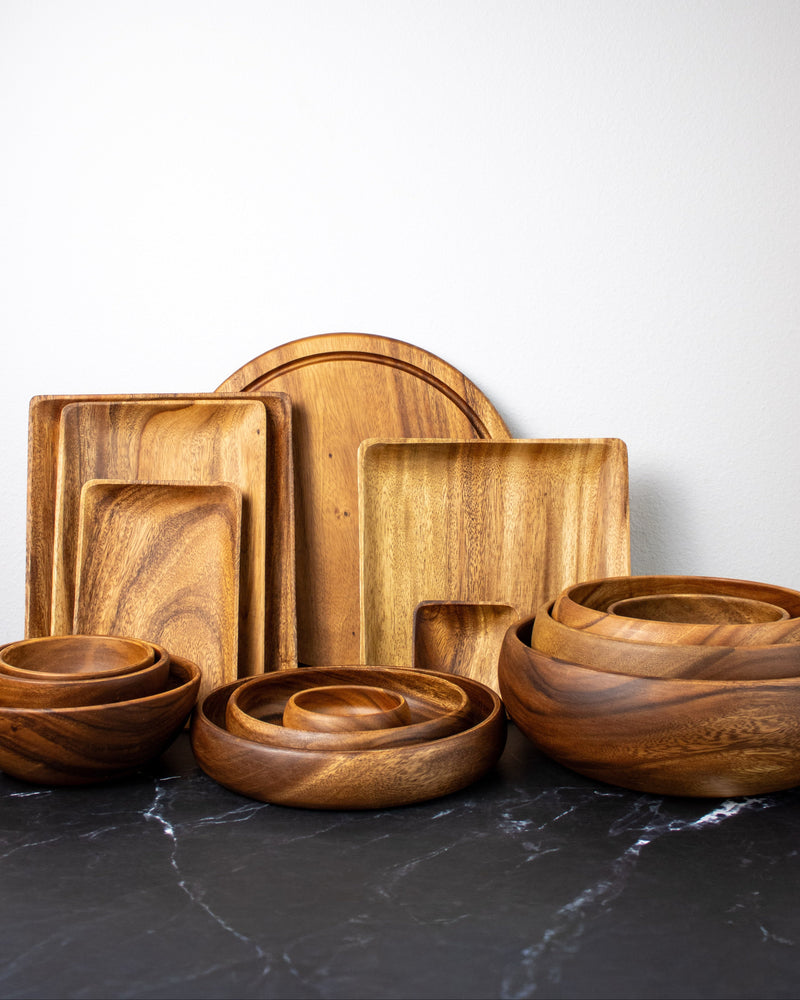
Why Lechon Needs a Board, Not a Platter
The first mistake most first-time lechon hosts make is trusting a ceramic platter to hold the roast. The platter is your grandmother's, it looks beautiful on the shelf, and it is exactly the wrong tool for the job.
Lechon is a physics problem before it is a food problem. A whole pig can weigh 8 to 12 kilos after roasting. Even a lechon belly rolled and tied comes out of the oven at 3 to 5 kilos, glossy with rendered fat that keeps leaking as the meat rests. The skin, if the lechonero did the job right, is a brittle sheet of glass sitting on top of a fat cap on top of muscle. Everything about that roast wants to slide, drip, and crack the moment you set it down.
The skin problem
The crackling is the whole point. Any Filipino who has watched a lechon get carved knows the sound the crowd makes when the first slab of skin comes off clean. That sound does not happen if the surface underneath is smooth ceramic. On glaze, the skin slips as the knife pushes, the fat pools instead of running off, and the crack goes sideways instead of clean through. What you get is a mess of oily shards instead of the tile of skin you paid for.
A wooden board grips the roast. The mild texture of the grain holds it in place while you tap and slice. The board also absorbs a small amount of fat as it cools, which sounds like a flaw until you remember what you are trying to do: keep the meat above the puddle, not floating in it.
Heat and weight
A hot lechon straight from the oven or a warming box is still radiating around 60 to 70 C at the skin surface. Thin ceramic and glass can crack from thermal shock at that heat, especially if the platter was fridge-cold or if a cold sauce bowl gets pushed against it. Hardwood does not care. A 3 to 4 cm thick acacia board handles the heat, the weight, and the shift of a knife bearing down through cartilage without a wobble.
Weight matters for a different reason too. If a serving surface flexes under a 10-kilo roast, the whole reveal moment falls apart. You want to walk the board out from the kitchen, set it on the table, and have every eye stay on the pig. A slab of dense hardwood does that. A large plate that bows in the middle does not.
Why acacia in particular
Filipino hosts have used narra, molave, and yakal for serving boards for generations. Acacia earned its place in modern Filipino kitchens for three reasons. It is dense enough to resist warping under fat and heat. Its natural oils tolerate contact with pork fat and vinegar without stripping the finish. And it is the wood that comes most consistently in large single slabs, which matters when you need a surface long enough to hold a whole pig without seams. If you are curious about the wider set of dishes acacia handles well, our guide to Filipino dishes for wooden tableware covers the fatty, saucy, high-acid staples that give ceramic trouble.
Choosing the Right Board for Your Lechon
Board size is the first question after you know what you are picking up. It is not vanity. A board that is too small forces you to carve in the kitchen and plate on the table, which kills the theater of the whole meal. A board that is too big looks empty and drowns the roast.
Whole lechon, belly, or Cebu-style chopped
Home hosting has changed in the last decade. Ten years ago, the default for a fiesta or a big handaan was a whole lechon delivered on a bamboo pole. Today, most home orders are lechon belly, a boneless roll that runs 40 to 60 cm long and serves 8 to 15. Cebu-style chopped, where the lechonero pre-cuts the pig into bite-size pieces with the crackling on top, sits in the middle. Each one asks for a different board.
- Lechon belly: a 30 to 45 cm serving board with room around the roll for a sauce bowl and a small pile of atchara. Anything longer looks half-empty.
- Cebu-style chopped: a 50 to 70 cm board. The meat and skin are already portioned, so the board becomes a stage for the pile rather than a carving surface.
- Whole lechon: a minimum 90 cm board, ideally 100 cm plus, thick enough to carry the weight without a helper board underneath. If your table cannot hold a board that long, this is the moment to consider a matched two-board layout instead.
Juice groove or flat
A juice groove, the shallow channel routed around the edge of the board, is designed to catch drippings. For lechon it is genuinely useful. The rendered fat that runs off the roast during carving has to go somewhere. Without a groove, it finds the tablecloth. A groove of 8 to 12 mm depth is enough for a home carving session. Deeper than that starts to look industrial and, more importantly, makes it harder to serve directly off the board.
A flat board works too, especially for Cebu-style chopped and for lechon belly that has been resting long enough to stop weeping heavily. If you go flat, put the board on a rimmed tray or a folded banana leaf. Both catch the drip without hiding the wood.
Single board or a set
For a handaan of 15 or more, one board rarely covers the whole meal. The lechon sits center. Around it, you want a smaller board for atchara and calamansi, another for the sauce bowls, and a third for the pancit or grilled sides that come out after the roast. A matched hosting set solves this without turning the table into a mismatched buffet.
Carving the Lechon (Step by Step)
Every family carves lechon a little differently. The version below is the one that works for a first-time host who wants the skin to come off in tiles, the meat to shred cleanly, and the whole thing to be done in under ten minutes so the crowd does not lose patience.
Step 1: Rest the lechon
Do not touch the roast for 10 to 15 minutes after it comes out of the oven or off the pickup. Resting lets the muscle fibers reabsorb the juice they released under heat. If you cut too early, that juice runs onto the board and into the fat pool, and the meat that lands on your guest's plate is drier than it should be. Rest also cools the fat cap just enough that the skin firms up, which is what makes it crack cleanly instead of tearing.
Step 2: The tap test and cracking the skin
Before you slice anything, tap the skin with the back of a spoon or the flat of your knife. A properly rested lechon skin sounds hollow, almost like tapping a wooden drum. If it sounds dull and soft, wait another five minutes.
Once the tap is right, start with the shoulder. Use the tip of a heavy knife to score along the shoulder line, then press down until you hear the first crack. Work the knife gently along the seam of the crack. The skin should lift in a sheet 8 to 15 cm wide. Repeat down the length of the pig, following the natural fat seams.
Step 3: The four-section method
Once the skin is off, or set aside if you are doing belly, section the meat in this order:
- Shoulder: the fattiest and easiest to shred. Cut in slabs across the grain, then break into fork-sized pieces by hand.
- Belly: the prize cut. Slice in 2 cm rounds if it is a rolled belly, in thicker slabs if it is off a whole pig. Do not overwork; belly should look like belly.
- Leg (pierna): denser meat. Carve across the grain in thin slices, angling the knife slightly to keep the pieces even.
- Back and loin: leaner, cut last. This meat dries fastest, so you carve it closer to when it will be eaten.
Knife choice and second-hand safety
A 20 to 25 cm chef's knife is the right tool. A cleaver works for chopping through joints but is too heavy for the finesse of skin lifting. A serrated bread knife is the wrong tool entirely; the teeth shred the skin instead of slicing through.
Your second hand is the danger. The board is slick with fat and the roast is hot. Hold the roast with a folded kitchen towel or a heat-safe glove, not with bare fingers. Keep your thumb tucked behind the knife hand, not in front of the blade. If the roast shifts, stop and reposition; do not chase it with the knife.

The board built for the whole pig
The Pamilya large chopping and serving board is solid acacia, thick enough to carry a whole lechon without flex and wide enough to plate the crackling around the meat.
Shop the Pamilya Large Board →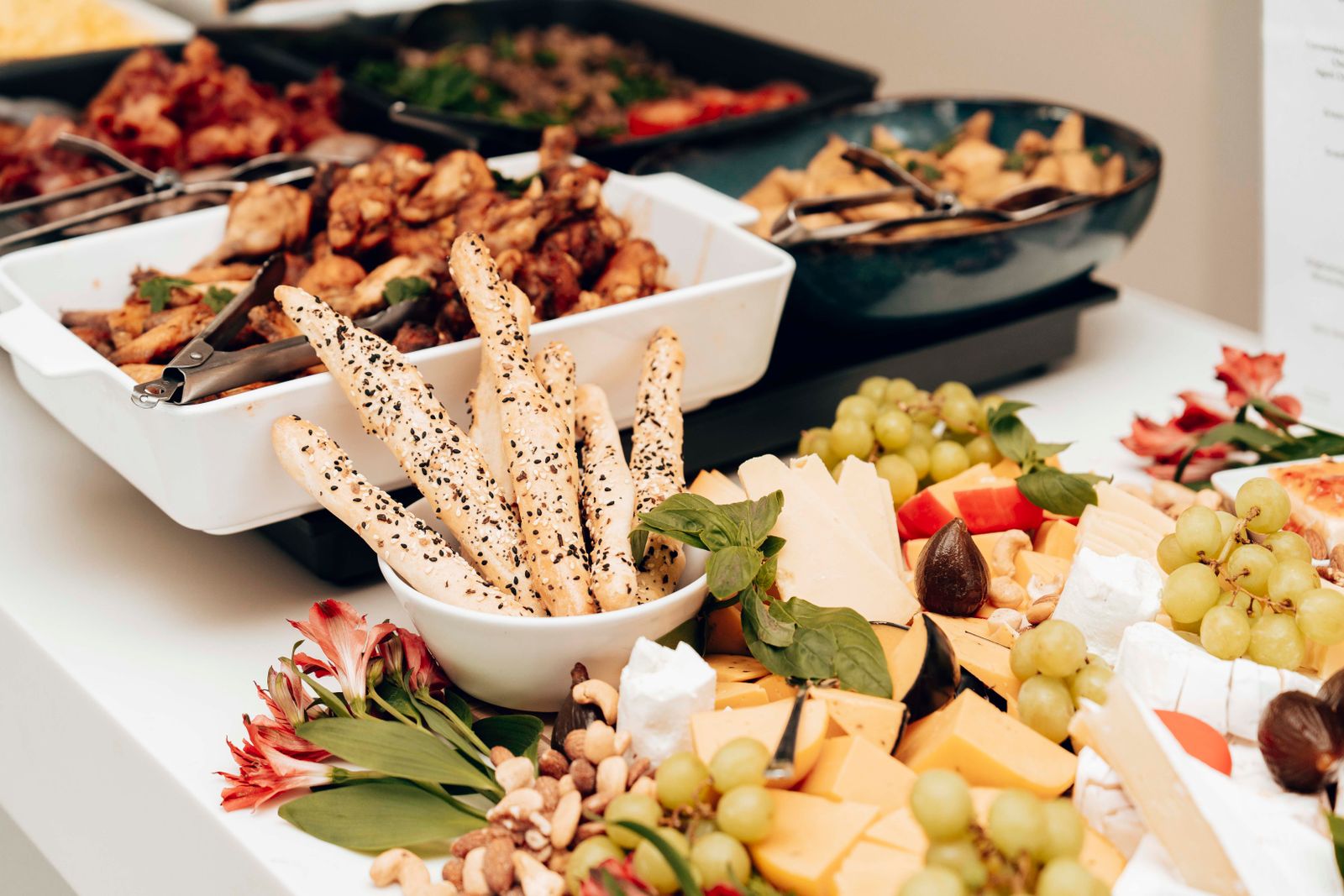
Plating and Presenting on the Board
The way the board leaves the kitchen is the memory the guests carry home. There is a specific arrangement most Filipino hosts use, whether they know they are following a pattern or not.
Skin on top, meat fanned underneath
The crackling goes on top, always. If you have carved a whole pig, place the largest tiles of skin down the spine of the board. If you have carved belly, the skin sits along the top edge of the roll. Underneath, fan the meat outward so a guest can pick up a slice of skin and a slice of meat in the same motion. This is not aesthetic; it is functional. A guest holding a plate with one hand should not have to fish under the skin for the meat.
Where the sauce sits
Sarsa or Mang Tomas sauce belongs in a small bowl at the front-right of the board, near the natural grip point where the host stands. Suka, meaning vinegar with garlic, chili, and onion, sits front-left. Two bowls, no more. The more sauces you add, the more the eye splits between the sauce and the lechon. If a guest wants toyo or a fancy dipping mix, they can spoon it onto their own plate.
Garnish
A banana leaf laid across the board before the roast lands does three things at once. It insulates the wood from direct fat contact, it adds a green background that makes the crackling look more amber, and it gives you a natural way to lift and reposition the meat later. If you cannot find fresh banana leaf, a folded piece of muslin cloth works and disappears visually the moment you set the roast down.
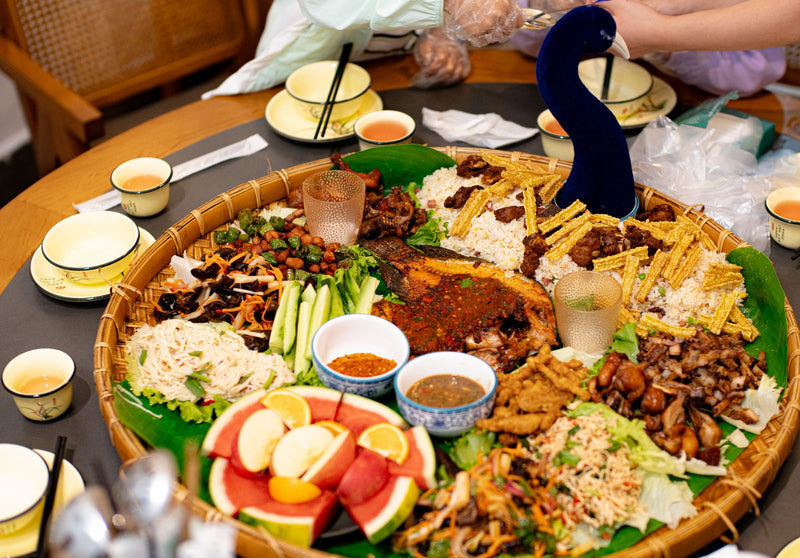
Calamansi halves go around the edge, cut side up. Six to eight is enough. Atchara, the sweet-sour green papaya pickle, sits in a small bowl or piled in a corner. If you are hosting a boodle-fight style layout where the food goes straight onto banana leaves in front of every guest, the lechon board still sits at the head of the table as the centerpiece. Our guide to how to host a boodle fight covers the wider table layout in detail.
The reveal
Carry the board in with both hands, low to the table height. Set it down flat, do not slide. The moment of contact is when everyone at the table looks up. This is the part every Filipino host, whether they say so or not, is quietly waiting for.

The full table, matched
The Royal Hosting Set brings the carving board together with matched serving pieces for sauces, sides, and rice, so the whole handaan looks intentional rather than assembled.
Shop the Royal Hosting Set →Sauces, Sides, and the Rest of the Table
Lechon is the center of gravity, but the meal is built around it. What sits next to the board decides how long people stay at the table.
Sarsa, suka, or liver sauce
Sarsa is the sweet-savory liver sauce most people know as the store-bought Mang Tomas variety. It is the default for pierna and back cuts, where the meat is leaner and benefits from the sweetness. Suka, or vinegar dip, is the Visayan preference, especially for Cebu-style lechon where the meat is already so well-seasoned that a bright acid is all it needs. If you are hosting guests from both sides of the archipelago, put both bowls out. Nobody will complain.
Rice, pancit, and what sits next to the board
A large bilao of pancit palabok or bihon sits within arm's reach of the lechon, not on the same board. Rice, whether steamed or as garlic sinangag, goes in a covered container to keep it warm through second and third servings. A vegetable side, often lumpiang sariwa or a fresh ensaladang talong, cuts the richness of the pork. Two vegetable dishes is the sweet spot; three starts to look like a hotel buffet.
The boodle-fight layout
If your handaan is going kamayan style, the board still holds the lechon. Guests portion from the board onto their section of banana leaf. The atchara and calamansi that would normally sit on the board can either stay put or migrate onto the leaves next to the rice and pancit. What matters is that the board is reachable from at least two sides so the lechon does not become a bottleneck.
Drinks and second servings
Beer and soft drinks are standard. The one specific thing worth knowing: cold drinks against the wood board are fine, but sweating glasses on the board itself will leave rings. Keep drinks on coasters or on a separate side board. If a second serving of lechon needs re-cracking, do it in the kitchen, not on the table. The reveal only happens once.
Cleaning and Caring for the Board After
The cleanup is the part most hosts get wrong, and it is the part that decides whether the board is still around for the next fiesta or ends up warped and stained in a corner of the pantry.
Scrape while warm, not hot and not cold
Once the guests have moved on to karaoke or coffee, go back to the board while it is still warm to the touch, maybe 30 minutes after the last serving. Warm fat scrapes off with a bench scraper or the flat side of a spatula. Cold fat has to be dug at, and dug at is how gouges get made in the surface. Hot fat, straight after carving, is dangerous to handle and thin enough to soak deeper into the grain.
First wash
Wash the board by hand with warm water and a small amount of mild dish soap. Do not soak. Do not put it in the dishwasher; the sustained heat and steam will warp the board and can crack the glue in laminated pieces. A stiff-bristle brush handles the film of fat that stayed behind. If any smell lingers, rub the surface with coarse salt and half a lemon, then rinse.
Drying and re-oiling
Dry the board immediately with a clean cloth, then stand it upright, not flat, so both faces get airflow. Flat drying is the fastest way to warp an acacia board. Leave it upright at least four hours, ideally overnight.
Re-oil within 24 hours. Food-grade mineral oil or a beeswax and mineral oil blend is the standard. Apply a thin coat with a soft cloth, working with the grain, wait 15 minutes, wipe off the excess. The oil replaces what the wash and the fat stripped out. Skipping this step is the single most common reason acacia boards look tired after their first year. Our guide on how to care for acacia wood cutting boards walks through the full re-oil routine, including what to do if the wood has gone dry between uses.
Storage for next handaan
Store the board upright, in a dry cabinet or on a shelf, away from direct sun and away from the stove. If you are stacking boards, put a cloth between them so the surfaces do not scratch each other. A board stored well between fiestas can last 15 to 20 years before it needs resurfacing. Most Filipino kitchens have one board that has seen three generations of handaan. The reason is care, not luck.

Matched pieces for the full spread
The Pamilya Board Set brings smaller matched acacia pieces for sauce bowls, atchara, and sides, so every element on the table shares the same grain and finish.
Shop the Pamilya Board Set →Frequently Asked Questions
Do I need a special board for lechon, or will any cutting board work?
Any dense hardwood board of the right size will work, but the size and thickness matter more than most home boards can manage. A thin bamboo board or a small maple prep board will flex under the weight and let the fat pool at the edges. A 3 cm plus acacia serving board handles both the heat and the load.
How big should the board be for a whole lechon vs lechon belly?
Lechon belly fits on a 30 to 45 cm board with room for a sauce bowl. Cebu-style chopped needs 50 to 70 cm. A whole roasted pig needs 90 cm minimum, and 100 cm plus is more comfortable. Below these sizes, the roast overhangs and the fat runs onto the table.
Will the lechon oil stain or damage an acacia board?
A well-oiled acacia board absorbs some fat during carving, but a proper wash and re-oil within 24 hours restores the surface. Lasting stains happen when the fat cools onto the wood overnight or when the board is stored dirty. Clean warm, dry upright, oil quickly.
What is the right way to crack lechon skin without shattering it?
Rest the lechon 10 to 15 minutes first, then tap the skin with the flat of your knife. When it sounds hollow, score along the shoulder line and press until the skin lifts in a sheet. Work with the natural seams; do not saw across them.
Can I serve lechon directly on the board, or transfer to a platter?
Serve directly on the board. Transferring is the moment the presentation collapses. A properly sized board is your platter, your carving surface, and your serving stage in one piece. Lay a banana leaf underneath if you want an extra layer between the fat and the wood.
How do I clean the board after the fat cools and hardens?
If the fat has hardened, warm the board slightly with a cloth soaked in hot water and laid across the surface for a few minutes. This softens the fat enough to scrape without gouging. Then wash with warm water and mild dish soap, dry upright, and re-oil.