For first-time plate owners
Ina Plate Set
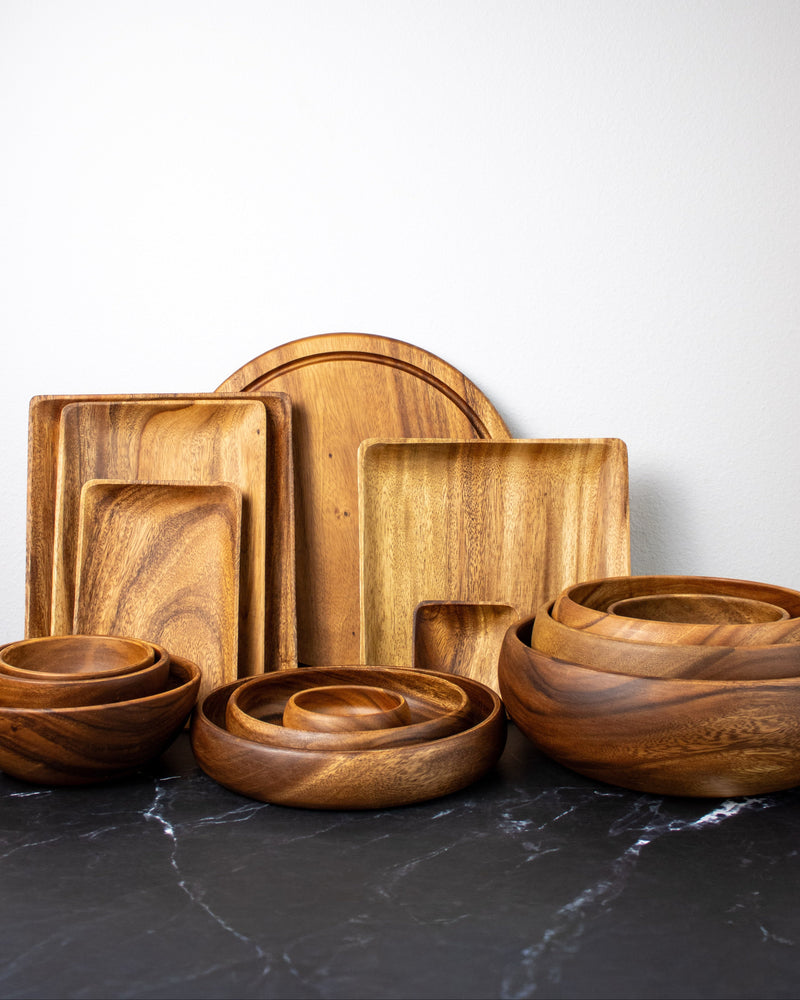
Three plate sizes in solid acacia, named for the Tagalog word for mother. The set we recommend for your first acacia plates. Wash, oil, and start the monthly rhythm.
Where to Start: Plates vs Bowls
Why Plate Care Has Its Own Rhythm
If you have already read our guide to caring for acacia wood bowls, our guide to acacia cutting boards, or the complete acacia wood guide, much of this will feel familiar. Acacia is acacia. The wood is the same dense, food-safe hardwood whether it is shaped into a bowl, a plate, or a cutting board.
But plates earn a guide of their own because they live a different life on your table.
A bowl holds food in its interior. The walls keep moisture in. The rim rarely touches anything sharp. Bowls live alone in a cupboard or nest inside each other.
A plate is the opposite. Food sits on the top surface. Forks and knives drag across it every meal. Heat moves in and out as hot rice or sinigang meets the wood. And plates do something bowls never do, they stack.
That changes the care rhythm. The same monthly oiling still applies, but the attention shifts to the eating surface, the rim, and the way the plates rest against each other in storage.
Quick Decision Tree: Plate-First or Bowl-First Household?
If you are deciding which acacia piece to start with, ask yourself how you actually eat.
Plate-first households: you serve full meals on individual plates, you host dinners often, you set a table for guests, or you appreciate the visual of a wooden plate under a colorful meal. Acacia plates are your starting point. Start with the Ina Plate Set or a single Ina Plate in the size you serve most.
Bowl-first households: you eat rice and ulam, soups, salads, and one-bowl meals more than plated dinners. Start with a bowl. Our bowls care guide covers that path.
Most homes end up with both, but the order matters because the care rhythm you build first becomes the habit that carries over.
The Four Risks Acacia Plates Face That Bowls Don't
Plates need their own care chapter because of four specific risks:
- Top-surface wear. Forks and knives drag across the eating surface every meal. The grain on top wears faster than the inside of a bowl that only meets soft food.
- Stacking pressure. Plates rest on each other. The rim of the plate below carries the weight of every plate above. Without felt liners, that pressure leaves marks.
- Heat shock. A 60-degree-Celsius bowl of sinigang dropped onto a 22-degree-Celsius plate causes the wood to expand unevenly. Repeated heat shock raises grain and dries the surface.
- Uneven oiling. Most people oil the eating surface and forget the rim and the underside. Those neglected surfaces dry out first and crack from the edge inward.
The chapters below cover each risk and how to prevent the damage before it shows.
The Basics
Why Acacia Wood Plates Are Naturally Food-Safe
Acacia is a true hardwood with a Janka hardness of 1,700 to 2,300 pound-force. That density gives it natural resistance to bacterial growth, supported by research from the FDA and food-science studies showing hardwood surfaces self-decontaminate within hours, often outperforming plastic alternatives (Ak, Cliver, Kaspar, 1994, cited in References).
The wood contains no toxic compounds. When finished with food-grade mineral oil, an acacia plate is safe for direct food contact, acidic ingredients like citrus and tomato included. The dense grain does not absorb food particles or odors the way porous materials do.
Acacia is a food-safe choice the day it leaves our City of San Fernando workshop. Care keeps it that way.
The Oils That Work and the Ones That Do Not
For your acacia plates, only food-grade mineral oil (also called USP mineral oil) is the right choice for monthly maintenance. It is odorless, tasteless, does not go rancid, and is FDA-approved for direct food contact under 21 CFR 172.878.
Acceptable alternatives, used sparingly:
- Beeswax blend. Mix 1 part beeswax with 4 parts mineral oil for added protection. Good for plates that see heavier daily use.
- Walnut oil. A natural option, but it can go rancid over time. Use only on plates you use weekly.
Oils to avoid completely:
- Olive, canola, coconut, vegetable oil. They go rancid in months and your plate will smell. We have seen plates come back from customers who used coconut oil, and the smell does not wash out.
- Linseed oil. Can become sticky. Designed for outdoor furniture, not kitchen surfaces.
- Furniture polish. Contains non-food-safe chemicals.
The Five "Never" Rules
Acacia plates last 10 to 20 years and more with proper care. These five rules are the difference between a plate that becomes a family heirloom and one that cracks within a year:
- Never the dishwasher. The heat and detergent cycle destroys the wood within a few washes.
- Never the microwave. The wood heats unevenly, causing cracking and oil release.
- Never soak. Extended water exposure leads to warping and grain raise.
- Never harsh chemicals. Bleach and antibacterial cleaners dry the wood and strip the finish.
- Never abrasive scrubbers. Steel wool and harsh pads scratch the eating surface.
The Daily Rhythm
After Every Meal: The 60-Second Hand-Wash
The single most important habit you can build is washing your plates immediately after the meal ends. Standing food, especially anything acidic or oily, slowly works into the grain if left for hours.
The routine:
- Rinse the plate under warm water to remove most of the food.
- Wash with a soft sponge and a small amount of mild dish soap. Hand soap also works in a pinch.
- Rinse thoroughly so no soap residue remains.
- Towel-dry the entire plate immediately. The eating surface first, then the rim, then the underside.
- Air-dry on a rack or cloth in a ventilated spot for another 10 to 15 minutes before stacking.
The whole routine takes under a minute per plate.
Why Drying Matters More for Plates Than Bowls
A bowl that is slightly damp inside still dries safely because the curve of the bowl channels water away. A plate does the opposite. The flat eating surface holds standing water, and standing water on flat wood is how grain raise starts.
If you have ever noticed an acacia plate that feels slightly rough after washing, that is grain raise. The fibers swell with water and lift. They can be sanded back down (covered in chapter 5), but the easier path is to not let it happen.
Towel-dry every wet plate. Always.
Resting Plates Between Meals
Once dry, plates need somewhere to live until the next meal. Two options:
Counter rest: if you will use the plate again within the day, leaving it flat on the counter in a ventilated area is fine. Avoid direct sunlight (which dries the wood) and heat sources (the same risk).
Cupboard storage: if it will be a day or more, stack with felt liners (covered next chapter) inside a ventilated cupboard. Avoid sealed plastic bins, which trap residual moisture and cause warping.

Start with one plate
Ina Plate (Small)
A single Ina Plate in solid acacia. The lowest-commitment way to try the care rhythm without buying the full set. Perfect for dessert, appetizers, or a personal table accent.
The Stacking Game
How Many Plates You Can Safely Stack
This is the question every new acacia plate owner asks. The honest answer is, it depends on whether you use felt liners.
Without felt liners: 2 to 3 plates maximum, and only if they are the same size. Any more and the weight of the top plates starts to leave faint marks on the rim of the plates below. The marks are not visible at first, but they become visible after a year as the rim wood compresses unevenly.
With felt liners: 4 to 6 plates, even with different sizes. The felt distributes the weight evenly and absorbs micro-movements when the cupboard door opens.
If you stack more than 6 plates, gravity wins. The bottom plate begins to compress. Better to split into two short stacks than build one tall one.
Felt Liners: What to Use, Where to Get Them
Any thin felt circle works. The cheapest option is to buy a sheet of self-adhesive felt at any hardware store, trace your plate size, and cut to fit. Brand-name "plate protectors" sold at home goods stores are the same material, marked up 5 to 10 times.
What does not work:
- Paper towels. They tear, they shift, and they hold moisture from any residual humidity. We have seen plates come back with paper-towel fibers stuck in the wood grain.
- Cloth napkins. Soft enough but absorb moisture and can mildew if even slightly damp.
- Plastic dividers. Trap moisture against the wood. The opposite of what you want.
Felt is the right answer. Cut once, replace every year or two.
Reading the Wear Pattern
If you have plates that have been stacked without felt for a while, look at the underside rim. You may see a faint circular impression where the rim of the plate below pressed against it. That is compression damage.
Compression damage is mostly cosmetic in early stages, and a light oiling often hides it. But repeated compression eventually splits the wood at the rim edge. If you can run a fingernail across the impression and feel the dip, the damage has gone past cosmetic.
This is the cue to switch to felt liners immediately and to oil the rim more often than the eating surface for the next few months. Wood under stress recovers when it stays hydrated.
The Kitchen Environment
Even with felt liners, the cupboard matters. Three environmental risks to manage:
- Humidity swings. A cupboard right next to a stove or sink sees daily humidity changes that stress the wood. Move the plates to a drier cabinet if you can.
- Direct sunlight. Sun darkens acacia beautifully (the patina), but uneven sun (one plate lit, the rest shaded) creates uneven darkening. Store all plates in similar light or rotate the stack monthly.
- Heat sources. Above the oven, near a radiator, beside a refrigerator vent. All of these dry the wood faster than the monthly oiling can replace. Move the plates elsewhere if possible.
"A plate that has been cared for tells a meal-by-meal story. The faint marks where a fork rested. The slight darkening where a hot bowl sat. Acacia does not forget the meals it serves."
The Care Rhythm
Monthly Oiling: Step by Step for Plates
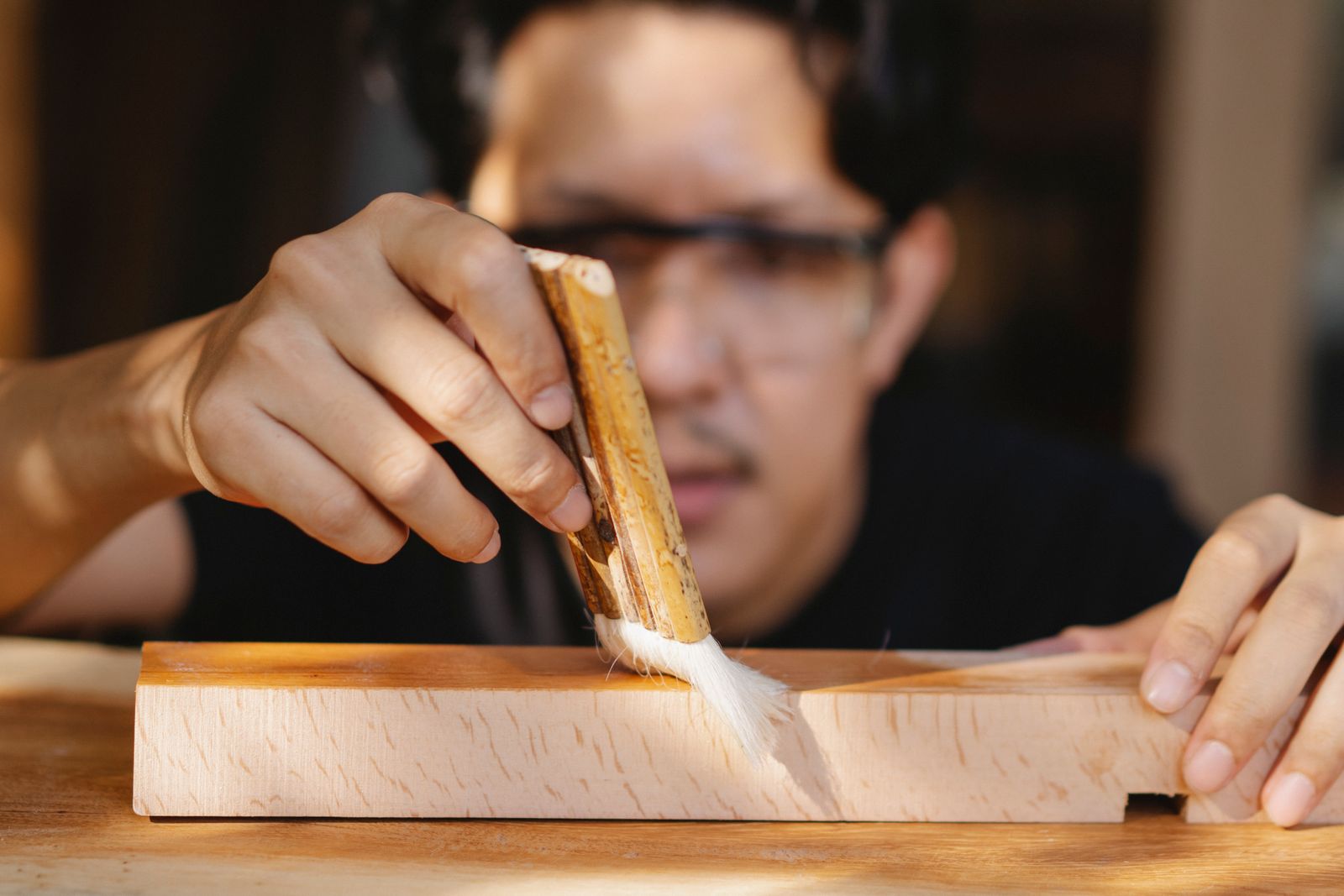
Once a month, every plate in regular use gets oiled. The rhythm is the same as for bowls, with one difference. The plate's three surfaces (eating surface, rim, underside) all need attention, not just the inside.
Step 1: Make sure the plate is bone-dry. If you washed it within the last day, wait 24 hours before oiling. Water in the grain blocks the oil.
Step 2: Pour a small amount of food-grade mineral oil onto a soft cloth. Rub the oil into the eating surface first, following the grain direction. Cover the entire surface generously.
Step 3: Flip the plate and oil the underside with a lighter coat. Most people skip this. The underside dries fastest because it sits against shelves and felt all month.
Step 4: Oil the rim last. Run the cloth around the entire edge. The rim is the most exposed edge of the plate and the most likely to crack first.
Step 5: Let the plate absorb for 15 to 30 minutes. If the surface still looks dry, apply a second coat.
Step 6: Wipe away any excess with a clean dry cloth. The surface should feel smooth, not greasy. Let the plate cure for 8 to 12 hours before stacking or using.
Frequency:
- Monthly for plates in daily or weekly use.
- Every 2 to 3 months for special-occasion plates that mostly sit in the cupboard.
- Whenever the surface looks dull or feels rough, regardless of the calendar.
- More frequently in very dry climates (air-conditioned homes, winter heating).
When to Oil: Reading the Wood
The calendar is a starting point, not a rule. Your plates will tell you when they need oil if you know what to look for:
- Dull surface. A well-oiled acacia plate has a soft sheen. When it looks matte and lifeless, oil it.
- Chalky feel. Run your fingertips across the eating surface. If it feels dry and slightly chalky instead of smooth, oil it.
- Color lightening. Acacia darkens over time. If a plate suddenly looks lighter than its neighbors, the surface has lost its oil and is sun-bleached or dry.
- Rim cracks starting. Hairline cracks at the rim are an emergency oil signal. Oil the rim and underside immediately, then twice more in the next two weeks.
When Things Go Wrong
Fork Scratches on the Eating Surface
Light scratches from forks and knives are part of an acacia plate's life. They are not damage, they are the start of the patina. Most fork marks blend into the wood after the next oiling.
For deeper scratches that catch your fingernail:
- Sand the affected area lightly with 220-grit sandpaper, following the grain. Do not sand against the grain.
- Move to 320-grit for the second pass to smooth out the sanding marks.
- Wipe away all dust with a clean dry cloth.
- Oil the entire eating surface (not just the sanded spot) so the color stays even.
- Let it cure overnight.
The sanded area will look slightly lighter than the rest of the plate for a few weeks, then the patina catches up and the repair becomes invisible.
Heat Marks and the Warming Trick
If you have ever set a hot bowl of soup on a cool acacia plate and noticed a dark ring afterward, that is a heat mark. The wood under the hot bowl expanded faster than the wood around it, creating a tonal shift.
Heat marks are mostly cosmetic and usually fade with regular oiling. To prevent them:
- Warm the plate before serving. A 15-second rinse under warm tap water before serving raises the plate's temperature enough to ease the thermal shift. Towel-dry immediately.
- Use a coaster or trivet. A small wooden coaster between the hot dish and the plate eliminates the issue completely.
- Avoid serving food above 80 degrees Celsius. Most hot home-cooked meals are 60 to 70 degrees by the time they reach the table.
Stains from Tomato, Turmeric, Beet
Strong-pigment foods leave color in the grain. Tomato and turmeric are the most common offenders in a Filipino kitchen.
For light stains, regular monthly oiling usually blends them in.
For visible stains:
- Baking soda paste. Mix baking soda and water into a thick paste. Apply to the stain, let sit for 15 minutes, scrub gently with a soft cloth, rinse, dry.
- Lemon and salt method. Sprinkle coarse salt on the stain, cut a lemon in half, scrub the stain with the cut side of the lemon. The salt is the abrasive, the lemon's acidity lifts the pigment. Rinse, dry, re-oil.
- Light sanding. For deep stains, 320-grit sandpaper on just the stained area, then oil the entire plate.
When to Retire a Plate
Acacia plates that are properly cared for last 10 to 20 years and become heirlooms. But some damage cannot be repaired:
- Deep cracks that go all the way through the wood.
- Splits at the rim that cannot be sanded smooth.
- Warping severe enough that the plate no longer sits flat.
- Splinters that keep returning after sanding.
If a plate reaches this stage, it has served its purpose. Acacia is fully biodegradable. A retired plate can be sanded down for a new use (decorative wall display, garden marker), composted (remove any oil residue first), or burned safely.

When plates become heirlooms
Chenoweth Plate Set
Four solid acacia plates: saucer, dessert, main, and charger. The full plate ladder for people ready to serve every course on wood. The care rhythm is the same, the table is more complete.
Acacia Plate Care: Frequently Asked Questions
Can I put my acacia wood plate in the dishwasher?
No. Acacia is not dishwasher-safe at any temperature or cycle. The combination of heat, harsh detergents, and prolonged water contact will warp, crack, and damage the wood within a few washes. Always hand wash with warm water and mild dish soap, then dry immediately.
Can I serve hot food directly on an acacia plate?
Yes, with one caveat. Most home-cooked meals (60 to 70 degrees Celsius by the time they reach the table) are fine on acacia. For very hot food directly off the stove or oven, warm the plate first with a 15-second warm-water rinse to ease the thermal shift. Avoid putting anything above 80 degrees Celsius directly on the plate without a buffer.
How do I prevent stacking damage on acacia plates?
Use felt liners between plates. Cut your own from a hardware-store felt sheet, or buy ready-made plate protectors. With felt, you can stack 4 to 6 plates safely. Without felt, keep stacks to 2 to 3 plates of the same size.
What oil should I use on acacia plates?
Food-grade mineral oil (USP mineral oil) is the standard choice. It is odorless, tasteless, does not go rancid, and is FDA-approved for direct food contact. Beeswax-and-mineral-oil blends work too. Avoid olive, canola, coconut, or vegetable oil. They go rancid in months and the plate will smell.
How often should I oil my acacia plates?
Monthly for plates in daily or weekly use. Every 2 to 3 months for plates that mostly sit in the cupboard. More often (every 2 weeks) in very dry climates or air-conditioned homes. Whenever the surface looks dull or feels chalky, regardless of the calendar.
My plate has fork scratches. Can I fix them?
Yes. Light scratches blend in with the next oiling and become part of the plate's patina. For deeper scratches, sand the area with 220-grit then 320-grit sandpaper following the grain, wipe clean, and oil the entire surface so the color stays even. The repair will look slightly lighter for a few weeks, then the patina catches up.
Can acacia plates be used in the oven or microwave?
No to both. The microwave heats wood unevenly, causing cracks and oil release. The oven, even at low temperatures, will dry the wood out completely within minutes. Acacia plates are for serving and presentation, not for cooking.
How long do acacia plates last with proper care?
10 to 20 years and more with the monthly oiling rhythm, felt-lined stacking, and the five "Never" rules. Many of our customers have plates that started with their parents and are now in their own kitchens. Acacia ages into family heirlooms when treated with care.
Are acacia plates safe for acidic foods like citrus or tomato?
Yes, acacia is naturally resistant to acidic foods and will not react with citrus, tomato, or vinegar. The dense grain prevents food from penetrating. Strong-pigment foods (tomato, turmeric, beet) may leave a faint stain that fades with regular oiling or can be lifted with the lemon-and-salt method described in chapter 5.
Can I serve a wet or saucy meal on an acacia plate?
Yes, for the duration of the meal. The dense grain resists short-term moisture contact. The rule is the same as for bowls: wash and dry immediately after the meal. Do not leave a saucy plate to sit overnight.
References
Sources we cited and consulted when writing this guide. We try to point to the original research where possible.
- Ak NO, Cliver DO, Kaspar CW. "Cutting boards of plastic and wood contaminated experimentally with bacteria." Journal of Food Protection, 1994. The food-science study showing hardwood surfaces self-decontaminate within hours, often outperforming plastic.
- USDA Forest Products Laboratory. "Wood Handbook: Wood as an Engineering Material." General Technical Report FPL-GTR-282, 2021. The U.S. Forest Service's standard reference for wood properties, finishing, and care.
- U.S. Food and Drug Administration. "21 CFR §172.878: White Mineral Oil." Code of Federal Regulations. Defines food-grade (USP) mineral oil and confirms its safety for direct food contact.
- Hidayat W et al. "Physical and Chemical Properties of Acacia mangium Lignin." PMC / NCBI, 2022. Background on the structural durability of the acacia species we work with.