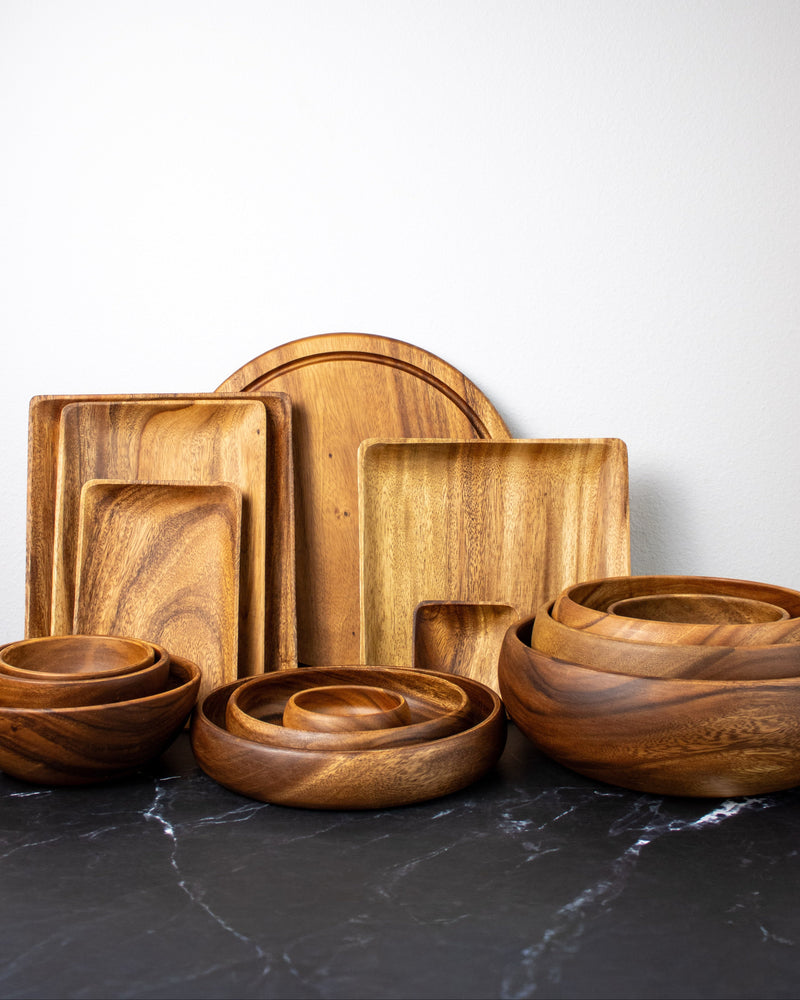
For first-time acacia owners
Gorosin Bowl Set
Pre-oiled and ready to use. The set we recommend for your first acacia piece. Wash, season, and start the monthly rhythm.
Your handcrafted acacia wood bowls and plates are built to last a lifetime. The care is simple but consistent: hand wash, dry thoroughly, oil monthly. This guide covers daily cleaning, monthly oiling, the common issues (stains, odors, cracks, water spots), and the small habits that turn a new piece into an heirloom. If you've inherited or neglected a bowl, jump to the Restoring a Neglected Bowl section below.
This guide focuses on bowls. If you also own acacia plates or cutting boards, the foundations are the same but the care rhythms differ. See our acacia plate care guide (stacking and heat shock), our acacia cutting board care guide (sanitation and knife marks), or the complete acacia wood guide for the full material primer.
Where to Start: Quick Decision Tree
- Just finished using it → Hand wash with warm water and mild soap, then towel-dry immediately. Never soak.
- Surface looks dull, dry, or chalky → Time to oil. Use food-grade mineral oil, apply a thin coat with a clean cloth, wait 30 minutes, wipe excess.
- Smells like food (especially garlic, onion, or fish) → Rub coarse salt and half a lemon inside, let sit 15 minutes, rinse, dry thoroughly, then oil.
- White spots or cloudy patches → Light water damage. Sand the spot gently with 320-grit sandpaper, then re-oil.
- Hairline crack → Soak the area in mineral oil for 24 hours, wipe excess. If the crack is structural or you can see through it, retire the piece to display use only.
- Bowl was inherited or hasn't been oiled in years → Skip to Restoring a Neglected Bowl below.
- About to put it in the dishwasher → Stop. Acacia is not dishwasher-safe at any temperature. Hand wash only.
The Basics
Why Caring for Acacia Matters
Acacia is one of the hardest, densest tropical hardwoods you can put on a table. Its natural oils resist moisture and bacteria, its grain develops a deeper patina with every meal, and a well-cared-for piece outlives the knives that cut on it. But acacia is still a living material. Heat warps it. Standing water swells it. Harsh detergents strip the natural oils that protect it. Care is not about babying the wood. It is about working with the way wood behaves.
Hardwoods like acacia have been shown to carry natural antimicrobial compounds that inhibit bacterial growth on the surface, making them a safer food-contact material than plastic boards once those plastics start scoring (sources: The Spruce 2023; RST Brands 2025; IFT/Wiley 2016; ResearchGate 2025). With monthly oiling and hand washing, your acacia piece is good for decades, not years.
The Oils: Which to Use, Which to Avoid
| Oil | Food-Safe? | Best For | Frequency | Notes |
|---|---|---|---|---|
| Food-grade mineral oil (USP) | Yes | Routine monthly oiling | Monthly or when dull | Doesn't go rancid. Our default recommendation. Inexpensive, available at most pharmacies. |
| Beeswax + mineral oil blend | Yes | Deeper conditioning, water resistance | Every 2 to 3 months | Richer finish, slightly more effort to apply. Adds water-beading. |
| Pure beeswax | Yes | Top-coat after mineral oil | Every 3 to 6 months | Apply after the wood has absorbed mineral oil. Buff with a clean cloth. |
| Walnut oil | Yes (if you don't have a nut allergy) | Conditioning, light finish | Monthly | Adds warmth to the grain. Goes rancid faster than mineral oil, so use small bottles. |
| Coconut oil (refined) | Conditional | Not recommended for regular use | N/A | Solidifies in cooler kitchens, can leave a sticky residue. Skip. |
| Olive oil, vegetable oil, canola oil | No, they go rancid | Avoid completely | N/A | Will turn rancid on the wood and smell bad within weeks. Do not use. |
| Linseed / tung oil (raw) | Usually no for food surfaces | Avoid for tableware | N/A | Curing chemistry not designed for food contact. Skip on Dalisay pieces. |
What Damages Acacia (and How Fast)
| Action | Damage Type | Time to Damage | Reversible? |
|---|---|---|---|
| One dishwasher cycle | Warping, cracking, finish stripping | 1 cycle | No |
| Microwave heating | Cracking, splitting from the inside out | 30 seconds | No |
| Soaking in soapy water | Swelling, joint separation, eventual cracking | 30+ minutes | Partial. Sand and oil may save it |
| Bleach or antibacterial cleaner | Strips natural oils, dries out wood, discolors surface | One use | Partial. Extensive re-oiling needed |
| Direct sunlight (windowsill) | Fading, drying, fine surface cracks | Weeks to months | Partial. Re-oil helps but color shift is permanent |
| Skipping monthly oiling | Surface dullness, micro-cracks, eventual splitting | 3 to 6 months | Yes. Resume oiling, sand if rough |
| Storing while damp | Mold growth, surface staining, warping | 1 to 2 days | Partial. Sand off mold, dry fully, then oil |
| Steel wool / harsh abrasives | Deep scratches, embedded metal particles (rust) | One use | Sand and re-oil; may leave permanent marks |
The Care Rhythm
When to Oil: Reading the Wood
| Sign | What It Means | What to Do |
|---|---|---|
| Surface looks chalky or lighter than the inside grain | Wood is thirsty, oil has fully absorbed | Apply mineral oil, let soak 30 min, wipe excess |
| Water no longer beads when you wash it | Protective oil layer is gone | Oil immediately after the next wash and dry |
| Faint fingerprints linger after handling | Surface tension is low, wood is starting to dry | Oil this week |
| Edges feel slightly rough where they were smooth | Fine surface grain raising from dryness | Light sand with 400-grit, then oil |
| It has been 4+ weeks since last oiling | Time of habit, regardless of visual cues | Oil on a regular monthly schedule (set a calendar reminder) |
| Just bought a new piece | Pre-shipped with a light finish, may benefit from a top-up | Optional first oiling within the first week of use |
Daily Cleaning: Hand Wash Only
Acacia care starts with how you wash. Three rules: warm water (never hot), a small amount of mild dish soap, and dry the piece immediately. Use a soft sponge or non-abrasive cloth. Avoid steel wool and harsh scrubbers, which leave scratches that trap food and bacteria.
Proper hand washing in 30 seconds: Rinse the bowl under warm water to dislodge food. Apply a drop of mild dish soap to a soft sponge. Wash the inside and outside with light pressure. Rinse thoroughly. Towel dry with a clean cloth. Air dry on a rack until fully dry on all sides before storing.
The critical drying step: Standing water is wood's enemy. Even a few minutes of pooled water can start the swelling cycle. Always towel-dry first, then air dry on a dish rack in a well-ventilated space. Never stack damp bowls. Never store while damp.
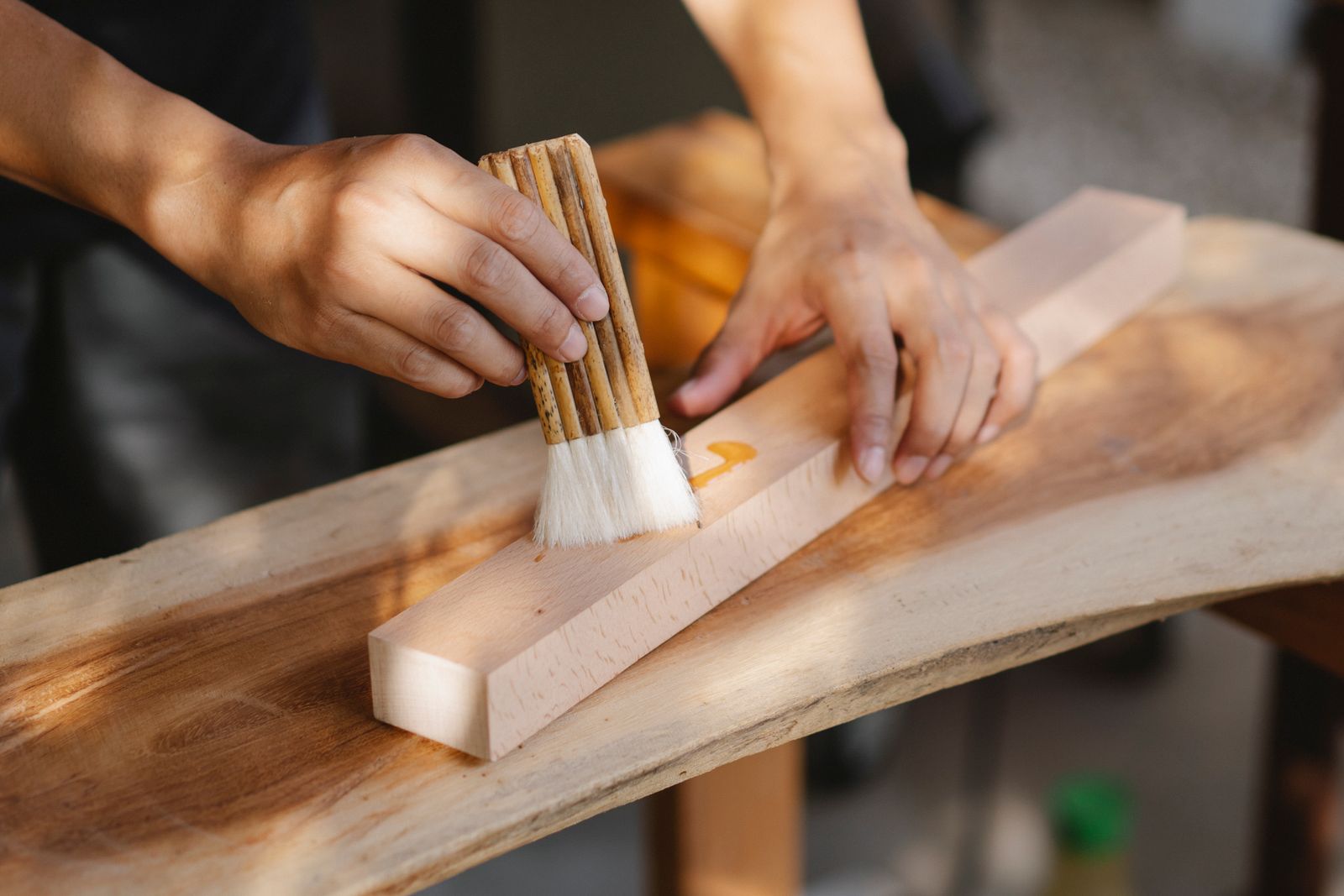
Monthly Oiling: Step by Step
- Make sure the bowl is fully dry. Oil and water don't mix. Applying oil to damp wood traps moisture inside.
- Pour a small amount of food-grade mineral oil onto a clean, soft cloth. A teaspoon is enough for a medium bowl.
- Apply in the direction of the grain. Cover the entire surface, inside and outside, including the rim and base.
- Let it soak in for 15 to 30 minutes. If the wood absorbs all of it and still looks dry, apply a second coat.
- Wipe away any excess with a clean cloth. The surface should feel smooth and slightly conditioned, never greasy or sticky.
- Let cure for 8 to 12 hours before using or stacking. Overnight is ideal.
"Care is not about babying the wood. It is about working with the way wood behaves."

Skip the first oiling
Pamilya Cutting Board Set
Our boards ship pre-oiled and ready to use. No setup, no waiting. Start the monthly rhythm a month from delivery.
When Things Go Wrong
What NOT to Do with Acacia Wood
Never use the dishwasher. High heat and strong detergents are the single fastest way to ruin acacia. One cycle is enough to cause warping and finish damage.
Never microwave acacia. Internal heating causes the wood to crack from the inside out in seconds. There is no safe microwave time for any wooden tableware.
Never soak or submerge for extended periods. A 30-minute soak in soapy water is enough to start swelling. If a stubborn food residue won't budge, sprinkle baking soda and scrub gently, but don't leave the bowl in water.
Never use harsh chemicals. Bleach, ammonia, and antibacterial sprays strip the wood's natural oils and leave it dry, dull, and prone to cracking. Mild dish soap is all you need.
Dealing with Common Issues
Removing stains: For stubborn food stains, make a paste of baking soda and water. Apply with a soft cloth, rub gently in the direction of the grain, rinse, dry, and re-oil. For grease stains, sprinkle salt on the spot, let it absorb for a few hours, then wipe and wash normally.
Removing odors: Sprinkle coarse salt inside the bowl, rub with half a lemon, let sit for 15 minutes, rinse, dry thoroughly, and re-oil. Garlic, onion, and fish smells respond well to this. For persistent odors, leave the bowl in a well-ventilated space for 24 hours after the salt-and-lemon treatment.
Addressing minor cracks or splits: Small hairline cracks usually result from dryness. Soak the affected area with mineral oil and let it absorb for 24 hours. The wood will often plump back and close the crack. If the crack is structural (wider than a hair, or you can see through it), retire the piece to display use only, since food can lodge inside.
Restoring a Neglected Bowl
If you've inherited a bowl, bought one secondhand, or simply haven't oiled yours in years, restoration is straightforward. Set aside about 45 minutes plus overnight curing time.
- Assess: Wash gently and inspect. If the wood is still solid (no through-cracks, no soft spots, no mold), it's restorable.
- Light sand: Use 320-grit sandpaper on rough spots, working with the grain. Wipe sawdust away with a slightly damp cloth, then let dry completely.
- Oil soak: Apply a generous coat of food-grade mineral oil, more than you would for routine maintenance. Let it absorb for at least 2 hours.
- Second coat: If the wood absorbed all of the first coat, apply a second. Continue until the wood stops absorbing oil after 30 minutes.
- Wipe and cure: Wipe all excess with a clean cloth. Let the bowl cure overnight (8 to 12 hours) before using.
- Resume monthly oiling. A properly restored bowl behaves like new and is good for many more years.
For deeply neglected wood (very dry, cracked, dull), repeat the oil-soak cycle weekly for the first month, then return to monthly maintenance.
The Long Game
Storing Your Acacia Pieces
Store bowls and plates only when fully dry. Keep them in a well-ventilated cupboard away from direct sunlight, heat sources (stovetops, radiators), and humidity extremes (above the sink, near a dishwasher exhaust). Stacking is fine if pieces are dry, but if you live somewhere humid, leaving a small gap between stacked bowls helps air circulate and prevents trapped moisture.
The Patina: Beauty Through Use
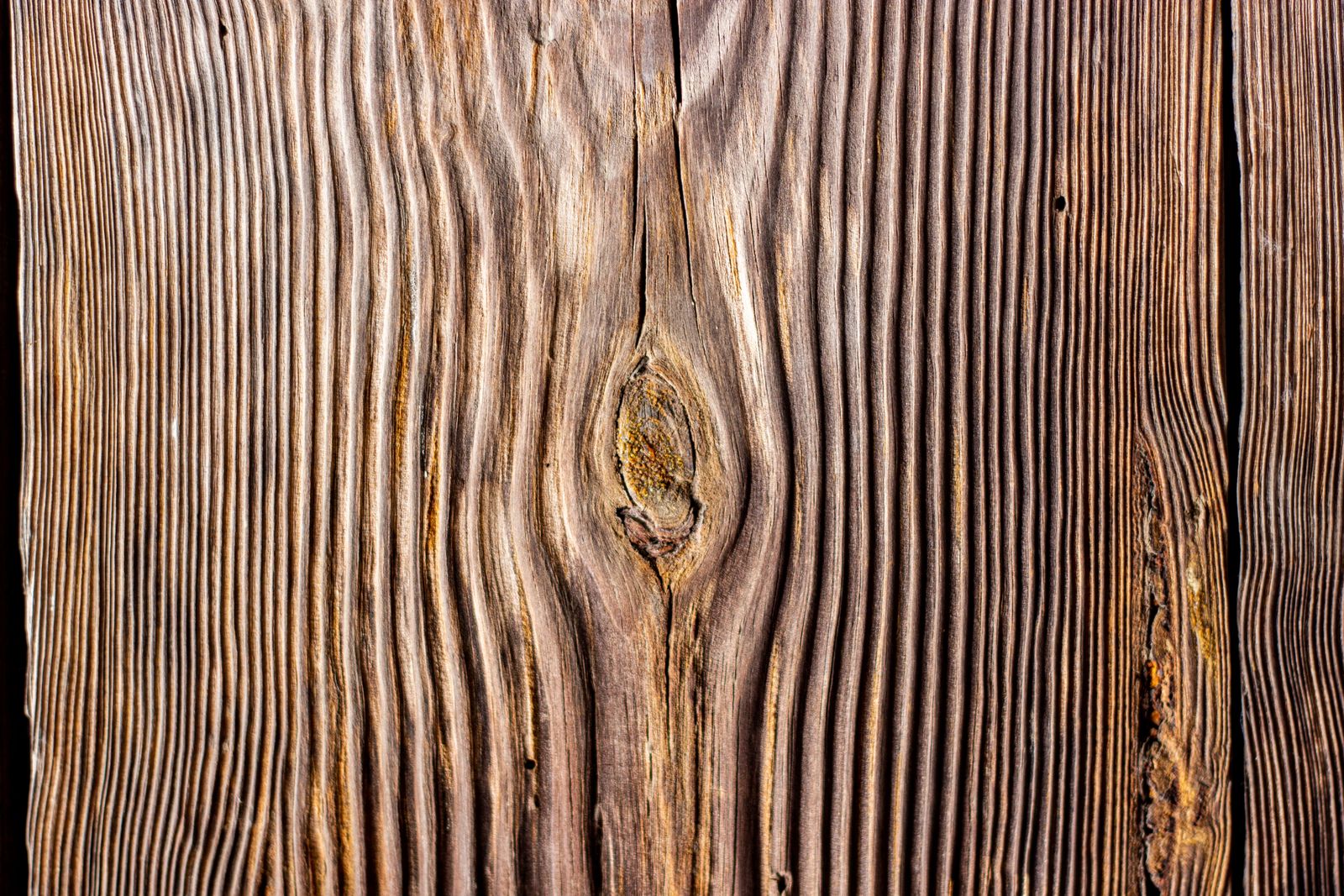
One of the joys of acacia is that it does not stay new. With every meal, every oiling cycle, every wash, the wood deepens in color and the grain becomes more pronounced. A bowl after a year of regular use looks lived-in. After five years, it looks like an heirloom. Small color variations between pieces and between sides of the same piece are normal and celebrated. They mean your acacia was genuinely shaped by hand, not factory-finished.
Quick Reference Care Checklist
- ☐ Hand wash only, warm water, mild soap, soft sponge
- ☐ Towel dry immediately, then air dry on a rack
- ☐ Oil monthly (or when surface looks dull) with food-grade mineral oil
- ☐ Never the dishwasher
- ☐ Never the microwave
- ☐ Never soak for more than a few minutes
- ☐ Never bleach or harsh chemicals
- ☐ Store fully dry, in a ventilated cupboard, away from direct heat or sunlight
- ☐ Re-oil after every restoration session, after deep cleans, and after lemon-salt odor treatments

For full-time acacia hosting
Royal Hosting Set
Thirteen pieces of solid acacia. Plates, bowls, and boards in one set. The same care rhythm covers everything when acacia becomes how you host.
Acacia Wood Care: Frequently Asked Questions
Can I put my acacia wood bowl in the dishwasher?
No. Acacia is not dishwasher-safe at any temperature or cycle. The combination of high heat, prolonged water exposure, and strong detergents causes warping, cracking, and finish damage, often within a single cycle. Always hand wash with warm water and mild soap, then dry immediately.
How often should I oil my acacia wood pieces?
About once a month, or whenever the surface looks dull, chalky, or lighter than the inside grain. New users sometimes oil weekly for the first month to build up the protective layer, then settle into monthly maintenance.
What oil should I use on acacia wood?
Food-grade mineral oil (USP grade) is the default recommendation, it doesn't go rancid, it's inexpensive, and it's available at most pharmacies. A beeswax-and-mineral-oil blend gives a richer finish and a touch of water resistance. Never use olive oil, vegetable oil, or canola oil. They go rancid on the wood and start to smell bad within weeks.
Is acacia wood food safe?
Yes. Acacia is naturally food-safe. Its dense grain and natural oils help resist moisture and limit bacterial growth. Hardwoods including acacia carry natural antimicrobial compounds that can inhibit bacterial growth on the surface, which is one reason hardwood is considered a safer food-contact surface than plastic boards that have started to score (sources: The Spruce 2023; RST Brands 2025; IFT/Wiley 2016; ResearchGate 2025).
My bowl smells like garlic / fish / onion. How do I get rid of it?
Rub coarse salt inside the bowl with the cut side of half a lemon. Let it sit 15 minutes. Rinse with warm water, dry thoroughly, and re-oil. For persistent smells, leave the bowl in a well-ventilated space for 24 hours after the salt-and-lemon treatment.
There are white spots on my bowl. What are they?
White spots or cloudy patches are usually mild water damage from pooled water sitting too long on the surface. Sand the spots lightly with 320-grit sandpaper, going with the grain, then re-oil. They typically come out completely.
My acacia bowl has a small crack. Is it still usable?
If the crack is a hairline (you cannot see through it), soak the area with mineral oil for 24 hours, the wood often plumps back and closes the crack. If the crack is wider or you can see daylight through it, retire the piece to display use only or as a key bowl, since food can lodge inside and become a bacterial risk.
Can I leave my acacia bowl out at room temperature for a few hours with food in it?
Yes, that's exactly what serving bowls are designed for. The food-safety concern is the food itself, not the bowl. Just don't let pooled liquids (especially acidic things like vinaigrettes or citrus) sit overnight without cleaning.
I inherited an acacia bowl that hasn't been cared for in years. Can I save it?
Almost always yes. Follow the Restoring a Neglected Bowl section above. Unless the wood has structural cracks, mold that has penetrated through it, or has been chemically damaged, an oil-soak cycle (and sometimes a light sand) brings it back. We've seen 30-year-old acacia restored to like-new condition.
How long should an acacia wood bowl last with proper care?
Decades, often a lifetime. The pieces we make are designed to be passed down. With monthly oiling, hand-washing, and the small habits in this guide, an acacia bowl outlasts most knives, most plates, and most of the kitchen equipment around it.
References
Sources we cited and consulted when writing this guide. We try to point to the original research where possible.
- Ak NO, Cliver DO, Kaspar CW. "Cutting boards of plastic and wood contaminated experimentally with bacteria." Journal of Food Protection, 1994. The Wisconsin study that found hardwood cutting surfaces self-decontaminate within hours, often outperforming plastic.
- USDA Forest Products Laboratory. "Wood Handbook: Wood as an Engineering Material." General Technical Report FPL-GTR-282, 2021. The U.S. Forest Service's standard reference for wood properties, finishing, and care.
- U.S. Food and Drug Administration. "21 CFR §172.878: White Mineral Oil." Code of Federal Regulations. Defines food-grade (USP) mineral oil and confirms its safety for direct food contact.
- Hidayat W et al. "Physical and Chemical Properties of Acacia mangium Lignin." PMC / NCBI, 2022. Background on the structural durability of the acacia species we work with.