You already know what you want to cook. You probably know who's coming over. What you don't know is whether to add the 10-inch or the 14-inch bowl to your cart, and whether you'll regret either choice the first time you set the table. This guide gives you the number, the reason behind it, and the confidence that the bowl will fit the dish, the gathering, and the shelf you have to store it on.
Why bowl size matters more than people think
Most bowl-buying regret traces back to one error: choosing by aesthetic instead of by use. A 16-inch bowl looks generous in a product photo. On a six-person table next to plates and sawsawan dishes, it can crowd everything else out of the way. The right size is the one that serves the dish you actually cook, in the quantity you actually serve, on the table you actually own. We cover the broader material story in our complete acacia wood guide, but sizing is the decision that affects how often the bowl gets used.
The dish decides the bowl, not the other way around
Walk through a typical week of your cooking. Do you make ginataan often? Salad? Rice for the family? Pancit on weekends? Each of those has a natural footprint. Ginataan needs depth so the gata does not slosh over when the bowl is passed. Salad needs surface area so the leaves can be tossed without bruising. Pancit needs a wide, shallow vessel so the noodles can be portioned without digging. Buy for the dish that hits the table most often, not for the one that hits it twice a year.
How undersized bowls ruin kainan flow
Filipino meals run on shared serving. When the bowl is too small, someone has to get up and refill it midway through the meal. The rhythm of kainan breaks. People wait. Plates cool. The host hovers instead of eating. A bowl one or two inches larger than you think you need almost always pays for itself the first time you host. The opposite mistake, an oversized bowl half-full, looks awkward and chills food faster because the exposed surface area exceeds the volume holding heat.
Why "one big bowl" is a Filipino-table mistake
There is a temptation to buy one enormous centerpiece and call it done. It rarely works. Filipino meals are layered. Rice, ulam, sabaw, sawsawan, and often two or three sides share the table at once. One giant bowl flattens that variety. A range of sizes, even a modest one, lets the table read as a meal rather than a single dish. Two mediums plus one large will out-host one statement bowl every time.

Start with a range, not a single piece
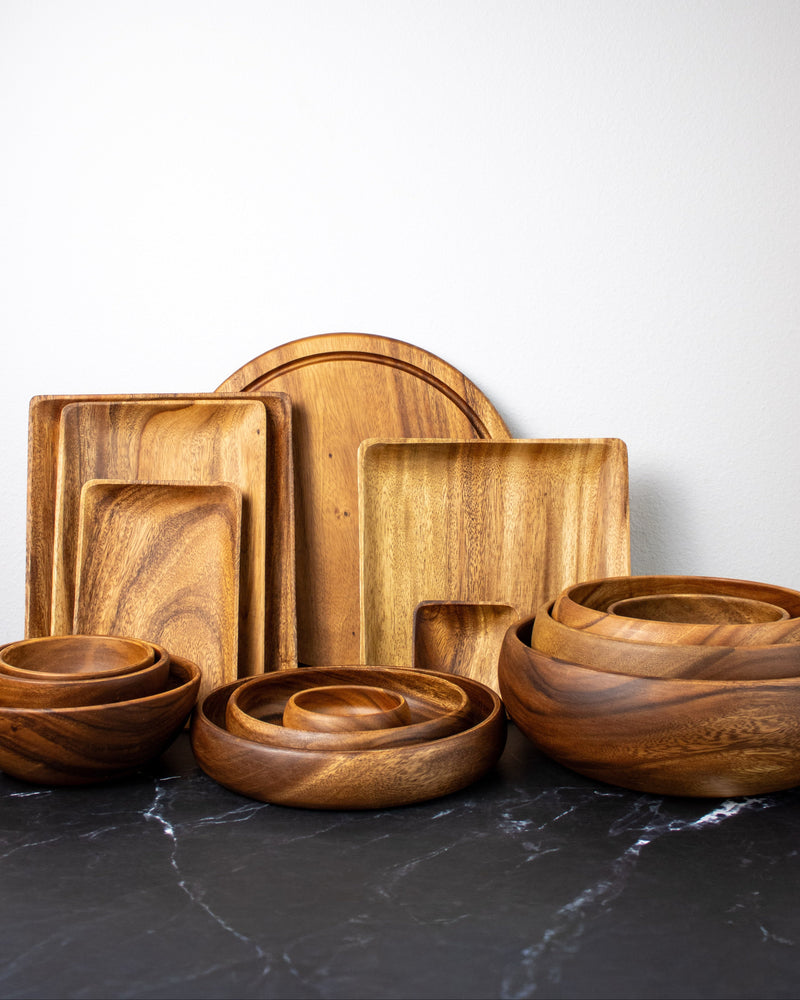
A graduated set covers more dishes and more guest counts than any single bowl can.
Shop the Gorosin Bowl Set →
The Dalisay sizing matrix at a glance
Bowls fall into four practical tiers. We name them by the job they do, not the shelf they sit on. Diameters are measured rim to rim across the widest point, and we use inches first with centimeters in parentheses since Philippine kitchens move between both.
Small (under 8 inches / 20 cm): individual portions, dips, suka-toyo
This is the personal-serving tier. Soup, a single rice portion, sawsawan with calamansi and patis, peanuts before dinner, ice cream after. A small bowl holds roughly one to two cups. Buy several rather than one. Six matching small bowls turn a regular table into a set table without any other change.
Medium (8 to 11 inches / 20 to 28 cm): pairs, side dishes, rice for 2-3
The workhorse. A medium bowl serves two to three people their portion of rice, holds a side of atchara, carries fruit to the table, presents a half-recipe of ensalada. If you only buy one bowl in your lifetime, buy a medium. It does roughly eighty percent of what most households need.
Large (12 to 15 inches / 30 to 38 cm): family salads, ginataan, pancit for 4-6
The hosting bowl. This is the size that handles a full salad for six, a pancit canton for the family, a ginataang bilo-bilo on a cold afternoon, or fruit for a merienda spread. A large bowl is also the one that travels best to a potluck. Bring food, do not bring back leftovers, the empty bowl rides home with you.
Statement (16 inches plus / 40 cm plus): handaan centerpieces, boodle-style spreads
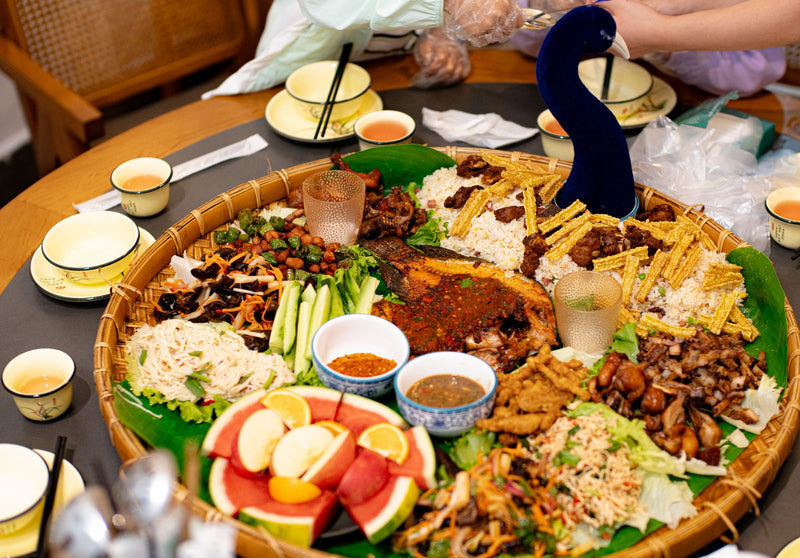
The occasion bowl. A statement bowl is not for Tuesday. It earns its keep at handaan, fiestas, holiday meals, baptism receptions, and the kind of birthday lunch where three generations show up. Outside those moments it lives on the sideboard as a fruit bowl or a centerpiece. That is fine. A statement bowl is allowed to be quiet most of the year.
Sizing by guest count: the real-world test
Guest count is the variable people get wrong most often. They size up for the maximum they ever host, then live with a bowl that is too big for the meal they actually eat. The better approach is to size for the meal that hits the table every week, then add one bowl for the larger gatherings.
Solo and couples (1-2): one medium bowl does almost everything
If you live alone or with one other person, a single medium bowl handles salad, pasta, fruit, popcorn, and weekend pancit. Skip the large entirely until you actually host. A pair of small bowls for rice or soup completes the kitchen. Adding a large bowl too early means it sits empty most weeks and feels disproportionate when it does come out.
Family of 4: one large plus two mediums covers most meals
Four people eating together is the sweet spot for the large-plus-two-medium combination. The large carries the centerpiece dish, whether salad, pancit, or ginataan. The mediums carry the sides. Small bowls handle sawsawan and individual rice if you serve that way. You do not need a statement bowl yet, and buying one before the household needs it usually means a year of storage before it sees the table.
Family of 6-8: a statement bowl earns its place
At six to eight regular eaters, the statement bowl stops being a luxury and starts being a workhorse. Sunday lunch happens. Lola comes over. The large bowl is suddenly the medium one. Add a 16-inch or larger piece and demote the previous large to side-dish duty. You will use both at the same meal more often than you expect.
Hosting 10 plus: layering sizes, not buying bigger
There is a ceiling on useful bowl size. Past 18 inches, the bowl gets hard to pass, hard to wash, and hard to store. For ten or more guests, the answer is not one enormous bowl but two or three large bowls placed along the table so every guest is within reach of food. Two 14-inch bowls of pancit beat one 20-inch bowl every time. Long tables and long reaches break the kainan rhythm.
Sizing by dish: what fits what
Diameter alone does not tell the whole story. Depth, slope, and rim height change how much a bowl actually holds and how it serves. Here is how the common Filipino-table dishes map to bowl shape. For deeper pairings, see our guide to Filipino dishes for wooden tableware.
Rice and ulam: depth matters more than width
Rice needs a bowl with vertical walls so the grains stay warm and do not fan out into a thin layer. For family-style rice serving, a medium bowl that is four to five inches deep beats a wider shallow one. USDA MyPlate guidance treats a serving of cooked rice as roughly half a cup. A six-person bowl needs about three to four cups of capacity, which a deep medium handles comfortably without spilling when passed.
Salads and ensaladang talong: width over depth
Leafy greens need room to be tossed without bruising. Choose a wider, shallower large bowl, 13 to 15 inches across with two to three inches of depth. Ensaladang talong, mango salad, and ensaladang labanos all do better in a wide vessel because the dressing distributes evenly rather than pooling at the bottom. A tall narrow bowl will drown the bottom layer and leave the top dry.
Soups, sinigang, tinola: portion bowls, not serving bowls
Soup served from a single large wooden bowl cools fast and spills easily when passed. Better to serve the broth from the cooking pot directly into individual small or medium bowls at the table. Reserve the large wooden bowl for the solid components, fish, vegetables, gabi, that can be transferred separately if you want a no-pot table presentation. Wood handles solids beautifully and broth less so, simply because of weight and temperature.
Pancit, lumpia, finger food: shallow and wide
Pancit needs a wide bowl so noodles can be portioned with tongs or a fork without the bottom layer getting smashed. A 12 to 14-inch bowl with shallow walls is ideal. Lumpia, fried tokwa, ukoy, and other finger foods also belong in shallow wide vessels so guests can pick a piece without rearranging the rest. Deep bowls hide the second row, and food that gets hidden does not get eaten.
Fruit, pasalubong display, decor: anything goes, but proportion still counts
A fruit or pasalubong bowl on the sideboard is the one place where statement size is forgiven year-round. Match it to the surface it sits on. A 12-inch bowl on a narrow console looks crowded. An 18-inch bowl on a wide dining table looks generous. A general rule: the bowl should occupy no more than a third of the surface beneath it.

The workhorse large
A 14-inch acacia bowl that handles weekday salads and weekend pancit without complaint.
Shop the Ama Bowl Large →Practical buying decisions
Once the dish and guest count point to a size, three practical questions decide whether the bowl actually fits your life: where it lives when it is not on the table, how easy it is to carry, and whether you should buy it alone or as part of a set.
Storage reality: measure your shelf before you measure the bowl
Wooden bowls do not nest as cleanly as ceramic, and acacia in particular is shaped from solid wood with thicker walls than thin porcelain. A 15-inch bowl needs a shelf at least 16 inches deep with about six inches of vertical clearance. Before buying, open the cabinet you plan to store it in. Measure twice. If the bowl will live on display, also check the surface it will sit on, console depth, shelf height, and the light it falls under.
Weight and handling: large acacia is heavier than it looks
Acacia is a dense hardwood. A 14-inch bowl filled with salad weighs more than people expect. If the cook in your household has wrist or shoulder issues, factor that in. A slightly smaller bowl that gets used is worth more than a slightly larger bowl that stays in the cabinet because lifting it full is uncomfortable. The best bowl is the one that actually comes out at mealtime.
Buying as a set vs. building over time
Sets solve the coordination problem. The grain pattern, the finish, the rim style all match. Buying piece by piece over months or years gives you variety but can leave you with a table that looks assembled rather than composed. If this is your first wooden tableware, a graduated set is the calmer entry point. If you already own one or two pieces you love, build outward from those rather than restarting with a new set.
When to size up "just in case" and when not to
Size up when you actually host more than once a quarter, when your household is growing, or when you cook ginataan or pancit in batches that exceed your current bowl. Do not size up because the larger bowl is on sale, because you might host someday, or because you saw a beautiful 18-inch piece in a photo. The bowl you buy for the meal you actually cook is the bowl that stays on the table.
Quick reference and care notes
A short closer to take to the checkout page. If you are still hovering between two sizes, this is the section to read.
The 30-second sizing flowchart
- How many people eat at your table on a normal week? One or two: medium. Three or four: large. Five or more: large plus statement.
- What is the dish that hits the table most often? Salad or pancit: wider and shallower. Rice or ginataan: deeper.
- What is the smallest shelf or surface the bowl has to fit on? Subtract one inch from the maximum diameter for clearance.
- Are you buying one piece or several? If several, lean toward a graduated set so sizes and finish coordinate.
- If you are stuck between two sizes, choose the smaller when buying single, and the larger when buying as part of a set.
Keeping the bowl in good shape regardless of size
Size does not change care. Every acacia bowl, whether 6 inches or 18, follows the same rules: hand wash, dry standing up so air reaches both sides, oil two to four times a year, keep it out of the dishwasher and out of standing water. The full routine lives in our acacia bowl care guide. The single most common mistake is leaving a bowl wet overnight. Wipe it dry the same evening it is used.
A note on graduated sets
If the decisions above are still uncertain, a graduated set removes most of the guesswork. You get a small, medium, and large that match in grain and finish, so the sizing decision becomes a hosting decision instead. That is a useful trade for first-time wooden-tableware buyers and for anyone who wants the table to read as composed rather than collected.

A graduated set, sized for real meals
Three coordinated sizes that cover the everyday and the handaan from one purchase.
Shop the Manila Bowl Set →Frequently Asked Questions
What size wooden bowl do I need for a family of four?
For a family of four, one large bowl in the 12 to 14-inch range covers the centerpiece dish, whether salad, pancit, or rice. Add two medium bowls of 8 to 10 inches for sides and atchara. You do not need a statement bowl unless you host beyond the household regularly.
What is the standard size for a wooden salad bowl?
A standard family salad bowl is 12 to 14 inches in diameter with two to three inches of depth. That range comfortably holds salad for four to six people and gives leafy greens enough room to be tossed without bruising. Narrower than 11 inches starts crowding the toss.
How big should a serving bowl be for 6 to 8 people?
Plan on a 14 to 16-inch bowl for six to eight diners on a single main dish. For a multi-dish handaan setup, a 14-inch large bowl plus a medium for sides serves the same group more flexibly than one larger bowl. Past 18 inches, lifting and passing becomes awkward.
Is a 12-inch acacia bowl too big for everyday use?
Not at all. A 12-inch bowl sits at the upper end of the medium tier and works as a daily-use bowl for households of three or four. It is large enough for family salad or pancit, small enough to wash easily, and stores on a standard cabinet shelf.
Can one large acacia bowl replace several smaller ones?
One bowl rarely replaces several. Filipino meals are layered, with rice, ulam, sides, and sawsawan often on the table at once. A single statement bowl handles one dish well but leaves the rest of the meal without proper vessels. A small range of two or three sizes serves the table better than any single piece.
Does bowl depth matter as much as diameter?
Yes, and sometimes more. Two bowls of the same diameter can hold very different volumes depending on depth and wall slope. Rice and ginataan want deeper bowls so heat and liquid stay in. Salads and pancit want shallower bowls so the food spreads and stays visible.