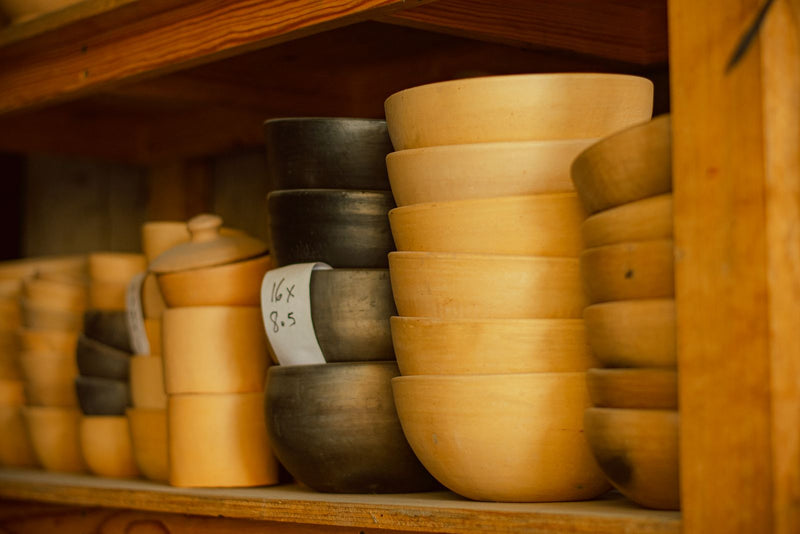
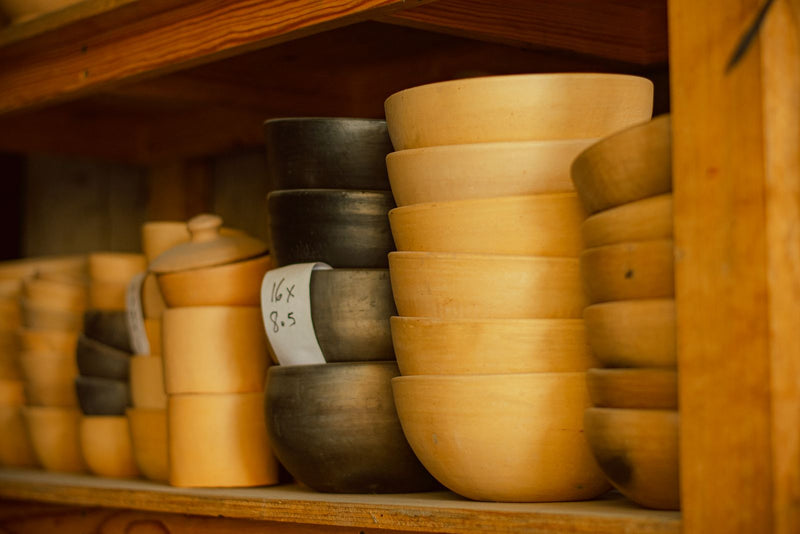
Some Filipino dishes work on any plate. Most do not. The saucy, the charred, the shared, and the wrapped all want a specific kind of surface, and that surface has been wood for as long as anyone has been serving these meals at a family table. This is not nostalgia. It is a matter of how sauce sits, how heat travels, how a slice of inihaw looks against a background, and how a boodle spread holds together when eight hands reach into it at once. Eight Filipino dishes in particular ask for wood before you even think about the vessel. This guide walks through each one, why it wants the wood it wants, and how to build a small set that handles all eight without buying a cupboard full of specialised pieces.
Why Filipino Cooking Reads Better on Wood
Filipino cooking never designed itself around porcelain. Long before matched dinner sets and bone china arrived in the Philippines, the eating surface was banana leaf laid over a wooden table, a halved coconut shell doubling as a bowl, or a bilao woven from bamboo. Wood was the throughline. It carried the food from the fire to the table because it was what the household had, and the food shaped itself around what wood could do well. That is why so many of our dishes look right on hardwood in a way they do not on a white ceramic plate. It is not a coincidence of style. It is a match between how the food behaves and what the surface underneath it lets it do. For a broader read on how this shows up across a full Filipino table, we have a longer piece on the dining traditions that shape how Filipino food is served, and the same vessel logic runs underneath everything in this guide.
Three questions that decide the vessel
Before you pick up a plate for any Filipino dish, three questions sort out the answer for you.
- Is it wet or dry? Broth, sauce, or thick coconut milk needs a bowl with a real wall. Grilled, fried, or wrapped dishes need a flat or shallow surface that lets crispness stay crisp instead of steaming into softness.
- Is it hot or cool? Serving heat for Filipino food usually sits well below 90 degrees Celsius by the time it hits the table, which is within acacia's comfortable working range. Cool dishes with strong acid (kinilaw, sweet halo-halo style) can sit briefly on bare wood or in a small inner vessel if you want zero contact.
- Is it a solo serving or a shared centrepiece? A single portion belongs on a plate or bowl sized for one. A whole inihaw, a lumpia tower, a boodle spread of rice and ulam wants a board long enough for hands to reach without crossing over each other.
These three questions cover most of the table. The pairings that follow are just the answers, dish by dish.
When wood is helping, and when it needs a leaf
Banana leaf is the original Filipino non-stick liner and it is still the correct answer for a handful of situations. Line the board or bowl with leaf when you are serving sticky sweets (suman, bibingka) that would otherwise fuse to the surface, when you are laying a full boodle spread of rice and ulam directly on the board, or when the dish is heavy in aggressive natural dyes like turmeric or atsuete and you would prefer to keep the wood as it was.
Do not line the wood by default. A kare-kare in a deep acacia bowl is meant to show the warm grain against the orange peanut sauce. A pancit on a wooden serving plate is meant to look like a tangle of noodles on hardwood, not a slick leaf. Reach for the leaf when it serves the food, not as a protective habit. The wood is not fragile. It is doing part of the presentation, and covering it up cancels the reason you chose it.
Kare-kare, the Deep-Bowl Case
Kare-kare is the clearest argument in the entire Filipino repertoire for why a wooden bowl beats a flat plate. It is a peanut-thickened oxtail and vegetable stew, deep orange from atsuete, slow-cooked until the tail slides off the bone. The sauce is the point. It coats the back of a spoon, it pools around the bagoong on the side, and it does not survive on a flat surface for more than a few seconds before running to the edge.
The right vessel is a wooden bowl with a four to five centimetre wall. That depth holds the sauce, gives the eggplant, sitaw, and pechay room to sit half-submerged rather than drowned, and lets you spoon the whole thing over rice without splashing. Acacia in particular reads well because the warm grain sits in the same colour family as the sauce. The dish looks like itself. On a cool white bowl, the orange goes flat and clinical. On acacia, it becomes the centre of the table.
We treated the full pairing case in more depth in a separate piece on why kare-kare belongs on acacia rather than ceramic, but the short rule is: bowl not plate, at least a four centimetre wall, and keep the bagoong alamang in its own small dish beside the bowl. Guests spoon it in to taste. Pre-mixing it into the pot flattens the flavour into one register and loses the ritual of the dip.
Sinigang, Hot Broth and Warm Hardwood
Sinigang is the sour broth, most classically soured with tamarind but also with kamias, guava, calamansi, green mango, or batuan depending on the province. It is hot, it is thin, and it carries a strong aroma. This is the dish that prompts the most anxiety about wood, usually in the form of the question, "will the bowl smell like sinigang forever?" The honest answer is no, not if the bowl is properly cured and sealed for tableware use. Wood is not as porous as people assume. A finished acacia bowl will not absorb a single meal's aroma the way an unfinished piece of pine might.
The case for a wooden bowl with sinigang is partly visual and partly thermal. Wood does not conduct heat the way ceramic does, so the outside of the bowl stays touchable within seconds of pouring. You can serve a bowl of sinigang to a child, or hand it across the table, without warning anyone about the rim. The broth also reads as broth against warm wood, whereas a stark white bowl tends to make the same tamarind broth look grey.
The rule of thumb is: deep bowl, never overfill above two centimetres from the rim, wash by hand within an hour of the meal. Do not soak, do not stack the bowl wet, and dry it upright so air circulates on all sides. This is the whole care routine for a bowl that will serve sinigang for years without complaint.

When the spread gets serious
A full hosting table (boodle board, serving bowls, plates, sawsawan dishes) needs everything at once. The Royal Hosting set covers the lot in matched acacia so nothing on the table clashes with itself.
Shop the Royal Hosting set →The Everyday Quartet: Adobo, Sisig, Inihaw, Pancit
These four dishes are the workhorses. They land on Filipino tables more often than any other four in this guide combined, and they cover a wide range of textures: braised and saucy, sizzling and rich, charred and dry, tangled and slippery. Each wants a slightly different vessel logic on wood, and getting them right on a nightly basis is what separates a set that works from a set that fights you.
Adobo
Adobo is the easiest case in the quartet and also the one people misread most often. Yes, adobo is saucy. No, you do not need a deep soup bowl for it. A properly reduced adobo has a sauce that behaves more like a coating than a broth. The right vessel is a shallow wooden bowl or a plate with a slight wall, sometimes called a pasta bowl shape. It holds the sauce, shows the dark soy-vinegar lacquer against the wood, and lets the rice sit underneath the chicken or pork without going soggy.
Two regional adjustments matter. Adobo sa gata (with coconut milk) produces more sauce and wants a deeper vessel. Adobong puti (no soy, just vinegar) is pale enough that the contrast with the wood is the entire visual argument for the dish; a wider, shallower bowl makes that work. For the standard soy-vinegar adobo, a two to three centimetre wall is enough. We wrote separately on how adobo has been served across regions and generations if the family variation question is worth pulling apart in more detail.
Sisig
Sisig is technically a sizzling-plate dish. In restaurants it arrives on a hot cast-iron platter, still bubbling, with a raw egg cracked on top that cooks in the residual heat. At home, most people do not have the cast-iron setup, and here is where wood does something interesting. A wide, shallow wooden bowl or serving plate holds sisig at a slightly cooler serving temperature but keeps the visual weight of the dish. The chopped pork, the onion, the calamansi wedges, the chili all sit against the grain and read the way they should. You lose the sizzle but you gain a serving vessel that belongs on a table, not on a trivet.
Do not put sisig on your best board. The oil content is high and the acid from calamansi is aggressive. A dedicated sisig bowl, wiped clean within thirty minutes and re-oiled monthly, holds up indefinitely. If you insist on the sizzle, use the cast iron and let the wooden serving board be the landing pad underneath it, not the direct vessel.
Inihaw na liempo
Inihaw na liempo is grilled pork belly, marinated in soy, calamansi, garlic, and often a splash of banana ketchup or 7-Up. It comes off the grill in strips, still hissing, and it belongs on a board. Not a plate. A board. The reason is functional: the board is both a slicing surface and a serving surface. You set the whole strip down, slice across the grain, and let the slices fan out for people to pick from.
Choose a flat board with minimal grooves. Deep juice channels trap fat and char and become miserable to wash after a grilling session. A dense hardwood like acacia handles a knife edge without scarring, and the grain does not absorb marinade in a way that carries over to whatever you serve next. Keep a small ceramic or wooden bowl of sawsawan (toyo, calamansi, siling labuyo) beside the board, not on it. Dipping sauce pooling into the slicing surface is a lose-lose.
Pancit
Pancit is the noodle category, and it splits into two vessel questions. Bihon (thin rice noodles) and canton (wheat noodles) are mostly dry by the time they reach the table. They belong on a wide, flat wooden serving plate or a shallow board. Palabok, which is dressed with a thick orange shrimp-based sauce and topped with crushed chicharon and boiled egg, is wetter and wants a wide shallow bowl or a plate with a slight wall.
Filipino birthdays are pancit birthdays because the noodles carry the symbolism of long life. The dish is meant to arrive on one platter that everyone serves themselves from, generously, without ceremony. A wooden serving board handles this better than porcelain because the noodles catch on the grain instead of sliding around, the mound holds its shape, and calamansi wedges sit at the edge without rolling off. Garnish at the table, never in the kitchen. The lift of fresh calamansi over hot noodles is part of the dish, and it does not survive the walk from stove to spread.

For the family rotation
The Family Hosting set is the middle scale, sized for a household of four to six that hosts often but not formally. Plates, serving bowls, and a board in matched acacia.
Shop the Family Hosting set →Kinilaw and Kakanin, the Cool and Sweet Bookends
The last two dishes bookend a Filipino meal. Kinilaw opens it, cool and sharp, and kakanin closes it, warm and quiet with coffee. Both have vessel requirements that are easy to get wrong, and both benefit from a slightly different thinking than the mains in the middle of the meal.
Kinilaw
Kinilaw is raw fish or shellfish cured briefly in vinegar (often coconut vinegar, the local suka tuba) and calamansi, with ginger, chili, and onion. It is bright, it is cold, and it is acidic enough to matter. The vessel question splits into two parts. The wood needs to handle the acid without staining over a short serving window, which a well-finished acacia bowl does without difficulty. And the bowl needs to be small enough that the kinilaw stays cold through the meal rather than warming out in a wide open surface.
The right shape is a small individual bowl per person, or a shared shallow bowl with a generous wall. Avoid a flat plate; the curing liquid is part of the dish and you want it to pool, not run. If you are running a long afternoon party where the kinilaw will sit out for more than an hour, line the bowl with a banana leaf cup or set a small ceramic inner bowl into the wooden serving bowl. Most home meals do not need this. The kinilaw disappears faster than the acid can matter.
Kakanin (bibingka and suman)
Kakanin is the general category of sticky rice sweets, and the two most common at the table are bibingka and suman. Bibingka is the rice-and-coconut cake baked in a banana-leaf-lined pan, classically topped with salted egg and grated coconut. Suman is sticky rice steamed in palm or banana leaf, eaten with coconut and sugar or with ripe mangoes. Both are wrapped foods, and both belong on a board lined with leaf, not on a bare plate.
The leaf is doing structural work here. Sticky rice will fuse to bare wood within minutes; this is not a wood-quality problem, it is a sticky-rice physics problem. The leaf gives you a release surface and a serving surface that looks the way it is supposed to look. For bibingka, present the whole cake on a small board with the leaf still under it from the baking, then slice at the table. For suman, arrange the bundles on the board with one or two opened up so guests can see the rice inside. The wrapped ones can rest on bare wood; the unwrapped ones sit on the leaf.
Coffee or tsokolate belongs beside the board, in small ceramic cups. The wood-and-leaf-and-warm-rice-cake combination is one of the quietest Filipino afternoons there is, and it is worth setting up properly even when you are eating alone.
Building a Wooden Set That Handles All Eight
The question after any pairing guide is the practical one: what do you actually need to own to serve these eight dishes well? The answer is shorter than most people expect. Filipino food does not demand a vast catalogue of specialised vessels. It rewards three or four well-chosen pieces that overlap. Below is the buy order that gets you from zero to a table that can carry any of the dishes in this guide, and beyond that into a full salu-salo when the occasion asks for it. The boodle-fight setup guide walks through the hosting scale in more detail, but the foundation below covers weeknights and small gatherings without stretch.
What to own first
If you are starting from zero, buy in this order.
- One wide acacia bowl per person. Four bowls in a household of four. This single vessel handles kare-kare, sinigang, adobo, palabok, kinilaw, and rice. It is the most-used piece in any Filipino household, and the first one to own.
- One long serving board. Forty to sixty centimetres, flat, minimal grooves. This is your boodle board, your inihaw board, your lumpia platter, your lechon kawali landing pad, and your kakanin base. Line with banana leaf when the dish asks. Bare when it does not.
- A set of acacia dinner plates. These are for individual servings of composed dishes: silog breakfasts, pancit portions, bibingka slices. A four-plate set covers a weeknight table.
- A handful of small sawsawan bowls. For toyo-mansi, bagoong, spiced suka, sweet chili. These are easy to overlook and easy to under-own. You always need one more than you think.
That is the foundation. Plates, bowls, boards, sawsawan dishes. Rice paddles, larger platters, and specialty pieces are nice-to-haves that you add as your hosting habits grow rather than as a first buy.
When to add a hosting piece
The weeknight rotation and the hosting spread are two different setups, and most households only need to actively think about the second one when a birthday or a Christmas Eve is coming. A weeknight is a plate of adobo, a bowl of sinigang for the table, a small dish of toyo-mansi. That is four pieces per person plus one shared bowl. You already own this if you followed the buy order above.
A hosting spread for eight to twelve looks like: one long boodle board, two medium serving boards (one for grilled, one for fried), three or four shared serving bowls (one per saucy main), and individual plates and small bowls per guest. This layers on top of your weeknight set. You are not buying a second cupboard, you are extending what you already have. The mistake is buying for the hosting spread first and then realising you have nothing to plate a Tuesday dinner on. Build from the everyday outward. Hosting pieces are the additions, not the foundation.

The everyday plate, for the rotation
A set of acacia dinner plates is the piece most people reach for nightly, from a quick adobo to a tapsilog breakfast. The Chenoweth handles the weeknight rotation cleanly.
Shop the Chenoweth plate set →Frequently Asked Questions
Can I put saucy dishes like sinigang or kare-kare directly on wooden bowls?
Yes, and a well-finished acacia bowl is the correct vessel for both. The bowl should have at least a four centimetre wall for sinigang and kare-kare, and it should be washed by hand within an hour of serving. Wood is not as porous as people assume when it is cured and sealed for tableware use; a single meal will not leave a lasting smell or stain.
Which of these eight dishes belong on a board rather than a bowl?
Inihaw na liempo, pancit (the dry versions like bihon and canton), and kakanin (bibingka and suman) all belong on boards rather than bowls. Sisig can go either way depending on whether you are recreating the restaurant sizzle. Kare-kare, sinigang, adobo, and kinilaw all want bowl shapes with at least some wall depth.
Is acacia wood safe for hot dishes like lechon kawali or sisig?
Yes, at the temperatures Filipino food actually reaches on the plate. Serving heat sits well under acacia's working tolerance. The real concern with oily or acidic dishes is staining, not safety. Wipe the wood clean within an hour, do not soak, and re-oil monthly with food-safe mineral oil. The wood will hold up to lechon kawali, sisig, and fried lumpia without any structural issue.
Do I need to line every wooden serving piece with banana leaf?
No, and lining by default cancels the reason you chose wood in the first place. Line the wood only when the food asks for it: sticky rice dishes like suman and bibingka, boodle spreads laid directly on the board, and dishes heavy in aggressive natural dyes like turmeric or atsuete. For everything else the grain is part of the presentation.
How many wooden pieces do I actually need to serve these dishes at home?
Four categories of pieces cover the eight dishes: wide bowls (one per person), a long serving board, a set of acacia dinner plates, and a handful of small sawsawan bowls. That foundation handles weeknight rotations and small gatherings. A full hosting spread adds a second board and a few extra shared serving bowls, but the base does not change.
Will turmeric or atsuete stain my wooden bowls permanently?
They can leave a faint tint on lighter wood if the dish sits for a long time. The two moves that prevent it are lining the bowl with banana leaf when serving dishes heavy in these dyes, or accepting the patina as part of the wood's life. If a stain does appear, a paste of baking soda and water scrubbed gently across the grain, then dried thoroughly and re-oiled, lifts most of it.