Ask ten Filipino homeowners what a modern kitchen should look like and you get two answers. Half describe a bright, gallery-white space with hidden handles and quartz counters. The other half describe the kitchen they actually love visiting, which is usually a tita's house that smells like garlic and has a wooden bowl of calamansi permanently on the counter. Modern Filipino kitchen styling sits between those two answers. It borrows the discipline of contemporary design but keeps the warmth, materials, and social rhythm that make a Filipino kitchen feel like home.
This guide walks through how to plan, style, and maintain a kitchen that reads as clearly Filipino without leaning on decorative shortcuts. It covers the material palette, how to zone the counter for real Filipino eating habits, what to display and what to hide, and how to keep the whole thing hosting-ready for the inevitable weekend drop-in.
1. What "modern Filipino kitchen" actually means
The phrase gets used loosely. Sometimes it means a Scandinavian white kitchen with a rattan pendant hung over the island. Sometimes it means a full bahay kubo aesthetic squeezed into a condo. Neither is quite right. A modern Filipino kitchen is defined less by a single visual style and more by three principles.
It is built around communal eating
Filipino kitchens are working kitchens that feed groups. A modern version keeps that intention. Counters are deep enough to plate for six, the sink is oversized so you can wash a stockpot without a fight, and there is always a landing surface near the range where a hot palayok can be set down without ceremony.
It uses tropical, tactile materials
Wood, stone, terracotta, capiz, and woven fibres do the heavy lifting. Chrome and high-gloss lacquer feel out of place. The finishes should look better after five years of use, not worse.
It respects the daily rhythm of Filipino food
Rice cooker in the morning, kaldero on the stove by lunch, merienda at four, and a proper set-down dinner. A well-styled kitchen anticipates all four moments and does not require re-staging between them.
2. The material palette that reads as Filipino
Materials do most of the styling work. Get these right and you will not need decorative accents to signal identity. The palette below is the shortest list that consistently reads as Filipino modern in the homes we have visited.
Acacia wood for the surfaces you touch daily
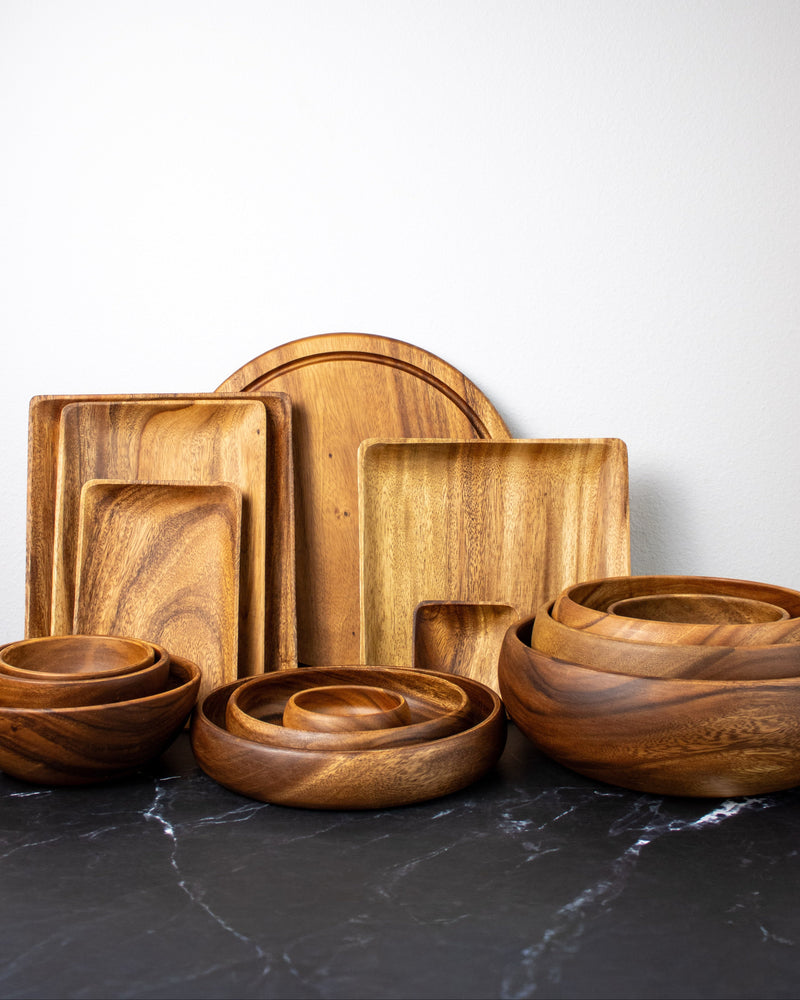
Acacia is dense, closes-grained, and grows across the Philippines. It handles knife work, hot pots off the stove, and years of oiling without splitting. Use it for cutting boards, serving boards, bowls, and utensils. The grain has enough movement to feel handmade even in a very clean, contemporary kitchen. If you are choosing pieces for the first time, our acacia bowl size guide is a practical starting point for scale.
Terracotta and unglazed stoneware for warmth
A palayok on open shelving, a terracotta water jar in the corner, or a set of unglazed dinner plates does more for a Filipino kitchen than any tiled backsplash pattern. Keep the pieces plain. The colour and the imperfect surface are the entire point.
Capiz, rattan, and abaca in small doses
Woven and shell materials add texture without adding visual noise. A capiz pendant over the dining nook, an abaca runner on the island, or a small rattan basket for garlic and calamansi is enough. Overdoing this is what turns a Filipino modern kitchen into a themed restaurant.
A quiet base for the palette to sit on
Cabinetry and walls should be quiet. Off-white, warm grey, muted olive, or unstained wood all work. Save the visual interest for the counters, the shelving, and the food itself.

The hosting foundation, in one set
If you are styling a kitchen you plan to feed people from, one coordinated set of serving pieces solves the "what do I put out" question for years.
Shop the Family Hosting Set →
3. Zoning the counter for kainan, not just cooking
Most kitchen advice zones for cooking: prep zone, cook zone, clean zone. That is not enough for a Filipino household. You also need a serving zone and a merienda zone, because food leaves the pot and lives on the counter for longer than in most other cuisines.
The rice-and-ulam zone
Rice cooker, spoon rest, and a shallow bowl or platter for the day's ulam. This corner runs from breakfast to dinner and rarely gets fully cleared. Style it so it looks intentional even when it is in use. A wooden serving platter under the ulam bowl, a small dish for patis or suka, and a folded cloth is the entire arrangement.
The merienda landing pad
Filipino merienda is not a formal meal but it still needs a surface. Leave a permanent 60 by 40 centimetre area free for pandesal, a plate of biko, or a small tray of coffee. If this space is always occupied by mail and gadget chargers, merienda ends up eaten standing at the sink.
The boodle-ready counter
On weekends the kitchen has to shift into hosting mode. Keep at least one deep counter section clear of small appliances so a full boodle fight platter, or a long board of grilled meats and rice, can be assembled without a Tetris moment. A dedicated wooden serving piece lives here so you never have to hunt for one.
4. Everyday styling: what to leave out, what to tuck away
The single biggest lever in modern Filipino kitchen styling is deciding what stays visible. The instinct in a small Filipino home is to leave everything out. The instinct in a magazine-white kitchen is to hide everything. Neither is right. Use this rule: leave out what you use every day and what is beautiful. Hide everything else.
Leave out
- A wooden bowl of calamansi, garlic, or shallots. Fresh, useful, and gives colour.
- Sangkap you cook with daily: patis, suka, toyo, sesame oil. Decant into simple glass bottles so the labels do not shout.
- One large serving board or bowl, always. It signals "this kitchen feeds people" and doubles as a landing surface for a warm pot.
- Your kaldero or a well-loved cast iron pan, if it lives on the stove anyway.
Tuck away
- Small appliances used less than weekly. The waffle iron, the ice cream maker, the electric kettle you replaced but did not throw out.
- Branded packaging. Rice in a wooden or ceramic bin, coffee in a plain jar, snacks in a drawer.
- Utensil clutter. Keep one wooden sandok, one metal spoon, one pair of tongs in a crock by the stove. The rest go in a drawer.
- Anything sentimental but unused. A gift from a ninang that never gets touched belongs in the china cabinet, not on the counter.
The one-bowl rule
If you can only leave out one thing on the counter, make it a generous, hand-turned wooden bowl. It holds fruit during the week, becomes the salad bowl at dinner, and turns into the popcorn bowl when the kids take over the living room. This is the single most versatile piece in a Filipino kitchen.

The counter piece that stays out
A large acacia bowl earns its counter space every day: fruit, salad, popcorn, and a full serving of pancit when guests arrive.
Shop the Ama Bowl (Large) →5. Hosting-ready: styling for boodle fights and merienda drop-ins
A Filipino kitchen is judged, unfairly, by how quickly it can pivot from Tuesday-night rice-and-ulam to a Saturday spread for twelve. Styling for hosting is not about producing an Instagram photo. It is about arranging the kitchen so the pivot takes fifteen minutes, not two hours.
Keep the "guest kit" together
Store your serving boards, large bowls, extra rice paddles, and hosting linens in one drawer or one shelf. Not spread across three cabinets. When your mother-in-law calls at 3pm to say she is bringing lechon at 6pm, you should be able to pull the whole kit out at once.
Style around the food, not against it
Filipino food is generous, saucy, and colourful. Adobo, sinigang, kare-kare, and pancit all photograph beautifully on wood and unglazed stoneware because the surfaces let the food take the visual lead. White plates and glass bowls work but tend to look clinical next to a rich adobo. If you are planning a hosting cabinet, favour wood and matte ceramic over glass.
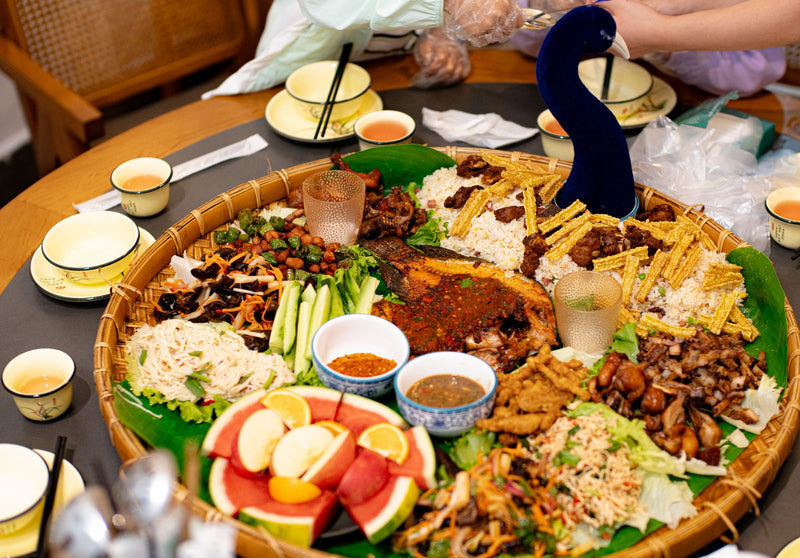
Build a boodle spread in three moves
- Line a long board or platter with banana leaves. If banana leaves are not available, unbleached parchment works and reads more modern.
- Mound the rice down the centre in a wide strip, not a pile. Rice is the backbone of the spread and should look continuous.
- Arrange the ulam alongside in colour blocks: grilled meats, seafood, pickled vegetables, and a small pile of salted egg and tomato. Keep the sauces in small bowls at either end so guests can reach without crossing arms.
Have a merienda-drop-in default
Not every hosting moment is a boodle fight. Most are a neighbour arriving with pandesal or a cousin dropping by for coffee. A styled Filipino kitchen has a default merienda arrangement: a small wooden board, a shallow bowl for the pandesal, a butter dish, and two mugs. Set once, kept clean, ready to be pulled out and filled.
6. Common styling mistakes and how to avoid them
The kitchens that miss the mark almost always miss it in one of these five ways. Each has a straightforward fix.
Treating "modern" as bare white minimalism
A gallery-white kitchen with nothing on the counters is not modern Filipino, it is just modern. The fix is to leave three or four warm, tactile pieces out permanently: a wooden bowl, a board, a set of pantry jars, a small woven basket. The room reads as lived-in immediately.
Overdoing the "Filipino" cues
Capiz shell everywhere, jeepney art on the wall, a full set of themed prints. This tips into caricature. Use each Filipino material once, in a considered spot, and let the rest of the room be quiet.
Mixing three or more wood tones
Warm walnut cabinets with a red mahogany dining table and a pale birch cutting board reads as busy. Pick one dominant wood tone for the built-ins and one accent tone for accessories. Acacia has enough range in its own grain to sit next to almost any built-in, which is one reason it dominates Filipino serving pieces.
Neglecting the maintenance of the wood
A dry, greyed-out cutting board on a beautiful counter undoes the whole scheme. Oil your wooden pieces monthly with food-safe mineral oil or beeswax paste. If you are new to this, our acacia wood care guide covers the full routine, and the short version is: wipe, oil, air-dry, repeat.
Buying serving pieces one at a time
A drawer of mismatched bowls and boards is the enemy of a fast pivot to hosting. Buy in coordinated sets or families where the wood tone, edge profile, and scale relate. This is the case for looking at a full range rather than picking up single pieces at random.

Boards that carry a full spread
A coordinated set of acacia boards gives you a hosting bench that can plate anything from lechon to lumpia without pulling from three drawers.
Shop the Pamilya Board Set →Frequently Asked Questions
What makes a kitchen "modern Filipino" instead of just modern?
Modern Filipino kitchens use warm tropical materials (acacia, terracotta, capiz, abaca), keep a hosting-ready counter, and style around real Filipino eating habits like rice at every meal and afternoon merienda. A modern kitchen without those cues is just contemporary.
Can a small condo kitchen work in this style?
Yes, and often better than a large one. The palette scales down naturally: one wooden bowl, one board, one capiz pendant, and a terracotta jar are enough. The zoning matters more than the square footage.
Is acacia wood safe for daily food use?
Yes. Acacia is a food-safe hardwood, dense enough to resist deep knife scoring and stable enough for hot pots and cold foods. Wipe clean, avoid soaking, and oil monthly to keep it from drying out.
What wood tones go with dark cabinets?
Medium-to-dark acacia and walnut sit well against dark cabinets without disappearing. Avoid very pale woods like birch, which can look chalky next to a dark base. If in doubt, hold the piece against the cabinet in daylight before committing.
How do I keep the counter styled but still functional?
Follow the rule of "daily use or beautiful, otherwise hide." Leave out a wooden bowl of alliums, your cooking oils and vinegars, and one large serving piece. Everything else goes into a drawer or cabinet.
Do I need banana leaves for a proper boodle fight at home?
Banana leaves are traditional but not essential. A long acacia board, or unbleached parchment on any wide platter, works and photographs beautifully. What matters is one continuous strip of rice with the ulam laid alongside.