The short answer, and why it matters
No. Do not put acacia wood in the microwave. Not for ten seconds, not on low power, not under a paper towel. Acacia is a dense hardwood with natural moisture and food-safe oils sealed into the grain, and a microwave heats those internal pockets unevenly. The result is cracking, warping, finish damage, and in extreme cases, scorching. If you are standing in the kitchen right now with a bowl of last night's sinigang and your acacia bowl in the other hand, transfer the food to ceramic, glass, or a microwave-safe plate first.
That is the answer. The rest of this guide explains the why, because once you understand what is happening inside the wood, the rules around oven use, dishwashers, and long-term care all start to make sense together. If you want the broader material context, our piece on whether acacia wood is food safe covers how the finish and grain structure work in everyday use.
Why "I did it once and it was fine" is not a green light
Microwave damage to wood is cumulative and often invisible at first. A single short zap may not produce a visible crack, but it dries out a layer of internal moisture and stresses the finish. Do it again next week, and again the week after, and the grain starts to split along the lines you cannot yet see. By the time the crack shows up, the wood has been compromised for months.
What actually happens when acacia wood hits a microwave
Microwaves heat food by exciting water molecules. Wood is not just a solid lump; it is a fibrous, porous material with water still bound inside the cell walls, even years after it was kiln-dried. When you microwave acacia, you are heating that internal moisture along with whatever sits on top of it. Four things happen, in roughly this order.
Cracking from uneven moisture loss
Heat drives moisture out of some parts of the bowl faster than others. The grain shrinks at different rates depending on where the moisture exits, and the result is a hairline crack along the grain line. Once that crack opens, food, oil, and bacteria all start collecting inside it, and the bowl is no longer hygienic to use with raw or moist food.
Warping at the rim
Acacia bowls are typically thicker at the base and thinner at the rim. The rim heats and dries faster, which is why warping shows up there first. You may notice the bowl no longer sits flat, or that the rim looks slightly oval rather than round.
Finish breakdown
Quality acacia tableware is finished with food-safe mineral oil and often a beeswax topcoat. Both have low smoke points compared to ceramic glaze. Microwave heat does not vaporize them in seconds, but it softens, migrates, and eventually breaks down the surface seal. A bowl that used to bead water now absorbs it, which speeds up every other form of damage.
Scorching and smoke risk
This is the dramatic one and the least common, but it is real. If a dry spot in the wood, especially near a knot, concentrates enough heat without food on top, it can char and smoke. Knots are denser and behave differently from the surrounding grain, and they are exactly the kind of irregularity you want in a beautiful piece of acacia. The microwave punishes that beauty.
Why dense hardwoods fare worse
People sometimes assume that because acacia is dense and sturdy, it must handle heat better than thin bamboo or softwood. The opposite is true in a microwave. Thicker, denser wood holds more internal moisture and has more places for heat to build up unevenly. Bamboo splints in cheap utensils survive short microwave exposures partly because they are thin and uniform. A solid acacia bowl is neither.

Built for kainan, not the microwave
The Ama bowl set is sized for rice, ulam, and shared eating, the moments where acacia belongs.
Shop the Ama Bowl Set →Why Filipino kitchens reheat differently anyway
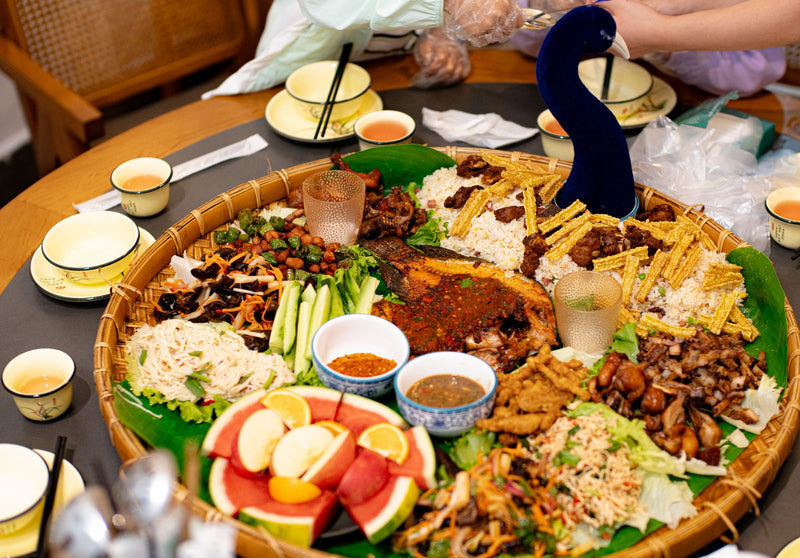
Step back from the microwave question for a moment. In most Filipino homes, the rhythm of a meal does not involve reheating a single portion at the table. Food is cooked in a batch, served family-style, eaten warm, and any leftovers go into a covered container in the ref for tomorrow's lunch. The reheating happens later, in the kitchen, in whatever vessel makes sense for the dish.
Stovetop is the better default
Sinigang tastes sharper and more layered when you bring it back to a simmer on the stove. Adobo benefits from a quick pan reheat that lets the sauce thicken slightly and the fat re-emulsify. Kare-kare needs gentle stirring to keep the peanut sauce from separating. The microwave handles none of these well. It heats unevenly, dries out the meat edges, and breaks emulsified sauces. A wooden bowl is not the limiting factor here. The microwave is.
The bowl's actual job
An acacia bowl is a serving vessel. It belongs to the moment between the stove and the mouth, when the food is plated and the family sits down. If you want a deeper look at how Filipino meals are structured around shared eating, our guide on salu-salo and pakikisalo walks through the cultural rhythm that wooden tableware is designed to support. The bowl is not trying to be a cooking pot or a reheat dish. It is trying to be the thing that holds your rice while your titas pass the ulam.
What to do instead, a practical workflow
You still need to reheat food. You still want to eat it from your acacia bowl. Here is the workflow that keeps both true.
1. Reheat in ceramic or glass, then plate to acacia
- Transfer the portion you want to reheat from its storage container into a microwave-safe ceramic or glass dish.
- Cover loosely with a vented lid or a damp paper towel. This keeps moisture in and prevents splatter.
- Microwave at 70 to 80 percent power in 45-second bursts, stirring between bursts.
- Plate the heated food into your acacia bowl or onto your acacia plate for the table.
- Eat. Wash by hand after.
2. Stovetop for stews, sauces, and rice
For anything saucy, this is the better path even when the microwave is faster. A small saucepan over medium-low heat, a splash of water if the sauce has tightened, a wooden spoon, three to five minutes. Rice can be steamed back to softness in a steamer basket, or in a pot with a tablespoon of water and a tight lid.
3. Warm the bowl gently before serving cold-storage food
If your bowl has been sitting in a cool cupboard and you are serving hot soup, the temperature shock between bowl and food can stress the wood. Rinse the inside with warm (not hot) tap water for ten seconds and dry with a clean towel. The bowl is now closer to the food's temperature and the contact is gentler on the finish.
4. When you genuinely need fast
Sometimes it is 10pm, the baby is finally asleep, and you just want food. Microwave the leftover into a ceramic dish, plate onto acacia, eat in three minutes. The transfer adds maybe ten seconds. It is not a meaningful tax.

A plate that finishes the workflow
The Ina plate set is shaped for the transfer-and-serve rhythm, generous enough for rice plus ulam.
Shop the Ina Plate Set →Caring for acacia so it lasts, a quick reference
Once you internalize the no-microwave rule, the rest of the care list is short and consistent. The same principle is at work in all of them: wood does not like sudden temperature changes, prolonged water exposure, or harsh chemistry.
- Hand wash only, no soaking. Warm water, a drop of mild dish soap, a soft sponge. Rinse and dry immediately with a clean towel.
- No dishwasher. The combination of heat, prolonged moisture, and detergent strips the finish and warps the grain. Our guide on whether you can dishwasher acacia wood goes into the full picture.
- No microwave, no oven, no direct stovetop. Any direct heat source will damage the wood.
- Oil every 4 to 6 weeks. Use food-safe mineral oil, applied with a clean cloth, left to absorb overnight, then buffed in the morning. Frequency goes up if you use the piece daily or live in a dry climate.
- Store away from heat and direct sun. A cupboard or open shelf away from the stove and windows. Sunlight bleaches the grain and dries out the oil faster.
- Re-oil when the wood looks thirsty. Pale, dry-looking grain or water no longer beading on the surface are both signs.
When acacia is the right choice for your kitchen
Here is the honest checkpoint. If your daily eating rhythm is "open the ref, microwave the container, eat from the same vessel, rinse it, repeat," then acacia is not your primary bowl. It is a serving piece that you bring out for meals where the food is plated and shared. That is not a knock on either your habits or the wood. It is just being clear about what the piece is for.
If your rhythm involves cooking, plating, and sitting down with family or friends, even sometimes, acacia earns its place at that table. It is warm to the touch, kind to ceramic glaze when you stack things, quiet against silverware, and it ages with use rather than wearing out. The grain develops a softer patina after a year of oiling and gentle washing. It looks more like itself, not less.
For the full picture of how acacia fits into a kitchen across cooking, serving, and care decisions, our complete acacia wood guide ties everything together in one read.

For the table that fills up on weekends
The Gorosin bowl set holds shared dishes for kainan, the moments acacia was actually made for.
Shop the Gorosin Bowl Set →Frequently Asked Questions
Can you microwave acacia wood for just a few seconds?
No. Even short microwave exposures stress the grain and finish, and damage is cumulative. The bowl may look fine after one short zap, but repeated short exposures still produce cracking, warping, and finish breakdown over time. Transfer the food to ceramic or glass instead.
What happens if you accidentally microwaved your acacia bowl once?
One accidental zap rarely produces visible damage, especially if it was short and the food was moist. Check the bowl for hairline cracks, warping at the rim, and any change in how water beads on the surface. If everything looks normal, re-oil the piece within the week to help the finish recover, and avoid repeating.
Is any wooden bowl microwave safe?
Generally no. No mainstream wooden tableware is labeled microwave safe by manufacturers, regardless of the species. Some thin bamboo utensils survive brief exposure because of their shape and density, but solid wooden bowls of any wood, acacia, mango, teak, or maple, should not go in the microwave.
Can you put acacia wood in the oven?
No. Oven heat is sustained and direct, which dries out the wood faster than a microwave and almost guarantees cracking. Acacia is not designed for any direct heat source, including conventional ovens, toaster ovens, air fryers, or direct stovetop contact.
How do you warm food in an acacia bowl without damaging it?
You do not warm food in the bowl. You warm the food separately in a microwave-safe or stovetop-safe vessel, then plate it into the acacia bowl for serving. If you want the bowl itself to feel warmer to the touch, rinse the inside briefly with warm tap water and dry before plating.
Does microwaving void the food-safe finish on acacia?
It degrades it. Food-safe mineral oil and beeswax both break down under microwave heat, which means the surface seal weakens and the wood becomes more porous. The bowl is not suddenly toxic, but it is more vulnerable to staining, absorbing odors, and harboring bacteria in any micro-cracks that develop.