The binyag envelope has been the default ninong and ninang gift for generations. It is easy, appropriate, and forgotten by the following weekend. If you are searching for something the inaanak will still recognize as yours at their eighteenth birthday, you are looking for a different category of gift entirely.
This guide is for ninong and ninang who want the first gift to hold weight. Not because a savings envelope is wrong, but because the sponsor role you are stepping into lasts decades, and it helps to mark the beginning with something that survives the day.
What the ninong and ninang role actually asks for
Before you decide on a gift, it helps to remember what you agreed to when the parents asked you. The role is not "close family friend who brought something to the church." It is a spiritual sponsor, standing in as a second set of parents in the eyes of the faith, and by long Filipino custom, staying present through every milestone that follows.
Spiritual sponsor, not just gift-giver
The word ninong comes from padrino, the Spanish term for godfather, but the Filipino version carries more weight than the direct translation suggests. You are the person the parents chose to help raise this child in faith and in life. The gift is not a fee for showing up. It is the first physical mark of a relationship you are now inside for good.
The lifetime relationship: birthdays, graduations, wedding
Filipino godparent culture assumes you will keep giving. Aguinaldo at Christmas, gifts at every birthday, a card at graduation, a role at the wedding. This is why so many ninong and ninang eventually stop showing up. The list gets long and expensive. But if the first gift is significant enough, it carries emotional interest across the years, even when your later gifts are smaller. The heirloom piece becomes the anchor.
Why the first gift sets the tone
The inaanak will not remember their binyag. They will remember, at ten or twenty or thirty, opening a cabinet and seeing a bowl or plate with their name on it, engraved on the day they were baptized, by a specific ninong or ninang. That memory is what you are buying. A gift card cannot do that job. Neither can a plush toy.
Why heirloom beats disposable for a binyag gift
There is nothing wrong with the envelope tradition. Cash is useful. Parents of a new baby need diapers, bottles, and formula, and cash converts to those things faster than any gift shop item. But cash also disappears, and the ninong or ninang who gives only cash is invisible in the household record of the child's life. If you want the inaanak to know you were there, you need an object that outlasts the money.
The envelope tradition and its limits
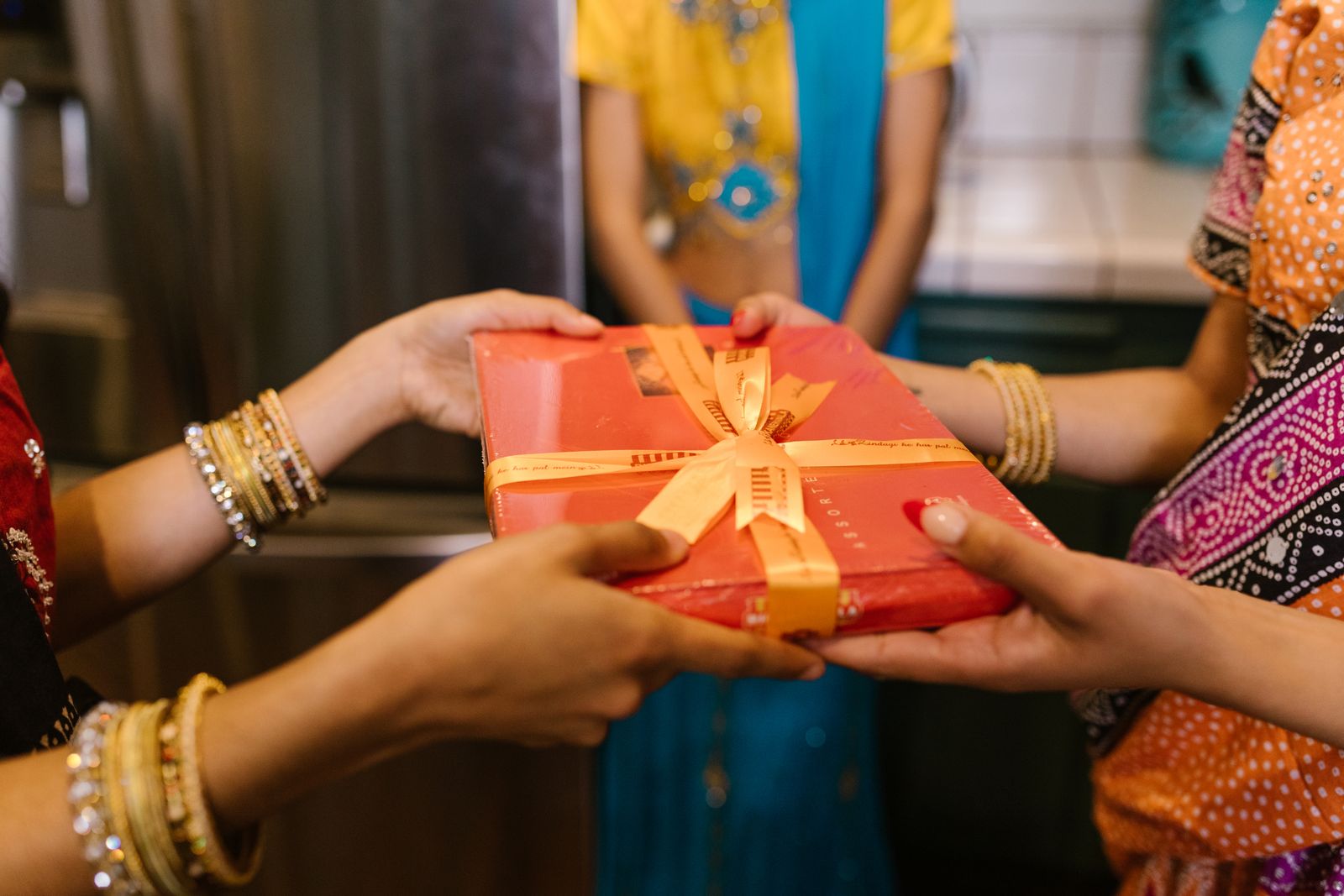
The pabaon envelope developed for a reason. It is quiet, respectful, and lets the parents decide what the child needs. In many families, cash is still expected alongside a physical gift. So think of the envelope as the floor, not the ceiling. The heirloom piece sits on top of, not instead of, whatever cash you were going to bring.
What "heirloom" means for a child who will not remember the day
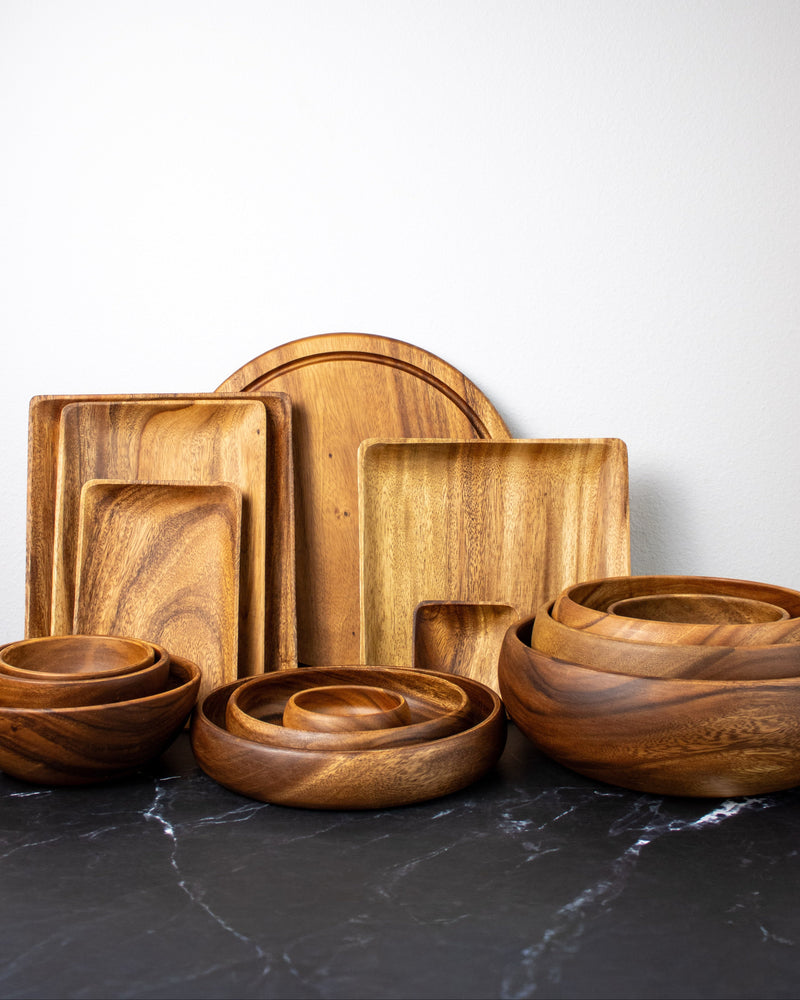
An heirloom in this context does not mean a museum-grade antique. It means something built to survive daily use for at least a generation, kept safe until the inaanak is old enough to receive it, and marked in a way that makes it unmistakably theirs. A solid acacia bowl engraved with a full name and binyag date meets all three tests. A ceramic figurine, no matter how expensive, usually fails at least one of them.
Objects that grow with the inaanak
The best heirloom gifts do not stay in a display cabinet. They come out at every meaningful family meal, get used and reused, and travel with the child from the parents' house to their first apartment to the table they eventually set for their own children. Wooden tableware fits this description almost too well. A well-cared-for acacia piece can last fifty years and improve in appearance every year it is used.

A father's bowl set, marked for the inaanak
Four large acacia bowls sized for the family the inaanak will one day host, engraved with their name and binyag date, held in trust by the parents until the child is grown.
Shop the Ama Bowl Set →Six heirloom gift ideas from ninong and ninang
These are ordered roughly from most restrained to most ambitious. Every one of them survives a house move, a wedding, and a couple of decades of use. Match the tier to your budget and to the closeness of your relationship with the parents.
1. Engraved family bowl set for future kainan at their own table
A set of four to six matched bowls is the workhorse gift. Solid acacia handles rice, sinigang, kare-kare, and everything else the inaanak will grow up eating. Engrave the child's full name on the underside of the largest bowl in the set. It becomes the inaanak's bowl in the parents' household during childhood, then travels with them when they leave home.
2. Personalized plate set, dated and initialed for milestone meals
Plates are used more often than bowls in most households, which means the engraving gets seen more often. A set of four to six dinner plates with the binyag date engraved on the back of one plate becomes a family conversation piece at every birthday dinner, graduation lunch, and eventually the inaanak's own hosting occasions.
3. A serving board for the family they will one day host
A large acacia serving board is the ambitious ninong and ninang gift for a family that already has plates and bowls. It is a piece the parents will use immediately at boodle fights and family kainan, and it carries the engraving well because there is more flat surface to work with. When the inaanak moves into their first apartment, this is often the first "real" adult kitchen piece they take with them.
4. A hosting set held in trust until they marry or move out
The most forward-looking version of the gift. You buy a full hosting set now, with the understanding that the parents store it, unused or lightly used, until the inaanak is old enough to receive it. The set becomes their first grown-up hosting kit, given at a wedding or first apartment. This is the closest a modern gift comes to the old tradition of a dowry piece.
5. A single statement piece: a large dulang or centerpiece bowl
If matched sets are too expensive, one exceptional piece works just as well. A large centerpiece bowl or dulang-style serving vessel becomes the object every household guest asks about. Engraving on a single piece is easier to make prominent, and the gift reads as intentional rather than generic. Good for ninong or ninang who want restraint with weight.
6. Custom engraving with binyag date, full name, and sponsor names
Whatever piece you choose, the engraving is where the heirloom character comes from. Standard practice is the inaanak's full name on the front or top, the binyag date on the back or bottom, and the ninong and ninang names in smaller script below the date. If both godparents are going in together, put both names. If you are the sole giver, put yours. This is not the moment for false modesty.
How to present the gift at the binyag
A good gift can still land badly if the presentation is off. The binyag is a religious ceremony followed by a meal, and each part has its own rules about what belongs and what does not. The gift belongs at the meal, not the ceremony.
Timing: before the salu-salo, not during the ceremony
Do not bring the gift to the church. Leave it at the salu-salo venue, in the car, or with a family member who will be at the reception. Hand it over before people start eating, ideally in a quiet moment when the parents are not being pulled in ten directions. The right window is usually the twenty minutes between the church and the meal, or in the first half hour of the reception before the food comes out. If you want context on the salu-salo itself and how the meal is structured, our piece on baptism binyag meal traditions covers the flow in more detail.
Wrapping and the handwritten note
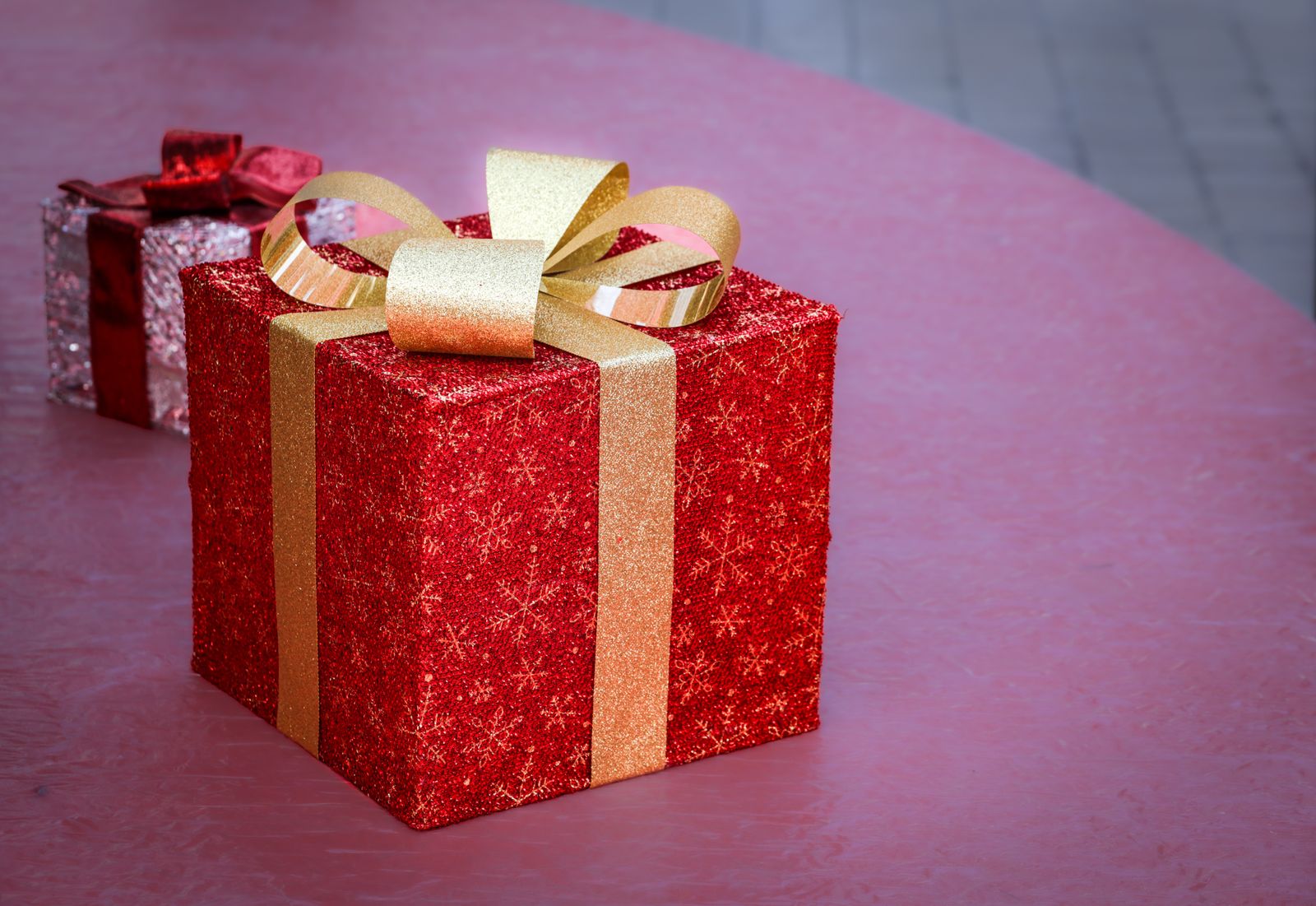
Wrap the piece in cloth if you can find something appropriate, or use plain kraft paper with a simple ribbon. Skip the gift bag with the plastic tissue. The gift is heirloom-grade, and the wrapping should signal that. Include a handwritten note, addressed to the inaanak, not to the parents. Something short. Your name, the date, why you chose this piece, and one line about what you hope for them. The parents will read it now. The inaanak will read it in fifteen or twenty years.
Words to say when handing it over
Do not overexplain. A brief "This is for [inaanak's name]. We had it engraved with today's date. Keep it safe for them" is enough. If you want to say more, save it for a private moment with the parents later. The moment of handoff should be warm and short, not a speech.
Who keeps it until the inaanak is old enough
The parents keep it. Make this explicit when you hand it over, especially for pieces meant to be given to the inaanak later at a wedding or first apartment. If you do not say it, the piece may end up in daily use immediately, which is fine, but changes the character of the gift. Both approaches work. What matters is that the parents know which one you intended.

A mother's plate set for milestone meals
Six acacia dinner plates sized for family kainan, ready for engraving with the inaanak's name, binyag date, and sponsor names.
Shop the Ina Plate Set →Budget ranges and what each tier gets you
Prices shift, so the ranges below are approximate. What matters more is understanding what each tier can realistically deliver, so you can match your budget to the object without overreaching or undershooting. Cash aguinaldo, if you are giving one, sits on top of these ranges, not inside them.
Under 3,000 pesos: a single engraved piece
At this tier, choose one exceptional object rather than a small set. A single large bowl or a solid cutting board with careful engraving reads as intentional. A small set of anything at this budget usually feels compromised. One good piece beats four mediocre ones.
3,000 to 8,000 pesos: a bowl or plate set with engraving
The most common ninong and ninang tier for a real gift. You can get a proper matched set of four to six bowls or plates, with engraving included, and still have room for a nice wrapping. This is where the "family use for daily meals" gift lives.
8,000 pesos and up: a full hosting set, heirloom-tier
The full hosting set territory. Serving boards, bowls, plates, and utensils together, engraved as a coordinated set. This is the tier where the piece is held in trust for the inaanak's adulthood. Also the right tier for very close family, or for principal sponsors making a statement gift.
When to go in with the other ninong and ninang
Filipino baptisms often have multiple ninong and ninang, sometimes six or more. If you know the others and can coordinate, pooling budgets for a single heirloom piece works beautifully. All the sponsor names get engraved together, and the gift is significantly larger than any of you could give alone. The inaanak grows up knowing exactly which set of adults chose this piece for them. If you are looking for gifting ideas that translate to adjacent occasions, our guide on Filipino housewarming gifts covers similar heirloom logic for the child's eventual first home.

Custom engraving for the binyag record
Full name, binyag date, and ninong and ninang names, hand-engraved onto any acacia piece before the ceremony. Book early to hit the church date.
Shop Custom Engraving →Common mistakes ninong and ninang make with baptism gifts
Every mistake below comes from good intentions. None of them make you a bad godparent. But knowing them in advance saves the piece you have already spent money on from ending up in a closet.
Giving something only useful for infancy
The most common trap. A silver rattle, a baby blanket, a stuffed animal. All beautiful, all outgrown in eighteen months, all in a donation bag by the time the inaanak is four. The gift is not for the baby. The gift is for the person the baby will become. Buy accordingly.
Forgetting the engraving deadline
Engraving takes time. Depending on the piece and the shop, custom engraving can require anywhere from one to three weeks of lead time before the binyag date. Order the moment you know the date. If you are within two weeks and have not started, call the shop and ask what is possible. Our deep-dive on engraving a family tree piece covers what the process actually looks like and how far ahead to plan.
Duplicating what the parents already registered for
Many Filipino parents now do informal baby registries. Ask. A quiet check-in with the parents a month before the binyag saves you from buying something they already have three of. If they have a wish list, and something on it fits the heirloom brief, cross it off for them. If nothing on it does, buy off-registry with confidence. Heirloom pieces are almost never on baby registries because most registries are built around infancy needs.
Choosing something too fragile for a real Filipino household
Fine china, crystal, and delicate ceramics do not survive a Filipino kainan. There will be children at the table, hot dishes moving quickly, and at least one person reaching across for the sawsawan. Choose materials that can take use. Solid acacia handles heat, drops, oil, suka, patis, and daily washing without complaint. That is the point. A gift too precious to use is not really a gift. It is a hostage.
Frequently Asked Questions
What is the traditional ninong and ninang gift at a Filipino baptism?
Traditionally, cash in a pabaon envelope, given quietly to the parents at the salu-salo. Modern practice pairs the envelope with a physical gift, and increasingly the physical gift is an heirloom piece rather than infant-specific items. The envelope is expected. The heirloom piece is what the inaanak actually remembers.
How much should ninong and ninang spend on a binyag gift?
There is no fixed rule, but common ranges run from 1,500 to 3,000 pesos for cash aguinaldo, plus a physical gift usually between 3,000 and 8,000 pesos for a matched set. Principal sponsors and very close family often give more. What matters is that the gift matches your closeness to the family, not that it hits a specific number.
Can multiple ninong and ninang go in on one heirloom gift together?
Yes, and it is one of the best strategies for a large sponsor group. Pooling budgets produces a bigger, more heirloom-grade piece, and all sponsor names get engraved together. The inaanak grows up knowing which set of adults chose the piece as a group. Coordinate early to hit the engraving deadline.
When should the gift be given, during the ceremony or the salu-salo?
At the salu-salo, before people start eating. Do not bring the gift to the church. The right moment is the twenty minutes between the ceremony and the meal, or in the first half hour of the reception. Hand it to the parents quietly, with a brief note or verbal message addressed to the inaanak.
Is it appropriate to give a gift the inaanak will not use until adulthood?
Yes, and it is a strong choice for close ninong and ninang. Make the intention explicit when you hand it over so the parents know to hold it in trust. Pieces meant for adulthood are typically given later at the inaanak's wedding, first apartment, or eighteenth birthday, closing the loop that started at the binyag.
What should I have engraved on a baptism gift?
The inaanak's full name on the most visible surface, the binyag date on the back or bottom, and the ninong and ninang names in smaller script below the date. If multiple sponsors are going in together, list all names. Skip motivational quotes. The names and date are the record. That is enough.