The Morning of the Binyag
Before there is food, there is water. A few drops poured over a small head, a candle lit from the paschal flame, a white kit folded and unfolded by the ninang who has been holding it on her lap since the drive over. The binyag itself takes maybe twenty minutes inside the church. Most of the day, though, is not in the church. Most of the day is the meal that comes after.
Filipino families know this without anyone needing to say it. The aunts have been cooking since five in the morning. The lola arrived the night before to start the pancit. Someone is already at the house heating the kaldereta while the baby is being baptized. The sacrament is the reason the family gathers, but the handaan is the shape that gathering takes. You do not go home from the church and eat a small private lunch. You go home to a table that has been laid since dawn.
What happens at the church before the meal begins
The priest will ask the parents what name they have chosen. He will ask the ninong and ninang if they are ready to help raise the child in the faith. They say yes, and then it happens quickly: the water, the oil, the candle handed to the godparent. Pictures get taken. A tita who was crying through the whole rite suddenly remembers she left the lechon sauce on the stove. People file out. The convoy of cars heads to the house, or to the function room, or to the lola's place where there is more space.
The white kit, the candle, the ninong and ninang taking their place
The white garment the baby wears is a small thing, but it is the visual signal of the day. So is the candle, which the ninong or ninang carries out of the church still lit. These objects make it to the handaan. The candle is set on the table near where the baby will be held. The kit is folded carefully on a chair. They are not put away yet. They are part of the meal's setting, the way the rice and the pancit and the bowls of sawsawan are part of it.
Why the meal is not separate from the sacrament
It would be easy for an outsider to think of the baptism as the real event and the lunch as the afterparty. Filipinos do not really divide it that way. The meal continues the welcome. The water inside the church declares the child a member of one community; the food at the table declares the child a member of another, the one that will actually feed and hold and remember them for the next seventy years. Both are real welcomes. Both are needed. The priest's part takes twenty minutes. The family's part takes the whole afternoon, and sometimes well into the evening.
Coming Home to a Set Table
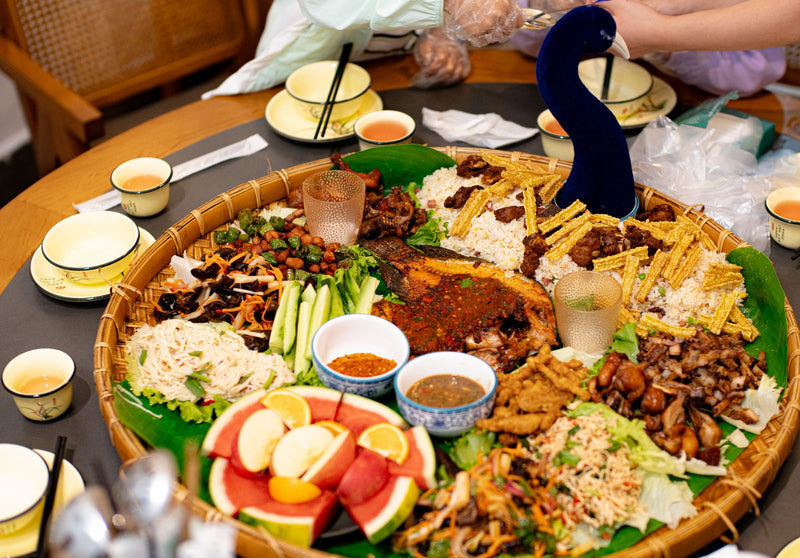
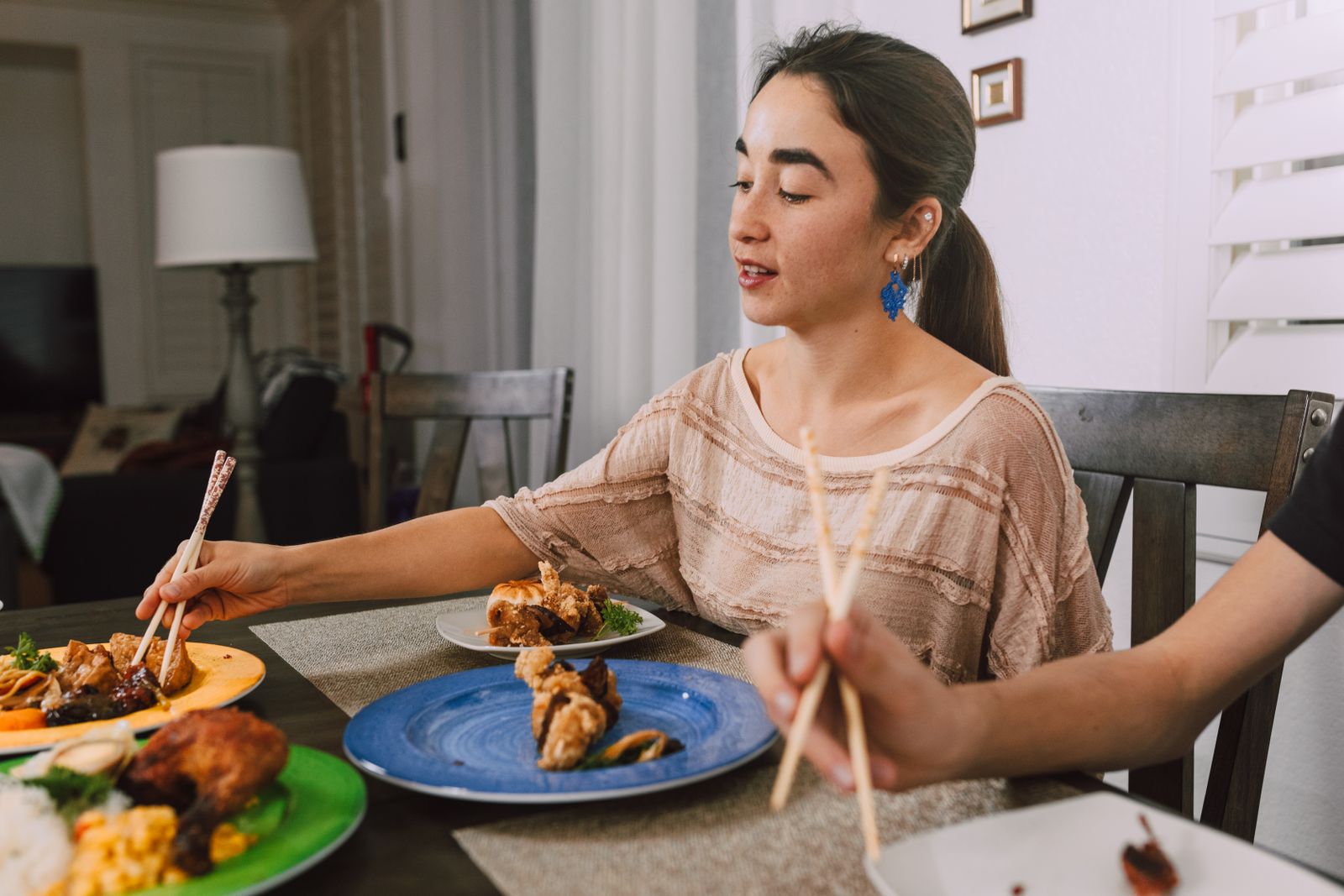
When you walk into the house after a binyag, the first thing you notice is that the dining table is already dressed. Not being set as guests arrive, the way a Western dinner party is staged. Already dressed. The trays of pancit are out. The rice is steaming under a cloth. The biko has been cut into squares and arranged on a wooden board. Glasses are out. Bowls of sawsawan, suka and patis and calamansi, sit in the middle. The house smells like garlic and soy and pork fat, and somewhere underneath, the sweetness of coconut.
"The table is set before the guests arrive because the welcome is not something you build in front of people. It is something you have already built for them."
The handaan as welcome, not celebration of achievement
A birthday handaan celebrates a person who has done the work of another year of living. A binyag handaan does something different. The baby has not done anything yet. The baby cannot eat the food, cannot thank anyone, will not remember the day. The meal is not for the baby's benefit at all. It is the family announcing, to itself and to the people it loves, that it has a new member and the new member is being introduced to the table. The welcome is a one-way gift. The family gives it without expecting return, because that is what families do for the small ones.
Who arrives first
The lola is already there, of course. She has been there since the cooking started. The titas come early, often bringing one more dish than was asked for. The ninang who is closest to the mother will arrive carrying pancit, because she will have insisted on bringing some even if pancit was already covered. The ninong who travels from a different city will arrive with a paper bag of pasalubong, mangoes maybe, or a bottle of something good. The neighbors come last, after the family is settled. This is not formal order. It just always happens this way.
The wooden serving boards and bowls laid out before guests sit
If the house has heirloom serving pieces, they come out for a binyag. Wooden boards that have held lechon at every family event since the parents' own wedding. A long bowl that was given to the lola decades ago and only gets used for the biggest dishes. These are not decorative choices. They are continuity. A table with pieces that have been used for thirty years of family meals tells the baby, without anyone explaining it, that they are joining a long line.
This is the practical reason a family hosting set matters at a binyag in a way it would not for an ordinary weeknight: the pieces will be in service for years. The lechon will come out on the same board for the next baby in the family. The pancit will be plated on the same long server for the godchild's confirmation, and again for graduations, and again for engagement lunches. The serving piece becomes part of the family's memory of its own gatherings.
What Goes on the Baptism Table
If you have been to enough Filipino baptisms, the menu is familiar. Not identical from family to family, but moving around a recognizable center. There are dishes that show up every time, and there are dishes that show up because someone's tita is particularly good at them.
Pancit for long life of the baby
The pancit is the non-negotiable. Every binyag has pancit. Pancit bihon, pancit canton, pancit malabon if the family is from that area, sometimes more than one kind on the same table. The reason is the same reason pancit appears at every birthday: the long noodles are a wish for a long life. At a binyag, the wish is for the smallest, newest life at the table, the one who has just been welcomed into the church and is now being welcomed into the long noodles of family memory. You do not cut pancit at a baptism. The length is the meaning.
Lechon, kaldereta, or menudo as the centerpiece protein
The protein anchor depends on family, region, and budget. Lechon, the whole roasted pig, is the grandest option and shows up at many baptisms, especially in the provinces where ordering one from a neighbor lechonero is not a big deal. In Manila and abroad, families often go with lechon kawali or lechon manok instead, which are honest substitutes, not lesser ones. Kaldereta, a tomato-based beef stew with potatoes and olives and bell peppers, is a strong runner-up because it can be made in volume the day before. Menudo, the pork-and-liver tomato stew, is the lighter cousin that fills out the table without competing with whatever else is in the spread.
Sweet rice cakes for the godparents to take home
Biko, suman, puto, kakanin in general, are always on a baptism table. The bibingka may appear if the binyag is in December. These sweet sticky rice cakes have a specific role beyond dessert: the godparents take them home. The ninang leaves with a foil-wrapped square of biko in her purse. The ninong gets a small box of suman handed to him at the door. This is partly pasalubong and partly something older, an exchange of sweetness between the families who have just become tied to each other through the inaanak.
Why baptism food is softer, sweeter, and more abundant than birthday handaan
If you compare a binyag spread to a birthday handaan, you start to see a pattern. The baptism table leans softer. More kakanin. More rice in general. Less spice, partly because old relatives are eating, partly because babies are present and the kitchen is in a gentler mood. The abundance is also different. A birthday spread can be generous; a baptism spread is almost ceremonially generous, as if the parents are saying, with food, that this child will never want for a full table.
The Role of Ninong and Ninang at the Meal
The ninong and ninang have been doing emotional work all morning. They stood up at the church and promised something serious. They held a baby that does not belong to them in front of God and the family. By the time the meal starts, they are seated as honored guests, and the way they are treated at the table reflects that.
Padrino and madrina seating, often near the parents
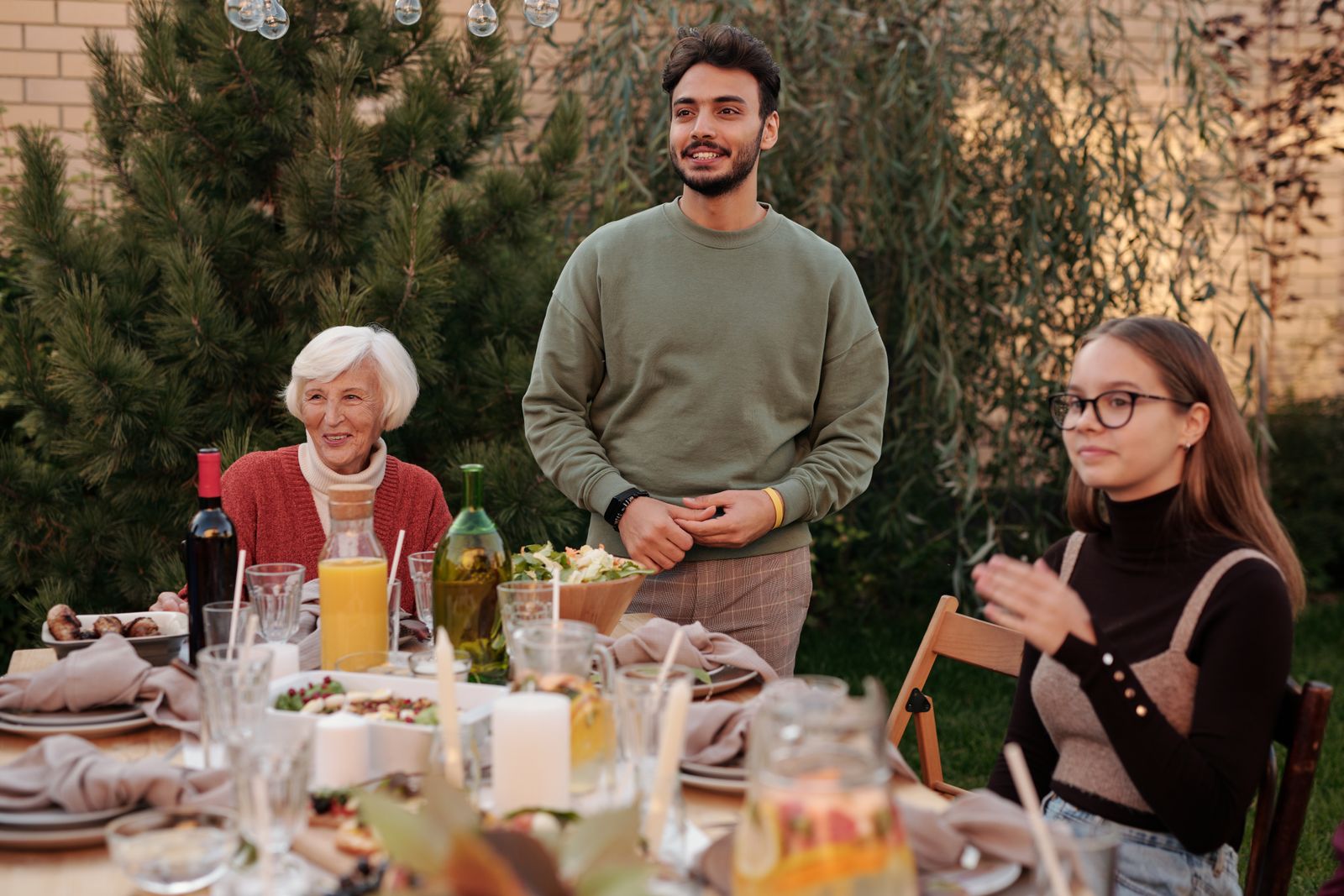
Godparents sit close. Not at a separate table of honor, the way some Western traditions stage it, but in among the parents and grandparents, often within arm's reach. The seating is intimate because the relationship is meant to be intimate. The padrino and madrina are not visiting dignitaries. They are being established as something closer to family, and the chairs reflect that.
The pamamanhikan-style gesture of feeding the godparents first
The parents will often serve the ninong and ninang before they serve themselves, or before the meal is formally opened. It echoes the pamamanhikan gesture, the older tradition of feeding the elders or in-laws first as a sign of respect and welcome. At a binyag, the gesture is the new parents acknowledging the godparents' new role: you are not a guest, you are a co-parent now, and we are feeding you the way we will be feeding our child.
Pasalubong they bring, pasalubong they leave with
Godparents almost always arrive with something. A gift for the inaanak, often in cash inside a small envelope, sometimes a piece of jewelry, sometimes a starter savings account. If you want the long version of what godparents traditionally bring, the family's notes on inaanak gifts cover the territory. What is less talked about is what the godparents leave with. They almost never go home empty-handed from a binyag meal. A box of kakanin, a tupperware of pancit, sometimes a portion of the lechon wrapped in foil. The exchange goes both ways, because the relationship is meant to go both ways for life.
The serving pieces that mark the godparents' seats
Some families dress the godparents' end of the table slightly more carefully. A nicer plate, a wooden bowl that does not come out on ordinary nights. It is not formal in a stiff way. It is more like the way a host puts the good tea in front of the most honored guest. If you have an ina plate set or an ama bowl set that gets used for the parents of the household at family meals, those same pieces often migrate to the godparents' seats during a binyag. The pieces are saying, in their quiet way: you are at this end of the family now.
The Quiet Meanings in the Meal
If you only ate the food at a binyag and never thought about it, you would still know it was a welcome. The meaning is built into the way the dishes are presented, the way the meal is timed, the way no one leaves hungry. But the meanings deepen when you look at them slowly.
"Abundance at a baptism is not boastfulness. It is a prayer the family is saying with food, that the child will never sit at an empty table."
Abundance as prayer
Filipino families cook too much food for a binyag. Not by accident, not because they miscounted heads. On purpose. The table that overflows is the table saying to the baby and to God, this child will not lack. You will have noticed that lola does not stop adding rice to a plate until the eater puts a hand over it. Multiply that gesture across a whole baptism, and you understand the abundance theology. The food is the form the blessing takes. To run out would be, in a small way, to fail the prayer.
Communal eating as the first lesson the baby receives
The baby cannot eat the pancit. The baby is too new for any of it. But the baby is present, often passed around the table, often held by the ninang while the ninang is trying to eat with one hand. This is the first lesson the baby is being given in pakikisalo, the Filipino practice of eating together as belonging. The baby is being shown, before they can understand it, that a meal is something you do with other hands around you. The lesson lands in the body before it lands in the mind. There is a long version of how this practice shapes a Filipino's whole relationship with food in our notes on Filipino dining traditions, but the binyag is where it begins.
Why leftovers are packed for guests, never thrown
By late afternoon the table thins. People have been eating in waves for hours. The titas start packing. Foil, tupperware, the plastic bags that have been quietly waiting in a drawer for this moment. Every guest who is leaving gets handed something. Pancit for the kids back home. Kaldereta to heat up tomorrow. A square of biko, always biko. To send a guest home empty-handed from a baptism would be wrong in a way that is hard to explain to someone outside the culture. The food going out the door is the welcome continuing to travel.
How diaspora families adapt
Filipino-American families hosting a binyag abroad face small puzzles. Whole lechon may not be available, or may cost five times what it would in Manila. Certain kakanin require Filipino markets that are an hour's drive away. The lola is back home and cannot fly in. What happens, almost always, is that families improvise without losing the core. Lechon kawali stands in for lechon. Pancit canton from the Asian grocery is just as long-noodled as the kind from the palengke. Someone learns to make biko by FaceTime with the lola. The meal looks slightly different, but the prayer the meal is saying remains the same. The child at the center of the diaspora binyag receives the same welcome their cousin in Bulacan receives. The form bends to the place. The meaning holds.
Hosting a Binyag Meal Today
If you are reading this because you are about to host one, a few practical notes from how families actually do it.
Planning for a small home reception vs. restaurant venue
Smaller families increasingly host the binyag meal at a restaurant, often a Chinese-Filipino spot that knows how to do a long table for thirty people. This is fine. The meaning travels. But if you can host at home, even a small home with twelve relatives crowded into the dining area, do it. The food tastes different when the kitchen is the lola's kitchen. The leftovers pack faster. The candle from the church goes on the sideboard. The baby sleeps in the back room while the meal continues. Home holds the day in a way a function room cannot quite manage, even when the function room food is better.
The serving pieces that make a baptism table feel like a family table
A restaurant table is dressed by the restaurant. A home table is dressed by you, and the pieces you choose are part of how the welcome reads. Wooden boards for the lechon and the kakanin, deeper bowls for the kaldereta and the menudo, a long platter for the pancit so the noodles can lie out at their full length. The pieces should be the ones that will keep coming out for the next family event. If you are starting a household and a binyag is your first big handaan, this is a reasonable moment to invest in serving pieces that will stay with you. The same boards will be on the table when this baby is graduating from high school.
Letting the ninangs help in the kitchen
When a ninang or tita offers to help in the kitchen, the answer is yes. Not "no, sit down, you are the guest." Yes. A binyag meal is a meal the women of the family make together, often three generations of them in the same kitchen, getting in each other's way affectionately. To refuse the help is to misread the day. The kitchen is part of the welcome too. The ninang who chops the garlic while the lola fries the pancit is showing the baby, in advance and from a different room, what it looks like to be loved by hands.
The last thing on the table
By the time the last guest leaves, you will be exhausted. The lola will fall asleep on the couch. The ninang will text you from the car asking if you saved her the biko she left behind, you did, you packed it for her, it is in a foil square in the fridge. The candle from the church will still be on the table, burnt down a little. The baby will be asleep in the next room, having no idea that any of this happened. They will not remember the day. They will not need to. The family will remember it for them, and the next time the table gets set this fully, with the same boards and the same bowls and the same pancit running the full length of the platter, the baby will be old enough to sit at it and eat. And the welcome will simply continue, the way welcomes do in Filipino homes, one long meal at a time.