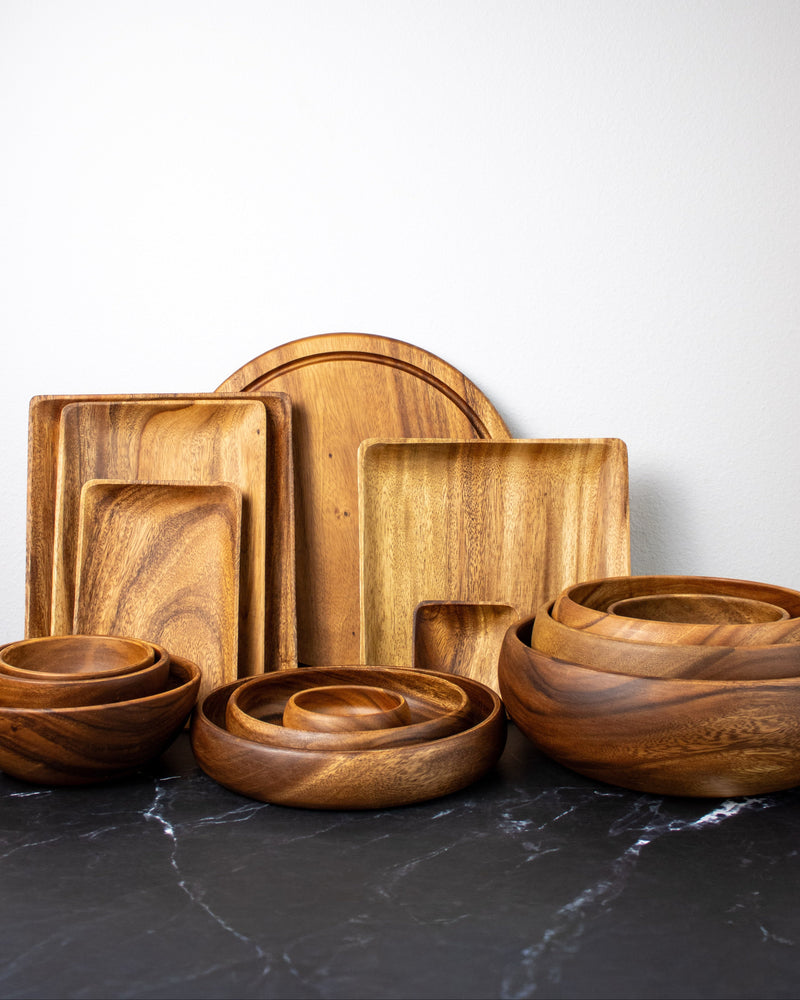
An engraved acacia piece is not a fragile ornament. It is a working object with a mark burned into it, and the mark ages differently than the wood around it. Handled reasonably, an engraved bowl or board keeps its inscription legible across generations of Sunday kainan. Handled the way you would treat a printed serving tray, it loses the mark faster than the piece itself loses shape. This guide is about the small routines that keep the mark and the wood aging together, and about the honest limits of what care can do.
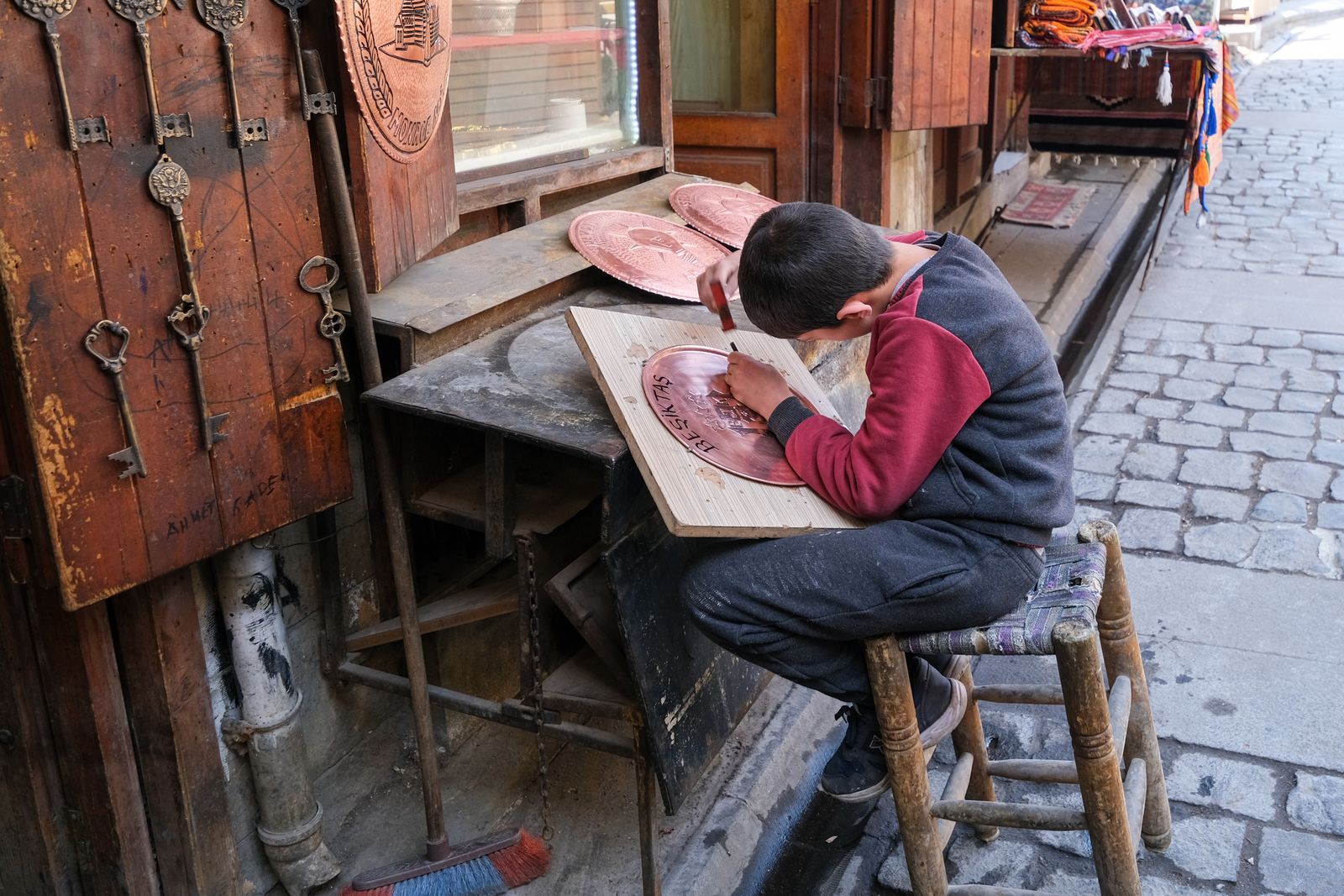
Why engravings age differently from the wood around them
Most people think of an engraving as a shallow etching that will eventually rub off, the way ink fades from a coffee mug in a dishwasher. That mental model is wrong for wood. An engraved mark on acacia is a recessed channel cut into the surface, and the way it ages is the opposite of the ink model. The wood around it lightens, mellows, and gains a soft patina over the years. The recess itself darkens, because oil, food traces, and time settle deeper into a cut surface than a smooth one. Over a decade of normal use, a well-cut mark reads more clearly than it did on the day it was delivered, not less.
The mark as a recessed channel
A standard engraved letter on acacia is between 0.5mm and 1.5mm deep, depending on whether the engraver used a laser, a rotary bit, or a traditional gouging tool. That recess is what protects the mark. The walls of the channel are shaded from the daily contact that wears a flat surface. When you slide a cheese knife across a serving board, it touches the top surface of the wood, not the bottom of the engraved letters. This is also why raised or embossed marks fade so much faster than recessed ones. Anything sitting proud of the surface takes the daily abrasion; anything sitting below it does not.
Patina versus erasure
There is a difference between a mark that is fading and a mark that is deepening. Fading looks like a loss of contrast, where the letters become harder to see against the wood. Deepening looks like a shift in color, where the letters become darker and warmer than the surrounding grain. Almost every engraved acacia piece goes through the second process, not the first, when it is cared for consistently. Households sometimes worry that the darkening means the mark is dirty. It is not dirty in any hygienic sense. It is the oil you applied doing exactly what it is supposed to do, settling into the grain and staying there.
The mid-century precedent
The evidence for this is on shelves across the Philippines. Carved bandehado, gift plates, and initialed serving boards from the 1950s and 1960s are still in service in households that used them for boodle fight, kasalan, and everyday meals. The wood on these pieces has mellowed to a deep amber. The marks are darker than the wood around them, often nearly black at the base of the cut, and completely legible. These pieces were not stored in cases. They were used. The mark survived because the household kept the wood conditioned. That is the whole trick, and it is the precedent this guide is built on.
The everyday care routine, unchanged and simple
Caring for an engraved acacia piece is almost identical to caring for an unengraved one. There is no separate ritual, no special product line, no maintenance cycle that requires calendar reminders. The rules are the same rules that have kept Filipino wooden kitchenware in service for generations. What changes with an engraved piece is a small handful of habits at the edges, mostly about drying and about what not to do to the mark itself.
Washing without pressure
Hand wash with warm water and a mild dish soap. Use a soft sponge or a clean dishcloth. Give the mark a light pass, not a hard scrub. If food has dried into the recess of a letter, do not attack it with a scouring pad. Let warm soapy water sit on the mark for a minute, then wipe it out with the corner of a cloth. Acacia does not need aggressive cleaning to be food safe, and aggressive cleaning is what wears the crisp edges of engraved letters over time.
Drying, and why the mark needs attention
Dry the piece immediately with a clean towel. This is the single most important habit for engraved acacia. Water pooling in an engraved channel takes longer to evaporate than water sitting on a flat surface, and prolonged moisture in one spot is what raises the grain, opens hairline cracks, and eventually blurs the edges of a mark. Wipe the mark first, then the rest of the piece, then stand the piece on its edge or on a drying rack so any residual moisture can escape from every angle. Never dry an acacia piece flat on a countertop, because the underside stays wet longer than the top.
Storage between uses
Store engraved pieces in a cabinet or open shelf with normal household airflow. Avoid sealed plastic containers, sealed cabinets that trap humidity, and any spot directly above the stove where steam and grease cycle daily. If the piece is displayed rather than used regularly, keep it out of direct sunlight from a window, because ultraviolet light bleaches wood over time and will lighten the engraved recess along with the surrounding surface. A shaded shelf, or a spot rotated away from a strong window, protects the piece without requiring any special covering. A piece in a full Royal hosting set deserves the same shelf care as a single bowl, since a set that ages unevenly reads worse than one where every piece has been treated the same.

Commission a mark built to age well
Custom engraving on Dalisay pieces is cut deep enough to darken with oil over the years, not shallow enough to fade under normal household washing.
Shop the custom engraving service →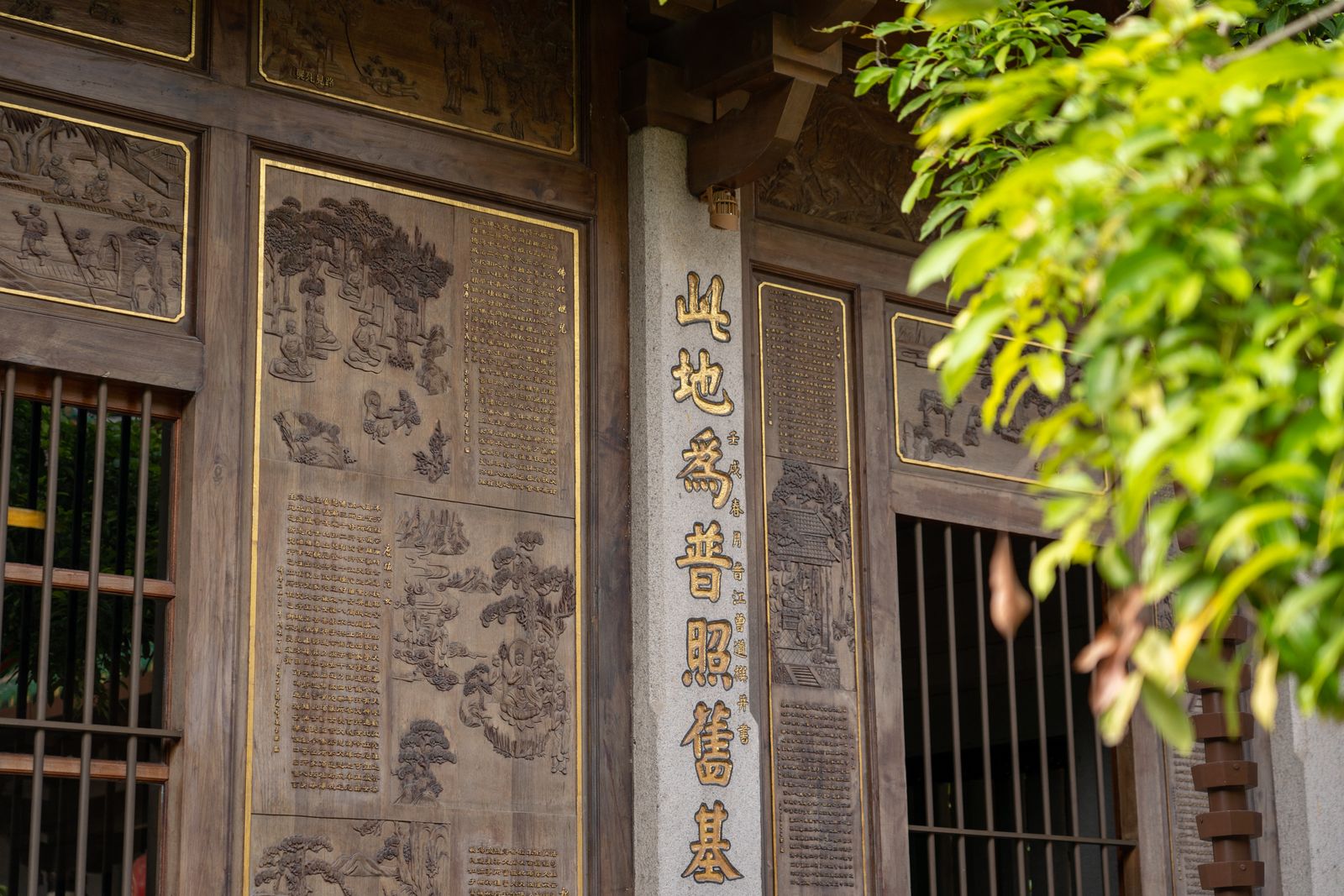
Oiling, with engravings in mind
Oiling is the single practice that separates engraved acacia that lasts from engraved acacia that quietly deteriorates. It is also the practice most households under-do. Wood loses moisture and lipids gradually, especially in air-conditioned Metro Manila apartments, and an unoiled piece will eventually dry out at the surface, raise its grain, and crack. On an engraved piece, cracks tend to appear along the edges of letters first, because the cut has slightly exposed the end grain inside the channel. Consistent oiling prevents that entire chain of events.
Which oil to use
Food-grade mineral oil is the standard. It is inert, does not go rancid, penetrates deeply, and is classified by the FDA as safe for direct food contact. Do not use olive oil, coconut oil, or any other cooking oil on a piece that lives with food. Those oils oxidize, turn sticky, and eventually go rancid inside the wood, which is a smell you cannot wash out. Some households use a mineral oil and beeswax blend, which adds a soft protective topcoat. Either is fine. What matters is that the oil is food-grade and mineral-based.
The rhythm
Re-oil every three to four months under normal Manila humidity. Re-oil every six to eight weeks in an air-conditioned home, where the ambient air is drier than most people realize. Re-oil sooner than that if the wood looks matte or feels rougher than it did last week. There is no penalty for oiling more often. The wood absorbs what it needs and any excess wipes off with a clean cloth.
The mark drinks first
An engraved area absorbs oil faster than the flat surface around it, because the cut has exposed more end grain in the channel walls. When you oil an engraved piece for the first time after cutting, expect the mark to look darker than the rest of the wood almost immediately. That is correct behavior. On subsequent oilings, you can apply an extra small amount directly along the mark with a fingertip or a cotton bud, then apply the rest across the whole piece. Wait twenty minutes for absorption, then wipe off any surface oil with a clean lint-free cloth. Do not leave a wet film on the piece, because that film attracts dust and takes longer to fully cure.
A beeswax topcoat, optional
A beeswax and mineral oil paste applied after a regular oiling adds a light water-resistant layer that helps engraved channels shed moisture faster. This is optional. Households that use their engraved pieces for wet foods, like a fresh mango salsa or a bowl of suka-based dip, may find beeswax reduces the visible watermarking that sometimes appears around a mark. Households that use their pieces mostly for dry foods can skip it. Do not apply beeswax to a piece that has not been oiled first, because the wax will sit on the surface without bonding.
What actually wears an engraving down
Engraved marks do not fail from use. They fail from a small number of specific mistakes, all of which are avoidable and none of which involve the piece being used normally with food, hands, and family. Knowing what actually damages a mark is more useful than a long list of things to worry about, because it lets you relax about the parts that do not matter.
Water sitting on the mark
The single most common cause of engraving damage is water pooling in the recess of a mark and sitting there overnight. This happens most often when a piece is left in the sink after a meal, when it is placed wet in a stack of other pieces, or when it is washed and then air-dried face-up on a flat surface. Prolonged moisture raises the grain inside the channel, and repeated cycles of raising and drying eventually blur the crisp edges of letters. Dry the piece immediately, every time. That one habit prevents most of the damage that pieces accumulate over the years.
Sun, heat, and cracking
Direct sun bleaches acacia and dries the surface unevenly, which lightens the mark and can create hairline cracks that pass through the letters. A serving board displayed on a west-facing kitchen counter will age faster than the same board stored in a shaded cabinet. Heat is a separate issue. Putting a hot pan directly on an engraved area transfers enough thermal shock to expand and contract the wood locally, which can crack a letter at its edge. Always trivet the piece if hot cookware is involved.
Detergents, abrasives, and the dishwasher
Dishwasher detergent is aggressively alkaline, and dishwasher cycles combine that detergent with sustained heat and prolonged water contact. Any one of the three would age an engraving quickly. All three together will visibly damage a mark in fewer than ten wash cycles. This is true for every acacia piece, engraved or not, and it is the reason no reputable maker of wooden tableware endorses dishwasher use. Steel wool and abrasive pads do a similar amount of damage in a compressed way, tearing at the edges of letters and gouging shallow scratches across the recess. Use a soft cloth or sponge only.

A set that ages together
The Gorosin bowl set is sized for daily use and holds engraved monograms consistently across matching pieces, which is what makes the marks read as a set rather than as individual bowls.
Shop the Gorosin bowl set →Reading the piece across decades
The word "heirloom" gets used loosely in tableware marketing. It is worth being specific about what it actually means for an engraved acacia piece. A well-cut engraving on a solid acacia bowl or board, cared for with the routine described above, will remain fully legible for at least twenty to thirty years of normal household use, and often longer. The precedent for this is the carved and initialed pieces from the 1950s and 1960s still in circulation in Filipino households today, some of them handed down two or three times. That precedent supports "decades" as a fair claim. It does not support "forever," and no honest maker should claim otherwise.
What "heirloom" actually means for a mark
An heirloom piece is not a piece that never changes. It is a piece that changes in ways the family recognises and welcomes. The wood mellows. The rim softens where hands have gripped it for years. The engraving darkens against a lighter surrounding grain. Small scratches accumulate on the surface and become part of the piece's history. This is different from wearing out. A piece that is wearing out has cracks that pass through the letters, an engraving that has become hard to read, and a surface that no longer takes oil. That state is reached through neglect, not through age.
The color shift over time
Acacia darkens with age and with oil. A freshly finished piece is often a warm caramel with visible grain contrast. After five years of consistent oiling, that same piece reads as a deeper amber, with the grain still visible but less sharp against the field. After twenty years, the base color is a mature honey-brown and the engraved marks are near-black. This progression is one of the reasons households return engraved pieces to the daily rotation rather than storing them. The piece looks better after a year of use than it did on delivery.
Passing it on
When an engraved piece moves to the next generation, the person receiving it inherits the maintenance routine along with the object. This is worth saying out loud, either when the piece is handed over or on a small card kept with it. The routine is not complicated: hand wash, dry immediately, oil every few months. But it is not obvious to someone who has never cared for wood, and a beautifully engraved bowl that ends up in a dishwasher within its first month at a new address is not a story anyone wants to tell. A minute of instruction protects decades of use.
When a mark fades or gets damaged
Even with attentive care, things happen. A piece is left wet in a stack. A cousin runs it through the dishwasher not knowing better. A hot pan sits on the mark for ten minutes. A crack appears along the edge of a letter after a very dry season. Most of these situations are recoverable. A few are not. Knowing the difference matters, because households sometimes retire a piece that could still be brought back, and other times invest effort in a piece that is genuinely finished.
Refresh oiling first
If a mark looks dull or faded but the wood is intact, the piece almost always responds to a thorough re-oiling. Apply mineral oil directly along the mark with a fingertip. Wait an hour, wipe, and repeat. Do this three times over the course of a day. In most cases, the mark will darken visibly and read clearly again the next morning. Households that assume a faded mark is permanently lost are often surprised at how much of that fading was actually just dryness.
Light sanding around the mark, not on it
If the surrounding wood has heat marks, ring stains, or small surface damage next to the engraving, a very light sanding with fine grit paper, followed by re-oiling, will restore the surface. Sand around the mark, not across it. The engraved recess is deeper than any sanding you should attempt at home, but the letters have crisp top edges that can be dulled by a stray pass with sandpaper. If the damage is on top of the engraving itself, stop and consult the maker.
The recut question
Some engravers offer a recut service that goes back over an existing mark, deepening the channel and sharpening the edges. Whether this is possible for a given piece depends on the wood, the depth of the original cut, and how badly the surrounding surface has aged. Dalisay's custom engraving is cut at a depth designed to hold up under normal household use without needing later refresh, and we would rather guide households toward better daily care than promise a mid-life recut. If you commissioned a piece from another maker, ask them first whether they offer this service. If they do not, a local wood engraver or a cabinet maker with a small router can often trace an existing mark and deepen it, though the result will always be legible rather than pristine.
When to leave it alone
Some damage is part of the piece now. A hairline crack that has stabilised is often better left in place than filled or sanded, because attempting to repair it can widen it. A darker patch of patina where a hand has rested during years of serving is character, not damage. A small softening at the corners of long-used letters is the same. Households that try to keep an engraved piece looking new at twenty years old are fighting the material. Households that let it age and just keep it clean, dry, and oiled end up with a piece that reads like an heirloom because it is one.

The piece worth planning care around
The Ama bowl is the size and format that most rewards long-term care. Its flat rim carries a mark well, and its depth holds up to decades of boodle fight, salu-salo, and Sunday kainan.
Shop the Ama bowl →Frequently Asked Questions
How often should I re-oil an engraved acacia piece?
Every three to four months under normal Manila humidity, and every six to eight weeks if you live in an air-conditioned home where the ambient air is drier. There is no penalty for oiling more often. The wood absorbs what it needs and excess wipes off with a clean cloth.
Can I use the same care routine as an unengraved bowl?
Yes, with one small addition. Pay extra attention to drying the engraved recess after washing, because water sits in a channel longer than on a flat surface. Everything else is identical: hand wash with mild soap, dry immediately, and oil regularly.
Will oiling fill in my engraving and blur the letters?
No. Oil penetrates the wood rather than pooling on the surface, and the mark actually reads more clearly after oiling because the recess darkens against a lighter surrounding grain. The blurring risk comes from prolonged water contact, not from oil.
My engraving looks faded. Can it be recut?
Try a thorough re-oiling first. Apply mineral oil directly along the mark, wait an hour, wipe, and repeat two or three times. Most fading is dryness that responds to oil. If the mark is still faded after that, ask the original engraver whether they offer a recut service. Not every workshop does.
Is a lacquer or varnish coat a good idea to protect the mark?
No, not on tableware. Lacquer and varnish create a surface film that eventually chips, yellows, or clouds, and once a coated piece starts failing there is no way to restore it without stripping and refinishing. Mineral oil, which soaks into the wood rather than coating it, is the correct finish for pieces that touch food.
Can engraved pieces travel safely as pasalubong?
Yes, with basic packing. Wrap each piece in a soft cloth or in bubble wrap, keep them dry inside luggage, and avoid sudden temperature and humidity changes where possible. On arrival at their destination, re-oil the pieces once to help them settle into the new ambient conditions, especially if travelling from Manila to a drier climate.